 Editor’s note: redefinED guest blogger Jonathan Butcher wrote this commentary for Fox News Network and offered it to redefinED for republication.
Parents looking for a national consensus on whether schools should open in the fall won’t find one. But that’s okay. We don’t need one.
As soon as President Trump announced his support for reopening schools, teacher unions said he was “brazenly making these decisions.” So much for consensus. And this despite the fact that both proclamations said students should be kept safe, emphasized Centers for Disease Control guidelines on reopening (speakers on the White House panel cited no fewer than eight CDC reports, while unions called the documents “conflicting guidance”), and claimed to have the nation’s best interests in mind.
Well.
Luckily, many state officials and school leaders had already moved on. In April, Montana Gov. Steve Bullock said that schools could hold classes in-person immediately but left the decision to local educators. In Idaho, closures varied by school district, but some school leaders had students back in class by May. Governors and state officials have announced in-person summer school classes for Illinois, Pennsylvania, Nevada, Texas and Virginia.
Even if relatively few schools have thus far decided to have students return to the classrooms, that fact that some states have done so should change parents’ question from if schools will open in the fall to how quickly the process can happen.
“The CDC has issued guidance,” Vice President Mike Pence said at the White House event, “but that guidance is meant to supplement and not replace state, local, territorial, or tribal guidance.” What may be “conflicting guidance,” to unions is better described as “federalism.” 50 states, 50 different pandemics, 50 laboratories of democracy.
That’s the way it should be. Supreme Court Justice Louis Brandeis coined the “laboratory” phrase, prefacing it by saying, “To stay experimentation in things social and economic is a grave responsibility.” We should be encouraged, then, that some local educators are not waiting for Washington to decide for them, and, likewise, that parents are not waiting on schools.
After the wild ride of sudden school closures in March, uneven attempts at online instruction through the spring, and a school year that seemed to have no official end date, polls showed more parents were considering educating their children at home. For those wondering if the 59 percent of respondents in a USA Today/Ipsos poll who said they may homeschool now really meant it, a headline last week—and weeks before school starts—from North Carolina’s North State Journal read “Homeschool requests overload state government website.”
Those not ready to homeschool will find it difficult if not impossible to return to work if schools are closed. Montana is not Virginia which is not New York City, and parents ready to homeschool in Greensboro, N.C., may be thinking differently than a family in Charlotte. Parents should be wary of press releases with advice on education from public or private national groups that use words like “comprehensive,” “nation’s schools,” or even “all.”
The Trump administration said that schools may lose federal money if they stay closed. Such a move would likely be challenged in court. But one problematic aspect of this threat is that it keeps the debate over who should be making decisions for the “nation’s schools”—again, beware the phrase—at the national level, a tussle between the federal government and nationally-focused special interest groups.
A more effective talking point for the administration would be to encourage the laboratories. For example: In areas where schools are closed, state lawmakers could give parents and students who wish to opt-out of those schools the students' per-student spending amount to use for homeschooling resources, private school tuition, tutors and more. Or erase district boundaries and allow students to choose a traditional school other than his or her assigned school.
The National Education Association and American Federation of Teachers, the nation’s largest teacher unions, will howl at the suggestions, but they should be loath to take the matter to court again. Last week, the U.S. Supreme Court ruled that Montana could not prevent families from choosing a religious school when students use K-12 private school scholarships created by state law.
Unions regularly cite provisions in state constitutions that are rooted in religious bigotry when the groups sue to block such opportunities, but the High Court called precisely this language discriminatory in Espinoza v. Montana Department of Revenue, weakening the union’s position in 37 other U.S. states with similar provisions. The fight has already advanced to defending scholarships to religious private schools in Maine.
Washington should not force schools to reopen. But national officials can remind state lawmakers and parents there are alternatives. Short of a consensus on opening schools in August, that is the best news for everyone.
This post first appeared on the Friedman Foundation blog.
Social movements such as women’s suffrage, black civil rights, and parental choice in education involve the redistribution of social, political, and economic power. Because few groups in control of that power at the time are enlightened enough to share it voluntarily, these power struggles are usually contentious—but they don’t have to be.
Although school choice opponents have used name-calling, character assassination, and misinformation as key strategies in maintaining their power, thankfully they have refrained from the physical violence that often accompanies disruptive social change. The bad news is their strategies still undermine our civic discourse and make it more difficult to provide every child with an equal opportunity to succeed. Our children and our democracy deserve better.
Despite the opposition’s tact, school choice supporters should try engaging opponents, particularly teachers’ unions. I know that is easier said than done, but, in the long run, the willingness to search for common ground could accelerate the transition to greater school choice. I say this as someone who’s had a front-row seat on both sides of this debate.
I became a teachers’ union organizer in 1978, and, for the next 16 years, held a variety of local, state, and national leadership positions in both the American Federation of Teachers (AFT) and the National Education Association (NEA). Today, I am president of a nonprofit organization that helps administer our nation’s largest private school choice program.
Although neither side is without sin, I have been most disappointed by the discourse coming from the teachers’ unions and their anti-choice allies. When I talk with local, state, and national union leaders, I am stunned at how uninformed they are and how many falsehoods they have embraced as truths.
I recently had dinner with one of our country’s top teachers’ union leaders who told me there has never been research showing students benefit from school choice programs. And last month, I was on a panel with a top Miami-Dade union leader who erroneously said Florida’s tax credit students are not tested.
This level of ignorance is a reflection of how insular, polarized, and tribal our politics have become. People are increasingly retreating into self-contained echo chambers where they hear only the messages that reflect the positions of their political tribe. Without access to contrary views from sources they know and trust, people have no basis upon which to question the one-sided communications they are receiving. And few organizations are as insular and tribal as teachers’ unions.
Such insularity causes many union leaders to develop a mindset that says their positions are good and all contrary positions, and those who hold them, are evil—hence all the rhetoric coming from teachers’ union leaders.
There are also financial incentives at play. (more…)
Arkansas: The U.S. 8th Circuit Court of Appeals dismisses a lawsuit to overturn the state's public school choice law, which will allow public school students to openly transfer to other public schools outside their district (Arkansas Times, Arkansas Online).
Arizona: The state sees an upswing in school districts wanting to convert some of their traditional schools into charters (Arizona Daily Star). Charter schools in Arizona will get greater parity in funding for vocational programs (Arizona Daily Star).
Florida: Charter schools again earn A and F grades at higher rates than district schools under the state's grading system (redefinED). A breakdown provided by the Hillsborough County School District, the eighth largest in the country, shows that in some district schools, 100 or more students have left for charters (Tampa Bay Times).
Louisiana: The U.S. 5th Circuit Court of Appeals partially dismisses the Louisiana Department of Education's appeal on the injunction against the state's new education voucher program in Tangipahoa Parish (The Advocate).
Michigan: Detroit may be shrinking, but charter schools in Michigan are growing (Detroit News).
Nevada: Wait-lists for magnet, charter and private schools grow in the Silver State as demand exceeds the available options to Nevada's public school students (Reason Magazine).
New Jersey: Gov. Chris Christie's administration approves six new charter schools for next fall, bringing the total statewide to 87 (New Jersey Spotlight). Republican U.S. Senate candidate Steve Lonegan says his likely Democratic rival, Newark Mayor C0ry Booker, needs to "man up" and admit whether he is for or against school vouchers (Newsworks New Jersey) (more…)
The American Federation of Teachers released a new survey this week, “Public School Parents and the Promise of Public Education,” that claims many things. But most important to school choice supporters, it says the vast majority of parents prefer traditional public schools and are opposed to educational options.
The quality of any survey is heavily dependent upon the methodology applied and, of course, the questions asked. AFT and the firm that did its survey, Hart Research Associates, condensed their findings in a short memo that’s worth reading.
The memo suggests the survey question about vouchers may be misleading participants by directing them along a predetermined path. For example, participants were asked to choose the better of two education approaches. Take a look at the language below (from page 6):
Approach A) We should focus on ensuring that every child has access to a good public school in their community. We need to make the investments needed to ensure all schools provide safe conditions, an enriching curriculum, support for students’ social and emotional development, and effective teachers.
Approach B) We should open more public charter schools and provide more vouchers that allow parents to send their children to private schools at public expense. Children will receive the best education if we give families the financial freedom to attend schools that meet their needs.
Not surprisingly, 77 percent of survey participants chose Approach A.
There are a few glaring problems. (more…)
Tuthill
Editor's note: This is the fourth and final post in a series on the future of teachers unions.
Over the last 20 years, the federal government and state governments have used standards, assessments and regulatory accountability to assert more top-down control over classroom teachers. As state-mandated teacher evaluation and merit pay systems have become ubiquitous, the level of teacher disempowerment and alienation has soared, and teacher unions have hunkered down and become even more defensive and conservative.
School choice is the way out - not only because it is breaking down public education’s 19th Century industrial management model, but because teacher unions are so economically tied to this model they are fighting to preserve it, even though it is bad for teachers and students. Ironically, teacher union dues today are used to perpetuate a dysfunctional management system, and to protect teachers from being abused by this same system. It’s crazy.
I say this as a former teacher union leader.
I started teaching in fall 1977. In January 1978, I sat at a table with other teachers and heard a divorced mother with two young children tearfully tell us she had rejected her boss’ sexual advances and now he was ending her employment contract. At the time, we didn’t have a union or a union contract.
I was 22 years old and became a union organizer while sitting at that table. We organized ourselves, collected cards and successfully petitioned the state to hold a collective bargaining election. We won a court case management had filed to block the election. Then we won the election and bargained and ratified a contract that included protections against arbitrarily firing employees.
In 1984, I joined a more mature union (and the school choice movement) when I moved to St. Petersburg, Fla. to help start one of the state’s first magnet schools. The Pinellas Classroom Teachers Association had been a professional association for several decades before turning into an industrial union in the late 1960s. By 1984, its collective bargaining agreement had been in place for more than a decade, and it had established a collaborative working relationship with management.
After the intensity of building a union from scratch, PCTA felt stagnant. The union was part of district management. It did a great job protecting teachers from the abuses of a politically-managed bureaucracy, but there was no energy or vision for progress. PCTA’s only internal and external message was, “We need more money.”
Pinellas teacher salaries increased by an average of 45 percent from 1981 to 1986, yet teachers were still miserable. More money was great, but they wanted greater job satisfaction. Individuals become teachers because they want to make a meaningful contribution to children’s lives, but that’s difficult - and often impossible - in a mass production bureaucracy that treats teachers like assembly line workers and students like identical widgets.
We attempted reform from within. (more…)
Editor's note: This is the third of four guest posts on the future of teachers unions.
by Gary Beckner
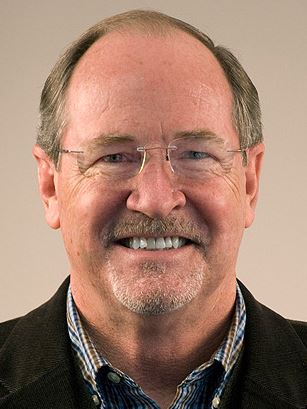
Gary Beckner
We are at a critical crossroads on the path to education reform in America. Stakeholders from all walks of life and political stripes are beginning to understand that in order to compete in a global economy we must focus on choice and technology to prepare our students for the future.
Likewise, we must also recognize that in order to drive needed change in instruction we must also examine how the teacher workforce is represented. Just as a one-size-fits-all system is not working for students, a labor union model solely fixated on protecting the status quo is no longer serving the needs of all educators in a modern workforce.
Choices in education have opened up avenues for advancing the teaching profession like never before. Virtual schools, technology, and non-traditional charter schools allow teachers to set new schedules and adapt their vision for education to a school that meets their specific needs. These innovations have brought new experienced professionals into the profession and have allowed other talented educators the ability to stay on in different capacities.
According to a membership survey by the Association of American Educators, the non-union teacher organization that I lead, teachers support laws that advance choice and promote options. For example, 68 percent of member educators support an Indiana law that provides a tax credit to parents who send their children to a private or parochial school of their choice. Similarly, 74 percent of survey respondents support Arizona's Empowerment Scholarship Accounts, which allow parents of special-needs students to use state education dollars in a school that meets the student's needs.
Despite this groundswell of support from educators themselves, the nation’s largest teacher unions, the National Education Association and the American Federation of Teachers, continue to stand in the way of commonsense education reform for the sake of preserving their own monopoly. Not only is this harmful to America’s students, it degrades the professionalism of one of the most revered career choices. (more…)
My holiday wish is for teacher unions to expand their business model to include all public education teachers, and not just those employed by school districts.
 The industrial model of unionism that teachers borrowed from the auto and steel workers 50 years ago assumes a large number of employees working in a centralized, command-and-control management system. Unions lose money when they apply this industrial unionism to smaller, decentralized employers such as charter and private schools. Consequently, they protect their desired market by opposing all school choice programs that enable students to attend schools not owned and managed by school districts.
But they are losing this fight. Parents like school choice. More than 40 percent of Florida students – 1.3 million - are now attending a choice school, and their numbers are increasing daily. As teachers move with their students and membership losses accelerate, teacher unions will eventually be forced to expand their business model to include services for teachers working for smaller, non-district employers. This expansion might include providing charter, virtual and private school teachers with liability insurance, financial planning, professional development, political advocacy and employee leasing for teachers willing to pay unions for guaranteed employment.
Teacher unions are an important vehicle through which teachers can make their voices heard and impact political decision making, but they have historically been conservative and resistant to change. The National Education Association, the nation’s largest teacher organization, resisted collective bargaining for several years and only relented after losing thousands of members to the AFL-CIO affiliated American Federation of Teachers. Both the NEA and AFT will refuse to embrace a more progressive, inclusive unionism until their membership losses are so severe they have no other choice.
This day is coming. When it arrives, teachers, unions, students and the public will all benefit.
Coming Friday: Two posts. Wishing school choice parents were impossible to ignore. And wishing for more information to help parents make the best choice.

Blanton
Rick Scott’s education plans. The Orlando Sentinel leads with Scott’s proposal to issue state-funded debit cards to teachers so they no longer reach into their own pockets to pay for school supplies. More from WINK News, Fort Myers News Press, Palm Beach Post. The Florida Democratic Party had a negative reaction, but Scott’s plan generated mostly positive comments, including from the Florida PTA, Sen. Bill Montford of the Florida superintendents association and Wayne Blanton, executive director of the Florida School Boards Association. According to the Associated Press, Blanton “endorsed (Scott’s) recommendation to lift a cap on charter schools with a caveat — as long decisions to create new charters are left to local school officials. ‘An open-ended lifting of the cap may be more than we need,’ Blanton said, adding that districts are having a hard time keeping up with the growth of charters.”
More charter school payout. The principal of NorthStar High School, the charter school whose board paid her more than $500,000 as the failing school was shutting down, consumed the lion’s share of the 180-student school’s funding last year, the Orlando Sentinel reports. "I have never seen an act that egregious in 15 years of working with charters," said State Rep. John Legg, R-Port Richey, a charter school business administrator.
Teachers union bus tour. The AFT bus tour in support of President Obama is rolling through Florida. According to a press release, it's hitting Tampa, Daytona Beach, Ormond Beach, Orlando, Miami, Fort Lauderdale and West Palm Beach. AFT President Randi Weingarten is aboard. More from the Hechinger Report.
After spending time at the Republican convention in Tampa and the Democratic convention in Charlotte, I needed to decompress, so I headed to Montana where I am now sitting on a hill watching a herd of deer graze in the meadow below. These deer have no funny hats on their heads, buttons on their chests or noisemakers in their mouths. They seem peaceful and, as best I can tell, nonpartisan. I’m a little jealous.
I was fortunate to speak with lots of smart and interesting people at both conventions, but I’ve decided the most intriguing speaker, other than Bill Clinton, whose speech seems to have ended the suspense over whether President Obama will be re-elected, was Daniel Barnz, the director of the new education movie, Won’t Back Down. Barnz spoke after a screening of his movie at both conventions. Each time, he expressed bewilderment that his movie is being attacked as anti-teacher and anti-public education.
Even before the movie was released to the general public, AFT president Randi Weingarten sent out an open letter accusing Barnz of “using the most blatant stereotypes and caricatures I have ever seen.” She asserted the movie “is divisive and demoralizes millions of great teachers,” although she neglected to explain how these millions of teachers could be demoralized by a movie neither they nor the general public have seen.
Barnz comes from a family of public school teachers. He wanted to make a fictional movie about teachers and parents working together to improve a struggling school. His sin, at least from Weingarten’s perspective, is that the teachers and parents in his movie saw freeing themselves from the control of the teachers union as essential to their improvement efforts.
Barnz’s fantasy of a community of empowered teachers and parents working collaboratively to raise student achievement, and Weingarten’s vitriolic response, illustrate the power struggle at the heart of today’s efforts to improve public education. (more…)
 Editor's note: Adam Emerson, who writes the Choice Words blog at the Fordham Institute, wrote a lot about the progressive roots of school choice when he was editor here at redefinED. Here is his latest piece on the subject.
The 2012 Democratic Party platform released this week calls for the expansion of “public school options for low-income youth,” a position that has appeared in varying language in every Democratic platform since 1992. But as Marc Fisher of the Washington Post reported this week, the Democratic platform historically has been “a jagged series of experiments” that once made room for more than just public-school choice.
Today, the national party fervently rejects vouchers for private and parochial schools, but that wasn’t the case thirty years ago. In 1972, Democrats sought to “channel financial aid by a Constitutional formula to children in non-public schools,” a position that reflected not only the influence of the Catholic Church at the time but also the drive, the values and the persistence of the late Daniel Patrick Moynihan.
Moynihan, who also crafted education planks for the Democratic platforms of 1964 and 1976, followed the party’s (and his own) guidance. Soon after his election to the U.S. Senate in 1976, he proposed a tuition tax credit for families with children in private and parochial schools. That bill was co-sponsored by an almost even number of Republicans and Democrats, and, as Moynihan defiantly wrote in Harper’s Magazine at the time, “Why should the anti-Catholicism of the Grant era be given a seat at the Cabinet table of a twentieth-century President.” But that president, Jimmy Carter, had come into office with the support of the National Education Association, which worked with H.E.W. Secretary Joseph A. Califano, Jr. to kill the bill.
Since then, the NEA and the American Federation of Teachers have exerted ever greater influence over the Democratic Party while the Catholic Church has wielded less. Full piece here.

