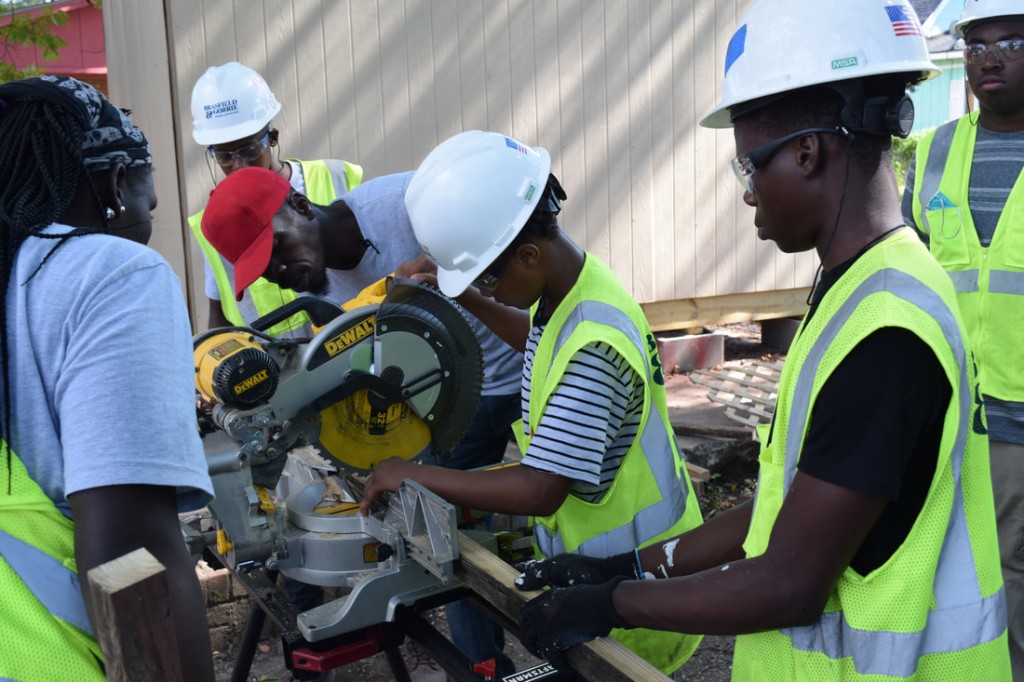
Students at Build UP Community School get an opportunity to learn the construction trade alongside core academic subjects to prepare them for apprenticeships or college. Each day after school, they rehabilitate rundown homes. Once they complete an apprenticeship or earn an associate degree, they are allowed to buy one of the homes for a zero-interest mortgage. The program recently received a $500,000 grant after being named a finalist for the Yass Prize, a national program that rewards education innovation.
A little more than three years ago, Keemarius Thomas was a rudderless middle-schooler stuck in a hardscrabble Birmingham public school. Whatever his aspirations, his prospects seemed limited by history — his own, and his ancestors’ — and his ZIP code.
“I had no idea back in my other school what I was going to do, or how I was going to get there,” Keemarius says.
Once more, Alabama’s entrenched and uneven allocation of academic resources, combined with its cumbersome school choice program, threatened to squash yet another young Black man’s modest dreams of a superior future.
Now a dual-enrolled high school senior and community college freshman, Thomas dares to dream large.
No. Better still, Thomas dares to plan large. An associate’s degree, then a degree from the four-year university up Interstate 20 — Georgia Tech — and a future in high-tech security.
What happened?
Build Urban Prosperity Community School is what happened. Popularly known as Build UP or BUCS, this private, nonprofit school unlike any other, eking out an existence in a community all too sadly familiar, not only changed Keemarius’ direction, it’s investing him with the in-demand workforce skills necessary to be the master of his course, the captain of his destination.
The rudder-dispensing enterprise is the brainchild of Huntsville-born Mark Martin, a member of the University of Alabama Class of 2003 (Finance) who went on to become equal parts evangelist and revolutionary. (With a name inspired by a Gospel writer and legendary reformers of the status quo from two eras, how could he be otherwise?)
Build UP, while borrowing from western European models that prize academics in partnership with private business, is an entirely fresh reimagining of the traditional trade school.
A veteran of Teach for America, Martin’s introduction to classroom instruction was at Atlanta’s Woodson Elementary, in “Georgia’s most heavily incarcerated ZIP code,” he says. The experience was a lesson in environmental destiny: Enter the world where impoverished parents were poorly educated, “then your destiny is pretty much defined for you,” Martin says. “We don’t believe that’s right.”
Build UP was founded in the fall of 2018 in Birmingham’s Ensley, a once-thriving industrial community that sank into poverty and ruin when the nearby steel mill shut down. This is how cool Ensley once was: Made into a song, Tuxedo Junction — a two-block entertainment area hard by the turnaround point for streetcars — became a No. 1 hit arranged by Glenn Miller at the height of the Big Band Era. At Build UP, the beat goes on, shattering generational chains of doom.
“We're a workforce development high school, preparing students for careers in the trades,” says James Sutton, Build UP’s executive director and — significantly — an instructor of African-American Studies at the University of Alabama-Birmingham. “However, we place a strong emphasis on giving students a quality education, particularly in math and reading.”
Yes, like most vocational-technical academies, Build UP students are trained in the construction arts. The first key difference: Students experience the practical relationships between classical education subjects and the building trades.
From framing windows to hanging drywall to fitting crown moulding to respecting load-bearing beams, there’s geometry, mathematics, and physics everywhere you look in a cozy three-bedroom, two bath bungalow.
There’s science, too, in electrical wiring and plumbing, and lessons in the life sciences to be derived from conquering mold, evicting vermin, or landscaping a yard.
Remember Sutton’s background? The Build UP faculty also finds ways to weave history, effective language skills, and art into the curriculum.
More pragmatism, Build UP style: Students earn paychecks for their efforts, which helps instill the virtues of budgeting and appreciating the value of work and compensation.
“Students are receiving both mentorship and guidance while also developing skills along the way,” Martin says. “They also get paid, so they are learning financial literacy and budgeting at an earlier age. It exposes them to all kinds of responsibilities.”
For those who go the distance — six years in the program, emerging with an associate’s degree and certifications across a variety of construction trades — graduates receive the keys to a house (with a zero-interest mortgage) they helped renovate in the Birmingham communities of Ensley and Titusville.
Among the first to score homeownership: Build UP veteran Torrey Washington, who acquired a tidy, restored 1930s brick Tudor Revival on a sweeping corner lot in Ensley, nearly 1,900 square feet under roof in which he, his mom, and four siblings ramble about.
“Build UP has done so much for me, and it has changed my life,” Washington said during the ribbon-cutting ceremony. “I would tell other young people that Build UP is worth it. I have no regrets. I’m happy, my family is happy, I’m about to be a homeowner and make a difference in my community.”
Martin likes to talk about how successful Build UP students will achieve equity that they can get their hands on: equity that comes from owning something that, historically, increases in value. How’s that working out for Torrey Washington? A recent check of Zillow shows the residence has increased in value by $13,300 in just 17 months, early evidence that the Build UP model works.
“Build UP exists to empower youth, families and communities to lift themselves out of poverty and lead self-sufficient lives,” Sutton says. “By equipping students to acquire a self-directed career-focused education, gain knowledge and experience in a high demand field of their choosing, they also become homeowners that build wealth and support neighborhood revitalization.”
The school/enterprise comes by its houses in a variety of ways, purchasing included. But there are tax breaks for owners who donate houses to Build UP, including those who otherwise would pay to have old homes razed and hauled away.
Instead, some 20 “perfectly good homes that shouldn’t land in a landfill” — Martin’s description — have been shipped from upscale Over the Mountain suburbs (Homewood, Mountain Brook, Vestavia Hills, and Hoover southeast of downtown Birmingham) to Build UP lots in Ensley and Titusville, where they become laboratories of hands-on learning.
Summer jobs are available through Build UP, as well as paid internships with the school’s partners. Here’s where we reconnect with Keemarius Thomas, only recently turned 18, and the extremely impressed Kyle Baker, CEO of Birmingham-based security and telecom provider Sophia Consulting and Integration.
Keemarius hired on part-time during the spring semester of 2022 to perform labor-intensive tasks, such as hauling cable for installers, which he did without complaint.
“He was humorous, always in good spirits,” Baker says. “He was just a really, really good fit, the perfect example of the type of person we want to reach. In our business, there are all these things you can get into — sales, systems engineering, project management, networking — things you can top without a certification or a degree.”
That experience turned into a paid internship last summer, then an every-Friday gig beginning in January. Baker says he could see the lad’s lights go on whenever he was assigned to an IT networking specialist.
“I think a lot of the students they've targeted,” Baker says, “have been the most negatively impacted on the long-term effects of these systems and structures that were in place and the education that they have access to.
“I do love that they are very specific about … just providing a wider perspective of what learning and education is, and what a career looks like? And what providing for yourself and for your family can look like. I love that.”
Not that Keemarius dismisses the construction skills he’s learned. As intense fan of power drills and circular saws, he knows the pride of seeing, at the literal end of any work day, how the skills he’s gained at Build UP can make the world a better place.
“I’ll always have that knowledge,” Keemarius says, “just that general knowledge to help fix up a house, even your own house. Or you can really help someone else. And if all of a sudden you need a job, you can have a job, because you know how to do all those things. That is my stuff.”
Build UP’s progress has not been without its setbacks: Six vehicles used to transport students to school and job sites were stolen from a fenced and locked enclosure during 2021. Early in 2022, trackers installed by Baker’s team on two vans swiped over Christmas led Martin and Jefferson County sheriff’s deputies to four of the trucks and vans in a western Birmingham junkyard, stripped.
Repairs and towing fees would run into precious thousands, Martin predicted, but rather than respond in anger, he told local reporters, “With Build UP, we are conveying skills to our young people so they don’t have to stoop to this level. I just hope whoever is doing this can get back on their feet and get some skills and start contributing instead of taking.”
Otherwise, Build UP’s primary ongoing difficulty is helping applicants clear the financial hurdle. Alabama’s school choice program puts strict limitations on students seeking a private-school option. Pending developments in the state Legislature favored by school-choice advocate Gov. Kay Ivey, this year, Alabama offers two modest options:
Alabama’s Education Scholarship Program, funded by taxpayers who donate to nonprofit scholarship-granting organizations (who receive tax credits), is restricted to students from families qualifying for the federal free and reduced-price lunch program. Scholarships for students in grades 9-12 can go as high as $10,000. Students assigned to failing schools receive top priority for scholarships.
Under the Accountability Act of 2013 Parent-Taxpayer Refundable Tax Credits, parents who transfer children enrolled or assigned to failing schools receive a tax credit worth the lesser of (1) 80 percent of the average annual state cost of attendance for a K–12 public school student during the applicable tax year, or (2) their children’s actual cost of attending school.
However, those projected credits cannot be borrowed against, loaned by the school, or assigned to the alternate school the student attends. Small wonder the number of students attending on Alabama’s tax-credit scholarship scheme has never reached even 200, and slipped to 56 in 2021.
This would explain why leaders of groundbreaking Alabama schools such as those at Build UP are rooting for legislative changes pioneered in Arizona and Iowa and, most likely soon, Florida, in which education funding follows students, not institutions.
Help from state lawmakers cannot come too soon. Build UP has set March 2, from 4:30-6:30 p.m., for its open house for prospective students and curious parents.
Take it from Keemarius, who doesn’t actively recruit, necessarily, but, when asked about Build UP, says this: “If you’re in a public school, and you know, if you want a better experience in terms of opportunities, Build UP would be the place you should go.”

Victory Christian School in Pell City, Ala., a ministry of Victory Church, seeks to develop lifelong learners through superior academics, a well-rounded curriculum, and a focused emphasis on spiritual growth and Biblical training. It is one of 412 private schools in Alabama serving more than 79,000 students.
Editor’s note: This article appeared Monday on yellowhammernews.com.
After recently saying “I support school choice 100 percent,” Alabama Lt. Gov. Will Ainsworth is once again making clear how much he supports more of these options for students in the Yellowhammer State.
Friday on Alabama Public Television’s “Capitol Journal,” Ainsworth discussed school choice and other ways to improve the education system in Alabama.
“I think you hear a lot of chatter, and something I’m certainly in support of, [is] school choice,” Ainsworth said. “And why does that matter? I mean you’ve got students that have been in historically failing schools. Look at Montgomery, right here the state’s capitol, you’ve got a lot of failing schools and those students are trapped, and so to give them an opportunity to go to potentially a private school, wow, that could be a lifeline for those students.”
Ainsworth said school choice would involve much more than just private school opportunities.
“[W]e need to potentially look at charter schools in some areas,” he said. “That historically has worked in a lot of places.”
He admitted that school choice won’t fix all the issues in education, but it could help many students across the state.
To continue reading, click here.

Alabama Christian Academy in Montgomery serves students in grades K2-12, focusing on a well-rounded curriculum with spiritual formation as its top priority. Three individual schools – the NEST, Lower School and Upper School – provide counselors to engage students and help guide them in their daily classroom experience.
Editor’s note: This article appeared Monday on Alabama’s cbs42.com.
As Tennessee becomes the latest state to implement a school voucher program, some state officials say it’s time for Alabama to do the same.
LEAD Academy in Montgomery is one of Alabama’s 13 charter schools set to open its doors in the next few weeks. It’s a public school accountable to the state but with more autonomy in how it’s run.
Founder and state Rep. Charlotte Meadows, R-Montgomery, said charter schools are one way parents can have a say in public schooling, but she’d like to see others too — especially considering Alabama’s low national ranking in public education.
“If you look at the results that we’ve gotten with what we’ve been doing the last 50-75 years, I think we can all agree, we’re not getting the results we want, so I think it’s important parents get to choose,” Meadows said.
Meadows said education savings accounts could help expand parents’ choices, as it allows parents to spend public money on private schools.
“That money does not belong to the public schools, it belongs to the state of Alabama to educate our children, and if our children are going to be best educated in a tent out there in the yard, then that’s what we should be doing,” Meadows said.
To continue reading, click here.
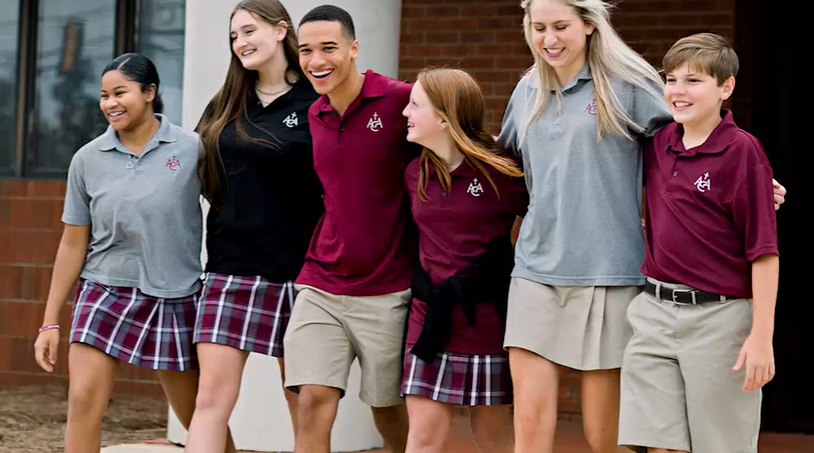
Alabama Christian Academy in Montgomery is one of more than 400 private schools in the state serving more than 85,000 students. The academy has prided itself for giving students the opportunity to experience a Christ-centered education for almost 80 years.
Editor’s note: This article appeared Tuesday on aldailynewscom.
School choice advocates in Alabama say they are encouraged by a recent U.S. Supreme Court decision on private and religious schools and state funding.
The high court ruled 6-3 that it is unconstitutional for Maine’s K-12 tuition support program for private schools to exclude religious schools. Chief Justice John Roberts noted in the majority opinion that although states don’t have to give money for private education at all, they cannot do so while excluding religious schools.
In Alabama, advocates said the decision will be beneficial for Alabamians who are continuing to fight for parents’ right to choose their children’s schools.
“I think it shows that the right thing to do is to fund children, not school systems,” said Rep. Charlotte Meadows, R-Montgomery about last week’s decision. “It clears the way for us to have a school choice act that doesn’t get caught up in a lawsuit.”
Alabama lawmakers in recent years have proposed taxpayer money be used to send children to private schools. The latest of these attempts was the Parents’ Choice Act sponsored by Sen. Del Marsh, R-Anniston, and Meadows. The bill, which Marsh called “the mother of all school choice bills,” ultimately failed during the 2022 legislative session.
The Parents’ Choice Act would have created education savings accounts where parents could keep a certain amount of money that they would’ve paid in taxes for public education and use it to fund their child’s schooling at the institution of their choice.
To continue reading, click here.
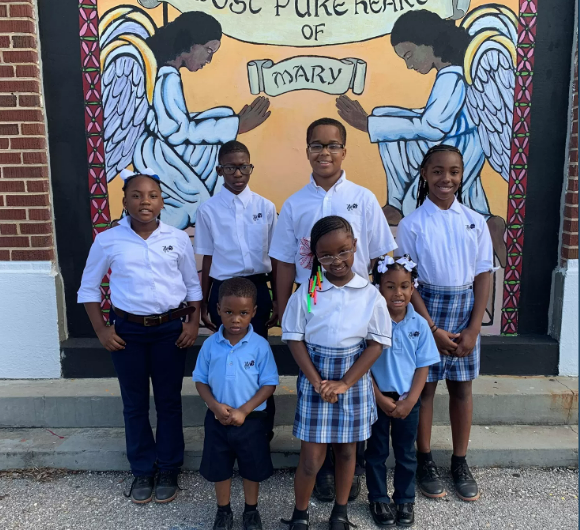
Heart of Mary Catholic School is a gospel faith community celebrating Catholic African American heritage, empowering youth to be gospel witnesses through faith-building programs. Students who are not eligible for Alabama Opportunity Scholarships can apply for a Heart of Mary Scholarship.
An Alabama parochial school that played an important role in the nation’s civil rights movement and recently was threatened with closure now will stay open.
Heart of Mary Catholic School, which has operated for 121 years in Mobile and serves primarily Black students, will continue to operate with an independent governing board, according to officials of the Archdiocese of Mobile.
“After thoughtful conversation among all responsible parties, with support of the Archdiocese of Mobile, some national and local Heart of Mary School alumni have offered to take responsibility for the continued existence of Heart of Mary Catholic School in Mobile, Alabama,” read the Archdiocese’s announcement.
The school was slated to close at the end of the 2021-22 school year due to declining enrollment, but alumni and supporters started a fundraising campaign that took in more than $450,000. The school’s alumni include former U.S. Labor Secretary Alexis Herman and Maj. Gen. Gary Cooper, the first Black person to command a Marine combat infantry company in Vietnam.
Former U.S. Surgeon General Dr. Regina Benjamin, who served during the Obama administration, did not attend the school but gave $10,000 to the campaign.
“I am overjoyed by the fact that Heart of Mary School will continue to remain open,” said Nick West, a computer software engineer and volunteer tutor who attended the school with assistance from the Alabama Opportunity Scholarship Fund. West, who was recently featured on a reimaginEDonline podcast, said his nieces and nephews have also benefited from attending the school.
The good news for Heart of Mary comes amid reports that enrollment at Catholic schools, which suffered declines for years nationally and endured a rough 2020-21, are experiencing a rebound. The latest report from the National Catholic Education Association showed an increase of more than 3.5% during the 2021-22 school year.
Florida, which has fared better over the years due to the wide availability of education choice scholarships, outpaced national enrollment figures with a 6.3% increase during 2021-22, the biggest jump of any of the 10 states with the largest Catholic school enrollments. The numbers were so good, that Archdiocese of Miami schools superintendent Jim Rigg described the trend as “the Great Registration.”
“Heart of Mary is a means of providing a quality education to students who otherwise would have been forced to attend a public school that didn’t fit their needs,” West said. He added that the Alabama education choice tax-credit scholarship program, which recently began accepting new students, will help boost enrollment at Heart of Mary and other schools and provide a high-quality education not otherwise available to families of modest means.
“I hope that increased support of the school choice movement will allow other schools like Heart of Mary to continue to serve students by providing students with a quality education that they wouldn’t have otherwise,” West said.
Heart of Mary was established in 1901 when Alabama adopted a white supremacist constitution to disenfranchise Black and poor white people. The school and its parish became a meeting place for Black people during the civil rights era.
Priests and nuns joined in marches and other demonstrations to support the Black community. You can see a video about the history of the school here.
School Board director Karlos Finley, who attended Heart of Mary starting in kindergarten, said it was a community that stood on the right side of the civil rights movement. He said no other churches would allow the Neighborhood Organized Workers, the leading civil rights organization in Mobile, to meet at their church. Heart of Mary was a staple in the community for those who felt like they had nowhere else to go to express their rights.
“The nuns and priests actually protested along with those civil rights workers and went to jail with them when they were arrested protesting in 1968 at the America’s Junior Miss contest,” Finley told WKRG-TV. The protest happened at the same time as the nationally televised pageant was held at Mobile’s new municipal auditorium to protest the lack of Black managers at the facility.
In 2021, the school adopted a new learning model as part of its strategic plan that allows faculty members to work in teams and focus on teaching their top two areas of expertise, established a corps of community volunteers to teach electives as “adjunct faculty,” and launched a new after-school program.
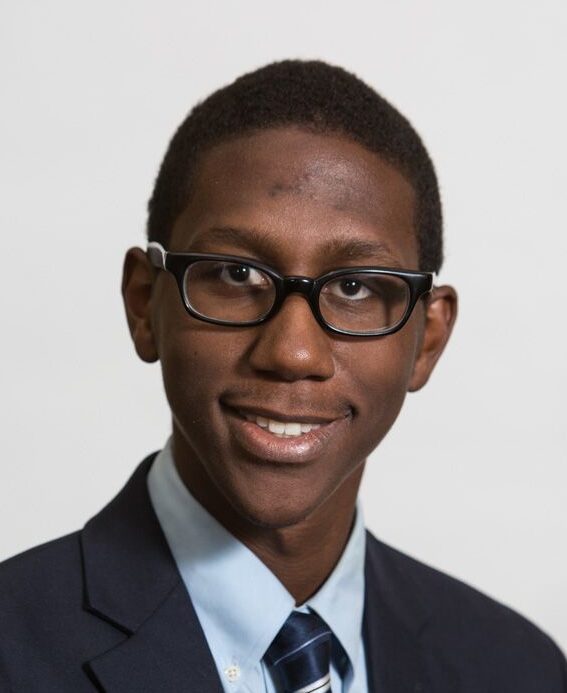
Nick West, recipient of an Alabama Opportunity Scholarship
On this episode, reimaginED senior writer Lisa Buie talks with Nick West, a Mobile, Alabama, resident who works for Siemens Digital Industries and is pursuing a doctorate at Purdue University.
West, who attended private elementary and secondary schools, talks about how the Alabama Opportunity Scholarship program made it possible for his mother, a single parent of five boys, to send four of them to a school that was the best educational fit for them. Without the scholarship, West says, it would not have been possible for him to remain at his Catholic high school.
“There’s nothing wrong with the public schools, in general. It’s just that I feel like every child has different needs, and parents should be able to have their choice, to pick whatever school is necessary to meet their child’s needs. I am where I am today because I went to private schools. We should be funding students, not systems.”
West tells how two of his brothers were born with unique abilities, forcing his mother to leave her job so she could care for them at home, and recalls how he always studied hard because he was aware of his mother’s sacrifices.
Now a successful young adult, West volunteers as a part-time computer teacher at his former school.
He also has worked with the American Federation for Children on policy issues, bringing awareness to his fellow Alabamians of the scholarship program and alerting them to when new applications are being accepted.
EPISODE DETAILS:
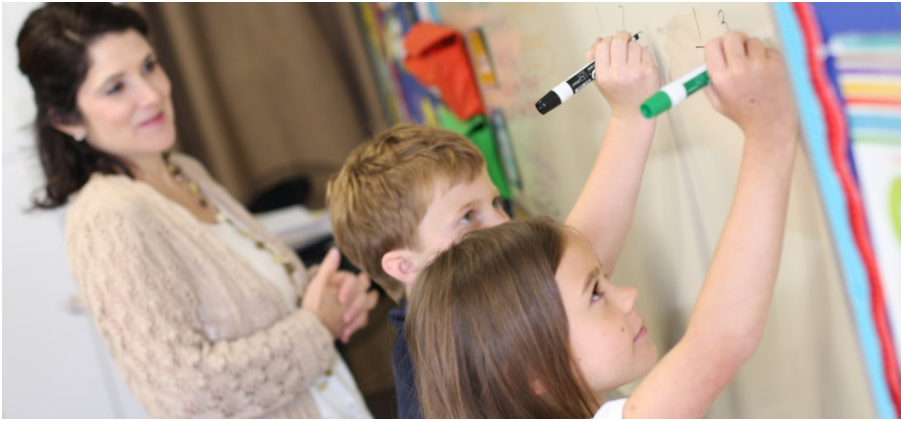
Eastwood Christian School, one of 417 private schools in Alabama serving just over 80,000 students, places its educational emphasis on the “trivium” – grammar, logic, and rhetoric – taught from a Biblical worldview.
Editor’s note: This article appeared this morning in the daily newsletter of the Energy Institute of Alabama.
Sen. Dan Roberts, R-Mountain Brook, led legislation passed yesterday by the Alabama State Senate amending the Alabama Accountability Act of 2013 to increase the income tax credit claimed by an Alabama taxpayer.
“Since the Accountability Act was passed into law in 2013, it has been a resounding success raising over $176 million from the private sector to provide for educational opportunities that students otherwise could not afford,” said Roberts. “However, private sector funding of Scholarship Granting Organizations (SGOs) has ebbed and flowed over the years for various reasons, including changes in the federal tax code.
“One of the most important elements of this bill is that it allows SGOs to have financial consistency in their budgeting and planning. This means that once a child is accepted into a participating school, the parents will have the peace of mind now in knowing that their child’s scholarship will be there to support them for years to come.
“The Alabama Accountability Act creates life-changing situations for students and their families, enabling an opportunity for school choice and enhancing the quality of life and learning for so many Alabamians. More than 97 percent of students who receive these scholarships renew them annually. That statistic alone is a true testament to the meaningful benefits this program offers to our school children,” Roberts continued.
To continue reading, click here.
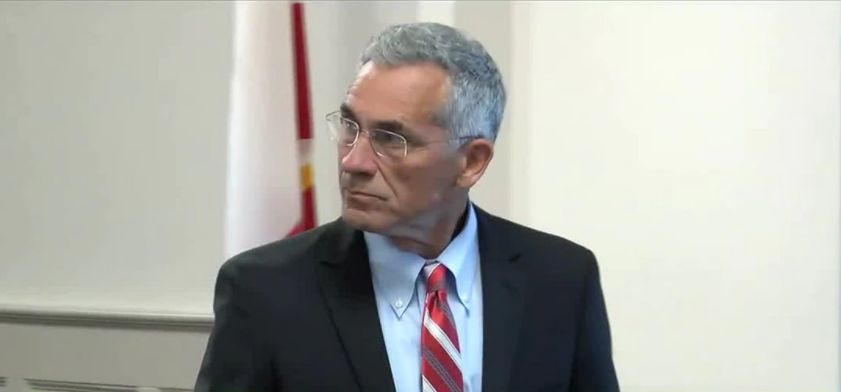
Alabama Republican Sen. Del Marsh is the voice behind the Parent’s Choice Act, which would provide state-funded education savings accounts to families to expand their education choice options.
Editor’s note: This article appeared last weekend on reason.com.
A comprehensive Alabama school choice bill is stalled in an Alabama Senate study group following objections from legislators and public school advocates.
The Parent's Choice Act, introduced by Sen. Del Marsh, R-Anniston, would provide families with state-funded education savings accounts that could be used to pay for private school tuition, standardized test prep, and homeschooling, among other qualifying education expenses.
Because SB140 would use public education dollars to empower families to leave their local public school, the bill has faced considerable backlash from public school defenders, with Sen. Kirk Hatcher (D-Montgomery) describing the Parent's Choice Act is an effort to "dismantle public education."
The Alabama Education Association, which represents public school teachers, released a statement alleging that "The Parent's Choice Bill is nothing but a shell game of a voucher program to divert funding from our community schools." The group added that "Alabama's students and educators cannot afford to take almost a half a billion-dollar hit from public education."
The bill has also faced considerable opposition in the Alabama Senate, where it's been assigned to a study commission, where some objections may get ironed.
To continue reading, click here.
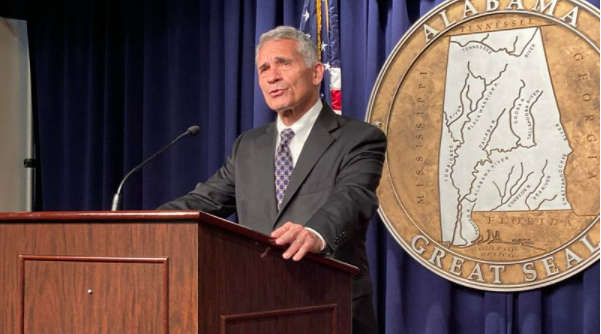
Alabama Sen. Del Marsh, in advocating for the Parents’ Choice Act, said there is an overwhelming desire on the part of parents in Alabama and across the country to make decisions for their children’s education.
Editor’s note: This article appeared Sunday on al.com.laba
A school choice bill that could give Alabama parents $5,500 in state funds to send a child to private school is headed to a study group for negotiations after opposition from some education organizations and lawmakers.
Republican Sen. Del Marsh said the Republican majority leaders have put together a group to look at his legislation. He said he is optimistic they can develop a compromise.
The Parents’ Choice Act, as introduced by Marsh, would establish a path for parents to tap state money normally used on their child’s public school education — about $5,500 per student per year — and use it to pay for private school, a public school outside their district, home schooling expenses or other alternate education paths.
The program would cost up to $537 million annually, according to an estimate from the Legislative Fiscal Office.
Marsh, who has been a vocal proponent of school choice options during his time in the Alabama Legislature, said the state’s constantly lagging test scores show a drastic change is needed.
To continue reading, click here.
 Editor’s note: The following announcement has been added to the website of the Alabama Policy Institute, which for more than 30 years has advocated for public policy solutions throughout the state.
The Alabama Policy Institute has announced the addition of SB140, a school choice bill sponsored by Sen. Del Marsh (R-Anniston), that would create an education savings account program in Alabama, to its legislative scorecard, the API Watchlist.
“For over eighteen months now, we’ve watched as states around the country have increased school choice for their residents,” API president and CEO Caleb Crosby said. “Alabama now has the opportunity to join them and provide hope for thousands of children stuck in failing schools or schools that do not meet their individual needs.”
Even so, there will be ample opportunities for the bill to be stripped of impact in the legislative process. API has determined the following are non-negotiables and should remain in the bill throughout the process.
First, the approved educational expenses must continue to include non-public schools, online tuition, tutoring, and curriculum. A version of this bill that limits the program to public schools could easily be substituted. Passing such a version would be no success and bring little hope to those looking for a way out of their current school.
Second, the program must not be further staggered in its eligibility provisions. Ideally, the program would immediately be open to all of Alabama’s students. As currently written, there is a three-year staggered eligibility period. This is a reasonable time frame for a new program. Further lengthening this period, however, would serve little positive purpose.
Third, the funding level must continue to be equal to the amount the state spends on students in the public system. Decreasing this number or tying the funding to another measure would hinder the effectiveness of the bill and offer opportunities for parties with sinister motives to weaken it.
Lastly, the bill must not impose excessive and new regulations on non-public schools that agree to participate. As in the bill’s current version, schools must not be penalized for or forced to change their creed, practices, admission policy, tuition, hiring policy, etc., if they participate in the program.
“If these non-negotiables make it through the legislative process, the future of Alabama is certain to be brighter,” Crosby continued. “With the teachers union overrun with lobbyists and money to oppose such a measure, however, getting this act to the governor’s desk will be a tall task. But the impact – the tens of thousands of students today and in the future whose lives will be unmistakably made better – will be worth the effort.”
SB140 and its companion bill in the house, to be sponsored by Rep. Charlotte Meadows (R-Montgomery) will be considered a ‘Yes’ vote on this year’s legislative scorecard, the API Watchlist.

