After more than a decade working in education reform I learned long ago that if I stopped to kick every snapping dog along the pathway, I would never arrive where I needed to go. But every now and then I read something, such as Diane Ravitch’s latest op-ed on CNN.com, and have to take a breath and ask “Really?” One of my earliest resources as I was starting in education reform back around 2000 was her book, “Left Back: A Century of Failed School Reforms.” But now it appears she’s utterly abandoned that historical analysis in favor of status quo incrementalism and apologies for failure.
Let’s just think about Dr. Ravitch’s assertions:
The NAEP test scores of American students are at their highest point in history: for black students, white students, Hispanic students, and Asian students.
They are at their highest point in history in fourth grade and in eighth grade, in reading and math.
I tend to agree with Dr. Ravitch that the National Assessment of Educational Progress (NAEP) test is the most valid measure of academic performance. But why is that? Primarily, as my American Center for School Choice colleague, Alan Bonsteel, recently reminded us, it is because most states have catered to their own self-interest, aligning examinations to weak standards to give the appearance of academic achievement rather than actually increasing the amount of learning necessary for student success in this century. So for most of the last 10 years, under No Child Left Behind, we permitted widespread creation of dysfunctional and often meaningless standards aligned to dysfunctional and meaningless tests. Logically, this history does not make for a persuasive indictment of the value of legitimate standards and assessment tools.
But beyond that, let’s look at Dr. Ravitch’s assertion:
The “highest point in history” while true, is relative to what?

With the exception of the Asian/Pacific Islander group, I doubt anyone is throwing a parade for the educational system’s accomplishments over the last 20 years. Are 7-point gains over 20 years for African-Americans and Hispanics and a 9-point gain for white students really the kind of progress we expect after multiple billions of real increased educational spending? Yet this seems to be what Dr. Ravitch finds acceptable performance. (more…)
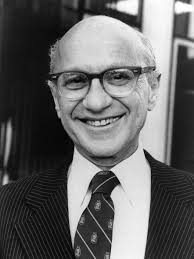
Milton Friedman
Colleagues in the American Center for School Choice have convinced me to add a more personal note to my recent 100th birthday blog about Milton Friedman. They ask that I describe my connections with - and occasional disconnections from - the great man. I am honored to be consulted and hope to contribute light sans heat. Though there is no avoiding one’s perceptions of human limits, correct or otherwise, my aim here will be neither to praise Caesar nor to pester him. Our 40-year acquaintance centered on a very public issue - that of subsidized school choice. The civic importance of this question justifies a story or two and, inevitably, a rough and rambling interpretation of our own relationship.
These stories could bear on the historic and continuing question of whether Friedman’s free market style of argument was the most efficacious to advance his own project. It is just possible that his prodigious contribution might best be honored today by considering a shift in the civic and moral mood music supporting our common pursuit of genuine authority and responsibility for less well-off parents.
Milton and I met a half-century ago in Chicago. He taught economics at UC; I taught law at Northwestern. He was maybe 18 years my senior. Milton became a frequent guest on my weekly (unsponsored, largely unheard) radio talk show. Over the air, the two of us would argue about appropriate government responses to the various challenges posed by the young and diverse civil rights movements.
In 1962, I had written what became a controversial report on racial segregation in Chicago public schools for the U.S. Commission on Civil Rights. My head was bursting with solutions for our educational calamities. These solutions included vouchers, but soon it was clear that I was bit more inclined than he toward government guardianship of equal access for poor and black families to schools that would participate in any subsidized system of choice. Milton was opposed to most of what seemed to me rather modest commitments by the school. He was confident that subsidy plus an unfettered market offered the best long-term protection for our civic values.
I think we liked each other. Milton was a tough guy and could be intimidating. Others may recall his classic trick of breaking into the middle of the opponent’s argument with “Excuse me,” and then proceeding to turn the conversation in whichever direction he preferred. But I never felt personally beset. When, later, he became a TV personality (the late ‘70s), Milton, to my glad surprise, invited me to represent the pro side in a TV debate on vouchers. The opponent was, like Milton, my sometime friend—the formidable Albert Shanker. It was fun and altogether coherent.
By then we had both moved to the San Francisco Bay area. I was pushing a popular voucher initiative that Steve Sugarman and I had designed; I was confident that my Friedmanic connection would generate financial support from business folk. We wined and dined with Rose and Milton and their admirers; we invested precious time and what was, for us, considerable capital in the campaign. In the end, to our surprise, Milton successfully urged our targeted business angels to wait for a more appropriate—i.e., less regulated—proposal. They took his advice. We bit the dust.
This turn of events was a bit difficult to digest. (more…)
Much has been written on school vouchers that assumes they are primarily about economic efficiency and increasing the private sector’s role in education - a notion of educational choice that is widespread, understandable … and grossly incomplete.
Fifty years ago, the 18th Century idea of subsidized parental choice was reintroduced as a sub-species of free market theory. To choose a school became equivalent in form and in our discourse to the private procurement of insurance or apples; the parties exchange promises, then they perform.
There is truth to this; the school and the parent do make mutual promises that, by and large, the law will enforce. But to reduce parental choice to a simple bargain has been a tragic contraction of thought - an intellectual and political calamity. Any such contract to educate a child is profoundly more complex than the exchange of promises between A and B. Whether subsidized parental choice is a good idea thus is left an unintelligible question; it cannot be reduced to arguments for and against freedom of contract because children are not free.
This is a decree of nature itself. “Choice” is grown-up dominance of the child. This holds whether the deciding adult is a parent or a government stranger; one or the other will assign Susie to a school. The social and political issue, then, is more complex than a preference for or against free contract. Here in America the question is this: Should government continue to decide for children of have-not families, while the rest of us - as a matter of right - send our children to our own favorite school, whether public, private, or religious? (more…)
Editor’s note: America isn’t the only place where school choice raises questions about not only education, but pluralism, citizenship and social integration. Noted school choice expert Charles Glenn, a Boston University professor and American Center for School Choice associate, writes that European countries with far more evolved choice systems continue to wrestle with these issues – but have no reason to fear faith-based schools.
 Early in June I was one of the speakers at a conference on educational freedom in The Netherlands and Flanders (the Dutch-speaking part of Belgium). It is no exaggeration to say these are the poster children of “school choice,” the two areas where its implications have been worked out most fully over the past two centuries (see my Contrasting Models of State and School, Continuum, 2011). Today, upwards of two-thirds of pupils in this area of some 23 million inhabitants attend non-government schools with full public funding.
Much of the discussion among the participants was about the details of how schools have been able – or not – to preserve their independence in the face of government regulation. I will not try to summarize that discussion here, except to note that as always the devil is in the details and we can learn a great deal from the experience over many decades of the interaction between schools seeking to maintain a distinctive religious or pedagogical character and government officials seeking to impose common standards. (The updated 2012 edition of Balancing Freedom, Autonomy, and Accountability in Education will include, in four volumes, detailed descriptions of how this relationship plays out in nearly 60 countries, most of them written by leading education law experts from each country, including these two.)
My own contribution at the conference was to raise openly what is beginning to be debated in Belgium and The Netherlands: is educational freedom still relevant, given changing circumstances? Is there still a need for schools not owned and operated by government and promoting worldviews that are in contrast with that of the societal majority? And, is the growing societal pluralism created by immigration an argument for or against such schools? Some, in fact, have claimed that the justification for non-public schools no longer exists because (a) some of them have ceased offering a truly distinctive education as a result of secularization, and (b) to the extent that they actually distinctive, they are a barrier to the social integration required in the face of the growing presence of Muslims in Western Europe.
My paper confronted head-on the widespread fear, among European elites, of strongly-held religious views, and argued that in fact “communities of conviction” make an essential contribution to the health of civil society. I cited research on faith-based schools in the United States to show they have by no means had a divisive effect or made their students unfit for active and positive citizenship. (more…)
Editor's note: This is the second of two posts we're running this week to commemorate the landmark U.S. Supreme Court decision in Zelman v. Simmons-Harris.
 As we commemorate the 10th anniversary of the landmark Zelman Supreme Court case, its implications are widely visible in the expansion of voucher programs, such as those in Indiana and Louisiana, as well as the growth of tax credit scholarship programs from Florida to Arizona. But the primary Zelman principle - that parents can utilize scholarship funding to enroll in any qualified school that they believe will best educate their children - is also at the heart of an important court battle in Douglas County, Colorado.
Conceivably, Zelman could not only lead to the reinstatement of an innovative voucher approach that local school districts could adopt more broadly, but also provide a pillar for arguments to overturn Colorado’s discriminatory and prejudiced Blaine Amendments.
Beginning in June 2010, the Douglas County School District’s School Choice Task Force began a series of community discussions to align its programs with its overarching policy of “universal choice.” The purpose: to create “multiple pathways for educational success” and then to assist families in choosing the best educational program for their child. This led in March 2011 to the adoption of a pilot Choice Scholarship Program (CSP) whereby in the 2011-12 school year up to 500 families could receive either the lesser of a private school’s tuition or 75 percent of the per-pupil revenue the district received. This amounted to a scholarship of $4,575 for 2011-12.
Just before its implementation in fall 2011, the Denver District Court issued a permanent injunction against the program because it caused state funds to flow to religious schools, violating the Blaine Amendments in the Colorado constitution and the Public School Finance Act. The appeal to overturn this decision attracted high-powered support from the Colorado Attorney General, the Beckett Fund for Religious Liberty, the Institute for Justice on behalf of families that had received scholarships, and the school district itself. Zelman is at the heart of their legal briefs.
The Institute for Justice notes that neither the school district nor the state has any role in selecting the school in which the family enrolls, i.e., this is a private choice program that Zelman specifically endorsed as constitutional. Citing the Zelman decision, when a scholarship program “permits government aid to reach religious institutions only by way of the deliberate choices of numerous individual recipients, the circuit between government and religion is broken,” and any “incidental advancement of a religious mission…is reasonably attributable to the individual recipient, not to the government.” This principle of parental choice, which state supreme court decisions upholding voucher programs in Wisconsin and Ohio recognized even prior to Zelman, led an Indiana court this year to reject a challenge to the Indiana Choice Scholarship Program. Yet, for some reason, the Colorado trial court chose to ignore this precedent. (more…)
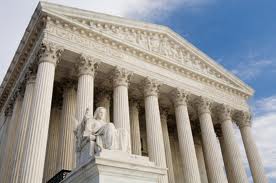 Next week marks the 10th anniversary of the monumental U.S. Supreme Court ruling in Zelman v. Simmons-Harris – the decision that upheld the constitutionality of the voucher program in Cleveland, Ohio and accelerated school choice nationwide by describing the conditions under which parents could use public funds to pay tuition and fees at religious schools. To honor the occasion, redefinED will bring you special posts from our partners at the American Center for School Choice.
On Monday, you’ll hear from John E. Coons, a member of the ACSC board of directors and a professor of law, emeritus, at the University of California, Berkeley. “Do we or don’t we want inner-city citizens exercising their rights over their own children?” he writes. “Why have we made it so hard for them? And even where we do allow them to choose a bit (as with public charter schools), what do we, as a society, gain or lose by excluding religious private schools as one among many choices?”
On Tuesday, ACSC executive director Peter Hanley will weigh in. He takes a closer look at the ongoing court battle over vouchers in Douglas County, Colo., and writes this about some of the legal briefs filed in the case: “Drawing on the historical work of my American Center for School Choice colleagues … the briefs provide a lurid and extensive history of the anti-Catholic bigotry that led to a wave of state constitutional amendments banning funds to support “sectarian” (19th century code for “Catholic”) organizations. They make a compelling case that the trial court not only erred in finding the amendments were violated, but incorrectly ignored this shameful history that means they should be struck down.”
Enjoy.
At every crossroads toward the future, it’s been said, tradition will post 10,000 people to guard the past. For frustrated Californians that see the need for significant change in the education system, a major number of those guardians are found in California’s Democratic-controlled legislature and the California Teachers Association (CTA), which is the state’s largest political contributor. Unfortunately, the problems are not new. I wrote at length on the terrible effects of California’s teacher employment laws and practices back in 2005, attacking tenure, seniority, and the evaluation and compensation systems as damaging to students. The depth of dysfunction in California has been documented repeatedly, perhaps most thoroughly in the 2007 “Getting Down to Facts” report, issued by Stanford University’s Institute for Research on Education Policy and Practice.
One of the key conclusions of the report, based on 22 separate studies it commissioned, was this: Current teacher policies do not let state and local administrators make the best use of the pool of potential teachers nor adequately support current teachers.
Five years later and with virtually no changes to teacher employment, compensation, dismissal, or tenure laws or practices - and no hope of any legislation passing - California’s reformers are following in the steps of great civil rights movements and seeking relief from the courts. In October 2011, a group of families, with support from EdVoice, sued the Los Angeles Unified School District (LAUSD) to force compliance with a mostly ignored California law known as the Stull Act, which mandates among other things that teacher evaluations occur regularly and that they include student performance data.
Even the current LAUSD superintendent admitted in his deposition that “the current system doesn’t best serve adults or students” and does not focus on “the whole part of an education, and that is how students do.” Now the Democratic mayor, Antonio Villaraigosa, has jumped in on the side of the families, filing a friend-of-the court brief insisting on change and noting that LAUSD only evaluated 40 percent of tenured teachers and 70 percent of non-tenured teachers. Moreover, the district’s own task force found “only a tenuous link between evaluations and improved teaching and learning.”
Last month, my colleague at the American Center for School Choice, Steve Sugarman, analyzed the current Reed vs. State of California case that is, at least so far, defeating the “last in, first out” hiring practices that the CTA advocates and most school districts adopt. This policy leads to disproportionate firing of teachers in schools that serve poor neighborhoods and operate in difficult urban areas because the seniority policies of unions and districts place the newly hired teachers at these schools. Thus the trial court found the practice unconstitutionally deprives students of an equal education.
Just last week, lawyers filed on behalf of eight teenage students across the state a third attack on the teaching status quo that demonstrably damages kids. (more…)
Editor's note: This entry comes from John E. Coons, who has championed the cause of school choice for four decades and co-founded the American Center for School Choice. He is Professor of Law Emeritus at the University of California, Berkeley, and with colleague Stephen D. Sugarman is the author of Private Wealth and Public Education. He is our newest host of redefinED.
We founded the American Center for School Choice because we believe a focus on parental empowerment can contribute to a broadening and coalescing of the coalition that seeks to provide the best possible education for children. Simultaneously, empowering parents creates a common good—for the child, the parent, the family, and society.
We begin with the delicate subject of authority—that of parent or of government over the mind of the young. In our culture, authority over thought (or even behavior) has never been a popular premise for argument. But no other way exists; some adult will in fact select a preferred set of skills and values and will attempt, through schooling, to convince Johnny, Susie, Jamal, or Juanita of their truth. Authority is simply a fact.
Whether one is Democrat, Republican, Libertarian, or the National Education Association, we must proceed by asking which big person will decide this issue for some little person. The fact of authority is no exit, but it is instead the necessary entrance to the debate of educators and society about content, values, money, liberty, the best interest of the child, and the common good.
The debate on authority dates from Plato’s vision in the The Republic of an ideal state that would completely disempower parents for a utopian common good and continues up to modern times. But in the U.S., the question of who has authority over the child has been universally resolved in all 50 states in favor of parents. In every state the custodial parent, whether natural or adoptive, holds a very wide ranging legal authority over his, her, or their own child. This sovereignty includes every experience of the child that the parent can physically and intellectually control short of neglect and abuse. It encompasses diet, hours, church, pets, exercise, and television as well as the power to decide who else shall have access to the child. This power to control access and environment includes, again, within broadest limits, the satisfaction of the parents’ obligation to school the child and the child’s own right to be schooled.
This authority has been tested in a steady line of Supreme Court cases since 1925. The parent who is legally fit to govern—99% of our parents—in truth has the right to govern. And the point of the law is not that parents make particularly good decisions for the children; individual mothers and fathers may or may not act in what you or I consider the best interest of the child or society. They are not necessarily good deciders; they are merely the best our culture, law, and history have discovered. They also have accountability in ways that are impossible to the world of American professionals, of doctors, lawyers, educators, and so forth. These people see clients for a time, do their best, wish them well, and head on home. The custodial parent is stuck—for better or worse and maybe for life—with what emerges out of whatever effort is made.
This wide acceptance throughout American society and its legal system of deference to and accountability for parental authority forms the foundation for broadening the support for choice in education. Our current system is an aberration of the way the rest of American life functions. (more…)
Editor's note: As redefinED enters its second year of publication, it has joined an alliance with the American Center for School Choice. Its first post comes from Fawn Spady, the Center's chairwoman, and Stephen D. Sugarman, its vice chairman.
Today the American Center for School Choice begins its exciting partnership with redefinED in a joint effort to focus attention on the importance of empowering parents with the authority to educate their children. The mission of the American Center for School Choice, advocating expansion of public support for families to choose the schools they believe will best serve their children, is rooted in two basic propositions:
The American Center supports the work of the many fine organizations advocating for education reform based on expanding the power of consumers in the educational marketplace and the need for greatly improved academic outcomes. The movement has won significant political victories, but also experienced many defeats.
Our organization’s name was intentionally selected because we believe a strong political center and consequently a broad coalition for school choice exists in a focus on parental empowerment. In placing families first, the Center’s perspective creates a unique and powerful opportunity to expand support for school choice to include greater numbers of political centrists, religious leaders, social justice advocates, and ordinary citizens who are either uninformed or uninspired by current educational reform debates.
Ultimately, we need to create and support good schools of all types to serve the diversity of our population’s needs. We want to deepen public understanding of the benefits, costs and design requirements of a full range of school choice opportunities, including inter- and intra-district choice of public schools, choice through public charter schools, and choice of private and religious schools through publicly funded scholarship and tax credit programs. The American Center for School Choice believes that expanding support for families to choose public, private, or religious schools for their children is a civic and moral imperative.
The Center’s primary activity is education. All families, but especially low-income parents and students who have not been well served historically, benefit when they select the school that they believe will best serve their children. The Center has utilized a variety of media and forums to provide information and analyses to deepen public understanding of the benefits, costs and design requirements of a full range of school choice opportunities. In partnering with redefinED, we have found a kindred spirit where great synergy exists.
Our board, associates, and staff will be regularly contributing their thoughts on where we are, where we hope to go next, and how best to get there. In addition to us, you will hear from Jack Coons, Charles Glenn, Gloria Romero, Terry Moe, Darla Romfo, Alan Bonsteel, Rick Garnett, and others in our network. We all look forward to joining and stimulating ongoing thoughtful and respectful exchanges that have marked redefined since its beginning.
It will take a centrist voice to advance the debate over school choice, and few individuals know that better than Jack Coons and Steve Sugarman of the University of California at Berkeley. The two law professors have thought more about parental empowerment in education during the last 41 years than perhaps anyone else living today, and they have established a rare progressive voice in school choice in an enterprise that has taken root at Berkeley.
That effort is the American Center for School Choice, an advocacy group that recognizes that the power of the marketplace alone in education reform has limited political appeal. “The empowerment of ordinary families will come only as the fruit of a credible coalition of recognized centrists,” the center’s leadership states. To that end, Coons and Sugarman have invited Gloria Romero and redefinED host Doug Tuthill to join them on the board. Tuthill is the president of Step Up For Students, which administers a Florida Tax Credit Scholarship program that today serves more than 34,000 students with bipartisan backing, and he also serves as the Florida coordinator for Democrats for Education Reform. Romero is DFER's California chief and a former Democratic state senator in California.
Those moves are the latest in the center’s ambitions to elevate the national debate over school choice. It has already hosted two national conferences and has plans to assemble more gatherings in the future. It sees choice as a moral imperative and as a public policy that has profound social effects on the poor families who benefit, and it is looking for credible researchers to examine just how profoundly. It sees a role for faith-based schools in a system of public education that is continually setting new precedents of pluralism and diversity, but the center recognizes that only a broad, interfaith coalition of support can advance that discussion (the center also named to the board Robert Aguirre, the chief executive of the Catholic Association of Latino Leaders and appointed Kathy Jamil, the director of the Islamic Schools League of America, to its list of associates).
But while the center has collaborated with more free-market oriented groups who favor liberating the parent and the educator from “government” schools, it knows what is – and isn’t – needed for the school choice movement to gain political traction.
“When our political discourse proposes subjecting education to the same market forces as banks, airlines and electric power, we give aid and comfort to the enemies of school choice,” Coons wrote in a 2001 article in America. “Voters care more about the visible hand of the parent than they do about the invisible hand of Adam Smith. And they are right to do so.”
When Tuthill and Romero addressed the center’s conference in April, the assembly was exposed to two active Democratic voices that have largely been overlooked since the Reagan administration appropriated the quarterback role of school choice from the War on Poverty. But just as Coons and Sugarman framed the idea of choice as equity in 1970, the American Center for School Choice is trying to guide us away from the political extremes and look with clarity and reason on the value of parental empowerment. Look to it as an emerging centrist voice in a conversation accustomed to simple ideological divisions.

