
Sal Kahn, founder of Kahn Academy, has teamed up with a nationally recognized education leader to launch a new venture based on the concept of students learning together. Listen to Kahn talking about Kahn World School here.
Editor’s note: You can read more about Arizona University Academy Prep Digital here.
During the pandemic, traditional schools designed exclusively for in-person instruction found themselves forced to hastily cobble together remote learning programs to get them through the end of the 2019-20 school year.
Many of these life raft programs, which continued into the 2021-22 school year in states that kept campuses shuttered, quickly developed a reputation for failing to engage students, frustrating parents, and contributing to learning losses.
Schools re-opened, yet the stereotype of “Zoom schools” being somehow deficient to in-person education tended to stick – an unfair judgment of established online programs such as Arizona University Academy Prep Digital and Khan Academy, which existed years before the first human tested positive for COVID-19 and were designed to deliver effective full-time education and tutoring.
Now, the two education powerhouses are teaming up to offer Khan World School, a virtual high school that will combine the best elements of both organizations to provide a robust learning environment for students from Nebraska to Nepal.
“Everyone was doing online, but not very well,” Amy McGrath, chief operating officer at ASU Prep Digital recently told Forbes. “But our infrastructure, which has been in design for quite some time, really thrived, and our learners, in fact, outperformed state averages.”
Khan Academy founder Sal Khan strongly agrees with McGrath. He likens their partnership to the nation’s strategic petroleum reserve, observing that the world needs to establish a strong model that can serve everyone during emergencies.
With that in mind, the school will launch in August with 200 ninth-graders who live anywhere in the world. Plans call for other grades to be added. Free for ASU Prep Digital students, the program will be available to other U.S. students for $9,900 annually, while international students will pay $12,900.
Based on concepts discussed in Khan’s 2012 book, “The One World School House,” the new school has three main goals: providing mastery-based learning; putting students at the center of education; and providing community for participants.
Khan said traditional forms of education leave learning gaps that are difficult for students to bridge. For example, a student takes a test, makes 80% and moves on with the rest of the class. A mastery-based system lets students who make 80% continue to learn the 20% they missed.
“You don’t have the gaps that come back to bite you,” Khan said at a recent webinar for parents.
Khan World School will provide student-centered education by allowing students to learn at their own pace and master 100% of the concepts and skills. Students who learn material faster will be encouraged to forge ahead. Those who excel in certain areas will be designated as peer tutors for their classmates.
Flying in the face of the commonly held belief that virtual education leads to isolation, Khan World School students will be divided into groups of 40 for synchronous seminars where they’ll dive into deep discussions and look for ways to solve the world’s most pressing problems. Khan compares these groups to the houses at Hogwarts Academy in the Harry Potter novels.
Meanwhile, groups, called squads, will be limited to five students. The squads will serve as a support system, ensuring collaboration as students navigate their coursework.
And should anyone doubt the rigor of this ramped-up program, all students will be expected to read a minimum of 12 books each year, which they will choose from a wide array of titles. They also will be required to attend tutorials with coaches and have access to guides who will lead the seminars and provide individual support.
“This defies the stereotypes of virtual education,” Khan said. “We are connecting humans even more, I would argue, than in a traditional, physical school.”
The beauty of Kahn World School goes beyond personalization and connection, Kahn said.
“We really hope that this is gong to be the first wave of a generation of learners who can make the world a better place.”
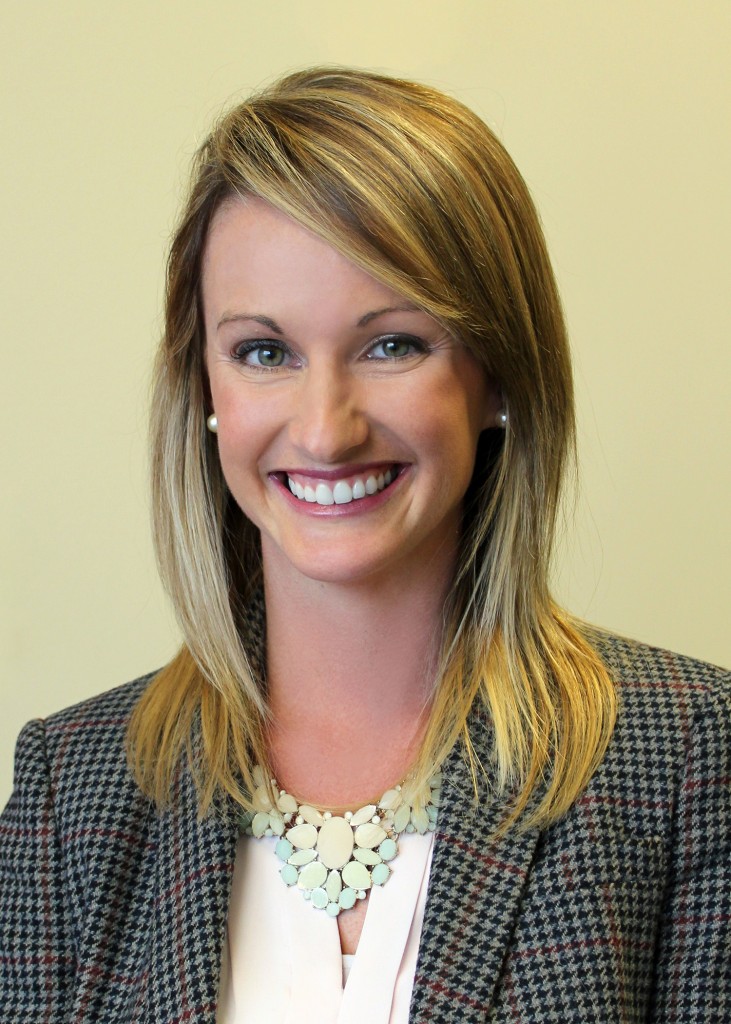
McGrath
Increasingly, Florida's school districts are offering virtual courses and district leaders are talking about adapting to an environment where at least some learning is digital for nearly all their students. At the same time, Florida Virtual School, an institution that helped pioneer these shifts, is recruiting students for a new, physical campus at its Orlando Headquarters.
Some students taking classes with the state's largest online learning provider will soon have a place to meet in-person with teachers and fellow students, where they'll be able to work on projects and receive support.
Amy McGrath, the director of FLVS Campus, explains in a podcast interview that the Florida Virtual School has long tried to "keep up with what the kids' needs are and to stay personalized." After working on the virtual school's in-house research and development for its Innovation Schoolhouse, she says the physical campus is growing out of its search for ways to better accommodate students at a time when even traditional learning is becoming "blended" to some degree.
Right now, it's looking to sign up students who will enroll in ninth grade classes next school year.
From a policy wonk's perspective, the new campus program will be structured and funded much the same as other Florida Virtual School offerings. It's being launched with the help of a grant from Next Generation Learning Challenges, and while they'll have teachers to guide them through their FLVS coursework, its students will be registered for home education (see more details here).
From a student's perspective, as McGrath explains, FLVS Campus is offering something different. It's intended to supplement online lessons with "opportunities to get your hands dirty and have some real-world applications." Students' projects, and the way they spend their time on the campus, will be tailored to their individual learning plans.
"It's going to be very different from your traditional classroom," she says. "You're not going to come in and see the teacher in the front and students sitting down and listening. It's going to be kids just all over the space, doing what makes sense for them at that moment in time."
While Florida Virtual School always wants to position itself as the state of the art in virtual instruction, McGrath noted in a blog post announcing the effort that technology is ultimately just a means to an end. She wrote: "I think our angle is going to give us a head start in blowing up the traditional notion of school—and leverage all we know of personalized learning in order to produce students who are truly college and career ready."

