Vouchers and testing. A new report from the Fordham Institute finds that mandated testing - and even public reporting of test results - isn't that big a concern for private schools worried about government regs tied to vouchers and tax credit scholarships. Coverage from redefinED, Choice Words, the Cato Institute's Andrew J. Coulson and Gradebook. AEI's Michael McShane says Florida's tax credit scholarship program (which, altogether now, is administered by Step Up For Students, which co-hosts this blog) finds the "sweet spot" with its testing and financial reporting requirements: "These regulations don’t sound too crazy to me; they seem to strike a good balance of accountability for safety, fiscal responsibility, and academic performance without being overly dictatorial in how schools must demonstrate any of those."
 Shooting rockets. Senate President Don Gaetz tells the Associated Press that Florida needs to slow down on ed reforms until it rights the new teacher evaluation system and other changes in the works: "We need to quit shooting rockets into the air. We need to give schools and school districts, teachers and parents time to institutionalize the reforms that have already been made. We need about a two-year cooling off period."
Ford Falcons. Schools need competition. EdFly Blog.
School choice. Education Commissioner Tony Bennett says at a National School Choice Week event in Tampa that some Florida districts deserve credit for expanding public school options such as magnets and career academies, reports redefinED. More from Tampa Tribune.
Charter schools. The National Alliance for Public Charter Schools ranks Florida fifth for its charter laws. SchoolZone. Gradebook. South Florida Sun Sentinel. StateImpact Florida. The Pinellas school district postpones a decision on whether to close a long-struggling Imagine school in St. Petersburg, reports the Tampa Bay Times and Tampa Tribune. The Volusia district's decision to shut down a struggling charter in Deland is headed to appeals court, reports the Daytona Beach News Journal. (more…)
Editor's note: Blog stars is our occasional roundup of compelling, provocative or just downright good stuff from other ed blogs (although sometimes we throw in op-eds from newspapers and magazines, too). Enjoy.
Geoffrey Canada: Death to Education Reform
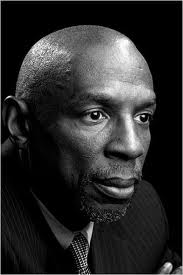
Canada
To know me is to know that no one feels more strongly than I do about the importance of transforming our current absurd, destructive educational system.
But the way education reform advocates are going about it is wrong. The problem is that you’re never going to get people motivated to be awesome teachers if they’re part of a giant bureaucracy. The only way you’re going to get people to be motivated to be awesome teachers is, yes, if you give them enough money, but also if they are part of a STRUCTURE and a CULTURE that breathes this kind of achievement and rewards it–rewards it not only financially, but also through an environment that encourages it every day. Why do small startups kick the ass of giant technology companies every day? It’s because, yes, these startups have payoffs, but anyone who knows them will tell you that what really makes them tick is the fact that they are small, tight-knit, and everyone is extremely focused. Information loops close really fast. It’s also what made Harlem Children’s Zone a success. It’s what makes neoliberal attempts to “reform” schools centrally via spreadsheet fail.
The only way you’re going to get good schools, in other words, is if you have a system where the people who have the biggest stake in the education, also have a very direct say in how things are run.
To put it another way, you need radical decentralization and a radical shift to power to parents and children in how schools are run. This can be accomplished through vouchers or through other means. (I actually have my misgivings about vouchers, for a bunch of complex reasons, but I’ve come to believe decentralization really is the key.) You could have a 100% public system if it was also structured so as to enable choice and competition. But the crucial thing is to let a thousand flowers bloom. Full post here. (Image from the thebestschools.org)
Andrew J. Coulson: Uh ... the 'Quality Controlled' Schools Are Worse
Sunday’s Washington Post ran a story titled “Quality controls lacking for D.C. schools accepting federal vouchers.” These are the particular failings chosen for the story’s lede:
schools that are unaccredited or are in unconventional settings, such as a family-run K-12 school operating out of a storefront, a Nation of Islam school based in a converted Deanwood residence, and a school built around the philosophy of a Bulgarian psychotherapist.
It is remarkable that more serious transgressions were omitted. Why not mention the schools in which current and former staff brawl in the parking lot, or students start vicious fights at sporting events? Why not discuss the schools spending nearly $30,000 per pupil annually and yet graduating barely half of their students on time?
The reason the WaPo didn’t mention them is that they are not voucher schools. (more…)
Editor's note: Here's our latest round-up of interesting stuff from other ed blogs.
Rick Hess Straight Up: Self-Pitying Tantrums Are Poor Way for Educators to Win Friends, Influence People
 Fact 1: Teachers feel like they're getting a bad rap in the public discourse.
Fact 2: I've long since stopped reading the comments proffered on RHSU.
What in the world do these two statements have to do with each other? I think it's simple. Self-proclaimed advocates of educators and public education have become so vitriolic, mean-spirited, arrogant, and unreasoning that it's becoming inane to anyone who's not a fellow true believer. This means that they're poorly positioned to convince Americans, and painfully uninteresting to anyone who doesn't agree with them already. ...
I was enamored by the self-identified teacher who wrote, "I honestly wonder what you're doing, writing about a profession that you so clearly despise. I also wonder about the integrity of Education Week, since it keeps publishing more and more hit-pieces by people like you, who openly brandish his anti-union, anti-public education, and anti-public school teachers attitudes, just to satisfy the whims and expectations of sponsors such as the Gates foundation and others...Unlike hacks like you, we can not charge over time, or demand to be payed [sic] by the column, or the word. You sir, are the worst kind of demagogue, attacking a noble profession, while disguising your broadsides as concerns over our benefits." Another wrote, "Well, Rick anyone can blog on and on about the virtues of deceit. Pity the folks in Wisconsin who couldn't quite get it together to alter the lopsided equation." Truthfully, I'm not even sure what this means. Full post here.
Cato@Liberty: State Rep. Balks at Voucher Funding for Muslim School
Just as Louisiana’s legislative session was wrapping up earlier this month, state Rep. Kenneth Havard refused to vote for any voucher program that “will fund Islamic teaching.” According to the AP, the Islamic School of Greater New Orleans was on a list of schools approved by the state education department to accept as many as 38 voucher students. Havard declared: “I won’t go back home and explain to my people that I supported this.”
For unreported reasons, the Islamic school subsequently withdrew itself from participation in the program and the voucher funding was approved 51 to 49. With the program now enacted and funded, nothing appears to stand in the way of the Islamic school requesting that it be added back to the list, and it is hard to imagine a constitutionally sound basis for rejecting such a request.
This episode illustrates a fundamental flaw in government-funded voucher programs: they must either reject every controversial educational option from eligibility or they compel taxpayers to support types of education that violate their convictions. In either case, someone loses. Either poor Muslims in New Orleans are denied vouchers or taxpayers who don’t wish to support Muslim schools are compelled to do so.
It doesn’t have to be that way. Read post here. (more…)
Editor's note: After redefinED posted Howard Fuller's comments about universal school choice, we asked the Cato Institute's Andrew J. Coulson for a response, which we published last week. To keep the debate going, we asked Matthew Ladner, senior advisor of policy and research at the Foundation for Excellence in Education, for his take. He generously offered the following.
 My friends Howard Fuller and Andrew Coulson started a needed discussion regarding the direction of the parental choice movement. Dr. Fuller has been quite outspoken in his opposition to universal choice programs in recent years, and Coulson raised a number of interesting and valid points in his redefinED piece. The parental choice movement has suffered from a nagging need to address third-party payer issues squarely. It’s a discussion that we should no longer put off. The example of American colleges and universities continues to scream a warning into our deaf ear regarding the danger of run-away cost inflation associated with education and third-party payers.
Howard Fuller and Andrew Coulson also indirectly raise a more fundamental question: where are we ultimately going with this whole private school choice movement? Dr. Fuller supports private choice for the poor and opposes it for others. He has concerns that the interests of the poor will be lost in a universal system. I’m sympathetic to Howard’s point of view. I view the public school system as profoundly tilted towards the interests of the wealthy and extraordinarily indifferent to those of the poor. We should have no desire to recreate such inequities in a choice system.
Andrew makes the case that third-party payer problems are of such severity that we should attempt to provide public assistance to the poor through a system of tax credits, and have other families handle the education of their children privately. Andrew’s proposed solution to the very real third-party payment issues is in effect to minimize third-party payment as much as possible, and to do it as indirectly as possible through a system of tax credits.
Despite the fact that Howard comes from the social justice wing of the parental choice movement and Andrew from the libertarian right, they agree that private choice should be more or less limited to the poor.
My own view is different from both Howard and Andrew’s. I believe the collective funding of education will be a permanent feature of American society and that it should remain universally accessible to all. I believe Howard’s real concerns over equity and Andrew’s real concerns over third-party payment can be mitigated through techniques other than means-testing. (more…)
Editor's note: After posting Howard Fuller's concerns about universal vouchers last week, we asked Andrew J. Coulson, director of the Cato Institute's Center for Educational Freedom, to offer his perspective.
 It’s not hard to see why Howard Fuller might be skeptical of universal government education programs. Public schooling is one such program and it has done an atrocious job of serving the poor. But is its universality the cause of its failure? Fuller believes that the poor are forgotten and given short shrift under universal programs and that the wealthy are favored by them. If that were the case in public schooling, we would expect schools serving the poor to receive less funding than those serving the wealthy. In responding to Fuller, Matthew Ladner contends that this is indeed the case: that public schooling “systematically distributes more money per pupil” to wealthier kids.
Actually, though, that doesn’t appear to be true. According to the federal Department of Education’s Condition of Education 2010, Indicator 36-1, districts with the poorest students are the highest spending. Public schools serving these students are not atrocious because they are underfunded, they are atrocious despite the fact that they are the best funded districts in the nation.
Having voted to raise public school spending relentlessly for generations, and having chosen to direct the highest level of per-pupil spending to the poorest children, it is hard to believe that Americans are indifferent to the education of the poor.
A more plausible explanation of the facts is that Americans would love to see their poorest countrymen thrive educationally but don’t know how to make that happen. For generations they have been told by the media, academics, and political leaders that the solution is higher spending. They have gone along with that recommendation and it has failed utterly. A few are finally beginning to realize that, but they still don’t know how to improve matters.
But the school choice movement believes it does know the cause of the problem: the lack of alternatives. Middle and upper income families find it easier to pay for private schooling or to relocate away from the worst public schools. They have alternatives that the poor do not. As a result, they get better service. The movement’s solution is thus to ensure that everyone has alternatives.
And this brings us back to Fuller’s claim: that the poor will be better served by a school choice program targeted exclusively at them. Is he right? In answering that question, it helps to consider a few facts and distinctions that are usually overlooked:
• First, there is a difference between universal access to the education marketplace and universal participation in a government program;
• Second, tiny markets are dramatically inferior to vast ones;
• And third, it actually matters who is footing the bill for a child’s education.
Saying that everyone should have educational choice is not the same thing as saying that everyone should participate in a particular government program. (more…)

