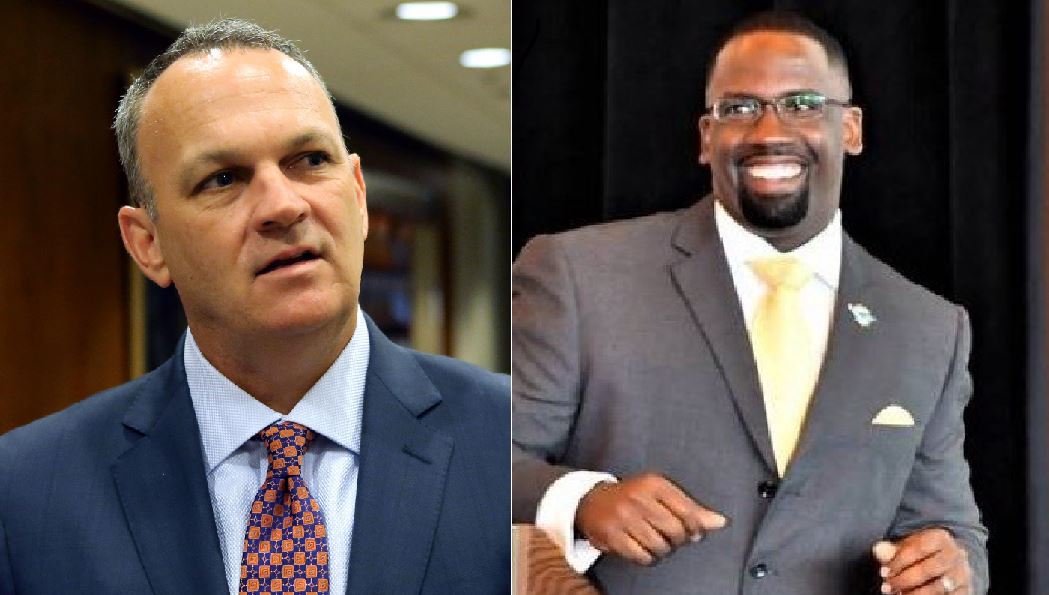
Richard Corcoran is the new Commissioner of Education. Fedrick Ingram is the new President of the FEA. Both have publicly signaled an interest in working together.
A day after the Florida Board of Education unanimously approved former House Speaker Richard Corcoran to be Florida’s new Commissioner of Education, the new president of Florida’s state teachers union extended an olive branch.
Florida Education Association (FEA) President Fedrick Ingram told the Tampa Bay Times: "We want to work with anyone who wants to empower our public schools…If we have to consult, work with and possibly collaborate with Mr. Corcoran, we will certainly do that to the extent possible, if Mr. Corcoran wants to do that…What I want is genuine conversation, policy talk about what can empower the classroom, what can empower student success…We teach our kids, if you have differences, you sit down, you talk it out…We will not agree on everything. But there has got to be some common ground."
Commissioner Corcoran quickly embraced Ingram’s invitation: "I've always had an open mind. I've always had an open door…The focus needs to be on providing our school children … the best world-class education possible. Anybody whose motivation is that, I'll sit down and meet with them."
I hope Ingram and Corcoran find time to talk. If they do, a dialogue I facilitated over a decade ago on behalf of the Collins Center for Public Policy might inform their discussions.
From 2006-08, John Kirtley, the founder and board chair of Step Up For Students (SUFS), met periodically with the FEA leadership, which at the time included President Andy Ford, Executive Director Aaron Wallace, and Public Policy Director Jeff Wright.
They began by getting to know each other. John talked about the great experiences he had in district schools growing up, Andy talked about how important attending Catholic schools was for him, and Jeff jokingly asked John where his horns were since everyone in FEA assumed he was the devil.
By their Jan. 25, 2007 meeting in Orlando, the group had agreed to a list of shared beliefs:
“We share a passion for all students being successful in school and being properly prepared to be successful in life, especially those urban, low income and minority students who may have fewer resources and opportunities available to them.
“Blaming individuals or institutions does not help educate students, nor does a public versus private school debate. Choice programs based on blaming ’failing public schools’ only serve to divide us.
“We need sufficient diversity in our learning environments to ensure the needs of all children can be met. All parents should have the right and ability to match their children with the learning environments that best meet their needs. A school or program that works for one student may not work for another student.
“All schools receiving public funds should serve the public good and be fiscally and academically accountable for how those funds are spent.”
On Feb. 9, 2007, the group met again in Washington, D.C., at a National Education Association gala fundraiser. The FEA leaders took John around and introduced him to several key NEA national and state leaders. Although more than a few eyebrows were raised, the NEA leaders were classy. John received a warm welcome.
On March 7, 2007, FEA’s Communications Director Mark Pudlow issued the following public statement on behalf of Andy Ford and John Kirtley:
“After years of stereotyping and talking past each other, we recently sat down and started talking to each other. Turns out we have many common values and aspirations, most notably our passion for insuring all children — especially low-income children -- receive the high quality education they need and deserve.
“While our talks are still in the early stages, we have made good progress in a short time. We are not naïve about the challenges ahead, but we are determined to resolve our previous disagreements and reach consensus on short and long-term initiatives that will help all students. Reducing Florida’s achievement gap is a moral imperative that we are committed to tackling together.
“We know we can accomplish more for children together than we can separately. These are hopeful times.”
By this point, the sense of hope and possibility within the group was high. They decided it was time to turn their words into actions. They agreed on a win-win compromise and asked Marshall Ogletree, a member of Wright’s legislative team, to turn their compromise into legislative language.
FEA would support Florida’s tax credit scholarship program, which enables low-income children to attend private schools or public schools in another school district. In exchange, Kirtley and the education choice community would support a pilot program allowing district choice schools to operate under the same regulatory accountability as private schools serving scholarship students. The group thought the balance between regulations and consumer choice in the accountability system for scholarship schools might work well in district choice schools. Kirtley also agreed to support a provision that redirected all the cost savings from the tax credit scholarship program to these district choice schools.
Soon after the 2007 legislative session opened in March, Ford, Wright, and Kirtley met with Senate President Ken Pruitt to present their legislative proposal. Sen. Pruitt opened the meeting by joking that he assumed there was a scheduling error when he first reviewed that day’s meetings. That Kirtley and the FEA leadership would be in his office at the same time presenting a joint proposal didn’t seem possible. And yet, here they were.
Sen. Pruitt listened politely, encouraged the group to keep at it, but was noncommittal. My sense watching the discussion was that he was somewhat intrigued, but skeptical the group could pull this off.
Kirtley next began sharing the proposal with other key political leaders. A few were hostile since the proposal rolled back some of the increased regulations on district schools that had only recently been enacted. But most had the same response as Sen. Pruitt. They were intrigued but skeptical the group could follow through.
A common theme Kirtley heard was that leaders wanted a more public commitment, especially from the FEA leadership. The FEA had developed a reputation in Tallahassee for making private commitments that they later back away from in public.
John was talking to the FEA about Andy Ford speaking at an April 12 education choice rally at the capital. If Ford made a public statement supporting the group’s proposal, key political leaders said they would publicly support the proposal.
Kirtley formally invited Ford to speak at the April 12 education choice rally, a draft speech was circulated, and then we waited to see how the internal discussions within the FEA would unfold. Ford eventually declined to speak at the rally or make any public statements supporting the proposal. Jeff Wright did come to the rally and stood in the back with me. The group’s legislative compromise was now dead.
When I accepted Kirtley’s invitation to become SUFS’s president in August 2008, my role changed from group facilitator to being SUFS’s primary point of contact with the FEA. Jeff and I continued to have occasional discussions about possible areas of collaboration. In his Sept. 20, 2007 testimony to the Florida Tax and Budget Reform Commission in Jacksonville, Ron Meyer, FEA’s lead attorney, laid out his reasons for why the FEA had no intention of challenging the constitutionality of the McKay or tax credit scholarship programs. For the next two years, we settled into a state of peaceful détente.
Leading into the 2009 legislative session, we made several changes to SUFS’s legislative agenda at Jeff’s request. He said if we made those changes the FEA would not oppose our items. A month later the FEA stood up in committee and opposed the bill containing these provisions. Jeff told the House Democratic Caucus that the FEA opposed the bill because of internal political pressures. We pretty much stopped talking after that. The FEA filed a lawsuit to shut down the tax credit scholarship program in 2014. They lost.
Fed Ingram’s election represents a sea change in the FEA’s internal politics that bodes well for his ability to follow through on any commitments he makes.
From 1974 until 2000, Florida’s district teachers were divided between two competing statewide unions with diverse histories and cultures. When Andy Ford became president in 2003, these cultural differences were still dividing the organization and undermining Andy’s ability to make bold moves. In addition, Andy was from a mid-size local, Duval County, which also limited his internal political clout.
For over 40 years, Pat Tornillo ran the state’s largest local teachers union in Dade County, and one of the two state teacher unions. Tornillo was the stereotypical strongman union leader. He was also a crook who betrayed his members. Tornillo pleaded guilty in federal court to tax evasion and mail fraud in 2003 and went to prison. Tornillo’s political demise created a crisis within the Dade union that took over a decade to clean up.
Fed Ingram’s election means Dade County is now ready to resume its historical role as the controller of the state teachers union. The cultural divide within the FEA has also largely been resolved with the American Federation of Teachers’ more top-down, autocratic leadership style becoming the norm. This all means Ingram probably has more organizational power than any previous state union president, including Tornillo. Ingram should have the internal political power to follow through on any commitments he makes.
Any systemic, sustainable improvements that Ingram and Corcoran agree to will probably be based on the same concerns about overregulation and insufficient access to education choice that informed the 2007 agreement between Kirtley and the FEA. District schools are overregulated, and low-income and working-class parents don’t have the same access to diverse learning options as more affluent parents. To have a lasting positive impact, any grand bargain will have to include less regulation of district choice schools and more choice for less-affluent families.
Ingram’s ability to embrace progressive improvements in public education is hindered by his union’s business model, which assumes a top-down, command-and-control management system that disempowers teachers, parents, principals, and students. One-size-fits-all union contracts require a one-size-fits-all public education system. Corcoran is going to push for a more flexible, customized system that empowers educators, students, and parents to meet the unique developmental needs of each student. This is the core tension that undergirds most disagreements today surrounding how best to improve public education. Ingram’s ability to navigate this tension within his union will be important.
New faces in old positions often provide the opportunity for progress. I hope Corcoran and Ingram seize the moment.
Tax credit scholarships. On his blog The Fine Print, the AP's Gary Fineout lists the "voucher" testing debate as one of the five biggest questions of the session. The Times/Herald takes a look at the "powerful political forces" supporting school choice scholarships. (The tax credit scholarships program is administered by Step Up For Students, which co-hosts this blog.)
 School choice. Palm Beach County School District considers expanding district choice. Palm Beach Post. South Florida Sun Sentinel.
Teacher unions. StateImpact Florida talks with FEA President Andy Ford about this year's legislative priorities.
Teacher conduct. A former Pinellas high school teacher is sentenced to three years in prison for having sex with a 16-year-old student. Tampa Tribune. Bradenton police are investigations accusations that a Manatee County School District middle school PE coach inappropriately touched female students. Bradenton Herald. Sarasota Herald Tribune.
Testing. Tampa Bay Times columnist John Romano both praises and pans Education Commissioner Pam Stewart's position on testing students with disabilities. Big changes coming for the SAT. Associated Press. (more…)
Charter schools. The Pembroke Pines Charter Schools system, which recently cut teacher pay, is asking parents to pay $1,000 per student per year to restore the system's reserves. South Florida Sun Sentinel. Gov. Rick Scott signs the bill boosting accountability for charter schools. Orlando Sentinel.
 Common Core. FEA President Andy Ford says too much testing could sour the public on it. StateImpact Florida.
School grades. Tony Bennett meets with the school grades task force, which includes a number of superintendents, but says he won't make changes just to soften the blow of bad grades. Orlando Sentinel, Tampa Bay Times, StateImpact Florida, Palm Beach Post, News Service of Florida, Tallahassee Democrat.
Dual enrollment. Tony Bennett says districts and state colleges need to better collaborate in the wake of the Legislature's decision to shift costs to districts. Gradebook.
Parent power. The Pensacola News Journal writes up the new law that gives more power to parents of students with disabilities.
Superintendents. Duval's Nikolai Vitti: "Folks here know that public education can be better. And they’re willing to put their shoulder to the wheel to make it better." StateImpact Florida.
Teachers unions. The Broward union wins an arbitration case involving changes to the high school schedule. South Florida Sun Sentinel, Miami Herald.
Tardiness. Alachua looks for ways to crack down on chronic tardiness. Gainesville Sun.
School spending. Walton will consider upping the millage rate for capital improvements. Northwest Florida Daily News.
Parent trigger. Who are Sunshine Parents, a group tied to parent trigger? Tampa Bay Times. More on AnswerSheet. More questions about who signed or didn't sign a petition in support of parent trigger, reports The Buzz.
 Turnaround schools. A number of schools in Pinellas and Hillsborough face prescriptive state intervention plans because they continue to struggle, reports Tampa Bay Times. Finding the right applicants to re-staff Lacoochee Elementary, a similar school in Pasco may be tough, the Times also reports. But don't give up on it, writes a volunteer in a Times op-ed. More from the Tampa Tribune.
Charter schools. Lawmakers agree to give charters $91 million for construction and maintenance, reports the Tampa Bay Times. The Lakeland Ledger writes up the National Alliance for Public Charter Schools report on the research showing academic gains for charter students. An appeals court sides with the Seminole school district in its decision to deny a charter school application, reports the Orlando Sentinel.
Career academies. An aerospace academy at Boynton Beach High School has big plans. Palm Beach Post.
Vouchers. Bad. Gainesville Sun.
Teacher pay. The House and Senate reach a compromise that Andy Ford applauds. The Buzz. More from Associated Press and Tallahassee Democrat. (more…)
Parent power. Florida gets high marks from the Center for Education Reform. Jacksonville Business Journal.
Common Core. Andy Ford's take on Common Core. StateImpact Florida.
Teacher evaluations. Don't shield the data from public scrutiny. Florida Times Union.
Rick Scott. Talks with superintendents about teacher pay, teacher evals, Common Core - and gets kind words from Sen. Bill Montford, D-Tallahassee. Coverage from The Buzz, News Service of Florida, Tallahassee Democrat.
School reform. Pinellas Superintendent Mike Grego is taking a more thoughtful approach to struggling schools than the state has, writes Tampa Bay Times columnist John Romano.
Career education. It's good the Legislature is expanding opportunities here, writes Tampa Tribune columnist Joe Henderson. (more…)
Florida business leaders put a spotlight Wednesday on the promise and potential pitfalls of Common Core - the tough, new academic standards that are rolling into Florida schools and will help re-shape teaching, learning and testing.

Bennett: "The state should own this initiative."
At a wide-ranging, day-long education summit in Orlando, several participants suggested a public awareness campaign to inform parents about the changes – which may be initially painful when they're implemented in the 2014-15 school year - and to rally broad support in a way that has eluded many of the state’s other, recent education reforms.
“These tend to be Tallahassee conversations. But if we don’t do this right, it becomes a Miami conversation or a Jacksonville conversation” and not in a positive way, Marshall Criser III, president of AT&T Florida and chairman of the Florida Council of 100, told redefinED during a break. “We have an opportunity and responsibility to take this back to our communities ... Because if not us, then who?”
“The state should own this initiative,” Education Commissioner Tony Bennett told attendees, reminding them of the marketing effort a decade ago for Just Read, Florida. “It shouldn’t be teachers against people. It shouldn’t be the state against schools, state against districts. This should be a statewide rollout that says this is important to our children and this is important to the future of our state.”
The Council of 100 sponsored the summit with the Florida Chamber Foundation, the National Chamber Foundation and the Institute for a Competitive Workforce. About 100 people attended, including three lawmakers, two superintendents, Board of Education Chairman Gary Chartrand and Florida Education Association President Andy Ford.
Spurred by the National Governors Association and the Council of Chief State School Officers, the Common Core standards in math and language arts have been adopted by 44 states. They’re well-thought-out and well-vetted. They’re benchmarked against international standards. They’re designed to instill a deeper knowledge than state standards do now. In the long term, supporters say, the higher bar will better prepare students for college and careers and an ever-more-competitive world. In the short term, though, ouch: They’re expected to result in a steep drop in test scores – and all the angst that comes with it.
“That’s a pain point,” Criser said. “But people have to understand that’s good,” he continued, because it’s the first step on a better path.
The discussion around Common Core has centered almost exclusively on public schools. But its gravitational pull is expected to be so strong that the impact will be felt at the private schools, too, to varying degrees. (more…)
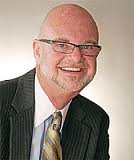
Andy Ford
Not the best fit. Andy Ford, president of the Florida teachers union, says in this Q&A with the Orlando Sentinel that Tony Bennett is “the best fit for the Jeb Bush power structure, but not the best choice for Florida's students, parents and school employees.” Board of Education member Kathleen Shanahan cites the PIRLS results in responding to a critical editorial about Bennett in the Tampa Bay Times.
Conflicts of interest? Three Board of Education members contributed to Tony Bennett’s campaign in Indiana. Gradebook.
Rick Scott is right to require students with vouchers and tax credit scholarships to take the same standardized tests as their public school peers, writes Adam Emerson at Choice Words.
In the wake of Newtown. Security beefed up at Florida schools: Tampa Bay Times, South Florida Sun Sentinel, Palm Beach Post, Lakeland Ledger. Beneath the surface, emotional scars, reports the Miami Herald. State Rep. Dennis Baxley, R-Ocala, and the author of the "stand your ground" law, says schools would be safer if teachers and principals could bring guns, reports the Sarasota Herald Tribune. More from Orlando Sentinel, Fort Myers News Press, Naples Daily News, Florida Today.
Remediation series. StateImpact Florida.
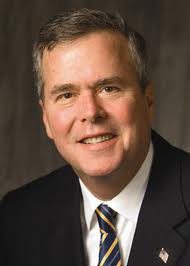 Jeb Bush on FCAT, Common Core, bipartisanship. He tells StateImpact Florida, “Education is one of the few places where you have left-right coalitions that are for reform and left-right coalitions that are against reform. It’s not as monolithic as other areas of policy.”
Orange school board considers more school choice. It’s considering a policy that would allow students at over-capacity schools to enroll at under-capacity schools, reports the Orlando Sentinel.
More on charter school funding. Orlando Sentinel.
Charter school teacher raises. Represented by the Broward Teachers Union, the charter school teachers in the Pembroke Pines system win a raise through arbitration, reports the South Florida Sun-Sentinel.
Proposed cut scores. For biology and geometry end of course exams and FCAT science. From Gradebook. From Sentinel.
FEA talks teacher evaluations today. From the News Service of Florida: Members of the Florida Education Association discuss impacts of the new teacher evaluation system that was created as a result of SB 736 setting up merit pay. FEA President Andy Ford and teachers participate.
At an education summit in Fort Myers today, Florida Gov. Rick Scott officially unveiled his education agenda, which included some measures that could expand charter schools. "In business, choice and competition create excellence," he said, according to his prepared remarks. "Increasing options in education will drive increased results for Florida students."
Scott's speech included details about his own upbringing, much of which he has shared before. The governor lived in public housing when he began school, and his family frequently moved because of their financial struggles. "But there were three constants in my life: my Mom, church and school," he said. "My teachers let me know I could learn, and learning was my ticket to the experiences of the world."
Scott's plan drew a fair share of positive comments from business leaders, former Gov. Jeb Bush and others. Wayne Blanton, executive director of the Florida School Boards Association, said in a written statement, "We are particularly impressed with Governor Scott’s recommendations aimed at providing greater flexibility and deregulation to local school districts so that we may customize learning opportunities to fit the needs of students, their families, their communities and local businesses."
Andy Ford, president of the state teachers union, was more cautious, describing the plan as "kind of sketchy," according to the News Service of Florida. Ford also said he wanted to see more accountability for charter schools, telling the News Service, "We have to make sure that we aren't allowing charter schools to cherry-pick students."
Click here to see Scott's prepared remarks in full.
 Our preoccupation these days with a Florida amendment removing the state’s no-aid-to-religion clause may strike some redefinED readers as a touch obsessive, and we won’t argue the point. But the truth is that we agonize over whether to write at all, and we want to explain why.
At the end of the day, we are confident that Amendment 8, whether it passes or fails, will have no legal effect on school vouchers. And yet opponents so far have invested $1 million in a campaign that argues otherwise. They not only contend the amendment will open the door to new vouchers, but that those programs will be, to borrow the words of one elected Alachua County school board member, “the very death of public schools.”
So the quandary is obvious. We’re a blog built around the new definition of public education, run by an organization that administers private options to low-income students, and we think we can bring clarity to the issue. But how do we complain about a debate that we say is falsely about vouchers without being viewed as though we doth protest too much? How do we enter the volatile, polarizing world of political campaigns and not be viewed as an angry combatant?
This is shaping up as a most peculiar campaign. The pro- and anti-amendment forces are on two entirely different planets, one fighting against the scourge of vouchers and the other extolling the virtues of faith-based community services. And yet the legal landscape is unmistakable: The state Supreme Court overturned Opportunity Scholarship vouchers in 2006 through a public education uniformity clause that would be untouched by this amendment. In other words, the principle barrier to any new vouchers is not on the ballot. That’s one of the reasons, and this is important to note again, that no groups supporting parental choice are spending a penny on this campaign. They see it as legally irrelevant.
We admit taking offense at some of the liberties that have been taken so far with the legal truth. And we’re left only to speculate on why the opponents would spend so much on an amendment that means so little in the education world. (more…)

