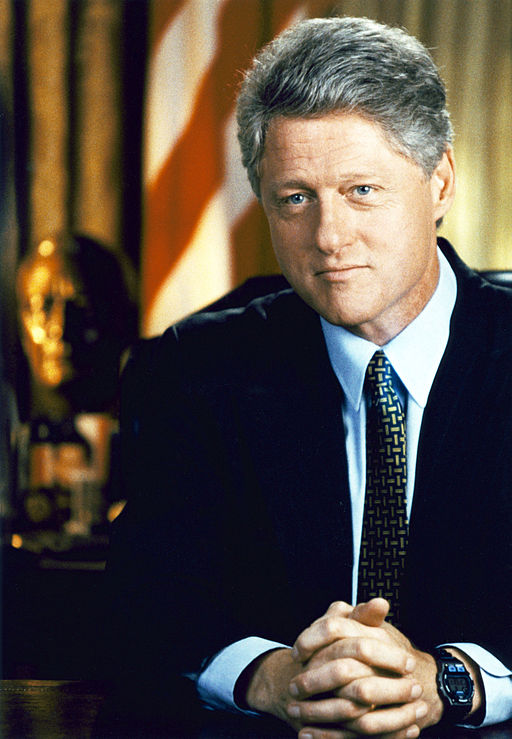
Before he became president, Bill Clinton wrote Wisconsin state Rep. Polly Williams, calling her a "visionary" for leading the charge on Milwaukee's school voucher program.
Not long before he ran for president, Bill Clinton saluted a school choice pioneer.
In 1990, as the governor of Arkansas, he wrote a letter to Wisconsin Rep. Annette “Polly” Williams, the African-American lawmaker who authored the bill that created America’s first major, modern school voucher program. (Thanks to the Center for Education Reform for the link.) He told Williams he was “fascinated” by the voucher plan in Milwaukee and “concerned that the traditional Democratic Party establishment has not given you more encouragement.”
 “The visionary is rarely embraced by status quo,” Clinton continued.
Polly Williams, the “mother of school choice,” died a year ago today. Her voucher story is well known. Bill Clinton’s, though, remains overlooked. Given how much school choice continues to divide the Democratic Party, that’s a bit odd, and a resurfacing now would seem to be timely. Who knows? Maybe Bill Clinton’s twists and turns on choice could shed a little more light on the education policy positions of Democratic front runner Hillary Clinton.
Not long after Gov. Clinton wrote the letter, candidate Clinton became a voucher opponent. He told the National Education Association vouchers would undermine public schools, and ran on a Democratic Party platform that was, after years of being pro-school choice, suddenly and stridently anti-voucher. President Clinton continued opposition: He vetoed creation of the federal voucher program in Washington D.C. (eventually signed into law by President Bush); publicly opposed the voucher ballot initiative in California in 1993; and suggested vouchers undermined school accountability.
But Clinton’s opposition includes a number of caveats, and even a surficial look suggests the Democratic Party’s internal tensions at play.
For example, President Clinton also praised the Children’s Scholarship Fund, the amazing organization that raises private funds for private school scholarships for low-income students. And he did by so by echoing a common refrain from choice supporters on the left, saying CSF was helping to “widen the circle of educational opportunity.” (Florida’s tax credit scholarship program, administered by nonprofits such as Step Up For Students, which hosts this blog, has its roots in the CSF. And Clinton’s former press secretary, Mike McCurry, now chairs the CSF board and is among the most articulate advocates for building a centrist school choice coalition.)
As president, Clinton also supported privately operated charter schools (though not always as strongly as he could have), and has been a bigger fan since. In 2012, he told a KIPP gathering in Orlando he wished there were 30,000 charter schools instead of 6,000. (more…)
It's not new news that progressive icon Howard Dean likes charter schools. Or that another big-name Democrat likes charter schools. Or that another big-name Democrat is all aboard with school choice (Cory Booker, Joe Trippi, Mike McCurry ... ). But until that expanding list starts to dent the narrative that parental school choice is a Koch Brothers scheme, well, we'll keep highlighting them. 🙂
The latest is what Dean said at a recent appearance at a college in Vermont. He told the audience his son taught for Teach for America in New Orleans, then continued:
“And his kids that he was teaching in the 9th grade … were essentially illiterate. Now this is 40 years after the civil rights movement, 40 years after African Americans and whites were supposed to have equal opportunity under the law. These kids had no equal opportunity. They were being starved by a corrupt school board, and a culture that had never valued them as much as they valued white kids. I was furious. I was so angry, in a moment I converted my whole philosophy of education, to we had to try anything we could to get inner city schools better."
"And inner city schools are being reformed by people in your generation who are joining Teach for America. There are principals … tons of them, all over the country, who are not yet 30 years old. It’s the charter school movement. There’s some things I don’t like about the charter school movement. They’re not all created equal. For profit charters are clearly worse than non profit charters. But the charter school movement is transforming inner city education. It is getting kids through high school with diplomas that never would have had a chance even five years ago."
Plenty of thoughtful folks would disagree with Dean about for-profits in education. And we can only hope his eye-opening led him to revisit his opposition to vouchers, too. But in the big picture, it's clear Dean is representative of a trend: growing bipartisan support for a growing array of options. (more…)
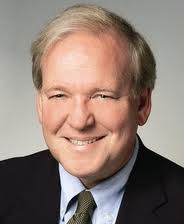
McCurry
In an American political system ripped apart by partisanship, the school choice movement stands out as a rare example of centrism, former White House Press Secretary Mike McCurry said Tuesday. But the movement can build even better bridges if it eases up on the name calling and finger pointing, he continued.
“We cannot demonize our opponents,” McCurry told several hundred people at the American Federation for Children summit in Washington D.C. “I hear too often, as I do the work I do at (the Children’s Scholarship Fund), hear people talk about teachers unions in a way that’s frankly ugly. Those people love our children just as much as anyone in this room. They happen to be particularly wrongheaded about the way … to improve their lives. But it’s not because they are ill motivated.”
“We need to recognize that, and have compassion for the people on the other side,” he continued. “Not everything needs to be mud wrestling on CNN with people calling each other names. … We’ve got to nurture the better angels on that side and understand where they’re coming from.”
McCurry worked for liberal Democratic Sen. Daniel Patrick Moynihan (himself a strong school choice supporter) early in his career and later for President Bill Clinton. He serves on the board of the Children’s Scholarship Fund, which provides privately funded scholarships for low-income students in grades K-8.
The school choice movement’s appeal to all points on the political spectrum is a source of pride, McCurry said. The movement needs to continue doing the hard work of making the center hold, of putting aside differences on other issues to find common ground on kids and education. He suggested it might even model good behavior in other realms. (more…)
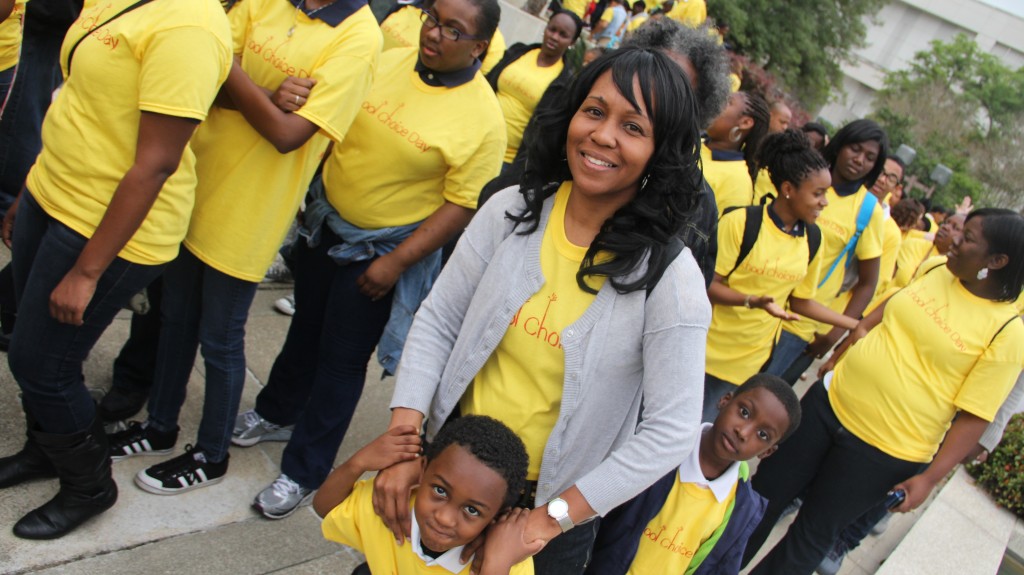
These folks were among those who attended the school choice rally in Tally earlier this month.
It’s true: ALEC likes school choice. Walton likes school choice. Jeb Bush likes school choice. Some of the folks who like school choice even say bad things about traditional public schools and teachers unions.
But this is true too: President Barack Obama is a fan of charter schools. Former President Bill Clinton is ga-ga about KIPP. Liberal lions like Daniel Patrick Moynihan and Hubert Humphrey supported public funding for private options.
More importantly, this is true: Growing numbers of parents and politicians of all stripes like school choice. Many don’t bash public schools or teachers unions. Many could care less who the Koch Brothers are.
I know this is obvious to anybody who’s managed to take a peek beneath the surface of the choice debate. But at this time of year, with state legislatures in Florida and elsewhere in session, complexity is not a common commodity. Anything having to do with school choice is sealed into a boilerplate narrative about for-profit this and right-wing that. This year in Florida, the privatization label has even surfaced in stories about student data and IEPs for students with disabilities.
It’s different in the real world. Out here, parents are flocking to new learning options for the most personal of reasons: the success of their kids. (more…)
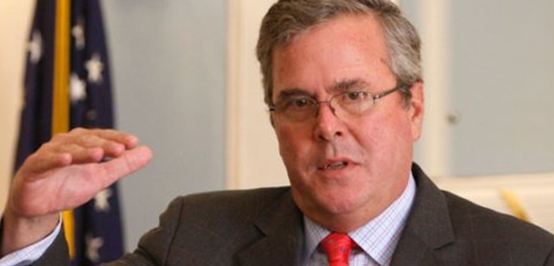 Jeb Bush may or may not seek the presidency in 2016, but those who dismiss his education foundation as a political prop are simply out of touch. What the Foundation for Excellence in Education is showing once again, with its fifth annual national summit, is that it is creating a sense of urgency and national purpose around our most fundamental commitment to each new generation.
 Recent election outcomes offer a snapshot of what people really think about education reform, said John Podesta, chairman and founder of the Center for American Progress. And lawmakers, advocates and opponents of school reform should all take note.
This month’s stunner - the ousting of Indiana public schools chief Tony Bennett, who implemented many of the same reforms found in Florida – is proof enough that reform “is not yet on solid ground,’’ said Podesta, the keynote speaker Tuesday during the fifth annual Excellence in Action National Summit in Washington, D.C.
At the same time, he noted, there are plenty of signs of progress, including historic passage of a ballot initiative in Washington that paves the way for charter schools.
The common ground seems to be a desire to create a system that works for children, he said, and reformers should seize the moment.
“As the lines blur, the movement has to invest in collaboration … ,’’ said Podesta, a former White House chief of staff to President Bill Clinton and longtime policy adviser.
“I think complete division between unions and reform is not helpful,’’ he said. “We have to let this go.’’
He also said reformers can’t “steamroll’’ measures without educating the public. “Stop just focusing on your enemy and start shoring up your allies,’’ he said. (more…)
The lineup for this week’s Jeb Bush education conference is further evidence that a growing centrist coalition has emerged to move the ball on education reform and school choice.
This is the Foundation for Excellence in Education’s fifth national summit, and it grows in both stature and bipartisanship every year. Two years ago, it made headlines when President Obama’s education secretary, Arne Duncan, was announced as a keynote speaker. This year, Duncan’s speaking again. So is John Podesta, the former Clinton chief of staff who heads the left-leaning Center for American Progress; and Gloria Romero, the former Democratic California state senator who authored the original parent trigger bill; and, on various panels, other Democrats like North Carolina Gov. Bev Perdue and Virginia State Delegate Algie Howell.
So, on the one hand, it’s no longer so notable that more and more liberals and progressives and Democrats are part of this constellation. On the other hand, holy smokes! Clearly, they’re not on the same page with Jeb Bush and fellow conservatives on every education issue. But the strength of the arguments in favor of ed reform and school choice, and the leadership of folks like Bush and Obama, have galvanized people from all across the political spectrum to have respectful, thoughtful discussions about our schools and our kids in ways that just weren’t possible 10 or 15 years ago.
I don’t know how long this will last, but the 2012 elections have at least produced a renewed call in Congress for a bipartisan solution to the deficit crisis. I suspect this is a rare opportunity in education, and reformers of all stripes would be wise to recognize it as such, and to do what they can to extend it. One way to foster that political cooperation is to make the public better aware that all this is happening – that Republicans and Democrats have actually found common ground on more than a few planks of ed policy. (more…)
 After going 56 years without attending a national political convention, I’m headed to Charlotte for my second convention in a week. For school choice advocates, the Democratic National Convention will be a somewhat hostile environment, unlike last week’s Republican National Convention in Tampa, where all forms of school choice were enthusiastically embraced.
As we’ve discussed previously on redefinED, the political left, including wide swaths of the Democratic Party, was supportive of giving parents - especially low-income and minority parents - access to more diverse schooling options in the 1960s and throughout most of the 1970s. That support began eroding when the National Education Association gave Jimmy Carter its first-ever presidential endorsement in 1976, and was mostly gone by 1980.
President Clinton’s support of charter schools marked the beginning of a renewed interest in school choice within the party, and pro- and anti-school choice forces have been battling ever since. After two decades of struggle, the momentum today is clearly on the side of the pro school choice Democrats, which has caused anti-choice Dems to become more desperate and strident. American Federation of Teachers’ President Randi Weingarten’s recent attack on the new teacher/parent empowerment movie, Won’t Back Down, was so disingenuous and hyperbolic I was embarrassed for her.
Both Weingarten and NEA President Dennis Van Roekel will be participating in a town hall meeting tomorrow sponsored by Democrats for Education Reform. Four years ago, at the Democratic convention in Denver, DFER burst on the scene at a similar event, and, with close ties to the Obama Administration, immediately became a majority power center within the party. I’m anxious to see what issues predominate tomorrow, and how Weingarten and Van Roekel position themselves.
“This should be a moment of renaissance in education in America.”
- President Bill Clinton, keynote speaker, KIPP School Summit 2012
 Advocating for students isn’t easy. Reform opponents regularly engage in ad hominem and anonymous attacks, tactics they condemn in others. The vitriol and anger they express are unworthy of the children they claim to be fighting for.
So it was refreshing to be with educators at last week’s KIPP conference in Orlando who reject that tone. The idea of spending a week with 3,000 dedicated educators, who champion the idea of putting students first, was a lifeline I grabbed with both hands.
In all of my eight years in education, I can honestly report I’ve never experienced anything like a KIPP gathering. The differences were startling and immediate.
KIPP teachers don’t complain about long hours or low salaries. KIPP teachers don’t fear change; they embrace it.
KIPP teachers don’t hold sessions on how to defeat education reform. They don’t hold sessions on how to defeat anti-reformers, either.
KIPP teachers don’t allow anyone to use uninvolved parents or poverty as an excuse for low performance. They don’t allow students to, either.
KIPP teachers don’t teach to the test.
Instead, KIPP teachers are focused on solutions. Their positive energy is contagious. They have hope for the future and talk about what they can do, which is:
Build a better tomorrow. Reach more students who need them the most. Double the number of kids in their schools. Double the number of their graduates in college. This is impressive, considering KIPP graduates go on to graduate from college at four times the rate of non-KIPP students from the same communities.
KIPP teachers at the summit talked about being a catalytic force in the communities they serve. Hearing them talk about how they can be even better was enough to make even the most beaten-down reformer feel good about the movement again.
But then it got better. (more…)

