A call for reform: Legislators and local school officials are calling for better oversight of private schools that get millions of dollars from the state's three scholarship programs. A series in the Orlando Sentinel last week detailed how some of those schools hired uncertified teachers with criminal backgrounds and submitted falsified  fire reports for years without the state taking action against them. State Sen. David Simmons, R-Altamonte Springs, remains a supporter of the tax credit, Gardiner and McKay scholarships, but agrees that "there's some place between no regulation and over-regulation.” Step Up For Students, which hosts this blog, helps administer the tax credit and Gardiner scholarship programs. Orlando Sentinel.
Teacher pay: Gov. Rick Scott has pushed for higher teacher pay in the past, but now is saying that the decision is out of his hands. "The way our system is set up in our state those decisions are made at the local level," Scott said during a discussion with teachers. "What I tell everybody is, 'You have to be active with your school board members, your superintendents.' " Associated Press. Scott did say that his budget proposal will include $63 million for teachers to help buy classroom supplies, an increase of $18 million over last year. That would bump the $250 a year teachers receive for supplies to $350. WTLV.
'Schools of hope': The Knowledge is Power Program (KIPP) charter school network is working on establishing a "school of hope" in the Liberty City area of Miami. The tentative agreement calls for the Miami-Dade County School Board to provide KIPP Miami with a facility, and KIPP would receive a state grant to help disadvantaged students and share its training programs with the district. The "schools of hope" program was set up by the Legislature to offer financial incentives so charter companies could move into neighborhoods with persistently struggling schools. KIPP is the nation’s largest nonprofit charter school network. redefinED.
Despite a full-court press from charter school supporters, the board of the National Association for the Advancement of Colored People approved a resolution on Saturday that calls for halting the growth of charters.
The move reaffirms the civil rights organization's longstanding positions, spelled out in a 2014 resolution decrying "privatization" in public education. But it also goes a step further, calling for a "moratorium on the proliferation of privately managed charter schools."
A press release published after the vote said the NAACP's call for a moratorium would remain in place until:
(1) Charter schools are subject to the same transparency and accountability standards as public schools
(2) Public funds are not diverted to charter schools at the expense of the public school system
(3) Charter schools cease expelling students that public schools have a duty to educate and
(4) Cease to perpetuate de facto segregation of the highest performing children from those whose aspirations may be high but whose talents are not yet as obvious.
Charter school backers showed up in Cincinnati to explain the benefits of independent public schools, and USA Today reported that about 140 demonstrators organized by the group Memphis Lift rode buses from Tenessee to protest the vote.
"We have charter schools that are good," Memphis Lift organizer Sarah Carpenter, a grandmother of 13, said during the protest at Fountain Square. "We are not against public schools. We want good schools of any type. Where was the NAACP when so many public schools were failing our children?"
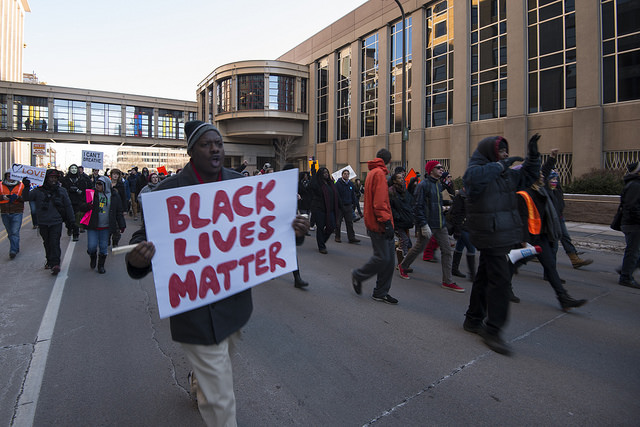
A debate over charter schools has split civil rights advocates. Photo credit: Fibonacci Blue.
Late last month, a host of charter school supporters — from former U.S. Education Secretary Rod Paige to school choice luminary Howard Fuller — wrote the NAACP asking to meet with its board before Saturday's expected vote on a resolution calling for a moratorium on charter schools.
That meeting never happened.
Still, many of their allies plan to gather in Cincinnati to highlight the benefits of charter schools tomorrow morning. And they've invited NAACP board members to hear their case before they vote later in the day.
Charter school backers, many of whom align with the 107-year-old organization on issues outside of school choice, have launched a full-court press in response to a proposed resolution that would toughen the NAACP's anti-charter stance, in what's become a major front in a larger battle that has divided civil rights activists. (more…)
Charter schools should revamp their discipline practices to create better learning environments for "ALL students" — especially children with special needs, a range of education and civil rights advocates said today in a joint statement.
The groups, which include the main national charter school association, the association of charter school authorizers, the Black Alliance for Educational Options, and a legal advocacy group for special needs students — say they reject "a return to 'one-size-fits-all education'" but want charters to rein in suspensions and expulsions of children with learning disabilities and other special needs.
The public charter school sector has demonstrated great potential to create safe, caring and orderly schools that have good reason to be proud of the academic growth of their students. However, some charter schools are criticized for their student discipline practices — including suspension, expulsion, and other actions resulting in the removal of students from the classroom — that disproportionately exclude and impact students with disabilities.
Exclusion of students with disabilities, in particular those with emotional or behavioral disabilities, does not foster a positive school climate, nor does it help create the opportunity for a high quality education. Sacrificing the educational welfare of some children to achieve the academic progress of others is the wrong paradigm: the academic success of all children should be our priority.
The country's leading black-led education reform organization could be in for some major changes after 2016.

Howard Fuller
The Black Alliance for Educational Options announced changes were coming in a letter to supporters on Friday, but provided few details on what the future would hold.
Howard Fuller, the chairman emeritus of the organization, said its board formed a committee, which he will lead, and plans to hold a competition aimed at drawing fresh leaders to set a course for what he said could be "BAEO 2.0," or a successor organization.
"The mission will remain," Fuller said. "The question becomes, what is the best way in the next period to fight for that mission? It could be an entirely different organizational form. It could be a couple different organizations."
The mission, which he said will remain sacrosanct: Serving as a black-led advocate for systemic educational change, rooted in values of social justice.
According to the letter, BAEO plans to remain under the leadership of Jacqueline Cooper, its current president, and continue its state-level activities in New Jersey, Tennessee and Louisiana — where it's been a prominent advocate for school vouchers, charter schools, and other reforms. (more…)
Note: This is the first contribution to our series of guest posts on testing and choice.
by Jacqueline Cooper
 We can’t help our children, especially Black children from low-income and working-class families, if we don’t know how well schools are serving them. This is especially true when it comes to expanding the high-quality options our children need to gain equity and access to great teaching and learning. This is why the Black Alliance for Educational Options and others in the education reform movement are so committed to ensuring all schools are held accountable through annual statewide tests and other measures.
But there are some allies in the movement who are concerned that parental choice programs and public charter schools may be subjected to excessive accountability standards. They contend that data from tests don’t provide information on the benefits that charters and private schools bring to the lives of children outside of academic achievement. They also argue that requiring private schools to conduct annual statewide testing as a condition for participating in voucher or opportunity scholarship programs restricts the number of schools children can attend.
Those concerns have some validity. But for the most part, they don’t have merit.
Researchers such as Raj Chetty and John Friedman of Harvard University, through their research on the impact of teachers using student test score growth data, have demonstrated the strong correlation between achievement on tests and later economic outcomes. If we as parent choice activists don’t believe testing is valid, then why did we just celebrate charter school exam scores in Arizona or the steady progress of all students in Washington, DC on this year’s National Assessment of Educational Progress? (more…)

Campbell
Ken Campbell, president of the Black Alliance for Educational Options, has advice for school choice supporters who may be frustrated by critics who distort the evidence and hew to tired arguments.
Call 'em out.
"We have to recognize and not be afraid to call out the level of hypocrisy that exists in a lot of these narratives," Campbell told redefinED for the podcast interview attached below. "Because honestly, most of the time, the people who are fighting against parent choice are people who have parent choice. They are people who are exercising choices for their kids every day. They are fighting to keep kids in schools that they never in a million years would send their own kids to."
Campbell continued: What they're saying is, "If your kids leave, then we might not have the system survive. Now it's okay if mine leave, but if yours leave ... And there's something about that, Ron, that chills me to my soul when I think about what that argument really says."
Campbell's comments come with "the narrative" cranked at full volume in the Florida Capitol. On Tuesday, lawmakers on a second straight House committee voted in favor of a bill to expand Florida's tax credit scholarship program, the largest private school choice program in the country (and one administered by Step Up For Students, which co-hosts this blog). But disappointingly, the vote again came along party lines. Democrats voted no, choosing to stand with the Florida PTA and state teachers union instead of the scores of low-income parents, many of them black, who came from all over the state to show support. At one point, Florida PTA President Eileen Segal told lawmakers in support that they were pitting parent against parent. "And it’s sad."
No one called her out.
Campbell's comments also come on the eve of BAEO's annual symposium, the largest gathering of black school choice supporters in the country. This year's event, which begins Thursday, will bring more than 700 people to New Orleans.
The location isn't coincidence. (more…)
Fuller
Count legendary school choice activist Howard Fuller among those who don’t have a problem with for-profit entities in education reform.
At the Black Alliance for Educational Options symposium in Orlando on Thursday, Fuller, who is BAEO’s chair, told several hundred participants at a first-timers orientation that “you also need to not have, at least in my opinion, a knee-jerk reaction to for-profits.”
“At the end of the day, judge something by what it does,” he said. “Don’t start by judging the label.”
The participation of for-profit companies is often raised by critics in parental choice debates on everything from virtual and charter schools to parent triggers and tutoring providers. It's also an issue to some extent within the choice community. A few months ago, Rick Hess from the American Enterprise Institute and Ben Austin with Parent Revolution engaged in a back-and-forth on the issue after Austin suggested nonprofits are more likely to put children first.
Fuller weighed in after letting attendees know BAEO supports effective public private partnerships. Here’s the full text of his remarks, as best as I could hear them: (more…)
Campbell
Elected black Democrats who support vouchers and charter schools are slowly but surely finding themselves less isolated. And for that, they can thank relentless parents, said Kenneth Campbell, president of the Black Alliance for Educational Options.
The tide is changing because of “this constant drumbeat that they’re hearing from parents about how much their kids are struggling,” Campbell told redefinED in the podcast interview attached below. “More and more people are just coming to this realization that even if I don’t necessarily like the people that are proposing this, we don’t have any other options. And we’ve heard that time and time again, as we’ve gone out and worked with elected officials - that we can’t ignore the pleas of our parents anymore.”
Campbell offered his comments on the eve of BAEO’s annual symposium, which is being held today through Saturday in Orlando. The largest gathering of black school choice supporters in the country will draw 650 people this year, including 50 current and former elected officials. It comes amidst head-spinning ferment on the choice front, with states as disparate as Louisiana, Washington and New Hampshire passing historic measures in the past year alone.
“There are a lot of people in our community who are rightfully concerned and skeptical about motives, and about is this the right thing to do,” Campbell said. “But I think increasingly, we have reached the point where there’s no excuse for not acting with urgency in giving kids and parents options.”
BAEO has been a leading voice for parental school choice since it formed in 2000. Its ranks include a number of leading reformers, including Howard Fuller, Kevin Chavous and T. Willard Fair, who co-founded the first charter school in Florida and served as chair of the state Board of Education.
Florida is an apt place for the group to meet. (more…)
Editor's note: The Rev. Manuel Sykes is pastor of Bethel Community Baptist Church and president of the St. Petersburg NAACP, an active chapter on Florida's west coast. In this commentary, he responds to a recent Tampa Bay Times column that criticized a federal tax credit scholarship bill offered by U.S. Sen. Marco Rubio. The Times also published a letter to the editor from Rev. Sykes in today's editions.
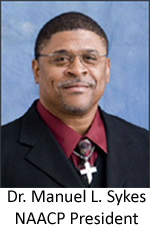 Florida offers the nation’s best lesson on whether private school options can help poor children, but the Tampa Bay Times seems uninterested in what these parents and students are telling us. Instead, it is busy pointing a distinctly partisan finger.
Argue if you want about whether the federal government should provide K-12 scholarships to low-income students, but the tax credit scholarship plan introduced by Republican U.S. Sen. Marco Rubio is not “bankrupt” or “craven.” It is instead a learning option that economically disadvantaged students wouldn’t otherwise have, and to label it as “money laundering” represents the kind of rhetorical excess that cheapens our public debate.
In Florida, more than 50,000 students are on a similar plan, and the results are encouraging to those of us who work with struggling children. The students who use the Florida Tax Credit Scholarship are truly poor – incomes barely above poverty and averaging less than $25,000 for a household of four – and more than two thirds of them are black or Hispanic. State research tells us they were among the lowest academic performers in the public schools they left behind, and testing results show they are making the same academic gains as students of all income levels nationally. Just as encouraging, the traditional public schools that are most impacted by students who choose the scholarships are themselves experiencing higher learning gains.
The educational results don’t seem to matter to those who prefer instead to dismiss scholarships as some kind of Republican conspiracy. Never mind that nearly half the Democrats in Florida’s Legislature also support this option, including a majority of the Black Caucus. Never mind those of us who work in disadvantaged communities in St. Petersburg and see children for whom these opportunities can make the difference between a diploma or a jail cell. Never mind that the Black Alliance for Educational Options, which represents elected black Democrats across the nation, has expressed its support for Rubio’s bill. (more…)

