LAUDERDALE LAKES, Fla.— Khyla Beaujin’s first fashion show as a designer was over, and she described the backstage chaos to her mother.
Where are the models?
Where are their shoes?
Who has the jewelry?
Khyla was frustrated at times and overwhelmed at others because the designers shared models and the models shared shoes, and confusion reigned. But she maintained her composure and pulled everything together, and the models strutted the catwalk with quiet poise, wearing Khyla’s spring collection.
It was a proud night for Khyla, then 12 years old, because she worked hard creating her collection during the months leading up to the event.
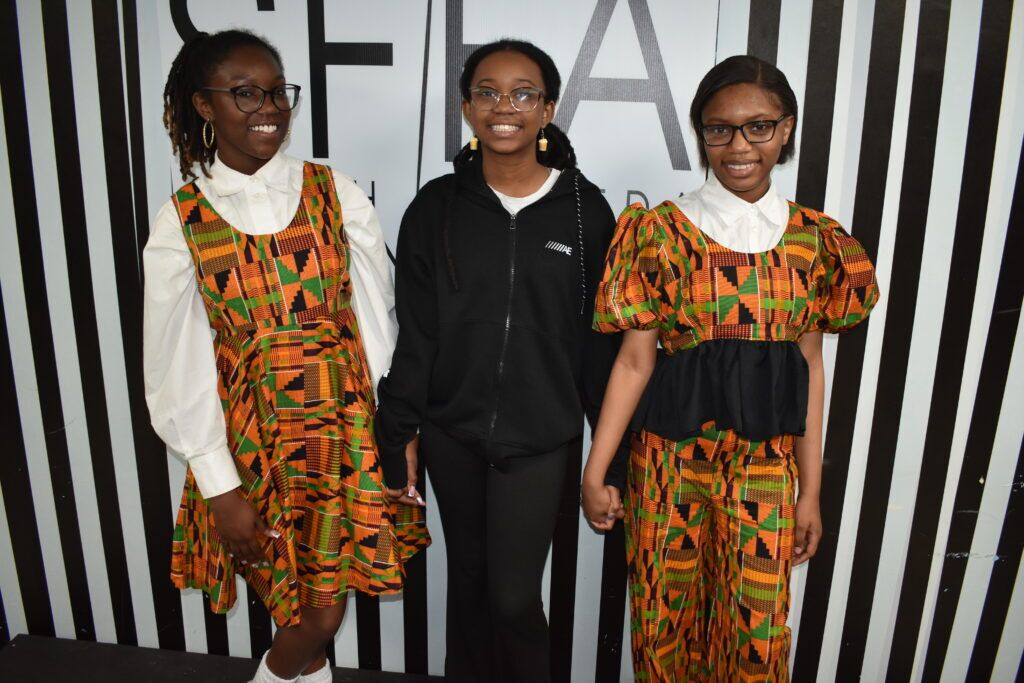
Khyla recounted all this to her mom post-show in a breathless monologue.
“The look on her face, the smile, I'm like, ‘Oh, I love this for you.’” Sheyla Bens Beaujin said.
Year One as a student at the South Florida Fashion Academy (SF/FA) ended that night for Khyla, and Sheyla knew her daughter was where she needed to be, attending a school that would nurture her love for fashion design.
Khyla is now a seventh grader at SF/FA, a private Pre-K-12 school in Lauderdale Lakes that incorporates fashion design, cosmetology, nail technology, barbering, skin care, business, and entrepreneurship with core classes. Khyla attends the school with the help of a Florida Tax Credit Scholarship managed by Step Up For Students and funded by corporate donations to the nonprofit.
“This is her passion,” Sheyla said, “so finding that school was really a life-saving experience. She’s found so much joy and purpose there.”
While Khyla was involved in a number of extracurricular activities and sports at her previous school, Calvary Christian Academy, her interest always returned to fashion design.
It’s something Khyla picked up from her mom at an early age, when Sheyla started her own children’s clothing line – KHYKOUTURE – and used Khyla as a model. Khyla enjoys walking the runway but not as much as she enjoys finding a top and a blanket at a thrift store and using her imagination, a sewing machine, and all the tools in her sewing kit to turn them into a dress or gown.
“I guess seeing my mom make all those outfits for me when I was little inspired me to do the same,” Khyla said.
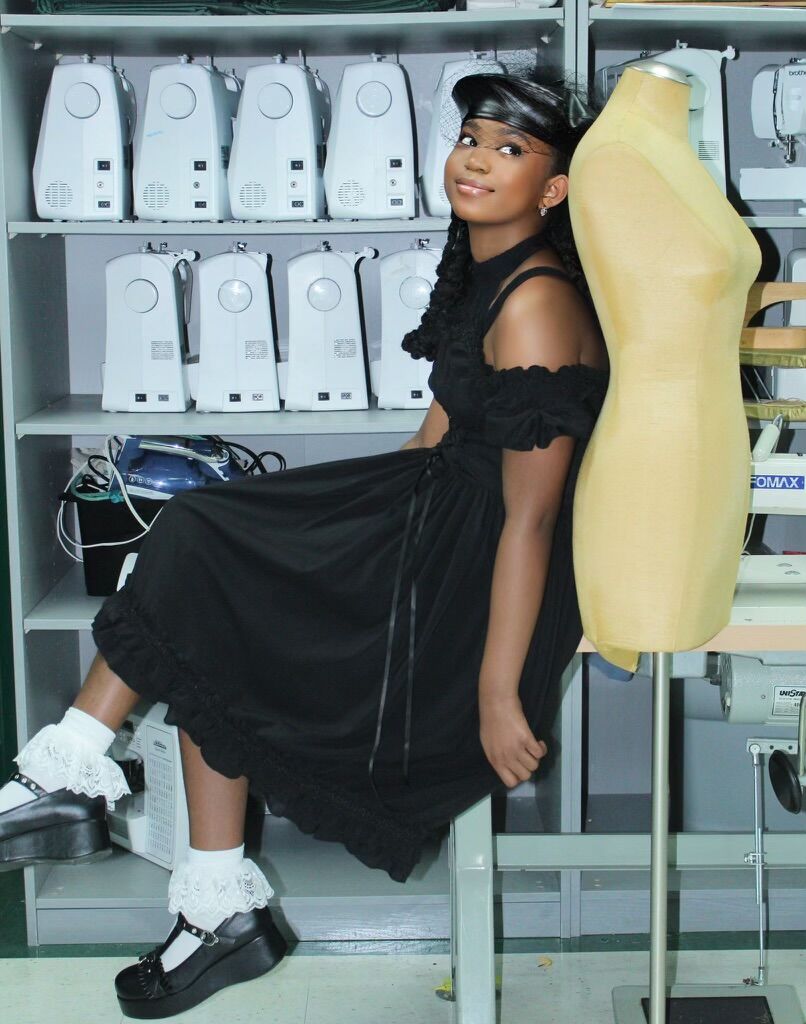
Khyla strikes a pose inside the sewing lab, her favorite room at the South Florida Fashion Academy. (Photo provided by Sheyla Bens Beaujin)
Sheyla learned of SF/FA on social media when Khyla was in the fifth grade. She and Khyla toured the school, which is a 30-minute drive from their Hollywood home. All Khyla had to see was Room 117, which is filled with mannequins and sewing machines, and she was sold.
“Best room in the school,” Khyla said.
She enrolled in the sixth grade for the 2023-24 school year, eager to see what the world of fashion was all about.
Now Khyla talks about attending a fashion school in New York City and having her work featured during Fashion Week in Paris, London, and New York.
“That's why I'm glad I'm going to this school so I can work on my skills,” she said. “I think I'm really going to do this. I'm really going to pursue this dream and stick to it till the end.”
***
In 2018, Taj McGill started a fashion program for students in South Florida that met in a one-room building on Saturdays. By 2021, she realized there was enough interest to start a dedicated school. SF/FA now has 75 students, many of them with dreams as big as Khyla’s.
McGill, who grew up in South Florida, has a degree in fashion design and merchandising. She has worked in various careers within the fashion industry for more than 20 years. She’s attending Fashion Week in those far-off cities. Her students are introduced to a cross-section of people from the fashion industry.
“South Florida isn't really known as a fashion capital although it is beginning to develop. I am intentional about exposing our students to the various careers within the industry and introducing creatives to professionals that inspire them to dream,” McGill said. “They can actually have a job in these specific career fields that we cater to here at SF/FA. They can flourish in those industries.
“If there were a school like this when I was a child, oh, my God, I would have been in heaven. If I was able to complete my core academic classes and then have classes in fashion or beauty or business, it would have been so great for me. So, I essentially created what I wanted as a child.”
In addition to the sewing lab, there is a room with barber chairs for hairstyling and another for nail technology and cosmetology. Students can dually enroll in the fashion program at Saint Thomas University in Miami Gardens, Miami Fashion Institute, or the University of South Florida.
“You don’t get this kind of experience anywhere else,” Khyla said.
Every student is involved in the end-of-the-year fashion show, from the designers to the models, to the cosmetologist to the hair stylist. The photography, video, social media, red carpet, and marketing are all done by students.
***
In nearly two years at SF/FA, Khyla has emerged as one of the school’s top students, with a 4.0 GPA. Her designs allow her to stand out, as well.
“She's determined,” McGill said. “She works really, really hard, and it's important to her to be a leader to her peers.”
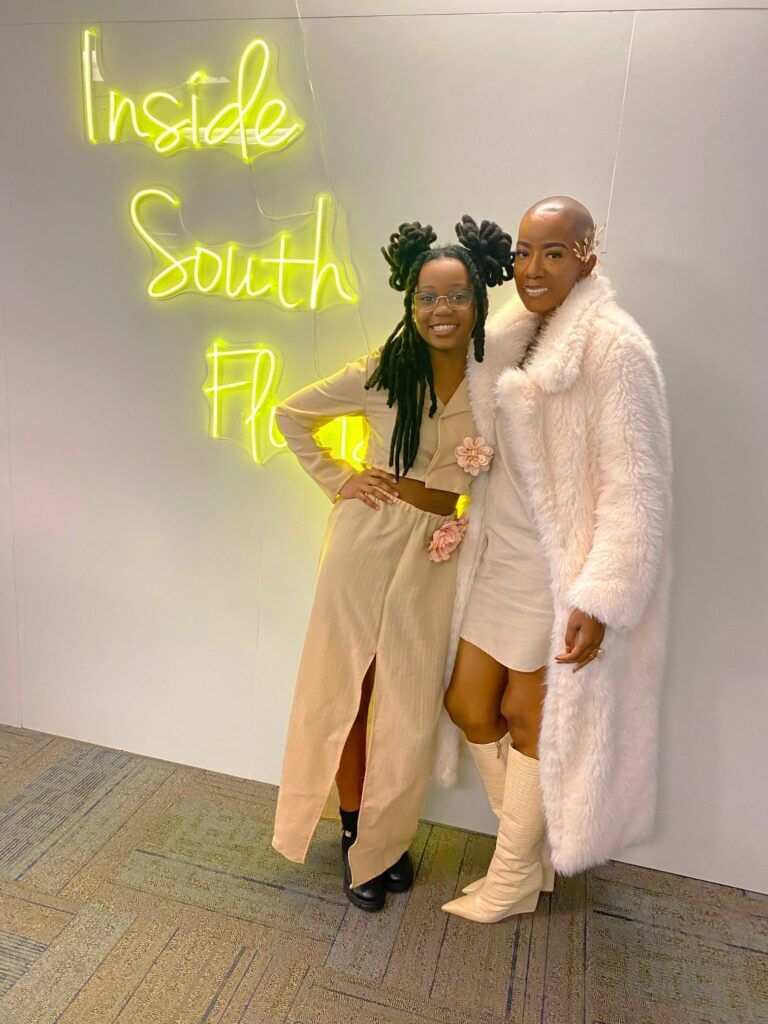
Khyla and SF/FA founder Taj McGill. (Photo provided by Sheyla Bens Beaujin)
Last year, Khyla designed three outfits for the fashion show. This year, it could be as many as seven. It will feature a rainbow of princess gowns inspired by the movie “Inside Out 2,” where the emotions of the main character, a teenage girl, are represented by characters of different colors. Anger is red. Envy is green.
“It was a little confusing at first because I knew I wanted to do the theme, but I didn't know what I wanted to make it,” she said. “So, I was like, ‘OK, let me just do princess dresses,’ and I can just do them with the ‘Inside Out’ colors and incorporate them into the designs.”
Sheyla has never seen the movie, so she’s not sure what Khyla is trying to accomplish. But that’s the case with all of Khyla’s concepts.
“When she tells me about them and I don’t get what she’s trying to do, she tells me, ‘Wait till you see where it’s going,’ and then I see the final product and I’m amazed,” she said.
Sheyla took a sewing class in Miami before starting her children’s line. She was the only adult in the class. The rest were students who were homeschooled.
“That stuck with me because I wanted my children to have the same opportunities,” she said.
Now a detention sergeant with the Broward Sheriff’s Office, Sheyla can give Khyla the educational opportunity she wished she had, thanks to Step Up For Students.
“Without Step Up, Khyla would have never gotten the opportunity to be in this school,” Sheyla said. “So, it's a wonderful thing that kids like Khyla can have an opportunity to let their talent flourish while focusing also on her academics.”
At SF/FA, McGill serves as a role model, as do the guest lecturers. The students feed off each other’s creativity and dreams. Khyla talks about attending the Fashion Institute of Technology in New York and having her designs featured at all the big shows in Paris and London.
“That makes me proud,” Sheyla said, “and it allows me to encourage her because I know those dreams are attainable.”
Three decades ago, dozens of Black families in the Liberty City neighborhood of Miami enrolled their children in Florida’s first charter school. They didn’t know it, but they were kickstarting the most dramatic, statewide, educational shift for Black students in America.
Today, 140,000+ Black students in Florida are being educated outside district schools. They’re either in charter schools, in private schools using state choice scholarships, or outside full-time schools entirely using education savings accounts.
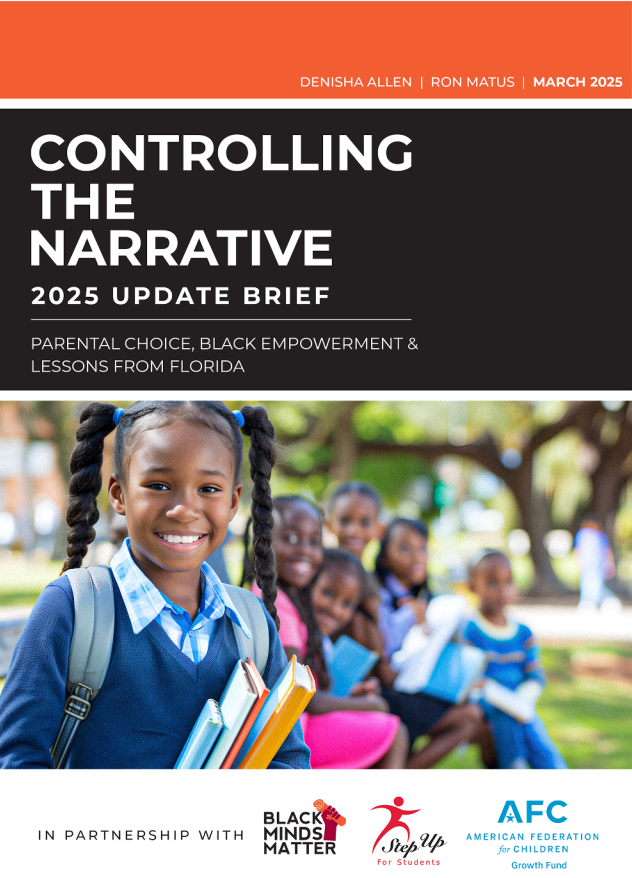
More details on this overlooked migration can be found in a new brief co-authored by Black Minds Matter founder Denisha Allen and myself. It’s a quick update to our 2021 report, “Controlling the Narrative: Parental Choice, Black Empowerment & Lessons from Florida.”
Over the past decade, the number of Black students in Florida enrolled in non-district options grew 86%, to 142,384. That’s more than one in five Black students in the state. For context, 31 states have fewer Black students in their public schools than Florida has in these options.
The numbers are a strong rebuttal to those who claim choice is aimed at helping wealthy, white families.
They’re also a good indicator of what’s next.
As choice programs continue to expand across America, look for even more Black families, educators and communities to embrace them.
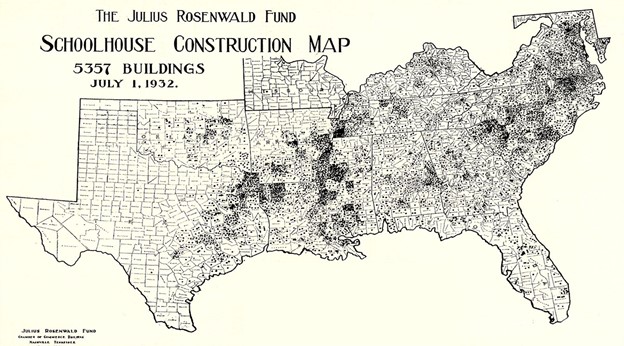
Rosenwald schools served as a forerunner of the modern choice movement. As the Smithsonian Magazine explained:
Between 1917 and 1932, nearly 5,000 rural schoolhouses, modest one-, two-, and three-teacher buildings known as Rosenwald Schools, came to exclusively serve more than 700,000 Black children over four decades. It was through the shared ideals and a partnership between Booker T. Washington, an educator, intellectual and prominent African American thought leader, and Julius Rosenwald, a German-Jewish immigrant who accumulated his wealth as head of the behemoth retailer, Sears, Roebuck & Company, that Rosenwald Schools would come to comprise more than one in five Black schools operating throughout the South by 1928.
The Rosenwald schools played a vital role in advancing Black education in the American South and resembled the later charter school movement in important ways, with philanthropy providing the building infrastructure and other startup needs, with the states paying for the ongoing operating funding. Like charter schools today, the states in question did not fund Rosenwald schools on an equitable per pupil basis. Nevertheless, they made a lasting contribution.
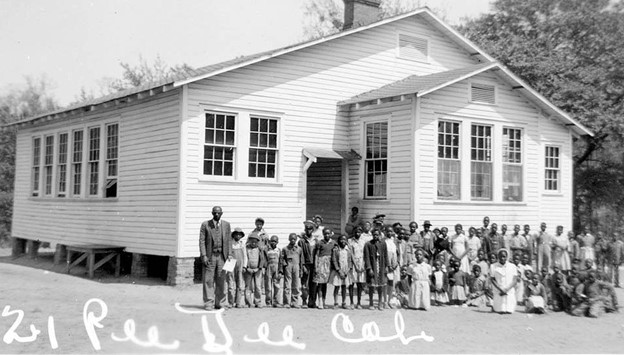
The Rosenwald school movement began a long decline with the passing of Julius Rosenwald in 1932. Rosenwald had hoped that states would continue to build these schools, but this hope was dashed. Concentrated in rural areas and operating in the Jim Crow South, these schools were incredibly disadvantaged in advocating their cases in state legislatures. While a few of the Rosenwald buildings continue to exist, they stopped functioning as schools many decades ago.
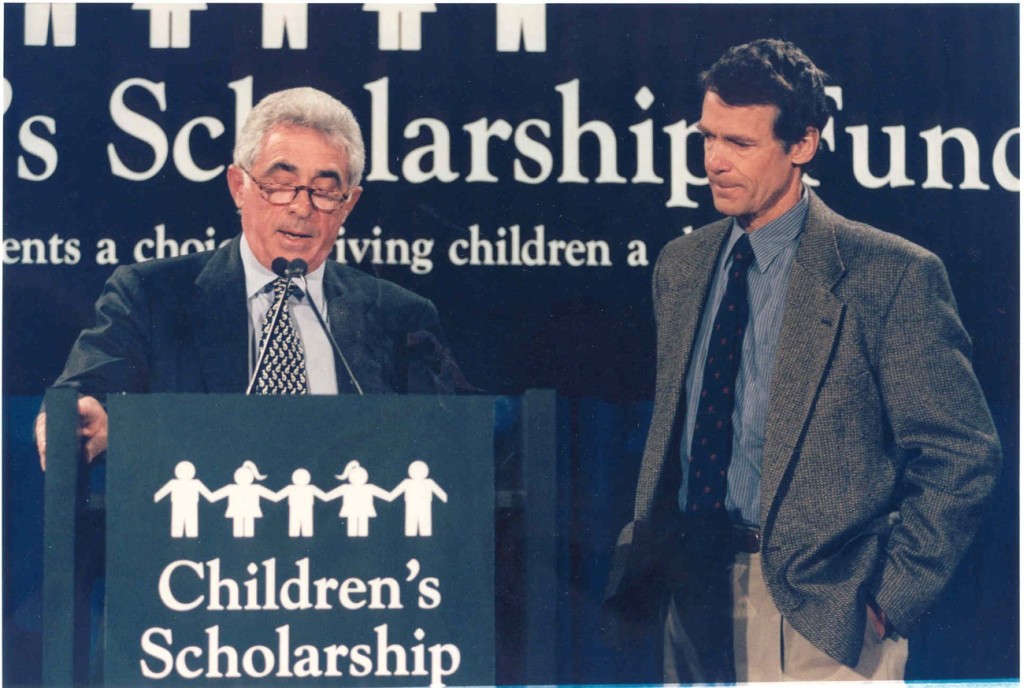
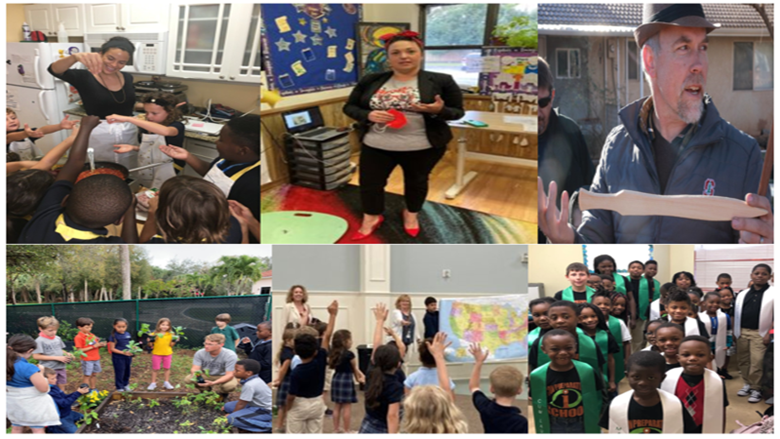
A more enduring legacy awaits latter day education philanthropists such as John Walton and Ted Forstmann. Together Walton and Forstmann founded the Children’s Scholarship Fund, which has granted almost a billion dollars in scholarships. Unlike Rosenwald, Walton and Forstmann have seen a now majority of states take up the role of financing alternative schools through mechanisms such as vouchers, tax credits and education savings account programs. A whole new generation of small community schools has emerged in the process, such as those featured here on Reimagined:
Unlike the Rosenwald schools, or sadly even charter schools in most states, the next generation of community schooling has already included all types of communities, leading to a broader base of support. Franklin Roosevelt’s New Dealers figured out that the best way to secure social insurance programs was to include everyone somewhere back around the time of Rosenwald’s death. Accordingly, Social Security is alive and well while Rosenwald schools lived their time but then faded due to a lack of political support.
Many decades passed before the choice movement embraced the New Deal insight, but much better late than never. Now America families and educators have a movement built to last.
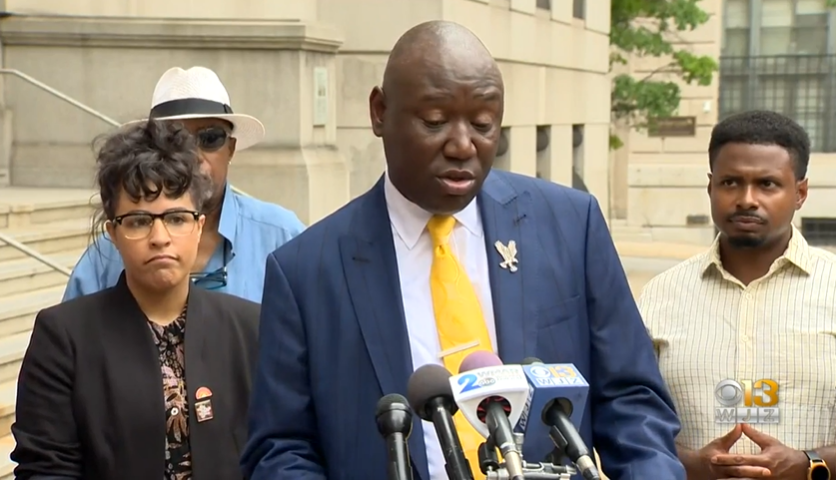
Civil rights attorney Ben Crump, who represented families in the Trayvon Martin, George Floyd, and Flint, Michigan, cases, has come to the aid of a Baltimore couple who is suing the Baltimore school system for alleged mismanagement of funds.
Many families whose schools were closed in the early months of the COVID-19 pandemic or who erred on the side of caution about sending their children back to the classroom responded innovatively by forming learning pods – small groups of students led by a teacher or an educator guide.
Now that the crisis has passed, most students have returned to their traditional schools. But many of these innovative solutions have persevered, especially those serving Black families.
Black education leaders who discussed the issue at a recent forum agreed that these tiny private schools are now an established alternative to traditional schools, which they say have failed their children.
Among six participants in a webinar sponsored by the Center on Reinventing Public Education – a group studying the role of learning pods – was Robert S. Harvey, former superintendent of a charter school network in East Harlem, New York, and now president of FoodCorps, a nonprofit dedicated to child nutrition.
Other panelists included Maxine McKinney de Royston, associate professor at the University of Wisconsin-Madison; Jennifer Davis Poon, a partner of learning design and sense-making at the Center for Innovation in Education, a national nonprofit that works with education leaders to promote inclusion; Janelle Wood, founder and president of the Arizona-based Black Mothers Forum; Lakisha Young, founder and CEO of The Oakland Reach; and Chris “Citizen” Stewart, CEO of brightbeam, a national network of education choice activists that produce Ed Post.
The webinar focused on what public education can learn from Black-led alternatives to traditional education, posing questions such as whether such initiatives should exist within the traditional system, which is where about 85% of Black students remain, and whether these alternatives, including homeschooling, which shot up from 3.3% to 16.1% during the pandemic among Black families, promote resegregation.
Oakland Reach founder Young said that’s the reason her organization chose to work within the traditional framework post-pandemic. The group trains parents as tutors, which it calls “liberators,” to help students with academics.
The nonprofit also provides community support, social-emotional enrichment, tech training and economic development. During the early months of the pandemic, Oakland Reach mobilized to set up a virtual hub for students without internet access.
“Our motivation for building outside of the system is because we saw our system crumbling in the midst of the pandemic,” Young said.
Now that the threat has passed, she said, the group is putting caring people out in the community and requiring that the system “re-engage with us in a different kind of power dynamic.”
Contrast that response with Black Mothers Forum, which maintained its small learning environments after traditional schools reopened.
Wood founded the forum in 2016 to provide support to Black parents who believed their children were disproportionately disciplined in district schools. When the schools closed, the Phoenix group opened small groups to educate students whose parents had to work and could not supervise remote learning.
Wood said the parents are happy with the small schools because “they aren’t being called in the middle of the day to pick (their kids) up for minor, minor infractions.”
“Our children were being criminalized and demonized for behavior that was normal for their age group,” she said.
Providing further impetus for the small schools to stay open is Arizona’s rich education choice policy, which offers state funds and makes the schools free for students. This year, Gov. Greg Ducey made history by signing into law a bill that grants education savings accounts to any student who wants one, putting Arizona on the map as the first state in the nation to do so.
But Stewart pointed out that in states that don’t provide education savings accounts, such programs are out of reach for Black students, whose families can’t afford to pay out of pocket. Harvey added that Congress’ refusal to make the expanded child tax credit permanent also deprives families of modest means a potential way to fund education alternatives.
As for whether Black-led alternatives contribute to resegregation, Wood and de Royston responded that Black children, especially boys, already were suffering from discrimination in the system. De Royston called blaming Black parents for resegregating school “a particular form of gaslighting,” especially when white middle class communities already have done that by seceding from urban school districts.
Her comments come as more and more Black parents are growing vocal about concerns over the quality of their children’s public schools. In Baltimore, a Black couple is suing the city school system for mismanagement of funds over accusations about the enhancement of attendance and grades for funding purposes.
In June, an inspector general’s report showed that 12,552 failing student grades were changed to passing between 2016 and 2020. The report prompted Maryland Gov. Larry Hogan to call for a criminal investigation into the matter. The case, which drew national attention, prompted civil rights attorney Ben Crump, who represented families in the Trayvon Martin, George Floyd, and Flint, Michigan, cases, to join the case.
“We knew that Black people were struggling in American schools, but we didn’t know much until we opened those systems up to public scrutiny,” said Steve Perry, head of school and founder of Capital Preparatory Schools, a group of charter schools in the Northeast.
Perry was interviewed on Revolt Black News for a segment called “Black America’s Education Epidemic” in which he said the system has failed Black students since the early 20th century.
“It isn’t a new thing,” he said. “Black people have been trying to find ways out of the system that was designed to undermine their very growth and humanity.”

