
Horn
by Michael B. Horn
With the rapid growth of online learning - both in full-time virtual learning environments and even more often in blended learning in schools - there is an opportunity to transform the nation’s education system from its factory-model roots to a student-centric one that can customize affordably for different learning needs and thereby bolster every student’s learning and America’s competitiveness.
One of the main reasons the country’s education system fails so many students is because it was never built to help each child realize her fullest potential. Because students have different learning needs at different times - students learn at different paces, have different aptitudes, and have different levels of knowledge when they enter a classroom - harnessing the power of technology to do the positive things it has done in so many other sectors of society is vital.
Although this is an important national opportunity, it does not mean the best way to drive this innovation is from the federal government. That is one reason Digital Learning Now!, an effort led by former Governors Jeb Bush and Bob Wise to seize this transformational opportunity, focuses on the things states should do to create a student-centric education system.
That said, it is important that the federal government support the conditions for transformation - and eliminate onerous requirements for educators on the ground. To further this end, there are several steps it can and should take.
Implement backpack funding: Title I and Title II dollars should follow students down to the educational, not just school, experience of their choice. With the growth in online learning courses, it is important to allow students to access great teachers and the right learning experience for their needs regardless of their zip code.
Promote individual student growth as the measure of performance: Move away from No Child Left Behind’s AYP school site accountability model. Create transparency by having states focus on the growth in learning for each individual student. Given that a student-centric system will recognize that each student has different learning needs at different times, it only makes sense to move to a system that leverages technology and captures how each child is doing in near real time, not just on an annual basis, and can give credit to educators that help a student make meaningful progress regardless of where she started. To the end of creating transparency in the education system around student learning, as well as creating a bigger market to spur private investment in digital learning, supporting the Common Core state standards is also an appropriate role for the federal government - whereas acting as the nation’s education venture capitalist is not. (more…)
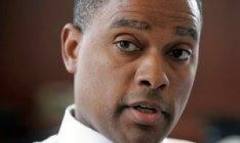 Florida: State education commissioner Gerard Robinson, a former president of the Black Alliance for Educational Options, resigns amidst tumult over the state's accountability system (Tampa Bay Times). Robinson says the move was for family reasons (Tampa Bay Times). Critics of Florida's education reforms see an opportunity to change direction (News Service of Florida).
Louisiana: There are far more applicants than seats available in Louisiana's new voucher program, leaving thousands of parents and students out of luck. (New Orleans Times-Picayune)
Wisconsin: Private school vouchers are a central issue in a Democratic primary for a state assembly seat in Milwaukee. (Milwaukee Journal Sentinel)
Maine: On the birthday of school choice champion Milton Friedman, choice proponents in Maine promise another legislative push for an expansion of learning options. (Bangor Daily News)
Mississippi: Gov. Phil Bryant pushes for charter schools as part of his education reform package (Jackson Clarion Ledger). Lt. Gov. Tate Reeves also says he'll continue pushing for legislation to boost charter schools despite the failure of a charter school proposal during the last session (Memphis Commercial Appeal).
North Carolina: The state board of education is set to consider allowing 25 new charter schools across 13 counties next year. (Associated Press)
South Carolina: Parents and teachers talk up the positives of a new charter school in the Myrtle Beach area. (Myrtle Beach Online)
Nevada: A state lawmaker proposes a voucher bill that would give parents half of the state's per-student funding to send their children to private schools. (Las Vegas Review Journal)
Two former governors from two different political parties this week announced the 10 elements of a digital-learning initiative they hoped would set educators on an entrepreneurial path to disruptive innovations in public education. If it wasn’t clear to the more than 500 people in attendance at the Washington, D.C., conference, where the elements were unveiled, this was a bipartisan drive to further scramble the current conept of “public schools” and “private schools."
What former Florida Gov. Jeb Bush and former West Virginia Gov. Bob Wise identified at the National Summit on Education Reform were the principles of transformational productivity in education demanded by President Obama’s White House education team. When Bush says that we have to think of public education “as educating the public” and calls for policies that allow students to customize their education, he’s applying the same concept that U.S. Education Secretary Arne Duncan does when Duncan tells schools to do more to “personalize” education.
The Digital Learning Now! initiative meets all these goals, and makes no distinction between public and private schooling. Indeed, its provisions demand that states recognize all learning providers – public, private and charter – equally. And for traditional school districts to adopt the digital innovations at the core of education reform, they will have to recognize private providers – with all their human and financial capital – as partners. (more…)

