by Fawn Spady
School choice has encountered greater travails in few venues besides Washington State. Before they narrowly approved a new charter law this November, voters rejected charter initiatives in 1996 and 2000 and repealed a charter law enacted by the legislature in 2004. Washington State is in fact the only state where charter schools have ever faced voters directly. Now, opponents including the Washington State teachers union and the state superintendent of schools are threatening to sue to try to have the law held unconstitutional.
But you can’t keep a good idea down, as we saw last week at the Washington Charter School Resource Center conference. My husband Jim and I started the center in 2000. We hosted 160 interested people, 80 percent of them educators, at a forum on how to start a charter school successfully. Many hope to open a school next fall.
We are frustrated that the opposition remains so intense when the need for new approaches and frankly, for empowering parents with more educational options, is so obvious. Not even half of our fourth- and eighth-graders were proficient on national reading and math tests in 2011. Although we are fortunate in Washington State to have fewer low-income families than the national average, we rank only 37th in high school completion. Our graduation rate was 73.7 percent in 2011, and it was just 56.5 percent for Native Americans, 65.4 percent for African Americans and 64.5 percent for Hispanics. This is simply unacceptable.
Thankfully, we heard the imperative for change from those attending our forum. A principal told us he was tired of doing the same thing over and over and expecting a different outcome. A parent said she just knows there is a better choice for her special needs children. A retired teacher said public charter schools give her the desire to return to public education. A former school board member declared charters a way to engage parents in schools.
Particularly encouraging for us is the wealth of expertise eager to assist us in moving forward. (more…)
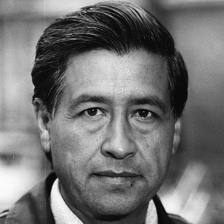
by Gloria Romero
Between fundraisers, President Obama touched down in La Paz, Calif., recently to dedicate the home of Cesar Chavez, the late founder and leader of the United Farmworkers of America, as a historic monument.
Even I – an Obama supporter – recognized the obvious political timing of this event and the reaching out for Latino votes.
But I applaud the dedication, knowing that millions of Americans will visit the new historic site and learn not only about Cesar Chavez, but that California is home to one-third of the nation's migrant schoolchildren.
But we need more than just naming monuments. Indeed, we have a habit of naming schools after civil rights legends. But should a school that bears such a name also be among our state's chronically lowest-performing schools?
Last May, the Navy launched a new cargo ship, the USNS Cesar Chavez. What reaction would there be if that ship had sunk on its maiden voyage? Would we tolerate the drowning of its crew members? Surely, there would be an immediate call for a commission to "get to the roots" of this tragedy.
Yet, we allow schools named after heroic leaders to sink, year after year. Our students "drown" in chronically underperforming schools. Where are the inquiries?
This question is particularly relevant as we await release of California's Department of Education's List of 1,000 chronically underperforming schools.
This compilation is based on a law I wrote that mandated giving parents access to these "watch lists," which previously were compiled by bureaucrats and then just left on a shelf in Sacramento. The idea behind the law was to spotlight underperforming schools, to begin their transformation with parental knowledge and participation.
There are some 35 California schools named after Cesar Chavez. Almost all are identified as "Program Improvement" (PI) schools – which is a bureaucratic label meaning "failing." Tens of thousands of students are "drowning" in these chronically underperforming schools. No whistles are blown. We just step back and watch them sink; and we also seem to blame the students for the educational equivalent of not knowing how to swim.
One school on this list – and named for Cesar Chavez – is located in Santa Ana, not too far from the school involved in the historic Mendez et al. v. Westminster 1946 federal court case that challenged racial segregation in California. This landmark case became the precursor to Brown vs. Board of Education, the 1954 Supreme Court decision barring racial segregation in schools.
Our public education system was forever changed with that decision. Now, a "Chavez" school in the same county as this historic site languishes on a "watch list" year after year.
In Northern California's Hayward Unified, Cesar Chavez Middle School has been on PI for more than 10 years.
In the Central Valley, Parlier's Cesar Chavez Elementary – not far from the newly dedicated Chavez national monument – first went on the watch list in 1998. Fourteen years; that's longer than the entire elementary and secondary education shelf life of students in these schools.
As this year's annual list is released, we should make it a priority to turn around chronically failing schools. No school should be left to fail year after year – especially not one named for a hero.
P.S.: There is a school in South Los Angeles that's named for Barack Obama; it also languishes on that "watch list." One of President Obama's recent fundraisers was held within blocks of it.
This column first appeared in the Orange County Register. Image of Cesar Chavez from biography.com
Editor’s note: For years, there have been concerns about discordant trend lines for students in many states – rising, according to the state’s own standardized tests, but anemic according to the National Assessment of Educational Progress. In Florida (where we’re based), the lines tend to be in sync. But this post scrutinizes a state where that isn’t the case.
by Alan Bonsteel
The California Department of Education (CDE) just announced it must delay the release of its annual STAR testing results because at least some of the test questions were posted on Internet sites such as Twitter and Facebook. Way back in April, CDE found about 1600 images on the Internet, though many were only of test booklets and student answer sheets rather than actual questions. After investigating, CDE traced the images to 12 schools around the state. It’s now trying to analyze how much damage the leaked questions, at least 36 to date, have caused so it can accurately report scores.
Almost all states do their own testing of their public school students, an obvious conflict of interest that almost always results in unrealistically rosy test results. Tests tied to inherently weak standards that states have been allowed to adopt produce test results that do not correlate with what students actually need to know. Here in California, the STAR has made up nearly all of the misnamed “Academic Performance Index" since 1999. Although the high school exit exam has been added, the addition of graduation and dropout data, called for in the legislation more than a decade ago, has yet again been delayed until next year.
From the outset the STAR results soared, at least in part due to lax security, a failure to change or even rotate questions from year to year, and consequently, some teaching to the actual questions on the test. By contrast, the two other standardized tests given throughout the United States, the NAEP, or National Assessment of Educational Progress, and the SAT, have remained generally flat, showing only very modest improvements over more than a decade in each case. Both of these latter two tests are given by independent testing authorities, and security has been maintained with them.
California is not the worst when NAEP scores are analyzed; Iowa, Maine, and Oklahoma have grabbed that honor. Thanks to Education Next, you can find a map with results from 41 states here. California edged itself just above the median.
For years our group, California Parents for Educational Choice, has commented in the news media about the disconnect between the self-administered STAR and the two objective exams, with telling results. (more…)

