 Charter schools. An Orange County charter that served dyslexic students is closing after seven months because of financial problems, reports the Orlando Sentinel. The parents of a charter in Miami-Dade are in limbo after a church decides unexpectedly to end the school's lease, reports the Miami Herald.
Virtual charter schools. In a repeat of last year, the charter school appeals commission sides with the Orange and Seminole school boards in their rejection of applications for Florida Virtual Academy schools. The state Board of Education will make the final call. SchoolZone.
Parent trigger. Two civil rights groups in Florida, LULAC and the NAACP, are opposed. StateImpact Florida.
Magnet schools. Parents plead with the St. Lucie County School Board to not close an arts magnet because of budget cuts, reports TCPalm.com. A new elementary school arts academy is in the works in Okaloosa, reports the Northwest Florida Daily News.
Career and technical. A bill filed by Sen. John Legg, R-Port Richey, would allow students to substitute industry certifications for other graduation requirements, reports Gradebook. More from the Orlando Sentinel. The Pinellas school district plans to create several new career academies for middle schools and put STEM labs in every elementary school in an effort to boost career education, reports the Tampa Bay Times. River Ridge Middle School in Pasco is realigning its curriculum to better reflect career education, the Times also reports. (more…)
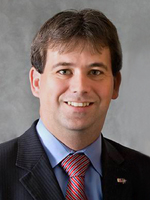
Sen. Legg
Florida state Sen. John Legg has a slogan ready for a bill he plans to file next week: “It’s not your daddy’s vo-tech.’’
The bill will focus on “high-end, high-skilled industry certifications at the high school level,’’ with one plank calling for some certifications to fulfill certain high school graduation requirements, said Legg, R-New Port Richey, who chairs the Senate Education Committee.
The certifications won’t replace any requirements, but serve as substitutions, he said. The idea is to put students on the fast-track for high-tech jobs that help grow the economy.
“Career education has changed since 1982,’’ Legg said. “It’s evolved. We’re trying to get the jobs back that we had in 2003, but we have failed. They’re not coming back, so we’ve got to train for jobs in 2023.’’
The bill, which is still being drafted, is part of a “very large package concerning career and technical education that will become a high priority for the senate,’’ he said.
It complements another bill Legg filed last month that would create “STEM zones” in counties with state universities that have high levels of research activity. Legg is looking primarily at the University of South Florida in Tampa.
Senate Bill 192 calls for partnerships between the Department of Education and Workforce Florida to build a gateway to science, technology, and engineering or mathematics careers.
The zones would create education hubs, not only looking to higher education facilities to train adults, but inviting traditional K-12 schools - as well as charters and private schools - to develop innovative curriculum for students and a pipeline of highly-skilled workers. In return, the schools would receive incentives, such as tax credits, expedited permits or grants, Legg said. (more…)
 Quality Counts. Florida ranks No. 6 this year in Education Week’s annual report. Coverage from redefinED, Associated Press, Miami Herald, Gradebook, Orlando Sentinel, StateImpact Florida, Fort Myers News Press, Naples Daily News, WCTV, News4Jax. More from Huffington Post.
Charter school access. SchoolZone takes a critical look at the first policy paper from the Center for School Options, a new think tank chaired by former Education Commissioner Jim Horne. It grades the 10 biggest districts in the state on charter school access. The Fort Myers News Press writes up Lee County's top grade.
Charter school attendance. Palm Beach district officials suggest tighter controls are needed after a Mavericks charter school overstated its attendance and received $160,000 more in per-pupil funding. Palm Beach Post.
Career and technical. Tampa Bay school officials are headed to Germany to learn more about programs there. Tampa Bay Times.
Suspension and grad rates. A Johns Hopkins University study of Florida ninth graders finds much higher graduation rates for those who were never suspended as freshmen versus those who were suspended even once or twice.Education Week.
Rick Scott. Visits Fort Lauderdale High School. South Florida Sun Sentinel.
Superintendent searches. Interim education commissioner Pam Stewart applies for the superintendent’s opening in Manatee County, reports Gradebook. St. Lucie County gears up to replace retiring Superintendent Michael Lannon, reports TCPalm.com.
School security. Hillsborough is going too far, editorializes the Tampa Bay Times. So is a Lake County School Board member who wants to arm teachers and principals, writes Orlando Sentinel columnist Lauren Ritchie.
Rezoning angst in Seminole. Orlando Sentinel.
School funding. Gov. Rick Scott wants to spend additional revenue on public schools, reports the Florida Current. Funding and other education issues are woven through a mid-term progress report on Scott from the Tampa Bay Times.
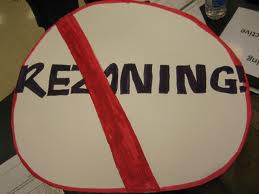 Rezoning. The Seminole school district is swamped with proposals, reports Orlando Sentinel. Affluent parents respond with “snobbery,” writes Sentinel columnist Beth Kassab. (Image from coolsprings.com)
Florida gets a B- for ed reform policies, according to a StudentsFirst report out today, the New York Times reports. That ties it with Louisiana for the top grade. A dozen states get F’s.
Best year ever. 2012 was a year of unprecedented accomplishments for the Miami-Dade school district, writes Superintendent Alberto Carvalho in the Miami Herald.
Career and technical. The Manatee school districts spends $44 million on a new main campus for Manatee Technical Institute. Bradenton Herald.
School grading. Poor grades for Polk high schools should be taken seriously. Lakeland Ledger.
School security. Editorials from Tampa Bay Times, Tampa Tribune, Palm Beach Post. More coverage from the Tribune and South Florida Sun Sentinel.
School enrollment. It's up in public schools by 30,000 statewide, in part because of declines in private schools. Palm Beach Post. A district audit finds a Palm Springs charter school overstated its enrollment, resulting in a $160,000 overpayment, the Palm Beach Post also reports.
Home schooling. Enough with the stereotypes, writes Mike Thomas at the EdFly Blog. (more…)
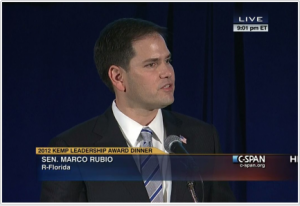 U.S. Sen. Marco Rubio, R-Fla., devoted a substantial portion of a major speech this week to education reform, saying public schools are a “disaster” for millions of disadvantaged American kids and pointing to parental school choice as a critical piece in uplifting the middle class.
More charter schools and more career and technical academies are among the changes necessary to ensure that people have the skills needed for the middle-class jobs of the future, Rubio, a Republican from Miami, said at the Jack Kemp Foundation’s Leadership Award Dinner (C-SPAN video here). He also proposed creation of a corporate federal tax credit to provide scholarships to low-income students who want to attend private schools.
“The bottom line is we are trying to prepare 21st century students using a 20th century education model,” Rubio said, according to a transcript of his remarks. “Now is the time to be creative, innovative and daring in reforming the way we provide our people the skills they need to make it to the middle class.”
Rubio is a longtime school choice supporter. But his latest remarks on the subject are noteworthy given the timing and context. In the aftermath of Mitt Romney’s loss, Republicans are re-branding their image to better appeal to middle-class voters – and Rubio squarely framed school choice as a vehicle for equal opportunity and upward mobility. Rubio’s points also dovetail with arguments long made by choice groups such as the Florida-based Hispanic Council for Reform and Educational Options. Minority voters are increasingly warming to vouchers, tax credit scholarships and other forms of expanded school choice, and polls suggest they may likewise warm to politicians who embrace such options.
In another section of his speech, Rubio mitigated his harsh assessment of failing schools, acknowledging the tough job schools face and offering sympathy for those in the trenches: “But perhaps the most effective thing we in government can do about societal breakdown is acknowledge the impact it is having. Ask any of the amazing teachers we are blessed to have here in America. I have four of them in my own family. They are on the frontlines of this problem. They will be the first to tell you that every single day, kids bring their home experience in to the classrooms. Every day, they see firsthand how kids living in dysfunctional homes are going to really struggle to make it. As a people, we cannot build a vibrant and broad-based middle class if we do not solve this problem.”
Here is the main section of the speech that touched on education: (more…)
Editor's note: Florida has a national reputation as school choice central. And in the state legislative session that ended Friday, lawmakers again took up a wide range of choice proposals, including the parent trigger bill that drew so much attention. Here's a redefinED rundown of what happened from Amy Graham, senior policy analyst for Step Up for Students. The bills that passed both House and Senate are on their way to Gov. Rick Scott.
Charter Schools:
House Bill 903, by Rep. Janet Adkins. The bill requires the Commissioner of Education to annually determine a high-performing charter school or school system’s continued eligibility for “high performing” status, requires each charter school to maintain a website that lists any entity that owns, operates, or manages the charter school, and establishes criteria for charter schools serving students with disabilities. It also requires a sponsor to reimburse a charter school on a monthly basis with all federal funds available for the benefit of the charter school, and authorizes certain Florida College System institutions to establish one charter school.
Final action: Passed by House 86-30. Died in Senate Education Pre-K-12 Committee.
Senate Bill 1852, by Sen. Stephen Wise. Authorizes certain Florida College System institutions to establish one charter school, authorizes each district to share revenue generated by its capital outlay millage levy with charter schools on a per-student basis, and requires sponsors to distribute a charter school’s share of federal funds to the school within 60 days. It also revises certain restrictions on high-performing charter schools.
Final Action: Died in Senate Budget Committee. (more…)

