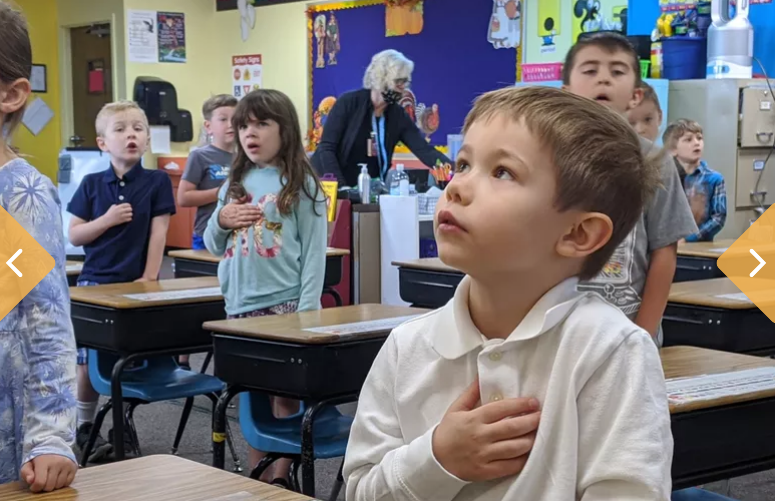
Faith Christian Academy in Arvada, Colorado, is one of 502 private schools in the state serving nearly 70,000 students. Accredited by the Association of Christian Schools International, it accepts children in nursery/preschool through Grade 12.
Editor’s note: This commentary appeared Tuesday on travelbreakingnews.net.
Do you remember where you were when the Zelman v. Simmons Harris ruling came down? I do. It was a beautiful spring day in Washington, D.C., and my pensive mood turned sunny upon hearing that the Supreme Court upheld the Ohio school voucher program.
The "Ohio program is entirely neutral with respect to religion … It permits such individuals to exercise genuine choice among options public and private, secular and religious," wrote Justice William Rehnquist for the majority.
At the time, only five states had voucher programs: Ohio and Wisconsin had scholarship programs for eligible families in Cleveland and Milwaukee. Florida awarded students with disabilities and students in failing public schools vouchers to attend another public or private school. Maine and Vermont operated century-old tuition programs for students in towns without a public school.
Additionally, Minnesota, Iowa, and Illinois offered taxpayers a tax deduction or credit for tuition expenses. Pennsylvania, Florida, and Arizona gave taxpayers a credit for contributions to philanthropic organizations that awarded students scholarships.
These programs had overcome challenges in state courts, but Zelman would make or break the movement to expand private school options for families. Twenty years ago, students won the day.
Today, 16 states have voucher programs; nine states offer tax deductions or credits for tuition expenses; 21 states offer credits for contributions to scholarship organizations, and eight states offer families education savings accounts from which they can pay for private schools. Public school choice programs such as charter schools, magnet schools, and intra-district and inter-district transfer programs, as well as homeschooling, have also grown significantly over the past two decades.
To continue reading, click here.
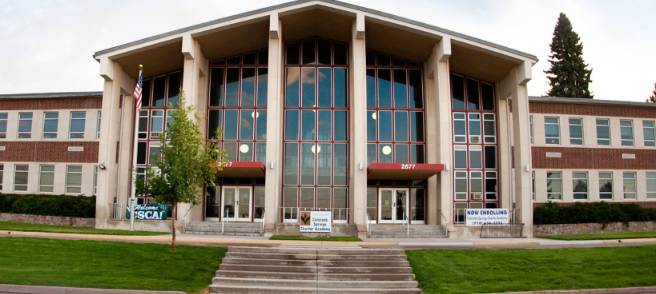
Colorado Springs Charter Academy was founded by a group of local parents and educational leaders in 2005 with the belief that children need a challenging, stimulating and motivating environment to fulfill their true potential.
Editor’s note: This analysis appeared earlier this week on Colorado’s gazette.com.
A majority of Colorado voters have a favorable view of charter schools and support opening new ones even in districts with declining enrollment. But support for charters was notably lower among Democratic voters.
The findings come from a Magellan Strategies poll of 882 Colorado registered voters conducted between April 26 and May 1. Survey questions were developed in collaboration with Chalkbeat. The survey has a margin of error of 3.3%.
The survey results were weighted to be representative of Colorado voter registration demographics. For that reason, respondents are more likely to be white and well-off than Colorado public school parents. Only about 30% of respondents were parents of school-aged children, similar to the percentage of voters in most elections.
The poll found 52% of respondents and 65% of parents had favorable views of charter schools. But just 36% of Democrats had a favorable view, compared to 79% of Republicans. Among unaffiliated voters who make up the largest share of Colorado voters, less than half had a favorable view, while 21% were unsure or had no opinion.
Asked to describe the differences between district-run and charter schools, many respondents correctly said they have more autonomy and flexibility, have non-unionized teachers, and get public money. These open-ended responses showed a partisan divide.
More Democrats described charter schools as religious, as being able to select students who will do better on tests, and as contributing to school segregation. More Republicans said charter schools have higher standards and don’t teach a left-wing agenda.
To continue reading, click here.

Many studies indicate that students who participate in private school choice programs, available to students who attend many of Colorado’s approximately 500 private schools, are more likely to attend and finish college. Private schools also help parents feel involved and engaged in their children’s education.
Chalkbeat’s “Two Colorados” event earlier this month came to a key conclusion — not enough of the Centennial State’s historically underserved students (ethnic minorities and/or rural students) are going to college.
Indeed, there is quite a bit of hard data to back this conclusion. For instance, fewer than half of Colorado’s Hispanic men attend college, and of those that do, only 41% will go on to finish their degree.
It is worth noting that I am not a fan of education’s current “College or Bust” attitude. Many kids are not suited for college, and we have just as much need for plumbers and electricians as we do for business and communications majors. By putting all our eggs in the college basket, families may be forced to make choices that are not in their best interests.
That said, if Colorado is going to make it its mission to get as many kids as possible to college, the state should at least do it right. The best way to ensure underserved students succeed in college is to give their families agency in their education long before they go to college.
In Colorado’s defense, the state has one of the country’s more generous open-enrollment schemes for their public schools, and more than 130,000 Coloradan students attend charter schools. That’s nothing to sneeze at.
However, private school choice matters too. Underserved students may not have a charter school nearby, or they may live within the boundaries of a poor-performing school district where no one school is any better than the others. The ability to choose a private school — or to craft a unique education for a child through an education savings account — is necessary in these circumstances.
Not only do a majority of studies indicate that students who participate in private school choice programs are more likely to both attend and finish college, but they also help parents feel involved and engaged in their children’s education. This is particularly important in Colorado’s case, as many of the Centennial State’s underserved students feel they are abandoning their family and community when they go to college. With more local support for education, these feelings would not be as much of a concern.
Furthermore, there is precedent for private school choice in Colorado, as Douglas County once operated a voucher program.
The Choice Scholarship Program, created in 2011, partnered with a local charter school to offer scholarships to Douglas County families, which would then be used as tuition at a private school of the parent’s choice. Almost immediately after the program’s creation, 271 families signed up.
So why doesn’t the program exist anymore? Did it fail to meet parental or policymaker expectations?
No. The program was subject to a lawsuit that left families unable to use it, and the school board, which was elected with strong union support, officially shut the program down in 2017. It died because of politics; not performance.
Colorado has a golden opportunity to fix its past mistakes. To that end, the state could reinstate a scholarship program like the one that existed in Douglas County. Colorado could also embark on a new course by establishing an ESA program or a unique private school choice paradigm.
Whatever model that state finds preferable, Colorado would have to fight the same public education lobby that killed the Douglas program in order to implement it. But if the state is truly interested in helping underserved children attend college, school choice is Colorado’s best and perhaps only option.
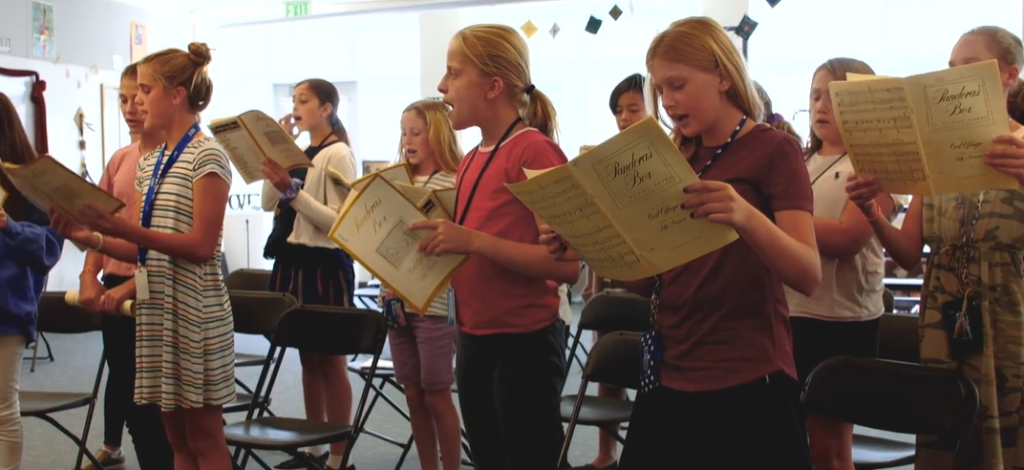
St. Mary’s Academy in Cherry Hills Village, Colorado, an independent day school founded by the Sisters of Loretto in 1864, is one of 502 private schools in the state that serve nearly 70,000 students.
Editor’s note: This opinion piece from Colorado Rep. Dan Woog, who represents the 63rd District in the Colorado House of Representatives and serves on the Energy and Environment Committee, appeared last weekend in Colorado’s Greeley Tribune.
It will come as no surprise to the parents and students of Colorado that the state is in an educational crisis.
Based on recent statistics, it’s become obvious that we have serious problems in the educational system in Colorado. Not only are we not sufficiently preparing our students for success in an increasingly failing economy due to the toxic fiscal policies of Democrats in Colorado and Washington DC, but we are also failing them by not providing the resources they need to accomplish their dreams.
In 2021, over 50% of Colorado students in grades 3, 5, and 7 were not meeting grade-level expectations in both English and math. This is unacceptable. While these statistics might just seem like numbers on a page, this is directly affecting the lives and dreams of students across the state.
We are all aware of the toll the pandemic took on students and teachers, but while this problem predates the pandemic, if there ever was a time our students deserved more choices in their academics, it is now after the shutdowns affected many students’ academic progress.
Not only does educational choice support students in their academic success, but it also supports parents. An October 2021 poll from Echelon Insights showed that 72% of Americans believe that parents should have the most or some influence over what schools teach.
To continue reading, click here.
 Editor’s note: This commentary from Deborah Hendrix of Colorado Springs, executive director of Parents Challenge, appeared Saturday on coloradosun.com.
What is empowerment? It’s the process of becoming stronger and more able to confidently control one’s life.
During the pandemic, and concerning K-12 education, empowerment has become a key factor for many families. Indeed, parents must be first in decisions impacting the lives of their most precious asset: their children. Our ability as a community to positively change the lives of children will be realized as we build bridges between homes, schools, and the broader community through educational choice.
Even before COVID-19 hit our shores, our students faced obstacles to receiving a quality education. The latest round of standardized tests, administered in January 2020 just before the pandemic, showed that test scores for 13-year-olds nationwide declined in both reading and math between 2012 and 2020. The lowest scoring students fell even further behind—a problem that the past two years of disruptions and learning losses have only exacerbated.
We must close these achievement gaps by empowering families to become better education consumers through informed school choice. That’s why my colleagues and I at Parents Challenge partner with low-income families to make sure they know their school options, available community resources, and how to support their scholars at home.
Parents do not need to be told what to do, they need to be provided with information and resources to enable them to make informed decisions that impact their children’s lives.
Colorado has so many educational options available to children, be it traditional public, charter public, private, homeschool or online. The number of public magnet schools in our communities also is increasing, along with community resources such as mentoring, tutoring, and mental health services.
Bridges are built when we give families this information, and these bridges empower families. When parents are empowered, their engagement level increases and their scholars do better in the educational setting chosen by the families.
A good starting point is for schools and educational organizations to ask families one simple question: What would help you better advocate for your child? This allows these educational organizations to reach out to community organizations that are a match, inviting them into a relationship with families.
Parents sometimes struggle with how to get their child an individualized education program or how to ask their school for resources. Some have no idea they can visit their child’s classroom and see how it supports learning at home. Others want assistance in getting technology for their home, math help for their child, or meals during a challenging time.
Building bridges between parents, schools, and community organizations empowers families with the knowledge and resources they need. It allows parents to be active partners in their child’s education, rather than passive recipients of whatever school lies in their neighborhood, or whatever curriculum local officials select. With parents taking responsibility and ownership for the school they select, they can work with a student’s teachers and counselors as an integrated team.
School choice is an empowering form of public accountability, where parents know that “one size does not fit all” and that, if an institution fails to meet their scholar’s needs, they can make a change.
Given the stakes involved in a child’s education, all parents need this power — and schools benefit from this accountability. Families should never be forced into a single school model; they should always have options available to them.
We have the ability and the responsibility as a community to showcase all that is available for our most precious assets. Children are our future — let’s give them every opportunity to succeed by empowering their parents to empower them.

Amber Ingram teaches her three children, Brynley, 5, Aubrey, 9, and Caleb, 12, at their home in Colorado Springs. PHOTO: Olivia Sun, The Colorado Sun
Editor's note: Click here to listen to a podcast with Step Up For Students president Doug Tuthill and Antonio Pares, founder of a Colorado-based organization that, thanks to innovative Colorado state law, works with public and private education groups to create new opportunities for students to receive education beyond the "traditional" schooling model.
Amber Ingram, a public school teacher in Colorado Springs married to a public school teacher, had been content for years with her family’s plan to educate the couple’s three children in district schools. Then, Ingram and her husband became concerned about some of the lessons being taught on subjects like gender identity. They became frustrated that at least one of their children was not being challenged enough.
And in the spring of 2020, COVID-19 appeared, bringing with it challenges for families with school-aged children. Ingram, who had never imagined herself teaching outside a classroom, decided to begin homeschooling.
Now entering her second year, she’s never looked back.
“I think I had put (homeschooling) in a box that was limited,” Ingram recently told a reporter at The Colorado Sun. “I didn’t realize all the opportunities that homeschooling can open up.”
Here’s what homeschooling looks like in the Ingram household: a daily schedule that calls for the children to learn individually and together; a focus on grammar and spelling; practice in critical thinking skills and math; an emphasis on history, science, music and art; and weekly get-togethers with other homeschooled children for learning and socialization.
Ingram tries to keep her children in a routine, but says they are so excited to learn that their lessons sometimes run overtime.
The Ingram family isn’t alone in its enthusiasm for homeschooling. Data show the state of Colorado’s population of homeschooled students doubled in the year after the pandemic hit schools, and indications are that the growth could be long-lasting.
To read more about this homeschool boom in the Centennial State and to hear how other Colorado families have come to embrace this learning alternative, click here.
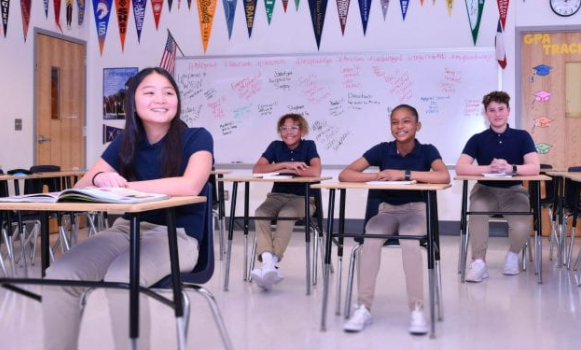
The Irving (Texas) Independent School District in the Dallas-Fort Worth area, which serves approximately 33,000 students across 37 schools, is one of several districts in the state that offer open enrollment.
While public school systems nationwide have had difficulties dealing with COVID-19, specifically around reopening classes to in-person activities, it’s clear the pandemic has opened many avenues for innovation. One example has come out of Colorado, where school administrators have opened public school enrollment to great success.
A recent Chalkbeat report found that Colorado has embraced public school open enrollment to great effect, with more students taking advantage of the opportunity to cross zoning lines than ever before, resulting in a 9% increase in students moving across districts.
The distribution of students attending schools outside their districts is not evenly distributed. In fact, the districts most likely to lose students to competing schools saw even greater decreases in enrollment. Unsurprisingly, a generally reciprocal increase in more desirable schools was found, too. Chalkbeat reports:
Where students went didn’t change much, though. The districts that already had high numbers of out-of-district students had even more this school year, and those districts that typically lost a lot of students to other districts continued to see that.
Colorado is not alone in pushing for open enrollment. States that have made similar pushes have found similar results. In Texas, the Reason Foundation found that parents sent their children to higher-performing districts when open enrollment was expanded:
Our analysis finds that three percent of Texas students transferred to a traditional public school outside of their assigned school district in the 2018-2019 school year.
These students tended to transfer to higher-performing school districts as measured by state accountability grades. In 2018-2019, roughly 45,000 Texas students transferred to a higher-performing school district at least a letter grade above their residentially assigned district.
The fact that open enrollment accelerated the trend of parents sending children to higher-performing districts indicates two things.
First, it shows that parents know their child’s district is underperforming. Parents must be able to identify good schools for open enrollment to fully flourish, and so this is a positive sign. Furthermore, it provides evidence that many parents had sent their children to local schools in previous years because zoning laws forced them to do so. It’s unlikely that open enrollment districts would return to stringent zoning laws.
Second, the fact that parents continued to send their children to districts that already were accepting more out-of-district students shows that higher-performing districts can maintain high academic rigor. If this were not the case, the trend would either start decreasing or reversing. But neither is happening. This is important because research suggests a school’s academic quality is the primary driving factor in open enrollment flows.
While Texas and Colorado are taking the right steps toward accommodating open enrollment, there is still much work to do. The good news is that 47 states allow some type of open enrollment. Unfortunately, the specifics and ease of these transfers vary greatly between states and districts. The variety is so great that a table provided by the Education Commission of the States is shockingly byzantine.
Some states have specific desegregation criteria that affect enrollment ability while others charge for moving across district lines. In other cases, the distance one must travel between schools is taken into account. Some states have mandatory inter-district open enrollment, while others allow only intra-district movement.
While these concerns may seem important to public school administrators, for parents, such regulations are unwieldy. Asking parents to go through arduous protocols to send their child to a school they know is better creates an adversarial relationship between parents and administrators. Students get caught in the middle.
Colorado has done the right thing by expanding criteria for public school enrollment. The move toward open enrollment has been beneficial for many Texas parents as well. More districts in the Lone Star state are following suit, and the number of children enrolling in schools of their choice is growing across the country.
Expanding open enrollment opportunities is a critical victory for students and parents alike. For students, it paves the way for higher educational achievement. For parents, it provides flexibility and peace of mind that their child is succeeding. While it may put pressure on administrators to deal with fluctuations in enrollment numbers, it is a worthwhile sacrifice if it benefits the student body.
We owe it to our kids to give parents the opportunity to enroll in the school of their choice through the vehicle of open enrollment.
Alabama: The Alabama Education Association sued to stop the state's education tax-credit program but a parent steps forward to try and block the suit with the help of the Institute for Justice (Associated Press).
Arizona: The Friedman Foundation for Educational Choice surveys parents using education savings accounts and finds they're happy with the program (Friedman Foundation).
Colorado: Two internet radio talk show hosts speak in Douglas County against school vouchers and "corporate" education reform (Lone Tree News).
D.C.: The government shutdown threatens the funding of the District's public school system including charter schools (Washington Times).
Florida: Tampa Bay area private schools are seeing enrollment growth thanks to a rebounding economy and school choice (Tampa Bay Times). GEICO donates $2 million to Step Up For Students, the non-profit that operates Florida's education tax-credit scholarship program for low-income students (PR Web). The McKay scholarship program serves 27,000 special needs students in Florida (Tallahassee.com). A group is suing the state to get more money for public schools, saying it is unfair to devote resources to charter and virtual schools (Miami Herald). Florida Virtual School wins the first round of court battles against K12 Inc. over trademark violations (EdWeek).
Georgia: Atlanta area KIPP charter schools received a group charter allowing them to pool resources (Atlanta Journal-Constitution).
Indiana: The state could be the No. 1 state for school vouchers if the growth continues (Indianapolis Star). Gov. Mike Pence talks education reform and school choice at the Education Nation summit (WNDU.com). A state report says voucher schools outperform the public schools but it is still unclear if the voucher schools are creating a bigger impact per student (Associated Press).
Iowa: A new survey by the Friedman Foundation shows a majority of parents in Iowa support having a school voucher program (Quad City Times, Waterloo Cedar Falls Courier). One local newspaper columnist calls school choice "insidiously popular" (Daily Iowan).
Louisiana: The state's voucher program actually promotes desegregation (National Review). A Ruston area private school that was kicked off the voucher program sues, claiming discrimination (The Advocate). Parents in Lafayette protest two charter school operators seeking authorizing in the parish (KATC.com). (more…)
Montana: House Republicans endorse three school choice bills - one to authorize charter schools, another to create a modest tax credit scholarship program and a third to create an education savings account program for students with disabilities (Independent Record). A day later, several defect on the charter school bill and it goes down - though maybe not permanently - on a 50-49 vote (Billings Gazette). The tax credit scholarship bill clears the Senate (The Missoulian).
Florida. U.S. Sen. Marco Rubio, R-Fla., introduces legislation to create a national tax credit scholarship program (redefinED). A parent trigger bill that was defeated last year in a dramatic tie vote is back this year (redefinED).
 Colorado: Two bills to expand private school choice through tax credits go down to defeat (Ed News Colorado). A student is in limbo after his mother withdraws him from a charter school to send him back to his zoned district school but the district says it's too late (9News.com).
Arizona: Charter schools would have to follow state purchasing laws and those that use management companies would have to post salary information under a bill filed in the wake of a newspaper investigation (Arizona Republic). Lawmakers nix a bill that would have required mailers be sent to parents informing them of school choice programs (Arizona Daily Sun).
New Mexico: Public schools, including charter schools, would be barred from contracting with private entities under a bill supported by critics who fear "a Trojan horse-type assault on the state to divert public education funds" (Santa Fe New Mexican).
Idaho: Lawmakers consider equitable funding for charter schools (Idaho Reporter).
Washington: The state public schools superintendent asks legislators to put charters under his watch, a move that conflicts with the new law voters recently approved that calls for a separate supervisory panel (King5).
California: The San Francisco school district triples the rent for charter schools, after charging less than other districts for years, prompting an outcry from some charters (San Francisco Chronicle). (more…)
Editor's note: This is the second of two posts we're running this week to commemorate the landmark U.S. Supreme Court decision in Zelman v. Simmons-Harris.
 As we commemorate the 10th anniversary of the landmark Zelman Supreme Court case, its implications are widely visible in the expansion of voucher programs, such as those in Indiana and Louisiana, as well as the growth of tax credit scholarship programs from Florida to Arizona. But the primary Zelman principle - that parents can utilize scholarship funding to enroll in any qualified school that they believe will best educate their children - is also at the heart of an important court battle in Douglas County, Colorado.
Conceivably, Zelman could not only lead to the reinstatement of an innovative voucher approach that local school districts could adopt more broadly, but also provide a pillar for arguments to overturn Colorado’s discriminatory and prejudiced Blaine Amendments.
Beginning in June 2010, the Douglas County School District’s School Choice Task Force began a series of community discussions to align its programs with its overarching policy of “universal choice.” The purpose: to create “multiple pathways for educational success” and then to assist families in choosing the best educational program for their child. This led in March 2011 to the adoption of a pilot Choice Scholarship Program (CSP) whereby in the 2011-12 school year up to 500 families could receive either the lesser of a private school’s tuition or 75 percent of the per-pupil revenue the district received. This amounted to a scholarship of $4,575 for 2011-12.
Just before its implementation in fall 2011, the Denver District Court issued a permanent injunction against the program because it caused state funds to flow to religious schools, violating the Blaine Amendments in the Colorado constitution and the Public School Finance Act. The appeal to overturn this decision attracted high-powered support from the Colorado Attorney General, the Beckett Fund for Religious Liberty, the Institute for Justice on behalf of families that had received scholarships, and the school district itself. Zelman is at the heart of their legal briefs.
The Institute for Justice notes that neither the school district nor the state has any role in selecting the school in which the family enrolls, i.e., this is a private choice program that Zelman specifically endorsed as constitutional. Citing the Zelman decision, when a scholarship program “permits government aid to reach religious institutions only by way of the deliberate choices of numerous individual recipients, the circuit between government and religion is broken,” and any “incidental advancement of a religious mission…is reasonably attributable to the individual recipient, not to the government.” This principle of parental choice, which state supreme court decisions upholding voucher programs in Wisconsin and Ohio recognized even prior to Zelman, led an Indiana court this year to reject a challenge to the Indiana Choice Scholarship Program. Yet, for some reason, the Colorado trial court chose to ignore this precedent. (more…)

