An episode of Paul MM Cooper’s outstanding documentary podcast series "The Fall of Civilizations" recounts the history of Carthage, which includes details of wars fought between the Carthaginians and Syracuse during the 300s BC. Carthage, a highly successful sea-trading nation, fought a number of wars with Greek colonies in Sicily prior to later wars with Rome.
Cooper describes how the Carthaginians made extensive use of mercenary armies, to spare themselves from the dirty business of fighting wars. During a Carthaginian siege of Syracuse, the Syracusans turned the tables on their attackers and sailed to attack Carthage. The wealthy but martially inept Carthaginians made impromptu efforts at fielding an army. This didn’t go well. The Carthaginians brought shackles in hopes of enslaving the Greeks, but instead found themselves routed in the field. Having scrambled behind their walls, the Carthaginians attempted to generate divine favor by sacrificing children to their gods.
Contemporaneous Greek accounts, and later archeological evidence, indicate that the Carthaginians may have been the last Mediterranean civilization to practice human sacrifice. As if this were not odious enough, wealthy Carthaginians would purchase and sacrifice other people’s children.
At first these rituals seem to have been an authentic sacrifice, giving up the life of your own children in the hope of receiving favor from the gods, but before long, wealthy Carthaginians found a way around this. In fact, they seem to have developed a macabre industry, a trade in other people’s children for sacrifice.
Fortunately, sensibilities have evolved in intervening millennia, and we don’t go in for either human or for that matter, animal sacrifice, these days. Still this account struck me as unsettling. We manage to field our own military here in the United States. The decades of scandal related to politically connected Americans avoiding the draft has, however, more than a faint echo of the Carthaginian elite sending someone else to fight for them. Dodging military service inevitably entailed sending someone less connected, less fortunate than yourself to fight and sometimes to die in your place.
The phrase “a trade in other people’s children for sacrifice” is perhaps a bit strong to describe what happened to students during the COVID-19 debacle, but perhaps not, especially considering the minimal value derived from billions of federal education dollars. No small number of Americans benefited from choice schools as children, benefited from choice schools as parents, but oppose programs to provide K-12 choice to others. Like Carthaginians of old, these people are willing to sacrifice someone’s children for one reason or another, just not their own.
Between damaging their demographic prospects by sacrificing children to statues and mercenary forces turning on them in the Second and Third Punic wars, the Carthaginians hit the dustbin of history.
Praeterea dico exercitia Carthaginiensium in America delenda est.

Editor’s note: This post from Bruno V. Manno, senior adviser to the Walton Family Foundation’s K-12 Program and a reimaginED contributor, appeared Friday in the The Messenger.
A wide-ranging national study of U.S. charter schools presents more evidence that this nonprofit enterprise sector of public education is largely a success story. Charter students have reading and math test score gains that are greater than their peers in traditional district public schools, learning an additional 16 days in reading and six days in math. Overall, 83% of charter students perform the same or better than their district peers in reading and 75% perform the same or better in math.
The Center for Research on Educational Outcomes (CREDO) at Stanford University has published three reports since 2009 on the charter sector’s academic successes and struggles — the third was released on June 6. Like other analyses, CREDO’s report shows continuous improvement in charter student academic outcomes over time. CREDO further shows that this progress comes from existing schools getting better, rather than better new schools raising the performance of existing schools.
The general lesson for American K-12 education is that public schools can change a student’s learning path and accelerate academic growth. This is good news as public education seeks ways to solve the problem of pandemic-related learning loss.
To continue reading, go here.

A new policy report from an Ohio-based independent research and educational institute offers commonsense solutions for improving K-12 academic outcomes in the state, all of which center on the availability of additional education choice options.
The Buckeye Institute posits in #StudentsFirst: Empowering Parents to Help Students Regain Lost Learning that allowing parents to make better schooling decisions, making educational resources more available, and raising the public’s trust and confidence in government-funded instruction not only will help reverse COVID-19 learning loss but also will lead to overall education reform.
“The disruption of the pandemic cost Ohio students the equivalent of months of academic instruction,” wrote author Greg R. Lawson, a research fellow at the institute. “Given the negative long-term financial and social effects of this learning loss, Ohio policymakers should pursue student-first strategies to regain lost learning time and improve academic outcomes for elementary and secondary students.”
The most efficient way to accomplish this, Lawson writes, is by dramatically increasing the number of schooling options and educational resources available to parents, thus enabling policymakers to help families tailor academic environments to fit their children’s learning needs.
Specifically, the report calls for the following:
Broad-Based Education Savings Accounts: Create a broad-based ESA initiative to reform Ohio’s education system and its long-standing government-run education monopoly by shifting the focus to fund students before districts.
Universal Open Enrollment: Make it easier for all families to send students to their school of choice by requiring all Ohio public schools to participate in inter-district open enrollment.
Expanded Tax Credit Scholarship: Increase the maximum tax credit from its current $750 limit to $2,500 to make it easier for grant organizations to offer larger scholarships to more students in need.
Enhanced Spending Transparency: Require all public school districts to operate more transparently by sharing their spending data with parents in Ohio Checkbook.
“Families deserve these reforms as their students struggle to overcome the negative long-term effects of the pandemic protocols that cost them valuable years of learning,” Lawson continued.
The report is especially forceful on the subject – and importance – of education savings accounts. While charter schools and voucher programs have produced positive outcomes, the author contends, they lack the flexibility to meet the personalized educational needs of each student. ESAs, on the other hand, with their ability to help parents pay for educational products and services tailored to their child’s unique academic needs, put textbooks, tutors, online classes and group learning pods within reach.
While public support for all school choice options consistently polls over 50%, the report states, support for education savings accounts is generally even higher. A 2013 focus group found that 94% of Arizona families using an ESA were satisfied with their accounts. Since 2017, ESAs have received more than 70% of the public’s support each year, reaching 78% in 2021.
The report points to a study of Florida’s ESA program, which while limited to students with special needs, shows that the longer a family uses an education savings account, the more services it buys.
The author acknowledges that programmatic administrative details need to be worked out for Ohio families to reap the full benefit of ESAs, suggesting that the Treasurer of State operate the ESA program to simplify the process for families and avoid bureaucratic hurdles within the Department of Education.
Additionally, Lawson writes, families with existing Ohio Afterschool Child Enrichment Educational Savings Program accounts should not face a second bureaucratic approval process; those who already have had their income level determined should pre-qualify for the new ESA, thus reducing administrative burdens to help encourage more families to take advantage of the program.
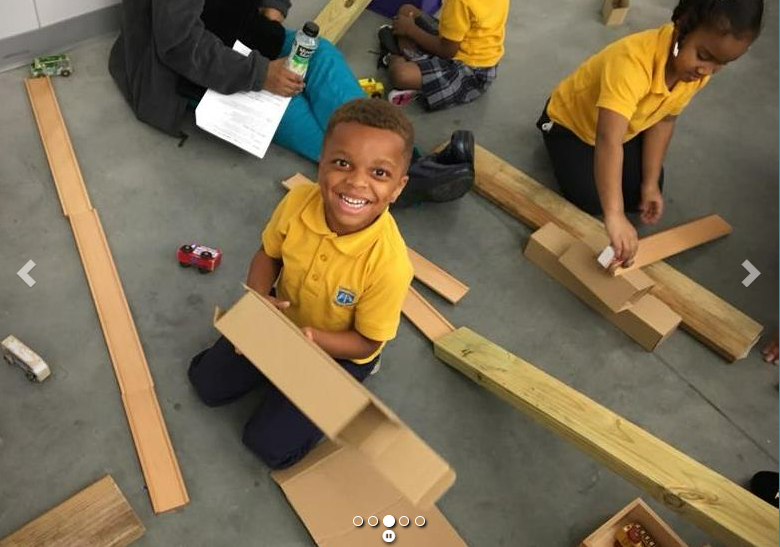
Guardian Catholic School in Jacksonville is partnering with a subsidiary of KinderCare Education to offer a summer program geared toward addressing COVID-19 learning loss.
As many students continue to struggle academically more than two years since COVID-19 hit, one Florida Catholic school has a focused plan to close the gap.
Guardian Catholic School in Jacksonville, Florida, will offer learning opportunities for students in kindergarten through third grade during its summer program to help those who have fallen behind catch up to their peers.
The campus, which opened in 2017 as the result of the merger of two other local Catholic schools, will offer help in reading and math, along with the usual fun of its summer program, said school principal Sr. Cynthia Shaffer.
Guardian serves students in pre-kindergarten through third grade and is the only urban school in the Diocese of St. Augustine. About 90% of its students receive state education choice scholarships to attend the school and about 70% are eligible for free lunch.
The school has partnered with Champions, a subsidiary of KinderCare Education, to put on its summer program, though paraprofessionals and aides at the school also will be assisting students. The program was made possible by donations.
Students will spend the first part of the day focused on academics, which will include a digital phonics program for pre-kindergarten through second grade. A math and English/language arts curriculum will come from Freckle, an online resource that continuously adapts to allow students to practice their skills while giving teachers the ability to focus on grade-level standards.
The English/language arts portion features instruction in reading, vocabulary and grammar. Self-paced math exercises present more than 70,000 unique math questions, covering K-12 standards and skills.
Like most every school in Florida, Guardian closed during the spring of 2020. When fall arrived, the school reopened its campus to in-person instruction, offering a synchronous online version for students whose parents chose to continue remote learning.
Many of the students who stayed home to take advantage of remote learning during 2020-21 are between six months and a year behind grade level, Shaffer said. Among the challenges families faced was Internet connectivity. Meanwhile, teachers were forced to go at a slower pace to ensure that students who were attending in person and online were working at the same rate.
While summer has been a traditional time for learning loss, known as the “summer slide,” the negative impact of COVID-19 on learning during the academic year has ramped up the need to provide safeguards. The situation has become so dire that traditional district and charter schools are required to spend at least 20% of their federal COVID-relief aid on addressing learning loss.
A recent analysis by FutureEd, an independent think tank at Georgetown University, found summer programs to be the top strategy for learning recovery. According to the group, Miami-Dade County Public Schools has budgeted $120 million over four summers, or 12% of its total American Rescue Plan allotment.
Meanwhile, the New York City Department of Education has earmarked $101 million for its six-week Summer Rising program this summer after spending $100 million last summer. Overall, districts have spent $3.1 billion to date; that amount could reach $5.8 billion by 2004.
Like Guardian, which plans to offer crafts, play and other fun-filled activities each afternoon, many summer programs this year are going beyond traditional, academic-oriented summer school offerings to provide enrichment activities for students. Some trends identified in the FutureEd report include:
 Editor’s note: This article appeared last week on Chalkbeat Indiana’s website.
Indiana plans to channel up to $15 million in federal emergency funds directly to parents to pay for tutoring for students who are struggling with reading and math.
Dubbed enrichment scholarships, the voucher-like program will provide each student who qualifies through their score on state tests a $500 grant toward tutoring.
The Indiana Department of Education is still developing the details of who qualifies and how parents will access the money, with no date yet set for the rollout.
The scholarships intend to help address pandemic-related learning loss, particularly in literacy, said the author of the law, Rep. Bob Behning (R-Indianapolis).
“We weren’t where we needed to be to begin with, but it’s been much more difficult as a result,” Behning said.
Statewide, only about 28% of students scored proficient in English and math in 2021, a percentage that dropped by one-quarter from 2019.
To continue reading, click here.

Prenda launched in 2018 with seven students. The network had grown to more than 400 microschools by fall 2020.
Editor’s note: To learn more about education choice in New Hampshire, check out SUFS president Doug Tuthill’s podcast with New Hampshire state Rep. Glenn Cordelli here.
Signaling its continued support for education choice and parental empowerment, the New Hampshire Department of Education has announced that four districts – Bow, Dubarton, Fremont and Haverhill – have been awarded Recovering Bright Futures Learning Pods grants from the state to address learning loss due to the pandemic.
The Department has partnered with Prenda, a tuition-free network of microschools, to create small, in-person, multi-age groupings where students can learn at their own pace, build projects and engage in collaborative activities. Prenda will utilize the grant funds on a per-pupil basis to serve Learning Pod enrolled students, who will remain enrolled at their district school.
Each learning pod will be supported by a certified learning guide and will follow a project-based learning model. All families can access the learning pods as space allows.
The concept of learning pods may be new to many, New Hampshire Education Commissioner Frank Edelblut said, but they’ve already served more than one million students across the country.
“Learning pods are particularly helpful to students who have experienced learning loss and will thrive with more individualized attention,” Edelblut said.
Learning programs in district learning pods have been aligned with New Hampshire Academic Standards and adapted to individual students. Prenda will be responsible for providing quarterly updates to the district on student performance criteria and attendance will follow district practices.
All New Hampshire school districts, including traditional and public charter schools, as well as home education families, are eligible to participate in the District Learning Pod program. The Department expects additional school districts in the state to sign on for the program.
 One Florida school is hosting a summer camp that will include reading, math and Bible class. Another is incorporating sports and drama into its offerings. A nonprofit organization will use the arts to help students with reading skills. Meanwhile, field trips, which practically were non-existent during the past school year, are making a comeback.
It’s all part of an effort to make summer school feel more like summer camp for students who have endured a year of masks, social distancing, and in some cases, learning entirely online and need to make up for lost time.
Though Florida schools, unlike those in many other states, were required to offer in-person instruction five days a week during the 2020-21 school year, COVID still disrupted learning, especially for families who were directly impacted by the pandemic or who lacked Internet access or other resources. Despite that return to brick-and-mortar schools, educators say some students never fully recovered since the sudden pivot to distance learning when the pandemic shuttered campuses statewide in the last quarter of the 2019-20 academic year.
“Some of these kids have lost a year,” said Stacy Angier, principal of Abundant Life Christian Academy in Margate, a small town 15 miles northwest of Fort Lauderdale. The school accepts K-12 state scholarships managed by Step Up For Students, which hosts this blog.
The school plans to offer three weeks of tutoring infused with fun. The first half of the day will include reading, math, and science “skill sharpeners.” During the afternoons, the students will get to choose among three tracks: sports such as flag football, basketball, or volleyball; arts such as drama, dance and music, and artistry that includes baking, knitting crocheting and crafts. Field trips will round out the summer experience.
At Tampa Bay Christian School, the SummerFUN program isn’t limited to students who attend the school. The state’s Reading Scholarship Program will allow district school students to attend if they have unused funds to apply. In addition to academics, the program will offer STEM, sports, and drama.
Theater also will take center stage at a summer program sponsored by the Central Florida Urban League and Central Florida Community Arts. The program, which was also offered after school and during spring break, helps students hone their reading skills by allowing them to write and design their own story.
“Specifically, this program will meet Florida Department of Education standards that ensure student achievement in particular grades and subjects, achievement growth on Florida Assessments and closing the achievement gap, all while boosting the reading and writing comprehension, knowledge, and confidence of our youth,” according to a statement on the league’s website.
Students who are approved for Reading Scholarships also can apply their funds toward 10 hours of extra tutoring.
“The idea is to help students avoid the summer back slide that inevitably happens annually, but we know that will be greater this year with all of the adaptations that needed to be made by schools and the virtual learning that students experienced this school year,” said Rebekah Lugo-Melise, senior manager of arts equity and access for Central Florida Community Arts.
This is the group’s second year partnering with the Urban League. It promises to be bigger and better with a playwriting theme, Lugo-Melise said.
“The goal for the students this year as we work with them is for each of them to write their own plays and design the costumes that would be used if the play were produced,” she said.
The community arts group is also planning supplementary materials that will play into the themes that the Urban League has established for the camp, with students creating newspapers in which they will promote their plays.
“They will get to do some acting, some drama exercises, and a myriad of other activities to expose them to the arts and to encourage engagement in their learning,” Lugo-Melise said.
Experts say that while it’s always important to make summer learning engaging, this year is more critical because of the learning losses and because the long-term stakes are high. A report by the Federal Reserve Bank of San Francisco recently estimated that pandemic-related learning disruptions will reduce the size of the economy over the next 70 years.
“Now, our country is heading into the most important summer for education in America perhaps since World War II,” Jenni Torres, vice president for curriculum for early education at Waterford.org, wrote in an opinion piece for The 74. “Due to COVID-19, the system is due for an overhaul to meet the new, long-term educational normal — and it needs to be done by the fall.”
 Editor’s note: This opinion piece from Steven Hodas, senior strategic lead for citiesRISE, and Travis Pillow, editorial director at the Center on Reinventing Public Education, suggests it would be a mistake to ignore the hundreds of community-based innovations in teaching, learning, childcare and health and wellness that have sprung up nationwide during the pandemic even as schools return to “normal.”
For nearly a year, schools' unpredictability has created stress and suffering for kids and families, especially in Black and brown communities where jobs and lives are also most at risk from the virus.
We've seen record learning loss, disengagement, depression, and signs of great stress in families.
But just as many schools struggle to serve their families, creative grass-roots responses have risen to fill institutional gaps. Policymakers are understandably eager to return to normal as soon as possible. But it would be a mistake to pave over the hundreds of community-based innovations in teaching, learning, childcare, and health and wellness that have sprung up around the country.
The media has highlighted stories of privileged families spending thousands to create personalized learning "pods." Less well-known is the growth of public pods, also known as learning centers or hubs, set up by community-based organizations, self–organized mutual aid groups, and freelance volunteers.
Pods share an ethos of mutualism with community-based tutoring, homework help, and counseling and mentoring programs. They enable community members to better help one another. And they provide an unprecedented natural laboratory for districts to work with families to codesign the services they need.
While much of this work is happening at organizations outside the traditional fabric of public education, a growing number of school systems have taken notice and begun to shift how they work. We are now collaborating with six of them.
The existential threat of enrollment loss, the unique flexibility of unrestricted federal relief funding, and a painful year of reflection on the subjugation of Black and brown families have led school districts to collaborate in power-sharing partnerships with families, volunteer groups, and community-based organizations.
Already, we are seeing the potential for more flexible, innovative roles for district staff, new talent pipelines into and alongside certificated teaching, revamped pathways between the K–12, higher education, and workforce sectors, and a leveraging of districts’ substantial financial resources to support organizations in their communities.
Indianapolis was one of the first communities where partnerships between the school system and local nonprofits spawned new supports for students learning remotely. The Mind Trust understood that churches and neighborhood groups had deep wells of trust in communities and worked with them to stand up small learning environments before school started last fall.
Leaders at The Mind Trust and Indianapolis Public Schools are now planning for these hubs to become a durable feature of student support, one that persists long after district buildings have reopened.
In North Carolina, Edgecombe County Public Schools opened learning hubs that provide in-person learning and social opportunities to students in the district who have chosen to continue learning remotely. The district is working with principals to design a “spoke-and-hub” approach to schooling that offers more community-based learning projects and uses flexible scheduling to make schooling more compatible with students’ jobs or internships.
Many leaders with whom we speak hope that the structures and services they are building now will persist and fundamentally redefine how they show up for their communities.
Though many kids will do better in regular in-person school, some are thriving with new kinds of adult support and the freedom to pursue ideas that light them up. Long after the COVID-19 pandemic is over, learning pods and arrangements that let schools resume online learning whenever necessary—knowing students can still receive in-person support if they need it—can hedge against possible future disease outbreaks and climate-caused shutdowns.
This is an exciting moment, but experience tells us that the old familiar ways will likely reassert themselves once schools feel out of mortal danger. Innovations will be discarded or wither away, depriving families, communities, and schools themselves of benefits being proven on the ground right now.
The innovations are at risk simply because the old arrangements—kids attending in-person school in large groups, teachers providing all instruction, community assets sidelined—are familiar and serve the interests of the best-organized interest groups. Parents who will want a return to full-time in-person instruction after the pandemic are in the majority. Teachers unions will also want a complete return to the status quo to protect their collective bargaining agreements.
Even well-intentioned relief efforts backed by new federal COVID funding could turn out to be palliatives that relieve strain on the status quo of schooling rather than catalysts to maintain a more diverse array of public support for learning.
For example, some plans for a “national tutoring corps” would require that tutoring be delivered in school buildings during school hours(link is external), often by district employees. This would crowd out grassroots homework-help programs that meet families where they are, at far lower cost and with far more community, parent, and student agency.
To avert the inevitable rush to put things back just as they were before the pandemic, governments and foundations should be building evidence about which innovations—online instructional programs, tutoring programs, pods, and other student support environments—are effective, for which kids and under which conditions.
The window of opportunity to learn from these new arrangements and produce durable changes will likely close in a matter of months.
People must get organized. Families that have come to rely on COVID-era innovations need to start urging school boards and municipal governments to continue them. Nonprofit groups that sponsor innovations must organize now to press state legislators to eliminate strings on public funds and other regulations (seat time and class size requirements, closed-shop arrangements that prevent community-based workers from becoming teachers).
Rather than using this unprecedented funding to double down on the very systems and practices that have failed our communities for decades, state and local advocacy groups should ensure that states and school districts invest stimulus funds in lasting changes that will preserve new educational arrangements that worked for families during the crisis and hold open the space of community-based agency and innovation.
Now is the time not only to invest in helping students recover from the pandemic, but to build an anti-fragile education system that is less brittle, less monolithic, more family-centric and more capable of meeting students’ individual needs—now and in the future.
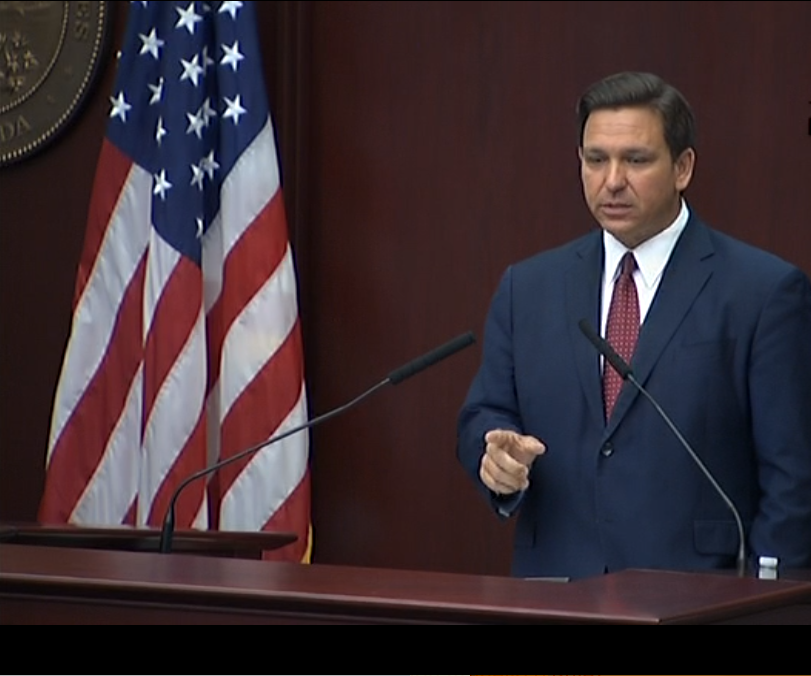 While other states were mandating lockdowns during the coronavirus pandemic, Florida was right to keep the state open, including its brick-and-mortar schools, Gov. Ron DeSantis said in his annual state of the state address today.
“Florida schools are open, and we are only a handful of states in which every parent has a right to send their child to school in person,” DeSantis told House and Senate members who gathered for the opening of the 176th legislative session. “We will not let anybody close your schools; we will not let anybody close your businesses, and we will not let anybody take your jobs.”
The governor also premiered a video that included scenes of happy, masked schoolchildren walking single file down the hall while being led by a happy, masked teacher. He thanked school administrators for their role in making sure campuses opened for the 2020-21 school year safely and smoothly.
In states that closed campuses, DeSantis said, the consequences will be “catastrophic and long lasting.”
Continuing the subject of education, DeSantis added that he hopes to build on last year’s priorities, which included a $500 million boost to raise district schoolteachers’ starting salaries to $47,500, putting Florida in the nation’s top five for teacher pay. He also cited education choice as a priority and congratulated the state for rising to No. 2 nationally in the percentage of graduating seniors passing Advanced Placement exams.
“Florida is leading in education, and we must continue to do so,” he said.
DeSantis’ remarks followed speeches from top legislative leaders delivered from their respective chambers earlier in the day.
State Senate President Wilton Simpson, R-Trilby, spoke specifically about Senate Bill 48, sponsored by Sen. Manny Diaz Jr., R-Hialeah. The bill would streamline the education choice system by combining five scholarship programs into two. It also would convert traditional scholarships to flexible spending accounts to give parents more control over their children’s education.
Simpson said the pandemic amplified the importance of parents’ ability to choose the best learning environment for their children. The scholarship programs, a patchwork system developed over two decades, needs to be simplified and accessible for the more 100,000 families who benefit from the program, which provides equity to lower-income families, he said.
“The fact is, school choice has always existed for wealthy families,” Simpson said. “I believe this option should be available to every family. It is the only way to truly break the cycle of generational poverty.”
You can read more about SB 48 here.
The 2021 legislative session is scheduled to run for 60 days and is expected to take up a number of education issues besides SB 48. These include school funding, dual enrollment affordability for private and homeschool families, career planning and workforce development and early childhood education.
Legislation under consideration includes SB 52, which would allocate $12.5 million to cover the costs of private and homeschooled who participate in dual enrollment programs by taking courses from a partnering college or university. The bill also would allocate $16 million to cover the costs of dual enrollment courses taken during the summer for all Florida students, including those who attend public schools.
The bill and its House companion, HB 281, would fix a glitch that occurred in 2013, when a change in the law shifted the cost of dual enrollment programs from colleges to school districts. Because school districts are state funded, the state picked up the cost. But private schools, which were not allowed pass the cost on to their students, had no alternative but to limit their dual enrollment offerings.
The Florida Conference of Catholic Bishops and the Florida Association of Academic Nonpublic Schools have each endorsed the dual enrollment bills.
 Editor’s note: In this opinion piece, Shaka Mitchell, Tennessee state director of American Federation for Children, and Justin Owen, president and CEO of the Beacon Center of Tennessee, explain how the Tennessee Supreme Court’s decision to take up an education savings account case would create a win for both parents and school systems. The piece appeared recently in The Tennessean.
On Thursday, the Tennessee Supreme Court accepted the widely publicized Education Savings Accounts—or ESA—case.
In 2019, the state Legislature offered a lifeline to families in our worst-performing school districts. They passed the ESA program, which would allow parents to take a portion of the dollars we already spend on their child’s education and use those dollars to send their child to a school of their choice.
Almost immediately, the city of Nashville and Shelby County sued the state to stop parents from utilizing this important program.
While lower courts sided with these local governments, we are optimistic that the Supreme Court will reverse those lower courts and allow the program to launch this fall.
Even before COVID-19, many families struggled to access a quality education in these two school districts. Fast forward to the current school year where nearly 200,000 students lack access to school buildings and tens of thousands haven’t been able to access the admittedly second-class online environment.
If they weren’t fortunate enough to be zoned into a good school or one that was open for in-person instruction, they were out of luck. Unlike families with means, lower-income families can’t just pick up and move to a better school district, nor can they afford private school tuition to send their child to a school of their choice. They are completely stuck.
We must do better.
The ESA program would be the great equalizer for these families. Regardless of their ZIP code or how much money they make, parents in Memphis and Nashville would finally have options. They could get their children into the school that best serves their needs by simply allowing the money to follow them to the school of their choice.
Yet, local government leaders are more concerned about money than fixing their schools or even allowing those most in need to leave for better schools. They chose to stand at the schoolhouse door, this time to keep these families in the schools they have failed to improve decade after decade.
Despite their claims, research shows that these local governments would save money under the ESA program. When a child leaves with an ESA, the public school district no longer has the expense of educating that child, but the program would still let the district keep a portion of the funding.
A recent Beacon Center study — using data reported by the school districts themselves — found that Nashville would save $500 each time a student left with an ESA. Shelby County would save an even greater $2,000 per child.
When the program is fully up and running, that translates into an additional $21 million these two districts would save. Metro Nashville Public Schools could add 65 classroom teachers or pay its existing teachers $670 a year more as a result. Shelby County Schools, meanwhile, could hire an additional 310 teachers or give each of its current teachers a $2,900 raise.
Fortunately, courts in nearly a dozen other states and the United States Supreme Court have found programs like Tennessee’s to be constitutional.
The state Supreme Court can now affirm the legislature’s authority to extend this lifeline to families by ruling that the Tennessee ESA program is in fact constitutional. And if they do so, thousands of families in dire need of a better education will finally have the options they deserve.

