School funding. Gov. Rick Scott proposes to spend $1.2 billion more on public schools next year. Coverage from Tampa Bay Times, South Florida Sun Sentinel, Palm Beach Post, Lakeland Ledger, Associated Press, News Service of Florida, Naples Daily News, StateImpact Florida, Panama City News Herald. More money will prove lawmakers care, writes Tampa Bay Times columnist John Romano.
 Teacher evaluations. Senate President Don Gaetz reiterates his concerns about the new system: "We have to be able to win this debate at the PTO meeting and the school advisory council, and we haven't won the debate." News Service of Florida. Gaetz is right about taking more time with teacher evals and other reforms, editorializes the Panama City News Herald.
Vouchers and creationism. SchoolZone notes a new website: Say No to Creationist Vouchers.
Jeb conspiracy. Exposed!!! Orlando Sentinel. Gradebook. The Answer Sheet. The Nation.
ALEC. Its latest annual report card gives Florida an education policy grade of B+ and a performance rank of 12.
Educator conduct. A former Palm Beach County principal gets 10 years in prison for soliciting sex from a minor, reports the Palm Beach Post and South Florida Sun Sentinel. After a four-year battle, a Palm Beach County teacher accused of harassing and threatening fellow employees may finally be fired, reports the Sun Sentinel. (more…)
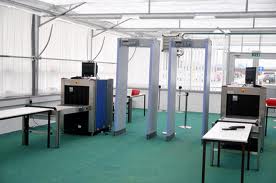
Image from schoolsecurity.org
School safety. Superintendents and lawmakers talk about more funding for more security. Coverage from Gradebook, St. Augustine Record, Sarasota Herald Tribune, Daytona Beach News Journal. Some are worried about “open campuses,” reports SchoolZone. A bill is filed that would require private schools to get safety alerts, just like public schools, from police departments and other emergency response agencies, reports redefinED.
The chairman of the Osceola County School Board, Jay Wheeler, writes in this Orlando Sentinel op-ed that the federal government should tax guns and bullets to pay for school guards: “When 26 students and school staff get killed by a crazed gunman in a public elementary school, it is a sad wake-up call for all of us that we have to do a better job protecting ourselves from our own freedoms.”
In Palm Beach County, mayors plead with the school board to install metal detectors in every school, reports the South Florida Sun Sentinel. More from the Palm Beach Post. In Lee County, deputies begin patrolling elementaries, reports the Fort Myers News Press. More from the Naples Daily News.
Test score limbo. If high school students fall short on the FCAT, he or she can still graduate if they get a high enough score on the ACT or SAT. But the state has yet to set new concordant scores for the other tests since upgrading the FCAT, leaving many students in limbo. Tampa Bay Times.
Charter school laws. SchoolZone notes the Center for Education Reform’s annual report card.
Why grading schools is good. EdFly Blog.
Vouchers and creationism. A Jacksonville school is among those highlighted in this MSNBC op-ed by student activist Zack Kopplin.
Privatization. The Bay County school district moves towards privatizing bus service. Panama City News Herald. (more…)
 Number of the week: 87,062
That’s how many low-income Florida families began applications for tax credit scholarships this year, up from 69,000 last year. It’s another sign of fast-growing demand for the largest private school choice program of its kind in the country.
Demand is so high, in fact, that Step Up For Students, the Tampa-based nonprofit that administers the program (and is home to redefinED), had to close applications last week to new students for the 2012-13 school year. More than 50,000 scholarships have already been approved, and thousands more are in the pipeline.
Not all families who begin applications finish them. And not all students who are approved for scholarships take them. That’s in part because some families determine they can’t afford the difference between the scholarship amount ($4,335 this fall) and the private school’s tuition and fees. The scholarships are only available to students whose families meet the income eligibility requirements for free- or reduced-price lunch.
Last year, the tax-credit scholarships program served 40,248 students, according to a Florida Department of Education year-end report posted Monday. That's nearly double the 21,493 it served just five years ago. In the spring, the Legislature bumped up the program cap from $219 million to $229 million so about 9,000 additional students could be served.
A bigger problem for science in Louisiana
Two widely circulated stories recently noted the anti-scientific teachings of some private Christian schools that will be participating in Louisiana’s new voucher program.
The first, from the Associated Press, quoted a science advocate who lamented that public money will be used to finance creationism and other “phony science.” Meanwhile, Mother Jones headlined, “14 Wacky ‘Facts’ Kids Will Learn in Louisiana’s Voucher Schools.” Tops on the list: “Dinosaurs and humans probably hung out.”
From a scientific standpoint, such teachings are indefensible. But as I’ve written before, the poor track record of public schools in science instruction, particularly with low-income and minority students, can’t be defended either.
According to the latest NAEP results in science, Louisiana ranked 46th of 50 states. Twenty-two percent of its eighth-graders were deemed proficient.
And Florida's next education commissioner will be … (more…)
Editor's note: Due to technical difficulties with the blog, many redefinED readers were unable to read this post when it was originally published Friday. Thanks to those of you who notified us. Thanks to all for your patience.
 It’s old news that many religious schools teach creationism and intelligent design – and that some of those schools accept students with vouchers and tax credit scholarships. But the recent New York Times piece on tax credit scholarships gave school choice critics fresh excuse to pick up and hurl. Teachers union president Randi Weingarten immediately tweeted, “Public money being funneled to creationist, anti-science religious schools.” A few days later, a left-of-center think tank in North Carolina, out to stop a legislative proposal for tax credit scholarships in that state, described the Times story as concluding that “redirected public money” is being used to “spread fundamentalist religious theology like creationism.”
I’m in the science tribe. The evolution-is-fact tribe. But I don’t share their outrage. During my own evolution on school choice, I’ve had to grapple with the fact that many private schools are at odds with what the vast majority of scientists consider good science.
I’ve come to this conclusion: Even if we disagree about creationism, we shouldn’t be so blinded that we forget all the other lessons these children receive in all the other classes they take, in all the years they attend school. We should not overlook whether these children are learning to read and write and succeed in life. I'm hoping that people who do value scientific literacy would be more likely to look at the issue with a sober analytical eye. I’m hoping they might even be willing to place scientific learning in a broader societal context, where many public school students are suffering in part because they lack the foundational learning skills that also handicap them in the arena of science.
The fact is, not many traditional public school students are doing well right now in science. It pains me to say this, because I had amazing biology, chemistry and physics teachers in my public high school. What I learned from them has benefited me personally and professionally. But the facts are informative. In 2009, 21 percent of high school seniors scored at proficient or above on the National Assessment of Educational Progress in science. Break those numbers down into subgroups, and depressing morphs into apocalyptic. Only 8 percent of low-income and Hispanic students reached that bar. Only 4 percent of black students did.
In Florida, the state I know best, only 27 percent of low-income students scored at grade level or above on the state’s high school science test in 2011. To be fair, that’s up from 19 percent in 2006 – and many talented people worked hard to move the needle even that much. But it’s nowhere near high enough or fast enough. (more…)

