
By David Heroux and Ron Matus
In the blink of an eye, à la carte learning in Florida has become one of the fastest-growing education choice options in America.
This school year, 140,000 Florida students will participate in à la carte learning via state-supported education savings accounts, up from 8,465 five years ago. Their parents will spend more than $1 billion in ESA funds.
These families are at the forefront of epic change in public education. Completely outside of full-time schools, they’re assembling their own educational programming, mixing and matching from an ever-expanding menu of providers.
Nothing on this scale is happening anywhere else in America.
To give policymakers, philanthropists, and choice advocates a snapshot, we produced this new data brief. In broad strokes, it shows a more diverse and dynamic system where true customization is within reach for any family who wants it.
ESAs shift what’s possible from school choice to education choice. They give more families access not only to private schools, but tutors, therapists, curriculum, and other goods and services.
Adoption of these more flexible choice scholarships has been booming nationwide; 18 states now have them. But nowhere is their full potential more fully on display than in Florida.
Last year, 4,318 à la carte providers in Florida received ESA funding, more than double the year prior. Many of them are tutors and therapists, but a growing number offer more specialized and innovative services, as we highlighted in our first report on à la carte learning. Former public school teachers are also a driving force in creating them, just as they’ve been with microschools.
How far and fast à la carte learning will grow remains to be seen. For now, check out our brief to get a glimpse of what’s ahead.

**SPOILER ALERT! DO NOT READ IF YOU ARE UNDER THE AGE OF 8**
Western cultures, for some strange reason, involve rituals where we pretend that various “fairy creatures” exist, particularly with children: the Tooth Fairy, a jolly old elf with flying reindeer who brought me an awesome Big Wheel in 1973, egg and goody hiding rabbits, etc. When I became a parent, I played along with these rituals, but then at some point questioned why I was doing it. On the one hand, I didn’t want my children to be those killjoy types who went around bursting the bubbles of other kids. On the other hand, I did not want to train my children not to trust me. I decided to allow the “fun” to go on until they each reached a certain age, then to explain to them that these things are traditions and that it would be best to allow their friends to figure it out on their own.
So, dear reader, I assume that you have reached a certain age and that you are prepared to know the truth about the last fairy creature. Belief in this one tends to persist much longer than the others and is alas, more detrimental. Sorry to be a killjoy, but here goes:
Philosopher kings are not real.
This was my main thought upon reading Mike McShane’s recent entry in a debate about school choice regulation. Go read it. I’ll wait here.
Go on…
Okay, good. My favorite part involved the Gilded Age meat baron, but McShane made several crucial points. Local school boards, state governments and the federal government all regulate public schools in a very active fashion. I could produce multiple graphs from NAEP, PISA, etc., showing what a pig’s breakfast American academic achievement has become, but you have already seen them, so I will spare you. Why are American schools so wretched despite so much regulation? Oh well, that is simple: regulation is not made by philosopher-kings but rather by politics. Politics has an amazingly consistent record of fouling things up.
The philosopher-king fairies, invented by Plato, are a specially trained and educated aesthetic elite who, disinterested in fame or wealth, love only wisdom and justice. Having thus earned the right to rule over us lesser mortals, we proles should feel deferential and deeply grateful for their sacrifice. Again, sorry to burst your bubble, but these people do not exist in the real world. Out here in the real world, mere humans with all kinds of motivations (political and otherwise), limits to their knowledge, greed, stupidity and other normal human failings create regulations. Those of us fortunate enough to live in a democracy get the chance to throw the bums out when we’ve had enough. Just in case you haven’t noticed, a major subtext of politics these days involves bums that voters can’t throw out.
Politics, not philosopher-kings, runs regulation, and politics runs on self-interest far more than on benevolent technocratic wisdom. Choice programs must cope with powerful organized interests that yearn to use regulation as a tool to domesticate choice opportunities and find it in their self-interest to do so. The default position of choice supporters should therefore be to view the calls for regulation with a deep skepticism; it is not paranoia when people really are out to get you.
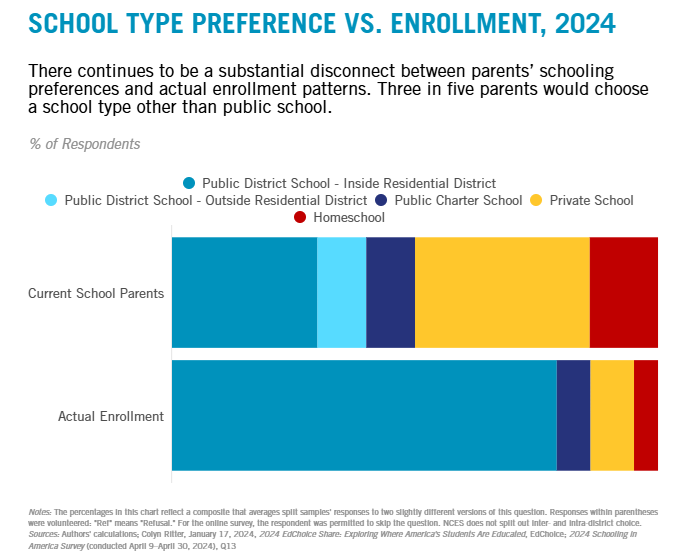
None of this is to say that it is possible to pass choice legislation without regulation; it is not. I am not aware of any program anywhere that operates without some degree of regulation. American parents, however, want a radically different K-12 system than the one government forces them to pay for (see above). The way forward is to allow families to partner with educators to sort through new schools and education methods. Heavily regulated choice systems might get to something close to the K-12 system parents want and deserve before the heat-death of the universe, but then again, they might not.
America’s founders fought a grueling war against the most powerful country in the world based upon what was then a radical idea, that people could live better without royalty to boss them around. The divine right of kings was another myth humanity needed to grow up and discard, and that should include philosopher-kings.
DELTONA, Fla.– Of all the skills Yaeli “Yaya” Santos could have picked to earn a grade in that portion of her eighth-grade physical education class, standing on her head seemed the easiest.
Understand this: Yaya does not claim to be athletic in the least, but she had to master a skill, and “How hard is a headstand?” she thought.
So, there she was, hands on the mat, feet pointing toward the ceiling.
Yaya was about to earn a passing grade when she lost her already tenuous balance, causing the mat to slip from under her. The top of her head slammed into the now uncovered hardwood floor.
“Not my finest moment,” Yaya said.
Yet that moment changed her life.
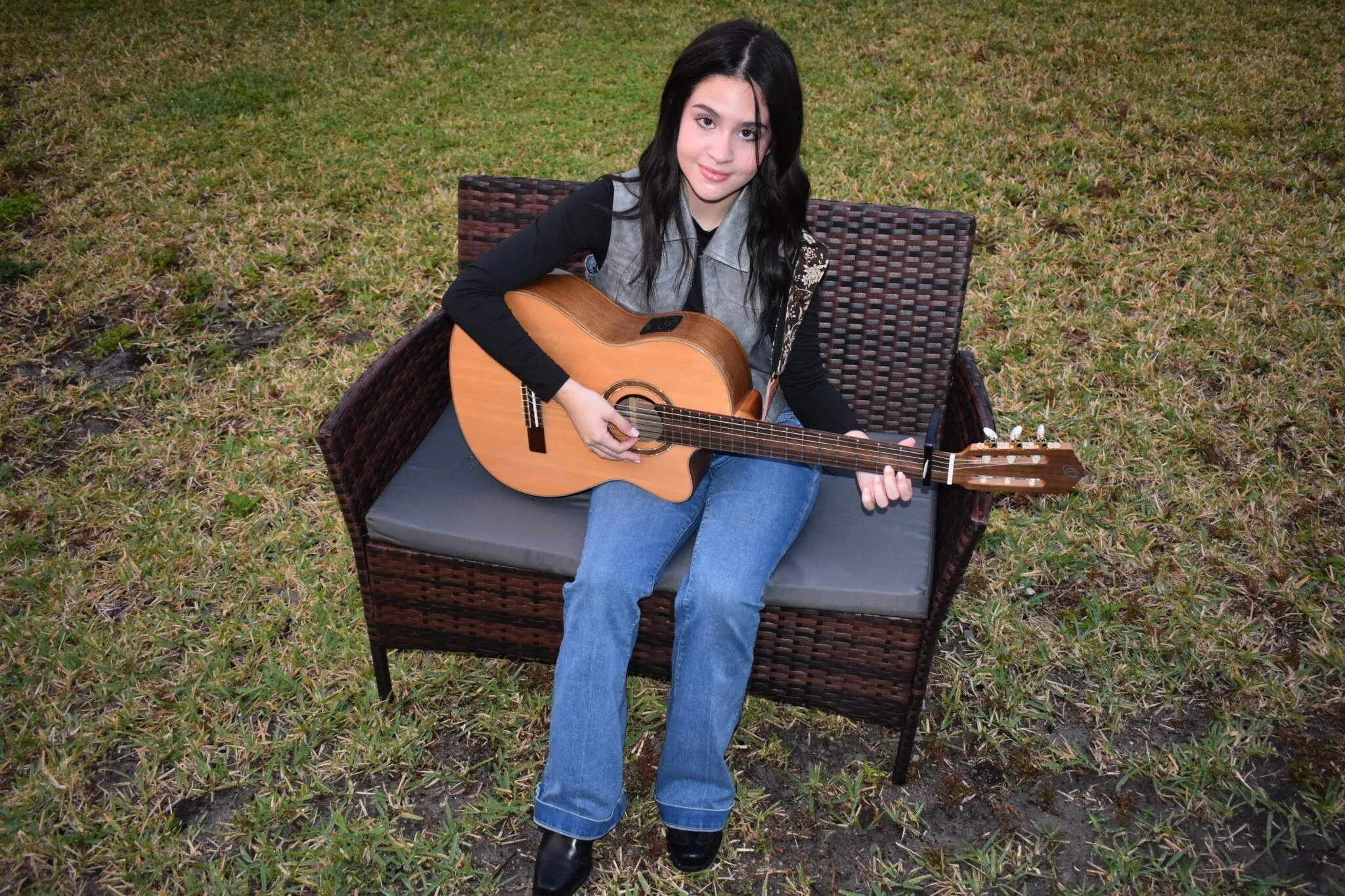
Yaeli "Yaya" Santos is learning to play the guitar as part of her curriculum under the PEP scholarship.
She suffered a severe concussion with lingering symptoms that included migraine headaches, dizziness, dyslexia, and memory loss. She went from being a confident student who earned top grades to one who lacked confidence in herself and struggled to complete assignments and tests.
“My eyes did not catch up with my brain, so I couldn’t focus on what I was reading,” Yaya said. “I couldn’t take notes because it was like my eyes got stuck when I was reading and I couldn’t transfer things from the board to paper, pen to paper.”
Yaya was attending Trinity Christian Academy, a private school near her Deltona home, with the help of a Family Empowerment Scholarship for Educational Options (FES-EO) when she suffered her head injury in March 2023. Now, learning in the traditional classroom setting was no longer working.
“I needed an alternative education path that could support her recovery with flexibility for doctors’ appointments and therapies,” said her mom, Giselle Bory-Santos.
That path was created by the Florida Legislature, which around the time of Yaya’s injury passed House Bill 1 and created the Personalized Education Program (PEP) that comes with a Florida Tax Credit Scholarship. Both the FES-EO and the PEP scholarship are managed by Step Up For Students.
The PEP scholarship provides an Education Savings Account (ESA) for students who are not enrolled full time in a public or private school.
Yaya graduated from the eighth grade at Trinity Christian then transitioned to the PEP scholarship for high school.
This allowed Giselle, the resource officer at Trinity Christian, and her husband, Rafi, a math professor at Full Sail University in Winter Park, Florida, to homeschool Yaya and tailor her education by spending the scholarship funds on various approved education-related expenses.
“PEP truly gives parents the chance to find the right educational path for their child’s unique journey,” Giselle said.
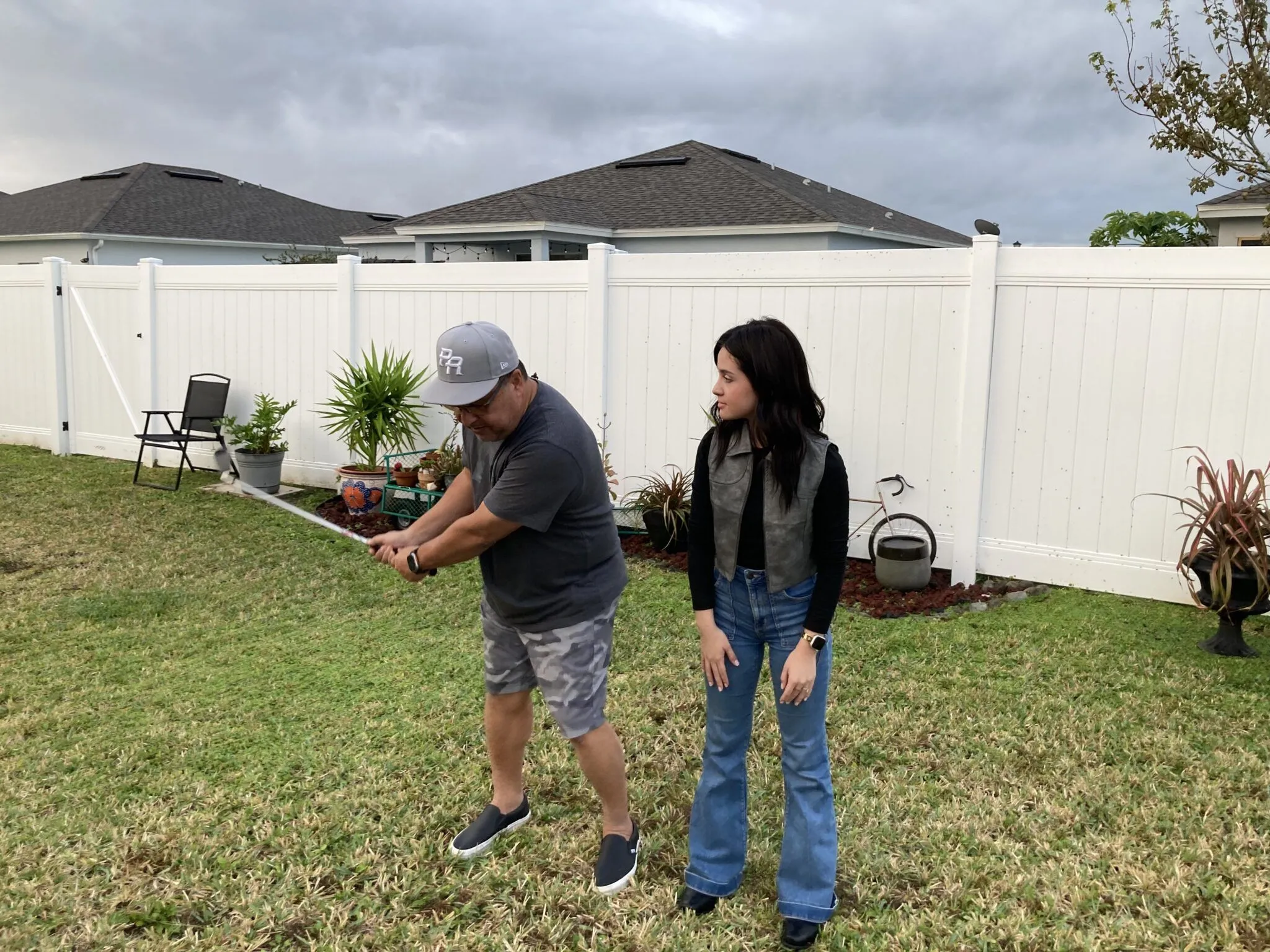
Yaya, working on her swing with her dad, Rafi, is learning golf as her physical education requirement.
Yaya moved to the PEP scholarship for the 2023-24 school year and enrolled in Florida Virtual School Flex. Now educated at home, Yaya could adjust her class schedule for appointments with her physical, occupational, and vision therapists. She could also work at her own pace without the pressure of completing a test by the end of the period.
She incorporated music into her curriculum and learned to play the guitar. Instead of gymnastics for her physical education requirement, she took up the safer sport of golf.
“I’ve officially retired from gymnastics,” she joked.
The PEP scholarship also allowed Yaya to dual enroll at Daytona State College, where she is working toward an associate degree in liberal arts.
With the help of her therapists, Yaya has been able to return to the classroom setting at Daytona State. Her professors, aware of her learning challenges, allow her more time to take tests and complete assignments. The result is a 3.94 GPA.
“I've been able to tailor my education and personalize it to who I am as a learner,” Yaya said.
Yaya has a 4.0 GPA in her high school studies. She will be 16 this spring when she graduates from both high school and Daytona State.
Next year, she will head to the University of Florida, where she plans to study sports and media journalism. Her goal is to eventually earn a master’s degree in media journalism from Full Sail University and a doctoral degree in professional communications from Florida by the time she’s 21.
“She is determined,” Giselle said.
Yaya said she was skeptical when her mom first raised the idea of home education. A self-described social butterfly, Yaya enjoyed attending school with her friends. Yet, she knew it was time for a change.
“My new normal was unique,” she said.
And the PEP scholarship, she said, was just what she needed.
“The word ‘personalized,’ I can’t think of a better one to sum it up,” she said. “Sometimes students excel when there are no boundaries to how they can learn. Being homeschooled opened opportunities for me.
“Who would have known that, after I had the concussion, that my school could no longer accommodate where I was at in my learning journey because of my health? Who would have known that this scholarship would have opened, and I would have been the first 10,000 students to receive it? Crazy. Now that is not normal.”
One of Yaya’s therapists suggested she keep a journal and write down her thoughts and feelings. A common theme during her recovery was the support she received. She often heard the phrase “you got this” as she struggled during therapy or with schoolwork.
So, Yaya wrote and recorded a song that incorporated her faith, her hard work and the support she received along the way. It’s called, “You Got This”:
“My thoughts fell apart
On the way to the ER.
In despair and fear,
He spoke into my ear
Time will heal your pain.
Take some time away.
You got this, you got this.”
Yaya still suffers from the effects of her concussion. Migraines come and go, and she can still become confused, but she’s learned to cope and compensate. She said she has far more good days than bad.
“The PEP scholarship is a blessing, and it changed my life, and it changed my family's life,” Yaya said.
“I would not go back and change anything about what I'm doing for school now. I've been able to find my dreams, my passions. I've been able to see that life outside of high school is going to be okay. The goal is to graduate and be successful, and that’s what I’m doing.”
Last week I had an opportunity to speak in Boise, Idaho, on school choice and the Arizona experience. In an interview on NPR, I addressed claims by choice opponents that Idaho “already has school choice.” I guess you could say I went full Depeche Mode in responding. I’ll explain why here, and I challenge you to try to keep that synthesizer music out of your head while you read on.
Families benefit from schools that are meaningfully diverse, proximate, and that have seats available in the grade levels appropriate for their children. The existence of choice schools is necessary but not sufficient: schools must be close enough to access and have seats available in the grade levels needed. The more schools you have, the more proximate schools you have, the less transportation challenges your families face.
The idea that Idaho, or for that matter anyone else, has “enough” K-12 choice seems highly questionable; in a demand-driven K-12 system families and educators continuously mold the clay of the education space. Educators develop new school models, such as microschools, and families sort through them.
The greater the meaningful diversity of schools proximate to families the better. Consider the Brookings Institution charter access map, showing the percentage of students with one or more charter schools operating in their ZIP code of residence:
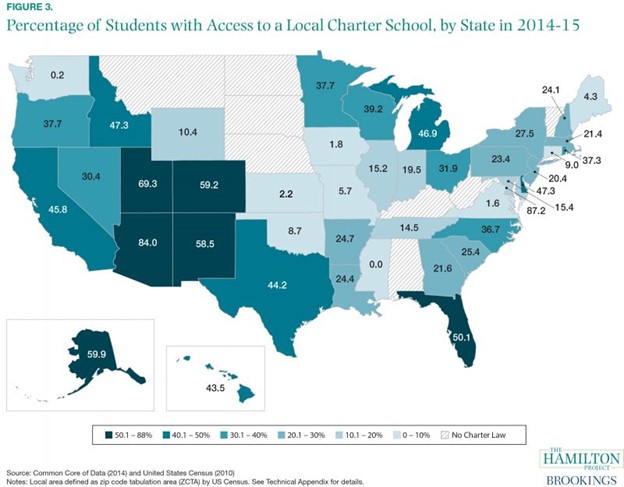
In the 2014-15 school year, 47.3% of Idaho students had one or more charter schools operating in their ZIP code. This means 52.7% of Idaho students did not have a charter school operating in their ZIP code. Having a charter school in your ZIP code represents a minimalist measure of choice. Given the many types of charter schools and families’ needs for a good-fit school with seats available at their child’s grade level, having a nearby charter is not much more than a start. Moreover, charter schools themselves do not capture the full diversity of schooling.
Arizona began creating mechanisms for educators to create meaningfully diverse schools 31 years ago. The quasi-market revealed demand for a wide variety of schools. We learned that parents wanted classical education, rigorous math and science college preparatory schools, and schools focused on a great many things from the arts to the equine arts.
More recently, several charter and private schools focused on the education needs of students with unique needs have emerged. The private choice programs increase access to private schools. Far from having “enough” choice in Arizona, every school waitlist should be viewed as a policy failure.
Modern choice programs have expanded the possibility set for families. Under Arizona’s ESA law, high school students can use their accounts to attend community colleges and simultaneously obtain a high school diploma and an associate degree. Families sometimes team up to hire their own teachers. Families have only begun to scratch the surface of the possibilities.
And then there is this polling research to consider from EdChoice:
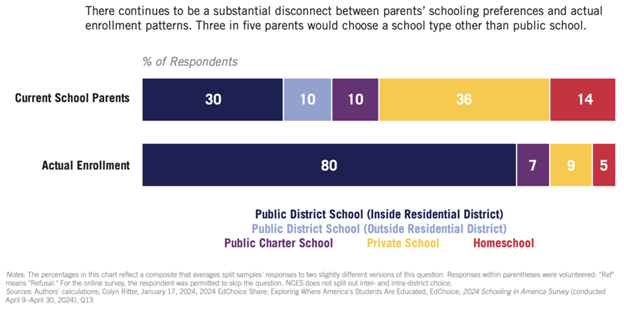
These polls indicate that certain types of schools are oversupplied, but it’s not the type that will become accessible if Idaho lawmakers pass a private choice program. Variety is the spice of life, and no state has yet come close to getting enough.

Education Next published a piece recently by Holly Korbey called The Tutoring Revolution, which reads in part:
Recent research suggests that the number of students seeking help with academics is growing, and that over the last couple of decades, more families have been turning to tutoring for that help. Private tutoring for K–12 students has seen explosive growth both nationally and around the globe. Between 1997 and 2022, the number of in-person, private tutoring centers across the United States more than tripled, concentrated mostly in high-income areas like Brentwood. Many students are also logging onto laptops to get personalized digital tutoring, with companies like WyzAnt and Outschool reporting they’ve enrolled millions of students for millions of hours in private, video-based learning sessions that students access conveniently from home. Market reports estimate the digital tutoring market was worth $7.7 billion globally in 2022, with projections of a compound annual growth rate of nearly 15 percent from 2023 to 2030.
Recall as well one of the most fascinating parts of Emily Hanford’s Sold a Story podcast series wherein Lacey Robinson, a veteran teacher in inner-city public schools described taking a teaching position in the suburbs. Robinson wanted to learn what the suburban schools were doing to teach literacy to upper-income students, and then bring it back to the inner-city schools. She discovered that the suburban schools were providing their students with approximately nothing:
“They were learning to decode at home with tutors. I know, because I became one of them.”
If you speak with or poll American suburbanites, they have traditionally expressed a fair degree of confidence in their public schools, which they tended to describe as either “okay” or “good.” Monitor their actions over time, however, and you see that they placed a greater and greater reliance upon tutoring. Most were enrolling their children in public schools, but they were relying upon them less and less and upon tutoring and other private enrichment spending more and more.
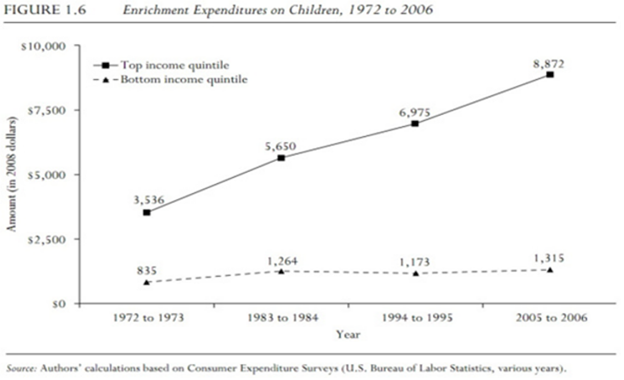
In 2015 Wired ran an article called The Techies Who Are Hacking Education by Homeschooling Their Kids. The unstated background message of this article: Silicon Valley families had decided that the time opportunity cost of enrolling their children in a school, even a public school they had already paid for with their taxes, was too high. Key quote:
“There is a way of thinking within the tech and startup community where you look at the world and go, ‘Is the way we do things now really the best way to do it?’” de Pedro says. “If you look at schools with this mentality, really the only possible conclusion is ‘Heck, I could do this better myself out of my garage!’”
Your garage, and perhaps your local Kumon, museums and hackerspaces. Early during the pandemic, Silicon Valley families created a Facebook group called “Pandemic Pods” with spontaneous order scratch to a very itchy group of American families.
The COVID-19 pandemic opened the eyes of many families regarding how much responsibility they should take for the education of their children: all of it. The public school system operates in the interests of its major shareholders (i.e., those deciding school board elections). Broadly speaking, mere taxpayers and families don’t qualify. One can describe the public school system as broken, but you can more precisely observe that it is operating as intended.
If you doubt that last statement, I invite you to attempt to lobby for a meaningful change in the way the public school system operates. You’ll meet all kinds of interesting people. Sadly, most of them will be eager to die on a hill defending the K-12 status quo.
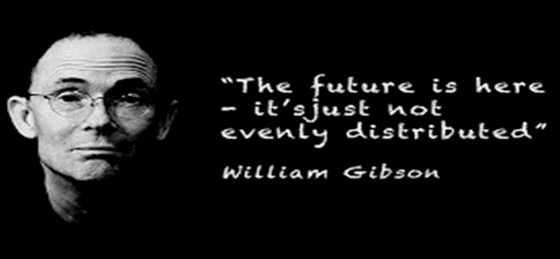
If someone purposely designed an education system to generate inequality, they would have some difficulty exceeding the ZIP code assignment plus tutoring for those who can afford it status quo. The question moving forward is not whether we are going to have more a la carte multi-vendor education. The question is what, if anything, we are willing and able to do to distribute that opportunity.

Recently I watched a presentation about the United States military. We face a very real if under-discussed possibility of an attack by China on American forces as a part of an invasion of Taiwan. If you take any stock in what China says and even more importantly what it has been doing, you might want to join the 1% or so of Americans paying attention. Remember when a large majority of the chattering classes thought Vladimir Putin was bluffing when he moved forces all the way from the Pacific region to the border of Ukraine? Best not to be that silly again.
In any case, an analysis concluded that the United States had overinvested in stealth aircraft. Stealth aircraft are great, mind you, but internal weapon bays are essential for stealth but also limit the amount of weaponry a plane can carry. The same goes for external fuel tanks, which extend operational range. Given the large investment made by China in asymmetrical tactics developed in the hope of sinking aircraft carriers, limited range is a big problem.
Not to worry. American advanced technology will save the day! Or will it? The NGAD (Next Generation Air Dominance) sixth-generation fighter might still be on the drawing boards before a major conflict breaks out. American aviation budgets are huge in comparison to other countries, but they are not infinite. The Pentagon needs to juggle keeping old systems operational and optimized while also developing next-generation platforms. We need a new strategy, on a budget, and with platforms we have available to us now.
What to do? The proposed solution involved using stealth aircraft to perform stealthy missions, like taking out enemy radar. Then the thinking went, we should use upgraded versions of older, non-stealthy aircraft. These older platforms are delightfully inexpensive; we have them lying around, and while lacking stealth, they can carry a tremendous amount of ordnance and big fuel tanks. Will it work? Hopefully, we will never have to find out, but this sort of thinking sounds broadly sensible.
What lessons can the school choice movement draw from this? Well in the implementation of ESAs, I’ve been hearing NGAD/major technological breakthrough stories for some time now. In the words of Jim Grant, “the inevitable is certain but is not always punctual.” While it is inevitable that technologies for improving ESA administration will develop, whether we can deploy them fast enough is an entirely different question.
So if like the American military, we need a solution we can implement now with technologies we have on hand and at an affordable cost the answer seems to be: debit cards. An improved version of an ESA debit card, limited to relatively simple purchases like tuition, therapies and tutoring, might relieve pressure on struggling ESA purchasing mechanisms. It might also reduce family frustration. Recently an Arizona ESA parent wrote on Facebook “so we have these accounts, which have money in them, that we can’t use.” The tens of thousands of pending reimbursements and various other payment delays have proven to be deeply frustrating to both parents and vendors.
Debit card codes are readily available to limit where purchases can happen, and practitioners have developed risk-based auditing in other, more mature policy areas such as SNAP. If we attempted to implement SNAP the way we are trying to implement ESAs, the calorie count for low-income Americans would fall off a cliff. “Americans can always be relied on to do the right thing…” Winston Churchill observed “…after exhausting all the other possibilities.”
 Will this be a perfect solution? Probably not. Might it make for an improved solution while we await technological breakthroughs? We will not know until and unless someone tries it. Alternatively, we might find ourselves discussing how fantastic our NGAD is going to be in 2040 as a means of consoling ourselves from a painfully bitter defeat in 2025. If you do not like this idea, and you certainly don’t have to, then I invite you to propose a better one but do please limit yourself to the stuff we have lying around.
Public education is in the early stages of transitioning from its second to third paradigm.
In his 1962 book, The Structure of Scientific Revolutions, Thomas Kuhn described an organization’s paradigm as the lens through which the organization’s members perceive, understand, implement, and evaluate their work. A paradigm includes a set of assumptions and associated methodologies that guide a community’s determination of what is right and wrong and true and false.
A paradigm shift occurs when anomalies begin to occur, and some community members begin to question the veracity and effectiveness of their paradigm. Eventually, a few community members begin proposing new ways of understanding and implementing their work, and a prolonged contest emerges between the existing paradigm and proposed new paradigms. If a majority of the community ultimately decides a new paradigm enables them to be more successful, a paradigm shift occurs, and this new paradigm is adopted. In scientific communities, Kuhn calls these paradigm shifts scientific revolutions.
Paradigm shifts are disruptive because they require community members to reinterpret all previous work and adopt new ways of conducting and evaluating future work. Senior community members most strongly resist changing paradigms because their status comes from their application of the existing paradigm over many years. Consequently, paradigm changes are rare and require several decades to complete.
While Kuhn’s work focused on the role of paradigms in scientific communities, his description of how paradigms function and change is relevant for most organizations and communities, including public education.
Public education’s first paradigm shift occurred in the 1800s. The United States was a sparsely populated rural agrarian society in the 1700s and early 1800s, and public education was highly decentralized. Most children were homeschooled, and literacy focused primarily on reading the Bible. Religious organizations provided most of the structured instruction outside the home.
Public education’s paradigm during this period emphasized decentralization, family control, flexibility, basic literacy, and religious instruction.
This paradigm began failing as innovations in transportation and communications in the early 1800s started to connect the country and promote more industrialization and urbanization. About 90% of Americans lived on farms in 1800; 65% in 1850, and 38% in 1900. This transition from rural to urban created child care needs, and increased industrialization necessitated more people becoming more literate.
The influx of European immigrants in the early 1800s, most of whom were Catholic, caused Protestant-controlled state and local governments to see public schools as the best way to ensure newly arriving Catholic children would be properly assimilated and turned into good Protestants. However, this first paradigm was ill-equipped to address this concern.
By the early-to-mid 1800s, a consensus was forming that a new way of conceptualizing, organizing, and implementing public education (i.e., a new paradigm) was needed. First, a desire for greater centralized management and standardized instruction and curriculum led states to begin creating school districts to own and manage local public schools.
Next was the passing of mandatory school attendance laws. Massachusetts passed the nation’s first modern mandatory school attendance law in 1852 to help assimilate a growing influx of immigrants from Ireland and other predominantly Catholic countries. By 1900, 31 states had followed suit. Eventually, every state joined them, with Mississippi being the last to do so in 1918.
Mandatory attendance laws significantly increased school attendance, which created management challenges for school districts, especially in growing, urban communities. To address this surge in student attendance, school districts began adopting industrial mass production methods such as batch processing that enabled the nation’s manufacturers to produce large numbers of products with consistent quality at a lower cost.
In addition to centralizing school district management and standardizing instruction and curriculum, this new industrial model of public education replaced multi-age grouped students with age-specific grade levels which functioned like assembly line workstations that moved students annually from one grade level to the next en masse. This was the new lens through which government, educators, families, and the public were now seeing and judging public education. This was U.S. public education’s second paradigm.
Just as public education’s transition from its first to second paradigm was driven by changes in transportation, communications, and manufacturing innovations in the 1800s, the rise of digital networks, mobile computing, and artificial intelligence in the 21st century is generating changes that are causing discontent with public education’s second paradigm.
Decentralization and customization are becoming core societal values that are transforming all aspects of people’s lives, including how we work, communicate, and consume media and entertainment. Consequently, decentralization and customization will be at the core of public education’s third paradigm.
Since public education is a government responsibility, this shift from the second to the third paradigm will impact government’s role in public education. Currently, government has a monopoly in the public education market, which undermines the market’s effectiveness and efficiency primarily because it underutilizes the market’s human capital.
In this emerging third paradigm, government will regulate the public education market but will no longer be a monopoly provider. This is like the role the government now plays in the food, housing, health care, and transportation markets. Most of the responsibility for how children are educated will shift from the government to families as families assume control over how most of their children’s public education dollars are spent.
This shift in government’s role from monopolist to regulator will require many operational changes. For example, as a public education monopoly, government holds its schools accountable for achieving performance goals. Without a government monopoly in the public education market, customers (i.e., families) will hold schools accountable for performance and change schools when they are dissatisfied.
Taxpayers also are customers in the public education market, and the government is responsible for meeting their needs through how it regulates this market. While families bear the responsibility for ensuring their children’s needs are met, government continues to be responsible for ensuring the public’s needs are met.
Kuhn’s research suggests that paradigm shifts are always long and contentious. This is particularly true for public education, given how much certain groups benefit financially and politically from the status quo. Lower-income students are the ones being most underserved by public education today and will benefit the most from public education becoming an effective and efficient market. But these students’ families have the least amount of political power.
In 1791,Thomas Paine proposed an ESA-type program for lower-income children in The Rights of Man. “Public schools do not answer the general purpose of the poor. They are chiefly in corporation towns, from which the country towns and villages are excluded; or if admitted, the distance occasions a great loss of time. Education, to be useful to the poor, should be on the spot; and the best method, I believe, to accomplish this, is to enable the parents to pay the expenses themselves.”
Paine’s recommended funding method was, “To allow for each of those children ten shillings a year for the expense of schooling, for six years each, which will give them six months schooling each year, and half a crown a year for paper and spelling books.”
More than 150 years after Paine’s proposal, Milton Friedman proposed a similar but more comprehensive plan in 1955 for making the public education market more effective and efficient. Now, almost 70 years later, we are starting to see some states adopt education choice programs similar to what Paine and Friedman suggested.
Apparently, U.S. public education is more fiercely resistant to change than the scientific communities Kuhn studied, but I am hopeful public education’s current paradigm shift will be completed within the next 30 to 40 years.
Drywall is piled three feet high in the attic of Emily and Alan Lemmon’s home in Tallahassee. It was placed there a few years ago, intended for walls as the couple finished the top floor.
But these days the stack serves a different purpose. Surrounded by white sheets used as backdrops and placed directly under nine flood lights attached to the rafters, it’s the stage used by the Tallahassee Homeschool Shakespeare Club, founded by the Lemmons’ oldest child, Genevieve.
“I have a house full of kids, about 25 of them, practicing their Shakespeare lines,” Emily said.
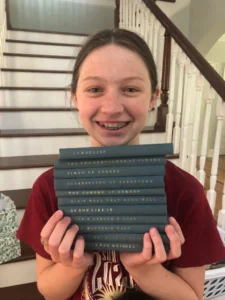
Genevieve Lemmon is the founder and director of the Tallahassee Homeschool Shakespeare Club.
Four of those kids live there – Genevieve, 14, and her siblings Chiara, 12, Dominic, 10, and Declan, 5. The middle two have roles in the yearly Shakespeare plays directed by Genevieve. Declan works as a stagehand, though he might soon earn a part on stage, possibly as the mischievous imp Puck from “A Midsummer Night's Dream,” which according to his oldest sister is a role he was born to play.
Genevieve began the club when she was 11 after watching Tallahassee’s Southern Shakespeare Company perform “Twelfth Night.”
“That kind of lit a fuse,” Genevieve said.
She recruited 10 of her homeschooled friends to act out three scenes from “Twelfth Night,” and soon her home was Tallahassee-upon-Avon. Alan was building sets, Genevieve was sewing costumes with her grandmother, and everyone was reciting William Shakespeare.
How do you get an 11-year-old hooked on the works of The Bard?
“We don’t own a TV,” Emily said.
And every room in the house is lined with bookcases stuffed with books.
The back yard leads to wetlands explored by the children as they satisfy their curiosity about anything that grows, crawls, swims, and flies.
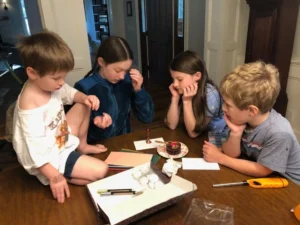
Emily and Alan are both professors at nearby Florida State University, and this is what they envisioned when they decided to homeschool their children. Emily was homeschooled and thrived in that education setting. She wanted the same for her children because she liked the freedom of customizing the curriculum to each child’s needs and interests.
“I like the way that homeschooling gives you more family time,” Emily said. “It helps build a really close-knit family, and parents can have more influence on the formation of their kids. I also thought my husband and I could do a better job educating them than a lot of schools because we can give them one-on-one attention.”
Last school year, the Lemmons qualified for the Personal Education Program (PEP) that comes with the Florida Tax Credit Scholarship (FTC), managed by Step Up For Students.
That was the first school year homeschooled families were eligible for PEP. The scholarship is an Education Savings Account (ESA) for students who are not enrolled full-time in a public or private school. This allows parents to tailor their children’s education by allowing them to spend their scholarship funds on various approved, education-related expenses.
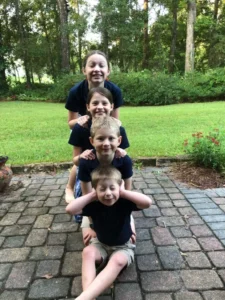
For the Lemmon kids, that’s a heavy dose of music lessons. They are all taking lessons in piano and a string instrument. All are members of the Tallahassee Homeschool String Orchestra, while Genevieve and Chiara are also members of the Tallahassee Youth Orchestra.
All PEP students are required to take a yearly, state-approved, norm-referenced test. (The list of tests can be found here.) The Lemmons take the Classic Learning Test.
PEP helps pay for curriculum, school supplies, books, summer camps, and music lessons.
“We’re trying to expose them to lots of different fields because they're trying to figure out what they're most interested in,” Emily said.
Chiara’s interests lean toward the sciences. She’s also developing an interest in farming and is now raising 17 young chickens in hopes of beginning her neighborhood egg business. She’ll call it Chiara’s Cheeky Chicks or Chiara’s Cluckers.
Chiara is also scheduled to take a farming internship this year.
Genevieve is mechanically inclined. She can take apart and reassemble a bicycle. She once disassembled a door in the family’s van and fixed what was rattling.
“She might have the makings of an architect or an engineer,” Emily said.
Or a Shakespearean scholar.
Genevieve took an online course this summer on “The Merchant of Venice,” taught by a Shakespearean author.
Her favorite plays are “Twelfth Night” and “King Lear.” When asked for her favorite Shakespearean line, she answered with the back-and-forth between Beatrice and Benedick in “Much Ado About Nothing.”
The Lemmons don’t own a TV and the kids don’t have iPhones, because Emily and Alan don’t want their children spending time staring at screens. They’d rather their children read books and explore the outdoors to stimulate their minds.
“So, you asked why an 11-year-old got interested in Shakespeare, it’s because her brain wasn't supersaturated with flashing lights and exciting noises and materialistic commercials. And she was quiet enough to be able to focus on what Shakespeare meant,” Emily said.
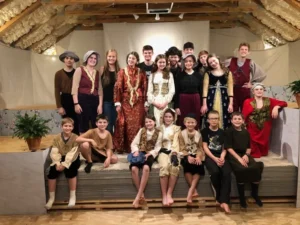
Directing has been a learning process for Genevieve. Mostly, she’s learned how to lead a cast. Along the way, she learned she could help shy or introverted cast members develop confidence by giving them bigger parts.
“I give them harder parts and they rise to the occasion each time,” she said.
Genevive said it was hard at first getting other homeschool students interested in Shakespeare. She fixed that with post-rehearsal pizza and ice cream parties. The afterparties are now called Sugar Shakes.
For Christmas last year, Genevieve received a director's chair and a megaphone.
“It was pretty cheesy in the beginning,” she said, “but now they know if they sit on my chair they're going to get in big trouble.”
In four years, the Tallahassee Homeschool Shakespeare Club grew from the original 10 members to its current 25. All are homeschooled and all received PEP scholarships.
Genevieve said being homeschooled is the catalyst behind her love of Shakespeare.
“I just like how it gives me more flexibility and it gives me more time to pursue my interests,” she said. “I think if I'd been in a (district) school system up to this point, I wouldn't have probably been exposed to Shakespeare and I wouldn't be directing plays now.”
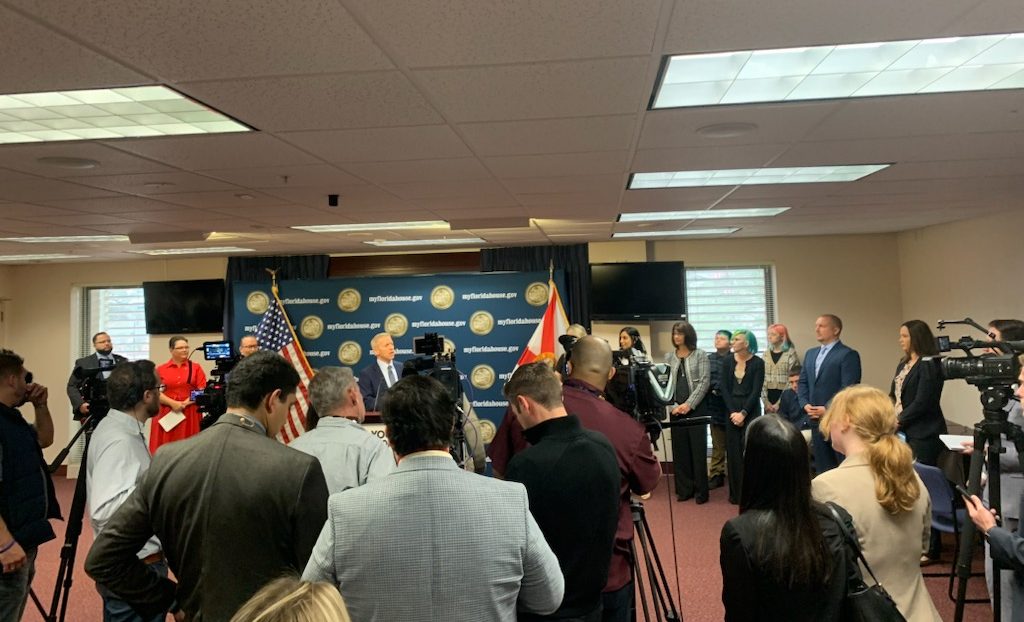
Florida House Speaker Paul Renner answers questions about newly filed landmark legislation that would greatly expand customized education choice options to every K-12 student. Photo by Amy Graham
A bill that Florida leaders are calling “transformational” would greatly expand the state’s 21-year-old education choice scholarship program by opening eligibility to all K-12 students in the Sunshine State and empowering parents to customize their children’s learning.
“Florida is about expanding freedom and opportunity,” said House Speaker Paul Renner, R — Palm Coast, who stood in front of a lectern with the sign, “Your Kids, Your Choice” during a news conference to introduce the bill. “Today, we empower parents and children to choose the education that best fits their needs.”
HB 1, which was filed Thursday morning, would remove income limits from all the state’s two major income-based programs, the Florida Tax Credit Scholarship Program, and the Family Empowerment Scholarship for Education Options. The bill also would convert traditional scholarships, in which money goes directly to a private school for tuition and fees, to education savings accounts. Also known as ESAs, these funds allow parents to direct funds toward other approved uses such as private tutoring, instructional material, including digital and internet resources, curriculum, a virtual program or online course that meets state requirements, or tuition and fees associated with homeschooling. (The number of homeschooled students using the formerly income-based programs will be capped and increased each year until 2027.) The law allows “choice navigators” to help parents sort through options and choose the best fit for their child. The expanded programs would be administered by state-approved scholarship funding organizations. (Step Up For Students, which hosts this blog, is one of two nonprofit organizations that manages these programs.)
Current law limits eligibility to lower- and middle-income families and students who meet certain criteria such as children of active-duty military members, law enforcement officers and children who are in out-of-home or foster care.
The bill also would eliminate the wait list for the Family Empowerment Scholarship Program for students with Unique Abilities. That program is already operates on an education savings account model. It places no limits on household income but restricts participation to students with certain special needs. More than 9,000 students are currently waiting to receive those scholarships.
“It is a tragic thing to have to say no to these children,” Renner said. This bill will completely eliminate the wait list for our children with unique abilities.”
The bill’s sponsor, Rep. Kaylee Tuck, R — Lake Placid, thanked the House leadership for allowing her to steer it through the legislative process.
“I think it’s clear to us that nobody, absolutely nobody, knows the needs and abilities of their child better than a parent,” said Tuck, who recently published a commentary on foxnews.com outlining how education choice works well in rural areas. “HB 1 empowers every parent to choose the customized and tailored system that fits best for their students…Florida is committed, has always been committed and will always be committed to providing the best education system possible.”
For Rep. Susan Plascencia, R — Winter Park, and Rep. Jenna Persons-Mulicka, R — Fort Myers, the bill was personal. Plascencia’s three children received education choice scholarships, and Persons-Mulicka’s son, Charlie, attends a private program for students with autism spectrum disorder that has allowed him to thrive.
“Within days and weeks, we could see the change and metamorphosis in our son,” Persons-Mulicka said. “We’re able to give our Charlie an opportunity, and it’s amazing we’ll be able to empower all our parents to give their children the same opportunity.”
Plascencia, who co-sponsored HB 1, said her children are now “leading productive, successful lives” and are happy in their chosen fields.
The bill is now in the House Choice and Innovation Subcommittee and is expected to be heard next week. From there it will go the PreK-12 Education Appropriations Subcommittee and then to Education and Employment Committee. A companion bill has not been filed in the Senate. The 2023 legislation session begins March 7.
“I think we’re going to see bipartisan support for this bill,” Renner said. “I think people will realize more and more how powerful (education choice) can be.”
The bill filing comes after two decades of support for education choice programs in Florida, which the Heritage Foundation named No. 1 in the nation last year for education freedom. Other states have recently followed Florida’s lead in establishing or expanding choice programs.
In 2021, West Virginia approved an education savings accounts program that was described at the time as the broadest expansions in the nation. That program will go into effect during the 2023-24 school year. Last year, Arizona enacted one of the most expansive education choice laws in the United States. The Arizona law allows any child who is not enrolled in a public or charter school to receive more than $6,500 per year per child to use toward private school, homeschooling, microschools, tutoring or any other form of education that does not fall under traditional public schooling. The law survived a challenge from opponents, who failed to gather enough signatures to put measure on the 2024 election ballot as allowed by the state constitution. However, newly elected Arizona Gov. Katie Hobbs has sought to block the expansion by not including the necessary funding in her proposed budget.
 In 2010, Doug Tuthill took a look around and realized he was living in a new era.
“Florida had this rapidly expanding portfolio of school choice options,” said Tuthill, the president of Step Up For Students, which administers the state’s tax credit scholarship program. “Yet there was little dialogue among the groups representing those choices. We weren’t talking to each other about what was working, what wasn’t, and why.”
Several important players in this bourgeoning movement recognized the need for more collaboration. Florida Virtual School and Step Up For Students, among others, wanted to see the school choice movement united, so they could learn from each other and talk through any differences.
Thus, FACE was born.
Florida Alliance for Choices in Education, or FACE, is comprised of more than 50 members, representing a diverse coalition of organizations dedicated to providing Florida school children with more educational options. Such organizations include National Coalition of Public School Options, Florida Charter School Alliance, Foundation for Florida’s Future, and StudentsFirst - all coming together with the belief that, as the FACE website says, “State policy should enable all parents to be fully engaged in their children’s education and to access those learning options that best meet their children’s needs.”
Step Up For Students (which co-hosts this blog) staffed the initial effort. Three individuals - Wendy Howard, a parent advocate from Tampa; Jim Horne, a former legislator and state education commissioner; and Julie Young, president and CEO of Florida Virtual School - spent a year facilitating outreach and diplomacy, eventually bringing all components of choice together in one organization.
Florida is the first state to do this. (more…)

