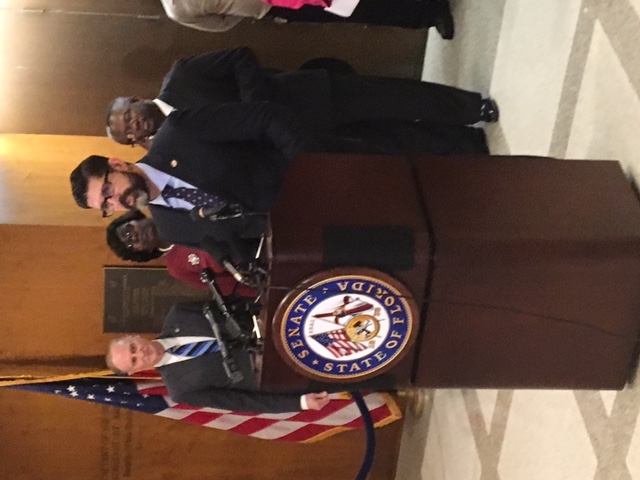
Sen. Manny Diaz (R-Hialeah) unveiled the Senate education leadership's priorities for the 2019 legislative session today in Tallahassee.
TALLAHASSEE – Florida state Sen. Manny Diaz Jr. on Thursday said Senate leaders hope to implement a “Family Empowerment Scholarship” to eliminate a waiting list for the Florida Tax Credit Scholarship for lower-income families.
Gov. Ron DeSantis made a similar pledge last week, saying he wanted to create an “Equal Opportunity Scholarship” to eliminate the FTC waitlist of about 13,000 families.
Diaz (R-Hialeah), who chairs the Senate Committee on Education, said there were “some similarities” in the two plans.
“We will continue to support families’ decisions to choose what’s best for their children’s education – whether it’s public or private school,” Diaz said, adding that over 100,000 students are currently on the FTC scholarship. (The scholarship is administered by nonprofits such as Step Up For Students, which hosts this blog.)
The new scholarship would be funded through the Florida Education Finance Program (FEFP) and would be capped at 15,000 students in its first year.
Flanked by lawmakers, parents on the FTC waiting list and faith leaders, Diaz said the “Family Empowerment Scholarship” is separate from DeSantis’ proposed plan. He said eligibility requirements of the two proposed scholarships are “very similar,” but did not offer specifics.
Under DeSantis’s plan, funding for the scholarship program would come from the FEFP. The scholarship award amount would be a slight discount of the district average per-student funding in the FEFP, allowing funding to follow the student. The maximum number of students eligible to receive a scholarship would be equivalent to 0.5 percent of statewide public school enrollment for the first year, providing opportunities for approximately 14,000 students. Each year thereafter, the number of eligible students would increase by an additional 1 percent of statewide public school enrollment.
Asked by media if the separate scholarships would confuse parents, Diaz said the proposed scholarship simply gives parents even more choices.
“I think we’ve done a good job of educating parents in Florida” about school choice, he said. “They’re interested in finding the best educational settings for their children. Every child is different. What works for one, may not work for another.”
The FTC program helps lower-income families pay for private school tuition or transportation costs to an out-of-district public school. A recent study by the Urban Institute showed students on the program are enrolling and completing college at higher rates than their public school peers.
In 2018-19, enrollment in the FTC program dropped for the first time in 14 years. In the preceding 13 years, the average annual enrollment increase was 20 percent. The enrollment dip was due to slower growth in corporate contributions, according to the state Department of Revenue.
Demand for the program remains strong. Parents for more than 170,000 students had started applications by the time Step Up For Students halted the application process in June. Step Up has already awarded more than 79,000 scholarships for 2019-20, approximately 20,000 students ahead of last year. New students are starting applications at a rate of more than 1,000 a day.
The proposed “Family Empowerment Scholarship” put a smile on the face of Giselle Gomez, who was among the parents who stood behind Diaz at Thursday’s event. Gomez is the mother of Arturo Gomez III, 6, who is on the waiting list for the FTC scholarship. A Realtor, Gomez currently pays out-of-pocket for Arturo to attend Redeemer Christian Academy in Ocala, which costs about $7,250 per year.
She did not want her son in a public school because of her own negative experiences attending public schools in Miami and Ocala. Gomez said she applied for an FTC scholarship this year for Arturo, but by the time Arturo’s application was approved, money to fund the program had run out.
While Arturo has thrived at Redeemer Academy – his behavior has improved and teachers often work with him one on one – she has been behind in payments.
Gomez said she is going through a divorce, making the situation even more tense.
“(Arturo’s) going through a lot of changes right now,” she said. “I want him to have stability and stay in the same school. His behavior used to be erratic, but the teachers have worked with him so much. His focus is better and his grades are amazing. I don’t want to take that away from him.”
Diaz was joined at Thursday’s press conference by Sen. Kelli Stargel (R-Lakeland), chair of the Senate Appropriations Subcommittee on Education, and Senate President Pro Tempore David Simmons (R-Altamonte Springs), each of whom unveiled other Senate K-12 education initiatives.
A Florida Senate panel advanced a proposal to create a new educational choice scholarship for victims of violence, harassment or bullying.
The sponsor, Sen. Bill Galvano, R-Bradenton, made changes to SB 1172 that would address some concerns opponents raised when the House advanced its Hope Scholarship legislation in November.
Public-school principals would have 30 days to investigate incident reports from parents. If the charges were "substantiated," victims would become eligible for a scholarship to a private school*, or a transfer to a public school of their choice.
Still, some critics argued lawmakers should focus on toughening up the state's existing anti-bullying policies, rather than create a new scholarship program.
"Wouldn't removing the bully make the school safer for all students ... as opposed to removing that individual who was bullied?" asked Sen. Perry Thurston, D-Fort Lauderdale. (more…)
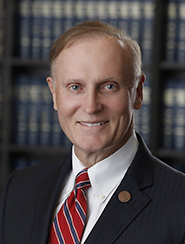
Simmons
The Florida Senate this morning has teed up debate on an overhaul of the school funding plan lawmakers approved last month.
Proposals on the agenda would strip all the funding out of House Bill 7069 — the wide-ranging, $419 million education measure that's been the center of controversy — except for one item: $30 million for Gardiner Scholarships, which provide education savings accounts to children with special needs. (Step Up For Students, which publishes this blog, helps administer the scholarships.)
And a key state Senator told reporters he hopes changes to the major education legislation won't end there.
Lawmakers returned to Tallahassee this week for a special session to meet three of Gov. Rick Scott's priorities. He wants them to steer more money into economic development, tourism promotion and public school funding. The governor freed up more than $400 million last week by slashing individual spending items out of the budget.
But the House and Senate are at odds over how, exactly, to fund the governor's priorities (and perhaps some priorities of their own). (more…)
Nearly 200 of Florida's lowest-performing public schools would have to make dramatic changes, or could soon see more of their students leaving for "Schools of Hope" run by national charter school operators, under a bill headed to Gov. Rick Scott's desk.
The wide-ranging education policy overhaul would affect everything from charters and recess to teacher contracts and virtual schooling.
After passing the House earlier in the afternoon, HB 7069 cleared the Senate 20-18, meaning one more no-vote would have killed it.
Three Republicans joined Democrats in opposition, including state David Simmons, R-Altamonte Springs, who presented the bill in a tense debate on the Senate floor.
Simmons and his House counterpart, Rep. Manny Diaz, R-Hialeah, brokered a compromise that would speed up the timetable for public school turnarounds, while spending setting aside nearly $140 million in grants for proven charter school operators that come to Florida and expand wraparound services in persistently low-performing public schools.
But Simmons said the bill would only supply those grants to 25 district-run schools — or about an eighth of those that might qualify. And he said struggling schools would only have two years to shake their D and F state letter grades before they would face closures or charter conversions. He questioned whether that would be enough time.
At one point, he said, luring new charter schools to open in the vicinity of district schools that could eventually close would "lead to the potential of significant waste."
As a result, he told fellow Senators: "Vote your conscience." (more…)
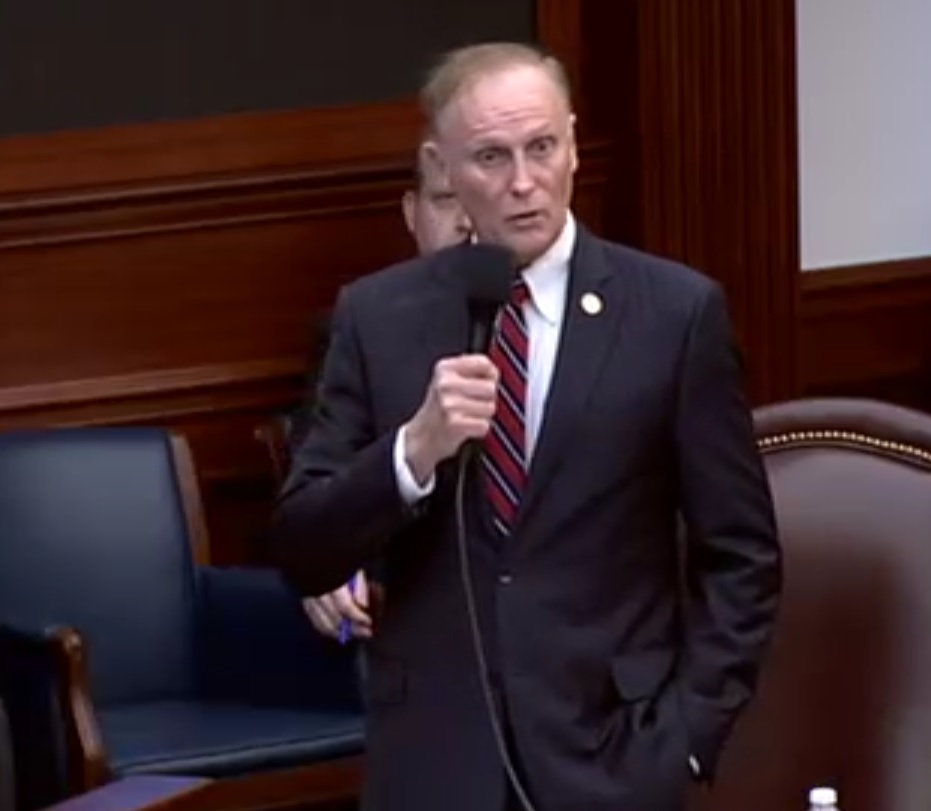
Sen. David Simmons, R-Altamonte Springs, explains the Gardiner scholarship program.
The Florida Senate had a guest in the chamber to celebrate legislation that would expand an educational choice program for children with special needs.
Jimbo Fisher, Florida State University's football coach, brought his son, Ethan, to the capitol. The 12-year-old, who's celebrating his birthday, has been diagnosed Fanconi anemia, a genetic blood disorder.
Coach Fisher and his wife have founded a charity that funds research to fight the rare disease.
The Legislature is putting the finishing touches on bills (SB 902 and HB 15) that would allow children with rare diseases to participate in the Gardiner scholarship program* for children with special needs, and the Senate is expected to vote on the legislation tomorrow. (more…)
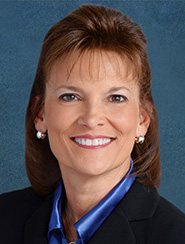
Grimsley
A pair of bills that would strengthen Florida private school choice programs advanced through the Senate's full appropriations committee this morning with bipartisan support.
The committee approved SB 1314 by Sen. Denise Grimsley, R-Sebring. It would increase the amount of funding students can receive through the state's tax credit scholarship* program, with larger increases for students in high school, where tuition tends to be more expensive.
The bill would also allow military families to apply for the scholarships year-round. And it would increase per-student funding for transportation scholarships, which help low-income and working-class students cover for the cost of traveling to public schools across district lines. (more…)
Simmons
But they also hinted they'd want changes to the concept. They said they'd like to steer money to traditional public schools that wanted to offer wraparound services or make other changes to help their most disadvantaged students.
The Senate Education Committee this afternoon approved two bills, SB 796 and SB 1362. Both would revive a concept that's made the rounds in Tallahassee for years: Making Florida more hospitable to "high-impact" charter schools with a proven track record of raising achievement among disadvantaged students.
Florida has long struggled to attract those institutions, despite the desires of its top policymakers.
The House's sweeping proposal would accelerate the timeline for public school turnarounds and look to shift students out of persistently struggling schools, into the same high-performing charters the Senate would hope to court with its more modest bills.
Sen. David Simmons, R-Altamonte Springs, is the upper chamber's chief K-12 education budget-writer and chairs the committee slated to hear the two Senate bills next.
He said the House had launched a long-overdue discussion about taking faster action to help children in persistently struggling schools.
Florida lawmakers are moving closer to an agreement that would create more stable, predictable funding for charter school facilities.
The state House is pushing ahead with a plan, included in its budget package, that would require school districts to steer some of their local property taxes to charters. A similar effort had stalled in the Senate, but was jump-started this week and won bipartisan approval today from the Appropriations Committee.
SB 376 would steer more than $150 million to charter schools statewide, though funding would vary significantly among districts.
Before the committee passed the bill, Sen. Oscar Braynon, D-Miami Gardens, said he wanted to add more protections to head off "private enrichment" in charter school real estate deals.
"No one wants to have taxpayer money go to enrich someone, and then when they sell or divest, they make money, and they walk away with taxpayers' money," Braynon said. He had proposed an amendment to that effect, but withdrew it for the time being.
The bill already aims to rein in profiteering by requiring charter schools to either ensure their land would wind up in public hands if they ever closed, or enter lease agreements with companies that have no ties to the charter organization. (more…)
Top Florida senators say they're prepared to create a stable, predictable funding source for charter school facilities.
But the road to get there remains uncertain, even after a second Senate panel voted today to advance a measure that would require school districts to share local property tax revenue with charters.
Charter schools in Florida receive the same operational funding as traditional public schools. But when it comes to money for facilities, they rely on annual appropriations from the Legislature. That funding has stagnated even as charters continue to grow, and it's far below what traditional public schools receive.
On Tuesday, Senate President Joe Negron told reporters that's unacceptable.
Education funding should follow the child to whatever public school they attend, he said. And the era of funding charter school construction through annual appropriations in the state budget — primarily through the dwindling Public Education Capital Outlay — must end.
"It's competing with other dollars that, to me, should be for universities and community colleges and schools in other areas," he said.
Senate bill 376, approved this morning by the panel in charge of education spending, would require school districts to give charter schools a proportionate share of their local property tax revenue reserved for capital projects. (more…)
Simmons
The nation's largest education savings account program would triple in size under a bill filed yesterday by the Florida Senate's lead education budget writer.
SB 902 by Sen. David Simmons, R-Altamonte Springs, would boost funding for Gardiner Scholarships from $71.2 million to $200 million.
It would also expand the list of conditions that allow students to qualify for the scholarships, which are available to children with specific special needs. The bill would make scholarships available to hearing and visually impaired students, those with traumatic brain injuries and those who are hospital or homebound.
The scholarships are designed to be worth approximately 90 percent of the amount the state would spend to educate a child in public schools. Parents can use the money to pay for private school tuition, homeschool curriculum, therapies, public-school courses, college savings and other approved education-related expenses. (more…)

