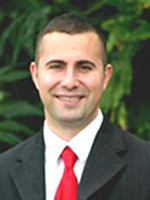
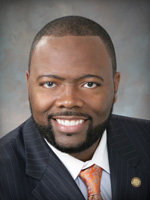
Rep. Soto
School choice Democrat has edge in senate race. State Rep. Darren Soto, D-Orlando, who supports vouchers and tax credit scholarships, appears poised to capture a state senate seat, reports the Sunshine State News.
DOE ends contract. From the Associated Press: “Florida is terminating a $20 million contract to build a website intended to help students, parents and teachers master new academic standards.”
Rick Scott ed plan called “timid.” The Daily Caller quotes Joy Pullman, managing editor of School Reform News: “Gov. Scott has released a comparatively tame education agenda, which reflects the vitriolic backlash he’s faced from the education establishment, and possibly a bit of “reform exhaustion” in a state that has made continual, serious education changes across the past 15 years.”
More no on Amendment 8. Hernando Today publishes a Florida Voices op-ed that says Amendment 8 is bad and really about vouchers.
Fate of double-F charter. The Board of Education will decide next week if the Sweetwater Branch Academic Elementary School in Gainesville can stay open, the Gainesville Sun reports.

Vouchers and tax credit scholarships are in line with Democratic Party support for social justice and equal opportunity, says Florida state Rep. John Patrick Julien, D-North Miami. And yet, he says, Democratic lawmakers in Florida who support those options risk getting "whipped" by party leaders who don't.
He says he's a perfect example.
He lost the August primary by 13 votes after the party establishment lined up behind his opponent, Rep. Barbara Watson, D-Miami Gardens. Julien, who strongly backs expanded school choice, challenged the outcome, alleging some absentee ballots were obtained fraudulently. But last week a Tallahassee judge dismissed the suit.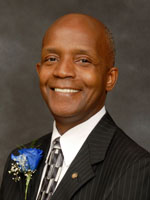
Democratic lawmakers who “care about educating the children, especially the poor children, they would want to support (vouchers and tax credit scholarships),” Julien told redefinED in the podcast interview attached below. “But they would get whipped out of it. … A lot of these folks, I guarantee you, if they try to push back, they’re going to be told, ‘Um, go talk to John Patrick Julien down there in Miami. And ask him how those votes worked out for him.’ “
Julien isn’t leaving quietly. He told Sunshine State News his family didn’t flee a dictatorship in Haiti so he could “be a slave” to Democratic Party leadership. He used similar language with redefinED: “If you want to sit down with me and treat me as a human being, and help me understand why my vote is wrong, I welcome it,” he said. “But what I don’t welcome are people that want to put the chains back around my ankles and my arms, and pull me in the direction that they want.”
Democratic opposition to vouchers and tax credit scholarships, Julien suggested, doesn't mesh with party values. “Democrats say that they want to educate people. Democrats say that they fight for the poor. Democrats say that their entire mantra is to be the voice for the voiceless. Democrats say that they are there for the sole purpose of fighting for the people,” he said. “What better fight is there than to fight to educate a poor child?”
The row in South Florida runs counter to long-term trend lines. Support for school choice among Florida lawmakers has grown over the past decade; in 2010, nearly half of them voted for a major expansion of the tax-credit program. Last spring, though, Democratic support dropped to about a third for a much more modest expansion. In the podcast, Julien offers one possible reason why.
Julien also suggests the Democratic Party should have a “big tent” on school choice. But as long as teachers unions remain a top financial contributor, he said, it’s not going to happen. “If you look at who my primary opposition was in this election cycle,” he said, “it was the teachers union.”
 Long-time Democratic education activist Jack Jennings, in a recent Huffington Post column, argued that Republican support for private school choice is a somewhat recent (i.e., the last 45 years) phenomenon, driven by a political desire to appeal to segregationists and weaken teacher unions. Jennings writes, “The Republicans' talk about giving parents the right to choose is a politically expedient strategy ... Just beneath the surface of the education rhetoric are political motivations to thwart integration, weaken the Democratic coalition, and cripple the teachers' unions.”
Jennings is being disingenuous by not acknowledging that Democrats have also changed their position on public funding for private school choice over the years. Democrats George McGovern and Hubert Humphrey both ran for president on platforms supporting tuition tax credits for private schools, and Senator Daniel Patrick Moynihan, D-N.Y., was the U.S. Senate’s leading advocate for giving parents public funding to attend private schools. The Democratic Party reversed its support of public funding for private school choice in the late 1970s - as a political payback to the National Education Association for giving Jimmy Carter its first ever presidential endorsement.
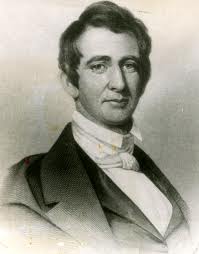
Jennings’ assertion that Republican support for publicly-funded private school choice didn’t exist prior to the 1960s would be news to the founders of the Republican Party, most notably William Henry Seward. Seward (pictured here) helped create the Republican Party and was one of Abraham Lincoln’s primary rivals for the Republican presidential nomination in 1860. After losing, Seward served as Lincoln’s Secretary of State during the Civil War.
Prior to seeking the presidency, Seward was elected governor of New York in 1838 as a member of the Whig Party. According to Doris Kearns Goodwin’s book, Team of Rivals, in his 1839 New Year’s Day inaugural address, Seward attempted to broaden his party’s political base by reaching out to “the Irish and German Catholic immigrants who formed the backbone of the state Democratic Party” (p. 82). As part of what Goodwin describes as Seward’s “progressive policies on education and immigration,” Seward “proposed to reform the school system, where the virulently anti-Catholic curriculum frightened immigrants away, dooming vast numbers to illiteracy, poverty, and vice. To get these children off the streets and provide them with opportunities to advance, Seward hoped to divert some part of the public school funds to support parochial schools where children could receive instruction from members of their own faith” (p. 83).
Seward’s attempts to give Catholic children access to more appropriate learning options drew a sharp rebuke from anti-Catholic Protestants. They accused him of tearing down the wall between church and state. At this time in U.S. history, the word “church” in the phrase separation of church and state meant the Catholic Church. (more…)
 Chicago: The teachers union strike is over, but it highlights a growing rift within the Democratic Party over school choice and education reform (Christian Science Monitor). Mayor Rahm Emanuel can now focus on expanding charter schools (Chicago Tribune). (Image from louisville.com)
Florida: The state teachers union sinks $1 million into the campaign over a constitutional amendment that has little to do with education (redefinED). Republican Gov. Rick Scott and a Democratic candidate for Congress make a joint appearance at a new charter school (redefinED). The latest enrollment numbers show school choice in Florida has become mainstream (redefinED). The Volusia school superintendent recommends the school board reject all nine applications for new charter schools next year (Daytona Beach News Journal).
Maine: A task force begins considering legislative proposals for expanding school choice. (Kennebec Journal)
Virginia: A Richmond charter school welcomes a critique from school district officials. (Richmond Times-Dispatch)
Tennessee: State education officials fine the Nashville school district $3.4 million for denying a charter school application. (Education Week)
Michigan: Lawmakers are set to discuss parent trigger legislation. (MLive.com) (more…)
Florida Gov. Rick Scott's visit to a new charter school yesterday was not only noteworthy because it reaffirmed his commitment to parental school choice, but because of who was by his side: former state Sen. Al Lawson, a Tallahassee Democrat now running for Congress.
“Throughout my 28 years in the Legislature I always wanted education reform for our young people. I had the opportunity to tour the state on many occasions to look into what was happening with our public schools. And I was always excited about the opportunity to help with public charter schools in the state," Lawson said after the visit to Governors Charter Academy, a K-8 school run by Charter Schools USA. "This is a great addition, not only to the state but to Tallahassee. And we have kids here that I’m really excited about. I’ve never seen kids act so well with all this media, so it’s already starting here. This is the kind of thing we want to improve education. That’s what it’s all about, whether you’re Democrat or Republican, about how we train our future leaders, because they have to take our place.”
Lawson was among the first black lawmakers in Florida who broke ranks with traditional allies to vote for vouchers and tax credit scholarships. (more…)
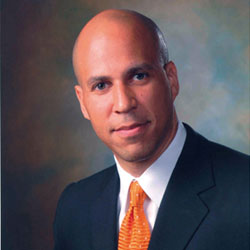 One of the national Democratic Party’s leading lights for expanding school choice, including private school vouchers and tax credit scholarships, will be the featured speaker Saturday at a local Democratic Party event in Tampa, Fla.
Newark Mayor Cory Booker will be the keynote speaker at the Kennedy King Dinner, an annual event sponsored by the Hillsborough County Democratic Party.
“Like the men for whom the event is named - President John Kennedy and Reverend Martin Luther King Jr – he (Booker) has shown great leadership in dealing with tough problems when others saw things as unchangeable,” county party chair Chris Mitchell said in a press release. “Mayor Cory Booker is a leader in our Party, mixing a pragmatic, 'get it done' approach with energy and a unique connection with voters."
Booker is fresh off a powerful speech at the Democratic National Convention that included moving lines about education but did not specifically mention his support for charter schools and vouchers. The press release announcing his speech in Tampa also skips that topic, instead noting Booker has “significantly reduced crime in Newark, championed a $40 million transformation of the City’s parks and playgrounds through a ground-breaking public/private partnership and doubled affordable housing production.”
 In this recent Los Angeles Times piece, education historian Jonathan Zimmerman (pictured here) credits Mitt Romney for offering a more ambitious education agenda than President Obama. The Republican's voucher plan, which would let students use government funding to attend either private schools or public schools in other districts, "would take on the true sacred cow in American education: local control," Zimmerman writes.
But here's the part that really caught our eye: Zimmerman's reference to the progressive roots of school choice. We can't trumpet this theme enough, so here's the relevant excerpt:
Yet the plan does remind us of the radical potential of school vouchers, which are today blithely dismissed by liberals as a right-wing plot to gut public education. But vouchers once drew significant support from the left too, including from such luminaries as Harvard sociologist Christopher Jencks and urban muckraker Jonathan Kozol.
To Jencks, who crafted a 1970 report on the subject for Richard Nixon's White House, vouchers could help equalize American education if public as well as private schools were required to admit a certain fraction of low-income students. And the vouchers would have to be distributed progressively, with the poorest kids getting the biggest tuition assistance.
The Jencks report represented a high-water mark of bipartisanship for vouchers, which have sparked nasty political divisions ever since. Despite court rulings to the contrary, many Democrats insist that public vouchers used in parochial schools violate the separate of church and state. They also claim that vouchers hurt public schools by skimming off the best students, although a long-term voucher experiment in Milwaukee shows little evidence of that.
 Sad but true: The other day, one of Louisiana’s statewide teachers unions tweeted that the Black Alliance for Educational Options, the stand-up school choice group, supports “KKK vouchers.” It subsequently tweeted, “Tell everyone you know.” (Details here.)
Even sadder but true: This wasn’t an isolated event. In recent months, critics of school choice and education reform have time and again made similar statements and claims – trying to tie Florida’s school accountability system to young black men who murder in Miami, for instance, and in Alabama, trying to link charter schools to gays and Muslims.
But this is also sad but true: Reform supporters sometimes go way too far, too.
Late last week, the Sunshine State News published a story about two Haitian-American Democratic lawmakers in South Florida, both strong backers of school choice, who narrowly lost primary races to anti-choice Democrats. The story quoted, at length, an unnamed political consultant who sounded sympathetic to the arguments raised by school choice supporters. He made fair points about the influence of the teachers union in the Democratic Party; about racial tensions that rise with Democrats and school choice; about a double standard with party leaders when Dems accuse other Dems of voter fraud. But then he said this:
“It’s a kind of ethnic cleansing of the Democratic Party,” he said, according to the report, “centered on the interests of the teachers’ unions.”
School choice critics may often be wrong; their arguments may at times be distorted and inconsistent. But to brand their motivations with a term that evokes Rwanda and Bosnia is more than off-key. It’s repulsive. It’s also a distraction and counterproductive.
I’m floored by extreme statements from ed reform critics. In the past couple of months alone, a leading Florida parents group accused state education officials of using the school accountability system to purposely “hurt children”; a left-wing blogger described John E. Coons, a Berkeley law professor and redefinED co-host, as a “John Birch Society type” because of his support for parental school choice; and other critics used fringe blogs and mainstream newspapers alike to shamelessly tar Northwestern University economist David Figlio, a meticulous education researcher who is not only widely respected by fellow researchers on all sides of the school choice debate but is so highly regarded beyond the world of wonkery that he was cited as a prime example of this state’s “brain drain” when he left the University of Florida. I’m further stumped by how such statements are rarely challenged by mainstream media, and by how more thoughtful critics simply shrug and look the other way.
Attacks like these make me want to say, “At long last, have you left no sense of decency?” But then, at less regular intervals, statements like the ethnic cleansing quote come up and knock reformers off the high road. I’m left with a less satisfying response: “Can’t we all just get along?”
 Should Florida’s next education commissioner be committed to the success of all students, no matter what type of educational setting they’re in? Or to public school students first and foremost?
State Rep. Reggie Fullwood, D-Jacksonville, believes it should be the latter. He issued a statement to that effect Friday, following the state Board of Education’s official launch of a search to replace Gerard Robinson, who left at the end of August.
“It is gratifying that the State Board of Education appears to be making it a priority to hire a commissioner who is committed to obtaining the input of parents and education stakeholders as future education reforms are contemplated,” Fullwood’s statement said “However, it is disappointing that the Board, by its actions today, remains anxious to hire yet another advocate for private-schools vouchers or a proponent of private virtual school operators. I believe Floridians expect our next state education commissioner to be committed – first and foremost — to Florida’s public schools and public school students.”
It's not clear what board actions prompted Fullwood's conclusion about voucher advocacy. But Fullwood, who sits on two education committees in the House, recently penned his criticism for school choice in a letter to the Jacksonville newspaper. “In Florida,” he wrote, “we have bet the house on vouchers and charter schools.”
As we noted Friday, the state board elected a new chair Friday – Gary Chartrand, a Jacksonville businessman who was instrumental in bringing the first (and so far only) KIPP charter school to Florida. As we have noted before, the Duval County School District, which encompasses the city of Jacksonville, has had less success with low-income students than any other urban district in Florida.
 The battle for the soul of the Democratic Party, at least in the area of public education policy, was on full display yesterday at two panel discussions organized by Democrats for Education Reform. (Full disclosure: I am DFER’s Florida coordinator.)
The first panel consisted of Democratic state legislators from Colorado, Indiana, New Jersey, North Carolina and Ohio discussing their legislative efforts to improve public education by changing teacher evaluation, tenure and compensation systems. These initiatives, generally opposed by teachers unions, are designed to make the current factory model of public education more effective and efficient by giving management more control over personnel decisions.
The second panel included the presidents of the two national teachers unions (Dennis Van Roekel of the National Education Association and Randi Weingarten of the American Federation of Teachers), two educational entrepreneurs with strong technology backgrounds (John Katzman from 2tor and Noodle.org, and Joel Rose from New Classrooms Innovation Partners), and Joe Reardon, the mayor of Kansas City, Kansas. They discussed what a post-factory model of public education might look like. There was broad agreement among these diverse panelists that customized learning is the future of public education. They all emphasized the importance of innovation and entrepreneurship, and the economic and moral imperative of more effectively overcoming the achievement gap related to family income.
The fault lines within this second panel, and in the Democratic Party as a whole, appeared when the moderator, Jonathan Schorr from the NewSchools Venture Fund, asked about the role private providers should play in public education. After acknowledging that private, for-profit companies provide buildings, desks, buses, textbooks, computers, pencils and electricity for district schools, both Weingarten and Van Roekel opposed allowing nongovernment employees to teach in public education, arguing that the essence of public education would be undermined if nongovernment personnel received public funds to teach children.
Katzman and Rose, the entrepreneurs/innovators on the panel, seemed agnostic about who employs teachers. They cared about the freedom to innovative and customize. Katzman in particular stressed that learning providers needed to be agile. Weingartner responded that teachers unions could provide this agility through collective bargaining contracts if only management would agree. She asserted that school districts were the impediment to flexibility and innovation, not teachers unions.
The teachers unions’ current business model is tied to teachers being public employees, so I understand why that’s a must-have for them. No business voluntarily gives up market share, but asserting that only public employees can further the mission of public education defies logic and common sense. (more…)

