
Education historian turned education activist Diane Ravitch critiques three recent books on education choice, but her review, as well as the thought line of the books themselves, contains fatal flaws.
Can public education survive against so-called “free market fundamentalists, religious zealots, and others” who hate the idea of public education and want to replace it with “privately managed charter schools, vouchers, tuition tax credits, online learning, home schooling, and for-profit schooling”?
Diane Ravitch, research professor of education at New York University, ponders this question in her recent New York Review of Books examination of three books critical of education choice. But her question, not to mention the review itself, misses the mark, in part because the three authors she reviews substitute “public education” (i.e., taxpayer funded education) for public schools (government owned and operated schools).
Derek Black, author of “Schoolhouse Burning: Public Education and the Assault on American Democracy,” conflates school choice supporters with segregationists as “opponents of democracy,” even when these groups are at odds or when segregationists used democratic means to achieve their ends.
Katherine Stewart, author of “The Power Worshippers: Inside the Dangerous Rise of Religious Nationalism,” conflates all sorts of thinkers as part of a monolithic opposition to public schools while misquoting sources.
And Steven Suitts, author of “Overturning Brown: The Segregationist Legacy of the Modern School Choice Movement,” conflates private school attendance during the 1950s-70s with racist motives.
If the authors are making more complex arguments, Ravitch doesn’t demonstrate it.
Black has argued that following the Civil War “public education corrected the flaws in our democracy.” Citing Black’s book, Ravitch notes that Louisiana’s Constitution of 1868 required all students to have access to free education, regardless of race, and that no school should be established exclusively for any race.
This, we are made to believe, was all undone by “opponents of democracy” who imposed Jim Crow laws and segregated education.
Not only was this not public education fixing flaws in democracy; racial integration wasn’t even achieved democratically in 1868. That was done by the Fifth Military District and Gen. Philip Sheridan. Sheridan had the power to remove democratically elected leaders and replace them with favored political appointees who were loyal to the Union and committed to the cause of racial integration and legal equality.
Louisiana wasn’t the only state that required free schools for Black students following the war. Florida did as well, and like Louisiana, quickly abolished any pretense of equality shortly after democracy was restored.
Louisiana replaced its constitution in 1879, and by 1885, Florida had done the same, cementing racial segregation in law for another 83 years. The state’s first democratically elected superintendent of public instruction spent his career trying to shut down a racially integrated private school and prevent white teachers from educating Black students.
To argue that public education, or even public schooling, is a cornerstone of democracy, there needs to be an acknowledgement that democracy brought about racial segregation. It was non-democratic means, a massive Civil War, and later the U.S. Supreme Court that began the slow march toward equality in education.
Here it seems almost as if Ravitch, and perhaps Black, Suitts and Stewart, are unaware or unwilling to acknowledge that public school advocates could also be staunch segregationists.
Historian Phil Magness noted that public school lawyer and advocate John Battle Jr. opposed school vouchers in Charlottesville, Virginia, on the grounds that it would weaken the district’s ability to resist racial integration. Battle found other pro-segregation allies to oppose school vouchers, including the all-white Virginia Education Association.
Racists and segregationists, such as Gov. Walter Pierce of Oregon and William N. Sheats, recognized as the father of Florida’s public school system, have supported public schools and opposed private ones.
Stewart unearths quotes from obscure villains to argue opposition to public schools is rooted in racism Christian and free market fundamentalists. But this strategy ignores the real and complicated debate about public education and school choice.
Public schools have been supported by “free market fundamentalists” such as Richard Cobden and even the father of capitalism himself, Adam Smith. And they’ve been opposed by thoughtful thinkers such as the scientist who discovered oxygen, Joseph Priestley, as well as New York statesman and abolitionist Garrit Smith.
The father of the modern voucher movement, Milton Friedman, was an agnostic who found racism and segregation to be morally repugnant.
Ravitch’s book review venerates public school advocates as saints defending the education of children fighting racism and saving democracy. The reality is that there have been heroes and villains on both sides, and it’s not clear these books take seriously the rich and complex history of American education and school choice.
In the end, Ravitch remains convinced that most parents remain loyal to their public school despite 47 states offering voucher, tax credit or charter school programs.
Indeed, many parents are satisfied. But that doesn’t justify her opposition to giving all parents, especially those in underserved communities, the same choices she had.
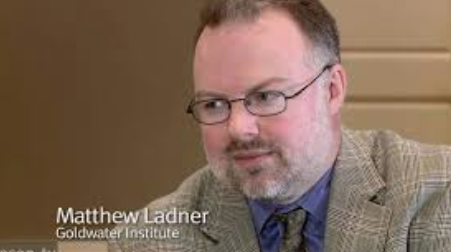 For as long as there have been public schools, there has been school choice. That was the message Matt Ladner delivered to education choice critics in an interview on KJZZ, a Phoenix-based public radio station.
The station aired interviews this week reflecting both sides of the education choice issue, which has been hotly debated in Ladner’s home state of Arizona. The first featured Diane Ravitch, an education professor, author and former assistant U.S. secretary of education during the George H.W. Bush administration. Ravitch argued that public schools are being hurt by billionaires who champion school choice.
Ladner, former vice president of research at the Goldwater Institute who is presently serving as director of the Center for Student Opportunity at the Arizona Charter Schools Association, responded in a follow-up interview today that education choice is not the result of a sinister plot but rather an attempt to democratize educational opportunities. School choice has always existed, he said, for those who are able to buy homes in well-to-do neighborhoods or afford tuition at pricey private schools.
“As long as school choice was tied to granite countertops, everything was fine,” Ladner said. “What we’re trying to do is extend that same opportunity to all students.”
Click here to listen to a snippet of the interview with Ravitch followed by Ladner’s interview.
 Last week Diane Ravitch warned her readers not to trust the findings of the latest Center for Research on Education Outcomes (CREDO) report highlighting student achievement in charter schools. To make her case, she cited a review of the CREDO study written by the National Education Policy Center (NEPC). Diane Ravitch citing NEPC struck me as humorous for a very good reason.
As the CREDO study results changed direction in favor of charter schools, both Ravitch and NECP took a u-turn of their own.
Now there is nothing wrong with changing your mind. In fact, I applaud people who review research and reassess their previous held beliefs, because it takes considerable courage to change your mind or admit you were wrong. However, the CREDO research methods didn’t change and neither did the concerns raised by NEPC. The only thing that did change was the CREDO results, and it no longer supported Ravitch’s or NEPC’s professional opinion.
Back in 2009, the CREDO report concluded, “Despite promising results in a number of states and within certain subgroups, the overall findings of this report indicate a disturbing — and far reaching — subset of poorly performing charter schools.”
When Ravitch accepted the National Education Association's “Friend of Education” award in 2010, she cited CREDO findings stating, “five out of six charters will get no different results or worse results than the regular public schools.” Ravitch was still highlighting CREDO findings as late as the summer of 2011, but today she attacks CREDO as part of a corporate education reform plot to privatize education.
Like Ravitch, the NEPC had nice things to say about CREDO back in 2009. Despite very little change in NEPC’s own concerns, or even in the CREDO methodology, the organization’s opinion turned decidedly negative in 2013 when the CREDO results shifted in favor of charter schools. (more…)

You're doing it wrong!
The new piece by Michelle Malkin on Jeb Bush, Tony Bennett and education reform in the Sunshine State is a touch heavy on hasty generalizations. The most jarring may be the way Malkin lumped Jeb Bush, the former governor of Florida from 1999 to 2007, in with the grading scandal in Indiana that embroiled the current Florida commissioner of education, Tony Bennett.
Malkin begins,
“[Bennett’s] disgraceful grade-fixing scandal is the perfect symbol of all that’s wrong with the federal education schemes peddled by Bennett and his mentor, former GOP governor Jeb Bush: phony academic standards, crony contracts, and big-government and big-business collusion masquerading as “reform.”
Tony Bennett was a strong supporter of school choice and common core. His resignation over issues related to A-F grading has now encouraged opportunists on the left and right to attack. Malkin begins her piece by lumping education policy together in one big pot and, without consideration, dismisses everything that was accomplished in Florida. Malkin didn’t take the time to separate out education policy in her hurried effort to attack Common Core.
And this is where Michelle Malkin is getting it wrong.
Malkin, in this respect, is following the approach of Diane Ravitch or Florida’s Fund Education Now organization. They tend to take advantage of any grading scandal to oppose and roll back A-F grading scales, accountability, teacher evaluations, and to besmirch the progress of any other reform attached to Bennett or Bush. Malkin is using this opportunity to attack Common Core, but her careless generalizations do more harm to the school choice and accountability movement.
Whether you agree or disagree with Common Core you simply cannot deny the strong growth in education achievement seen in Florida. Jeb Bush’s many reforms were a part of the growth. Denying that because you disagree with one unimplemented policy is irresponsible.
School grades. The Board of Education's decision "reeks," writes Beth Kassab. Sherman Dorn's take (which includes a pitch for grading private schools with large numbers of voucher students). "Politically manipulated scam," says Bob Schaeffer at FairTest. Diane Ravitch's blog.
 School districts. Hillsborough, its superintendent MaryEllen Elia and its highly publicized teacher evaluation system all get a plug from Tom Vander Ark. Education Week.
Standardized testing. Drop the Common Core-linked PARCC, Senate President Don Gaetz and House Speaker Will Weatherford tell Tony Bennett. Miami Herald, Orlando Sentinel, Tallahasssee Democrat, Education Week, Associated Press, Gradebook. The costs, post-FCAT. StateImpact Florida
Common Core. Raising the bar worked in the Olympics. It'll work in classrooms too. EdFly Blog. Bay educators prepare. Panama City News Herald.
Superintendents. Liberty Superintendent Gloria Gay Uzzell is arrested "on charges she used a school board credit card for the purchase of lingerie, alcohol, hotel rooms, clothing and jewelry" and is suspended from her post by Gov. Rick Scott. Tallahassee Democrat, Gradebook, The Buzz. New Polk Superintendent Kathryn LeRoy says she plans to expand the district's pockets of excellence. Lakeland Ledger.
Charter schools. The Palm Beach County School Board votes to allow a charter with an Afro-centric curriculum to stay in a building badly in need of renovations. Palm Beach Post. The Sarasota Military Academy charter wants to open a middle school. Sarasota Herald Tribune.
Virtual schools. Clay Today writes up the Clay Virtual Academy.
Trayvon Martin. School discipline policies in the Miami-Dade School District contributed to Martin's death? American Spectator. (more…)
Charter schools. Education Week writes up the state report that compares the test scores of Florida charter schools and district schools. Diane Ravitch sees a stunt. The Bay school board postpones a decision on whether to deny a charter school's renewal due to financial concerns, reports the Panama City News Herald. A news STEM-oriented charter is coming to Collier County, reports the Naples Daily News.
 School choice. The waiting for thousands of parents begins as the Palm Beach County school district finishes up the lottery for magnet schools and career academies. Palm Beach Post.
Career education. A major bill to boost it clears the Senate Education Committee. StateImpact Florida.
Teacher pay. Pinellas teachers will get their regular rate of pay for a summer learning program that Superintendent Mike Grego initially recommended would be at a reduced rate. Gradebook.
Superintendents. Miami-Dade's Alberto Carvalho gets a contract extension, a raise and lots of praise, reports the Miami Herald: "Don’t test him out on free agency,” said Delio Diaz, executive director of the Dade Association of School Administrators, comparing Carvalho to a Super Bowl-winning quarterback. The Hernando school board interviews four candidates, reports the Tampa Bay Times.
School zoning. The latest changes in Seminole means a total of 3,000 students will be reassigned. Orlando Sentinel.
Charter schools. Brooksville's first charter school, one with a STEM focus, will open this fall, reports the Tampa Bay Times. Competition from charter schools is forcing the Palm Beach County school district to think harder about its needs and priorities, reports the Palm Beach Post. Charters are also sparking debate among Palm Beach school board members about how much help they should give struggling charters, the Post also reports. An op-ed in the Miami Herald raises concerns about charter schools' diversity and financial incentives. The Sarasota Herald-Tribune profiles the principal of the Imagine charter school that is trying to break free from the parent company.
Magnet schools. The Tampa Tribune applauds the Hillsborough school district for creating a magnet tied to the maritime industry.
Alternative schools. Troubled girls get a fresh start at a sheriffs' youth ranch in Polk County. Orlando Sentinel.
 Tax credit scholarships. Great back-and-forth between scholars Kevin Welner at NEPC and Jason Bedrick at Cato, with Florida's program a big part of their debate. Cato at Liberty.
School choice. It's often partisan. Sunshine State News.
Parent trigger. Education Commissioner Tony Bennett raises a constitutional question. The Florida Current. (more…)
AP results. Florida students rank No. 4 in the nation in the percentage of graduates passing an AP exam. redefinED. Tampa Bay Times. Miami Herald. Tallahassee Democrat. Orlando Sentinel. CBS Miami. Florida Today. Associated Press. Fort Myers News Press.
Tutoring oversight. The Tampa Bay Times elevated a handful of bad actors to taint the overall tutoring effort in Florida and ridicules a program championed by the late Sen. Ted Kennedy to help low-income families, writes Steve Pines, executive director of the Education Industry Association, in an op-ed response to the Times series and editorial.
Teacher evals and school grades. Despite the concern of Education Commission Tony Bennett and others, the two systems are not meant to be in sync. Shanker Blog.
More conspiracy! Now in Education Week.
Class size flexibility. There's bipartisan support for a bill to provide that. StateImpact Florida.
Common Core. Florida Education Commissioner Tony Bennett talks more about the why's behind Plan B. Education Week. (more…)
Common Core. More signs that an implementation delay is in the works. StateImpact Florida. Orlando Sentinel. Associated Press.
School spending. South Florida Sun Sentinel: "The Broward school district overpaid a security firm by $129,000, according an internal audit that found the district grossly mismanaged the contract, paid unnecessary overtime and late fees, and even paid guards after the contract expired." Brevard Superintendent Brian Binggeli hears from upset parents and teachers objecting to budget cuts, reports Florida Today.
Special needs students. Parents say they'll fight district plans to shutter two schools for special needs students in Broward. South Florida Sun Sentinel.
Gays and lesbians. More than 100 supporters of a proposed Gay-Straight Alliance at a Lake County middle school turn out for a school board meeting. Orlando Sentinel.
Teacher evals. Mismatch between eval results and school grades concerns state education officials, reports Orlando Sentinel and Gradebook.
Teacher pay. Is Scott's proposal a raise or a bonus? Lakeland Ledger.
Educator conduct: The Sarasota Herald Tribune reports Manatee district officials did not follow up on tips about an assistant football coach's possible misconduct involving a student and decided to close an inquiry in time for the playoffs.
Diane Ravitch. Weighs in on school closings in Brevard. (Hat tip: Florida Today).
More conspiracy! The editorial board of the The Oklahoman takes a rational look at the Jeb-Bush-corporate-conspiracy theory being promoted by a group called In the Public Interest and advanced by mainstream media.
School boards. Manatee board member Julie Aranabar won't face charges for a potential public records violation. Sarasota Herald Tribune.

