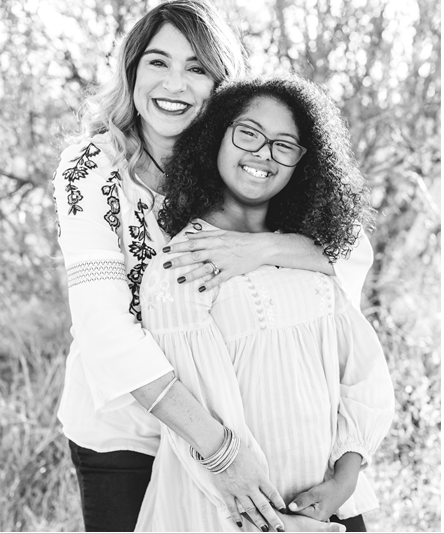
Long-time education choice advocate Karla Phillips-Krivickas and her daughter, Vanessa.
In the two decades that I have been involved in the school choice movement, I’ve seen how choice policies can empower parents to select the school that best fits their child’s needs. But as the mother of a middle school daughter with a disability, I’ve also experienced the difficulty in finding a school that is the right fit. It’s even harder when you’re asked to make the decision sight unseen.
School policies v. FERPA
When deciding where to enroll my daughter for middle school last year, I was surprised when two schools said they did not allow parents of prospective or enrolled students to observe special education classes due to the Family Educational Rights and Privacy Act (FERPA).
This didn’t sound quite right. So, I called my state department of education and learned that the schools were, in fact, wrong. FERPA does not prohibit parents from observing their child in any classroom setting. FERPA guidance clarifies that the act "does not protect the confidentiality of information in general; rather, FERPA applies to the disclosure of tangible records and of information derived from tangible records."
But this reality doesn’t change the fact that some schools are denying parents the chance to observe classrooms.
Informed decisions
If prospective parents can’t observe classes, how will they know if the school’s programs are right for their child? Both schools told me that I should feel comfortable relying on their reputation and school letter grade since they are high performing schools. But that is so inadequate.
While discussing the unique challenges parents of students with disabilities face in school choice, researcher Lanya McKittrick appropriately noted: “ … the information that’s freely available might not adequately describe whether a school will be the right fit [for my child]—the only way for me to check out a school’s acoustics and lighting is to show up in person.”
Acoustics and lighting might seem inconsequential for some, but McKittrick’s youngest child is deaf-blind, and these details will make all the difference in her child’s educational experience.
Contrary to some schools’ policies, federal law and all related guidance encourage parent involvement, especially for parents of students with disabilities. If parents of enrolled students can’t observe, how can they meaningfully contribute to their child’s education and be full partners in the development of their child’s Individual Education Program (IEP)?
Not all parents are experts about special education, but no one knows their children better than they do.
State policy needed
I believe the solution to this problem is simple: States should require that every district and charter school adopt a policy, with parent input, for all tours, visits and observations that includes all classrooms or students.
Schools will, of course, need to find the best way to minimize distractions. Some situations may even call for observations via camera, windows, or other options. But all classrooms should be observable. Period.
Certain classrooms, of course, are specifically designed for students with significant emotional and behavioral disabilities, and some will argue that any observation would be simply too disruptive. To this I would respond with two simple questions.
First, if a parent is requesting to observe that classroom as a potential placement, isn’t it even more critical that they understand how the classroom functions—and how their student would fit in—before agreeing to the placement?
Additionally, we must consider that these students are often our most vulnerable since they typically have significant disabilities and may be non-verbal. Why wouldn’t we encourage frequent observations to ensure students are receiving an appropriate education?
Most schools value parents as equal partners in their child’s education, but some schools may need a push to enact valuable policies that allow observations and will, ultimately, benefit ALL educators, parents, and students. And it’s up to education leaders and policymakers to ensure this happens.
Because of the pandemic, parents have been able to observe and support their child’s’ virtual classes. The insights gained from these observations have only increased parent engagement and appreciation for educators. Let’s not sever that connection now when students return to in-person school. Let’s cultivate it!
Because no parent should be told—like I was—that they would have to decide sight unseen, trusting only the school’s reputation or past performance. These are our students. We know them, and we need to be able to make fully informed decisions to select the right education for them.
Florida lawmakers are working on proposals that would allow parents of children with developmental disabilities to put state education funding to use beyond the traditional public school system – and even beyond private, virtual or other school choice options.
Rep. Bileca
The proposals being considered in the House and Senate resemble the “education savings accounts” that have started getting attention around the country, but they would be available only to certain children with special needs.
Parents of children with conditions like autism, spina bifida or cerebral palsy would be able to use “personalized accounts for learning” to cover expenses like therapy, private tutors or a specialized curriculum. Under a bill already filed in the Senate, they could also use the funds to start saving for college.
While the McKay Scholarship program can allow disabled students to attend public or private schools of their choice, disabled children's needs often extend beyond the “in-school component" of their education, House Choice and Innovation Subcommittee Chairman Mike Bileca, R-Miami, said during a hearing on the proposal Tuesday.
“For some students, a full day at school may not meet their education needs, and the parents have the most valuable perspective and insight into what their children need,” he said.
Ashli McCall, one of two parents who testified in favor of the proposals, told the committee she is the mother of a 15-year-old with Asperger syndrome. She said her son would be stymied by a “total sensory overload” in a traditional public school setting. She said he responds best to one-on-one instruction at home, but could benefit from having more access to therapists.
“If we had had the funding to support the needs of my child at an earlier age, we may have had more success in his academic achievements,” she said. “He struggles with so many issues which interfere with his learning that his academic process has been hindered.” (more…)
 We reported last month that Florida’s private school enrollment numbers are rising again. And that’s true. But trend lines beneath the surface suggest the modest rebound is tied more to publicly funded options than to private-paying students.
Here’s the thing: McKay scholarships for disabled students and tax credit scholarships for low-income students are making up a fast-growing share of private school enrollment – from 8.5 percent in 2002-03 to 28.4 percent last year. When those students are excluded from enrollment totals, it’s clear privately funded, private school enrollment continues to drop at a steady pace.
What does that mean? It may show private schools are still suffering the effects of a long and jobless economic recovery, which leaves fewer families able to afford an education option they used to choose. It may reflect that some private-school parents have chosen a different option, charter schools, that barely existed in the first year of our chart and enrolled 203,199 students last year (we have little data, unfortunately, on how many of these students previously attended private school). It may mean the basic economics of private school have changed for many middle-class families, either because tuition has risen too fast or incomes are declining in a more systemic way.
This is an intriguing, and possibly troubling, trend. But we’ll have more on that at another time. For now, here's a simple spreadsheet with more numbers, all from Florida Department of Education reports. And here's a few charts with the highlights: (more…)
by Allison Hertog
Hertog
I have dedicated my life to helping disabled students – first as a special education teacher and, for the last many years, as an attorney for parents of disabled children. As strongly as I support the rights of disabled students to be educated on an equal playing field with their typical peers, I do not completely agree with the kind of heavy governmental oversight of private schools that the U.S. Department of Justice mandated last month in its much-publicized letter to the Wisconsin superintendent of public schools.
In that letter, the DOJ finds the State of Wisconsin is obligated to “eliminate discrimination” against students with disabilities in its private school voucher program, regardless of whether the private schools accept federal funds.
Because they take federal funds, states are of course charged with meeting certain federal civil rights mandates in their administration of public schools. I am not an expert in school choice law, or the Americans with Disabilities Act for that matter. But what appears to be new here is that because Wisconsin administers a school choice program, it must “ensure” that participating private schools, regardless of whether they take federal funds, adhere to some of the most important mandates of the ADA.
The private and religious status of the individual voucher schools does not absolve DPI of its obligation to assure that Wisconsin’s school choice programs do not discriminate against persons with disabilities as required under Title II [of the Americans with Disabilities Act.]
The letter was precipitated by a complaint filed in June 2011 by the American Civil Liberties Union and Disability Rights Wisconsin. It alleged the Milwaukee voucher program discriminates against kids with disabilities and segregates them in public schools. It claimed that of the 21,000 students enrolled in private voucher schools, 1.6 percent had plans that specified special needs services, compared to about 20 percent of students in the Milwaukee public school system. Voucher advocates such as Patrick Wolf, who completed a study in 2012, have found less discrepant rates of disability in the Milwaukee program.
An important note: Wisconsin’s voucher programs are not designed specifically to serve children with special needs, such as Florida’s John M. McKay Scholarship for Students with Disabilities. They are designed to serve all students with family incomes up to 300 percent above the poverty level.
Nonetheless, the result of the DOJ letter is the state must seriously ramp up its oversight of the private secular and religious schools participating in its voucher programs, including the Milwaukee Parental Choice Program, the oldest voucher program in the country.
Some oversight is, of course, warranted. In our country, private schools can’t discriminate against students based on their race for instance, regardless of whether the schools take government funds. And private schools which don’t take federal funds shouldn’t discriminate in their admissions and suspensions process against students who can meet the demands of the school if provided with reasonable accommodations and supports.
However, not all private entities in our society have a public purpose. Some private schools choose to forego the benefits of federal monies because they want to provide a certain type of education to a certain type of student population - be it a nunnery or a secular feeder high school to the Ivies. In the later case, even a private school which takes federal funds is totally within the confines of the ADA to discriminate against a child applicant with intellectual disabilities who cannot meet its academic demands. When a private school foregoes government money, it should not be subject to the same government oversight as a school which reaps the benefits of it. (more…)
Charter schools. A charter school and the Pasco school district disagree about whether the school can increase its enrollment this fall. Tampa Bay Times.
 Teacher pay. Republican lawmakers are moving ahead with a merit-pay alternative to Gov. Rick Scott's proposal for an across-the-board teacher pay raise, reports the Tampa Bay Times. More from Central Florida Political Pulse, StateImpact Florida, The Florida Current. Some Board of Education members push back against Scott's proposal, reports WFSU.
Parent trigger. Former state Sen. Paula Dockery weighs in on parent trigger with a no in this Florida Voices op-ed. Flagler Live writes up Tuesday's debate on parent trigger in the House Education Appropriations Committee.
Magnet schools. Duval Superintendent Nikolai Vitti is pushing to restore buses for magnet schools. Florida Times Union.
School choice. The St. Lucie County School Board makes changes to its choice and student assignment plans for high school students. TCPalm.com.
Special needs students. Another incident involving students with disabilities in Hillsborough, this one involving a bus driver who is caught on camera kicking an 8-year-old autistic girl, reports the Tampa Bay Times. More from the Tampa Tribune. (more…)
Digital learning. Lawmakers are set to consider a digital education bill that would allow school districts to create "innovation schools" similar to charter schools. Gradebook.
 Parent trigger. House version is filed, reports SchoolZone. Democrats concede they probably don't have the votes to stop it this year, reports Naked Politics.
Magnet schools. The Orange County School Board has a wide-ranging discussion about the district's offerings. SchoolZone.
Charter schools. The governing board of a charter school in Sarasota County votes to end its management contract with the Imagine charter network, but the company immediately files suit. Sarasota Herald Tribune.
Common Core. Having a Plan B is not a bad idea, writes EdFly Blog. Education Commissioner Tony Bennett notes the politics of CC are tricky, too, reports StateImpact Florida.
Teacher evaluations. Contrary to perception, charter schools have to abide by the new teacher evaluation law just like district schools. StateImpact Florida.
Wall of Shame. Teachers at Tampa's Jefferson High get an F for word choice, writes Tampa Bay Times columnist Sue Carlton.
Teacher shortage areas. Tallahassee Democrat. (more…)
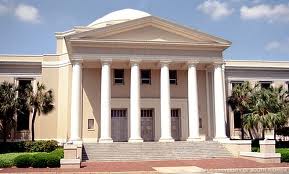 Pension ruling. In a case brought by the state teachers union, the Florida Supreme Court rules 4-3 that it is constitutional for the state to require teachers and other state workers to contribute 3 percent of their pay towards their pensions. Coverage from the Herald/Times Capital Bureau, Palm Beach Post, Lakeland Ledger, Orlando Sentinel, Daytona Beach News Journal, Tallahassee Democrat, Associated Press. StateImpact Florida considers potential impacts on the lawsuit against SB 736.
Teachers in Palm Beach and Broward are “devastated,” reports the South Florida Sun Sentinel. “Bitter disappointment,” writes the Tampa Tribune. “Dashed hopes,” writes the Gainesville Sun. The state should offer modest raises to “lessen the sting,” editorializes the Tampa Bay Times. Gov. Rick Scott should convert the savings into better teacher pay, editorializes the Palm Beach Post.
School safety. Gov. Scott will “listen to ideas” but not push for gun law changes, reports SchoolZone. Some Pinellas schools will consider “buzz-in access,” reports the Tampa Bay Times. Officials in the Hernando district are quietly dropping the issue, the Times also reports. The Palm Beach County district will spend $400,000 on school police aides, with more expenses on the way, reports the Palm Beach Post. Escambia Superintendent Malcolm Thomas wants armed, plainclothes marshals, reports the Pensacola News Journal.
Charter schools. The Clay County School Board shoots down an application for a performing arts academy. Florida Times Union.
Test score limbo followup. State Sen. John Legg says fix the problem with concordant scores, pronto. Tampa Bay Times.
Teacher evals. Pasco officials say in response to a query from Patricia Levesque at the Foundation for Florida’s Future that the district isn’t ready for the new requirements, given the need to develop hundreds of new tests, reports the Tampa Bay Times. (more…)
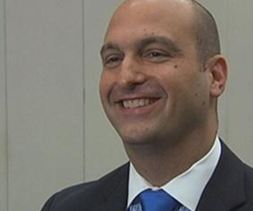
Vitti
Charter school debate. Interesting debate in Duval over the performance of charter schools. Says new superintendent Nikolai Vitti, according to the Florida Times Union: “I want the conversation in Florida and in Jacksonville to shift toward what’s best for kids, what’s best for communities, and not a conversation driven by ideology. The conversation in Florida regarding charters has been too focused and dominated by ideology and not data.”
More paths to graduation. Sen. John Legg, R-New Port Richey, says the ed policy committee will look at expanding the list of courses that can satisfy graduation requirements and find ways to make 11th and 12th grades more meaningful, reports Gradebook.
Disabled students. The Hillsborough school district asks for dismissal of a case involving the death of a disabled 7-year-old on a school bus. Tampa Bay Times. More from the Tampa Tribune. New school board chair April Griffin says finding solutions to the district’s problems with disabled students is a top priority, the Tribune also reports.
More class size. Alachua County is one of the districts most out of compliance, reports the Gainesville Sun. So is Marion County, reports the Ocala Star Banner.
From ports to … education? Democrats criticize Gov. Rick Scott’s position on a pending strike by Florida port workers, then pivot to get in a word about education funding. The Buzz.
Synthetic marijuana. School officials in Santa Rosa see progress in a crackdown on students who use “spice.” Pensacola News Journal.
Ed stories to watch in 2013. StateImpact Florida.

Robinson
Standardized test costs. They total about $1.7 billion a year nationwide, according to a new report from Brookings that includes state-by-state figures. Not much, concludes researcher Matt Chingos, who adds “perhaps we’re spending less than we should.” Coverage from Education Week and Huffington Post. Former Florida education commissioner Gerard Robinson tells the latter about test anxiety: “I won't pretend that tests don't matter and there's no anxiety -- but I also tell people there's anxiety with sex. There's anxiety with sex, but there isn't any talk about getting rid of that.”
And still more Jeb summit coverage. Politic365 on the “Florida Formula.” EdFly Blog on the crucial center. Rick Hess on "The Common Core Kool-Aid."
More protests from Hillsborough parents. They want better training for employees who work with special-needs children, StateImpact Florida reports. More from Tampa Bay Times.
Charter school critics got a lot of mileage from a U.S. Government Accounting Office report last summer that found charter schools enrolled fewer students with disabilities than traditional public schools. But a new report (hat tip: EdWeek) offers even more reason why we should all take a more careful look before leaping to conclusions.
The Center for Reinventing Public Education found the numbers for middle and high schools in New York state were on par between the two sectors. And while fewer students with disabilities were enrolling in charter elementary schools, that didn't mean discrimination. Wrote the center:
The fact that only charter elementary schools systematically enroll lower proportions of students with disabilities than their district-run counterparts calls into question whether discrimination drives lower enrollment. There is no obvious reason to think that charter elementary leaders would be more likely to discriminate than charter middle and high school leaders. Indeed, the fact that state testing does not begin until the third grade suggests that elementary schools have arguably the weakest incentives to discriminate against students with disabilities. The grade-span differences highlight a need to examine what is different about the policies and practices of special education and the preferences of parents with students with disabilities at the elementary grades versus the upper grades. Many causes other than discrimination could be affecting enrollment.
It may be that charter schools are simply less likely to identify students as having disabilities that qualify them for special education in the first place, or that specialized preschool programs with designated district feeder schools lead parents to opt for the district school over the charter school. Or it may be that federally mandated district counseling for families of kids with disabilities creates opportunities for the district to encourage these families to stay in district-run schools, whereas non–special education students’ families never get such advice. None of these potential contributors to elementary level underenrollment in charter schools have been explored sufficiently, if at all.
The GAO report was written about widely, from the New York Times and Wall Street Journal to outlets in Florida. It'll be interesting to see what kind of coverage the new report gets.

