After spending time at the Republican convention in Tampa and the Democratic convention in Charlotte, I needed to decompress, so I headed to Montana where I am now sitting on a hill watching a herd of deer graze in the meadow below. These deer have no funny hats on their heads, buttons on their chests or noisemakers in their mouths. They seem peaceful and, as best I can tell, nonpartisan. I’m a little jealous.
I was fortunate to speak with lots of smart and interesting people at both conventions, but I’ve decided the most intriguing speaker, other than Bill Clinton, whose speech seems to have ended the suspense over whether President Obama will be re-elected, was Daniel Barnz, the director of the new education movie, Won’t Back Down. Barnz spoke after a screening of his movie at both conventions. Each time, he expressed bewilderment that his movie is being attacked as anti-teacher and anti-public education.
Even before the movie was released to the general public, AFT president Randi Weingarten sent out an open letter accusing Barnz of “using the most blatant stereotypes and caricatures I have ever seen.” She asserted the movie “is divisive and demoralizes millions of great teachers,” although she neglected to explain how these millions of teachers could be demoralized by a movie neither they nor the general public have seen.
Barnz comes from a family of public school teachers. He wanted to make a fictional movie about teachers and parents working together to improve a struggling school. His sin, at least from Weingarten’s perspective, is that the teachers and parents in his movie saw freeing themselves from the control of the teachers union as essential to their improvement efforts.
Barnz’s fantasy of a community of empowered teachers and parents working collaboratively to raise student achievement, and Weingarten’s vitriolic response, illustrate the power struggle at the heart of today’s efforts to improve public education. (more…)
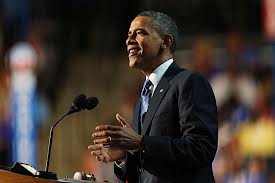 DNC: President Obama suggests Mitt Romney would gut education spending, but avoids mention of Race to the Top (redefinEd). (Image from Minnesota.publicradio.org) Panel discussions sponsored by Democrats for Education Reform highlight the battle within the party over education policy (redefinED). Teachers union leaders promise to campaign hard for Obama, despite difference over teacher evaluations, charter schools and other policies. (Education Week)
Florida: The new chair of the state Board of Education helped bring the KIPP charter school network to Florida (redefinED).
North Carolina: The state board of education authorizes the opening of 25 more charter schools next year. (Associated Press)
California: The Los Angeles school district, which has more charter schools than any district in the country, is scheduled to discuss a moratorium on new ones. (Los Angeles Times)
Indiana: Republican gubernatorial candidate Mike Pence unveils an education agenda that includes expanding vouchers, but it's light on details. (Associated Press)
Pennsylvania: Cyber charter school are growing rapidly in the state, creating tensions with traditional school districts. (Pittsburgh Post-Gazette)
Tennessee: The state education commissioner blasts a privately-owned online school for its test results, calling them "demonstrably poor." (TheLeafChronicle.com)
New Mexico: The state's first virtual charter school begins classes. (Santa Fe New Mexican)
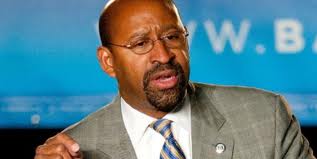 In Orlando back in June, Philadelphia Mayor Michael Nutter and other big-city Democratic mayors convinced the U.S. Conference of Mayors to unanimously endorse the idea of parent triggers - and were promptly savaged by critics. They were tools of ALEC, profiteers, enemies of public schools.
Nutter just spoke to the DNC a few minutes ago, and if he's a right-wing fringie out to gut public education, he's also got a bright future as an actor. Frankly, with tonight's script, he sounded a lot more like an establishment Democrat than a reform-minded one. But the point isn't to critique Nutter's positions on education policy. It's to note that some particularly vocal ed reform critics have become so rigid, they're disparaging - and potentially alienating - fair-minded people who actually agree with them much of the time.
Here are the prepared remarks for Nutter's speech:
I'm honored to serve as mayor of my hometown where our founders started America with three simple words: "We, the people." And when they said "people," they didn't mean "corporations."
I'm most honored to be the father of Christian and Olivia, and a proud parent of a public school student.
My wife, Lisa, and I know Olivia's education is central to everything she, and everyone in my city, wants to achieve. In Philadelphia, our public safety, poverty reduction, health and economic development all start with education. We can't grow the middle class if we don't give our kids the tools they need to innovate and invent.
But first we have to invest in them. That's what President Obama did, saving 400,000 educators' jobs and giving states the flexibility to shape their schools.
Mitt Romney doesn't get it. (more…)
We want to spotlight two new videos that highlight the tension – and potential for change - that we’ve been seeing all week between education factions at the Democratic National Convention. The first is from Democrats for Education Reform; the second, from TEACHED. To whet your appetite, here are some choice quotes. Remember, these are Democrats saying these things, many of whom were in Charlotte this week.
“These bureaucracies have a way of outlasting the reformers, of insulating themselves from really deep reforms ... In our schools today across the country but particularly here in California, performance isn't taken into account at all.” – Los Angeles Mayor Antonio Villaraigosa
“We have to really focus on teacher quality. We have to focus on holding our schools accountable.” – Indiana State Rep. Ann Sullivan
“We can no longer operate insanity in this country.” – Ohio State Sen. Nina Turner
“We’ve got to do radical things.” – Denver Mayor Michael Hancock
"You have powers in place, and people in power, that have been around a long time and are comfortable with the way things are ... We know that all kids don't have access to opportunity. And so a Democrat who believes in education reform is somebody that's willing to say we can do it better, and it's okay to do things differently." - Maryland State Sen. Bill Ferguson
 Andy Ford, president of the Florida teachers union, has done his darnedest to kick out many of the Republicans who continue to run both the executive and legislative branches in this state, and they don’t usually take a shine to his approach. Just the other day, Ford bought a two-page ad in Florida Trend, a leading business magazine, to proclaim: “IT’S MIDNIGHT IN FLORIDA. Do You Know Where Your Public Education Dollars Are Going?” He added: “The foundation of public education in the Sunshine State is devious, unreliable and crumbling before our very eyes.”
Given all that, you’d think Ford would be in a better mood at the Democratic National Convention in Charlotte. And you’d think he’d especially appreciate the speech from U.S. Education Secretary Arne Duncan, who spent much of his time criticizing Mitt Romney for gutting education spending “to cut taxes for millionaires and billionaires.” Even American Federation of Teachers President Randi Weingarten found some reason for cheer, tweeting, “Duncan: "teachers matter" and "no teachers should have to teach to the test"-very different from Romney/Ryan/Rhee agenda.”
Was Ford moved, too? Not so much. As the secretary wrapped up, he tweeted six words: “Glad Duncan is off the stage!”
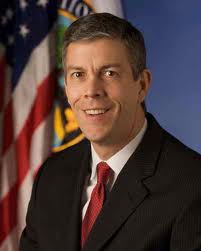 From U.S. Education Secretary Arne Duncan's prepared remarks at the DNC tonight:
I'm here tonight as a parent with two young children who attend a wonderful public school. No one has more at stake in this election than our kids, and that is why we need to re-elect President Obama!
Our president knows education is about jobs. It's about giving every child a shot at a secure middle-class life. Right now, we're in a race for jobs and industries of the future. If countries like China out-educate us today, they'll out-compete us tomorrow. The president believes that education begins at home with parents who take responsibility. But he also believes that teachers matter. In his first two years in office, he helped save the jobs of 400,000 educators.
And President Obama didn't just invest resources; he demanded reform. And 46 states responded by raising education standards. The president also believes teachers must be respected and paid like the professionals they are. No teacher should have to teach to the test. Great teachers should be recognized and rewarded.
And President Obama also knows that higher education is an economic necessity. He fought to keep student loan interest rates from going up. He fought for Pell grants. He took the big banks out of the federal student loan program and passed billions of dollars in savings on to young people. This year alone, he helped nearly 10 million students afford college.
The president knows that the path to the middle class goes right through America's classrooms. That was his path. That's America's path. However, his opponent believes differently.
Under the Romney-Ryan budget, education would be cut by as much as 20 percent. Think about what that would mean: 200,000 fewer children in Head Start, fewer teachers in the classroom, fewer resources for poor kids and students with disabilities, fewer after school programs. Ten million students could see their Pell grants reduced, putting higher education further out of reach. And these cuts wouldn't create jobs or pay down the deficit. They would go toward a huge new tax cut for those at the very top.
In order to cut taxes for millionaires and billionaires, Governor Romney will cut education for our children. That's the difference in this election. They see education as an expense. President Obama's sees it as an investment. That's the choice in this election. And that's why our president needs four more years!
The battle for the soul of the Democratic Party, at least in the area of public education policy, was on full display yesterday at two panel discussions organized by Democrats for Education Reform. (Full disclosure: I am DFER’s Florida coordinator.)
The first panel consisted of Democratic state legislators from Colorado, Indiana, New Jersey, North Carolina and Ohio discussing their legislative efforts to improve public education by changing teacher evaluation, tenure and compensation systems. These initiatives, generally opposed by teachers unions, are designed to make the current factory model of public education more effective and efficient by giving management more control over personnel decisions.
The second panel included the presidents of the two national teachers unions (Dennis Van Roekel of the National Education Association and Randi Weingarten of the American Federation of Teachers), two educational entrepreneurs with strong technology backgrounds (John Katzman from 2tor and Noodle.org, and Joel Rose from New Classrooms Innovation Partners), and Joe Reardon, the mayor of Kansas City, Kansas. They discussed what a post-factory model of public education might look like. There was broad agreement among these diverse panelists that customized learning is the future of public education. They all emphasized the importance of innovation and entrepreneurship, and the economic and moral imperative of more effectively overcoming the achievement gap related to family income.
The fault lines within this second panel, and in the Democratic Party as a whole, appeared when the moderator, Jonathan Schorr from the NewSchools Venture Fund, asked about the role private providers should play in public education. After acknowledging that private, for-profit companies provide buildings, desks, buses, textbooks, computers, pencils and electricity for district schools, both Weingarten and Van Roekel opposed allowing nongovernment employees to teach in public education, arguing that the essence of public education would be undermined if nongovernment personnel received public funds to teach children.
Katzman and Rose, the entrepreneurs/innovators on the panel, seemed agnostic about who employs teachers. They cared about the freedom to innovative and customize. Katzman in particular stressed that learning providers needed to be agile. Weingartner responded that teachers unions could provide this agility through collective bargaining contracts if only management would agree. She asserted that school districts were the impediment to flexibility and innovation, not teachers unions.
The teachers unions’ current business model is tied to teachers being public employees, so I understand why that’s a must-have for them. No business voluntarily gives up market share, but asserting that only public employees can further the mission of public education defies logic and common sense. (more…)
Massachusetts Gov. Deval Patrick made the most extensive remarks about K-12 education on the DNC stage last night. He didn't explicitly mention Race to the Top, expansion of charter schools or a push for better teacher evaluation systems (all Obama administration priorities) but he did reference more accountability, higher teaching standards and longer school days. His suggestion of lower student achievement during Gov. Romney's tenure was wrong; Massachusetts is and has been an academic leader. In a nod to teachers unions, he described making ed reform in Massachusetts "with labor at the table." Here's the kicker to his speech, which highlighted change at a high-poverty school in Boston:
What's at stake is real. The Orchard Gardens Elementary School in Boston was in trouble. Its record was poor, its spirit was broken, and its reputation was a wreck. No matter how bad things were in other urban schools in the city, people would say, "At least we're not Orchard Gardens." Today, thanks to a host of new tools, many enacted with the help of the Obama administration, Orchard Gardens is turning itself around. Teaching standards and accountabilities are higher. The school day is longer and filled with experiential learning, art, exercise and music.
The head of pediatric psychology from a local hospital comes to consult with faculty and parents on the toughest personal situations in students' home lives. Attendance is up, thanks to a mentoring initiative. In less than a year, Orchard Gardens went from one of the worst schools in the district to one of the best in the state. The whole school community is engaged and proud.
So am I. At the end of my visit a year and a half ago, the first grade—led by a veteran teacher—gathered to recite Dr. King's "I have a dream" speech. When I started to applaud, the teacher said, "not yet." Then she began to ask those six- and seven-year-olds questions: "What does 'creed' mean?" "What does 'nullification' mean?" "Where is Stone Mountain?" And as the hands shot up, I realized that she had taught the children not just to memorize that speech but to understand it. (more…)
Newark Mayor Cory Booker, a star in the Democratic Party, is already considered a future presidential candidate. But he is also an unflinching supporter of private school vouchers. In a rousing speech at the DNC tonight, he moved delegates with his lines on education: "You should be able to afford health care for your family. You should be able to retire with dignity and respect. And you should be able to give your children the kind of education that allows them to dream even bigger, go even farther and accomplish even more than you could ever imagine."
Booker didn't even hint at vouchers or private schools. The Democrats aren't ready. How long before they are?
Like the Democratic Party platform on education, this is no surprise: Democratic tension over school choice and parental empowerment is on display at in Charlotte. But some of the developments and statements are still worth logging in.
StudentsFirst co-sponsored a special screening of the new movie “Won’t Back Down” at the DNC yesterday, just as it did at the RNC in Tampa last week. And in the panel discussion that followed, Ben Austin, executive director of Parent Revolution, told the audience that the parent trigger law – upon which the movie is loosely based – is a progressive idea aimed at giving parents more power to right struggling schools. According to coverage of the panel by Education Week’s Politics K-12 blog:
The laws allow parents to "unionize and collectively bargain, just like teachers' unions," said Austin, who served in the Clinton White House. "Parent trigger fundamentally makes public schools more public. ... We need to be modern 21st-century progressives" who stand for government working.
To be sure, people like Austin and former California state Sen. Gloria Romero have tried, mightily, to dispel the notion that the trigger is a right-wing creation, but the myth persists. In June, the U.S. Conference of Mayors unanimously endorsed the parent trigger idea, and among the big-city Democrats who led the charge was Los Angeles Mayor Antonio Villaraigosa.
Villaraigosa is chairman of the Democratic National Convention this year, as the Huffington Post notes in this piece over the weekend. He’s also a former teachers union organizer. Wrote the HuffPo: “It is hard to paint the school reform movement as a right-wing conspiracy. Support for taking on teachers’ unions is growing in Democratic and liberal circles.”
More DNC coverage of the growing divide between Dems and teachers unions in the Los Angeles Times and the Washington Times.

