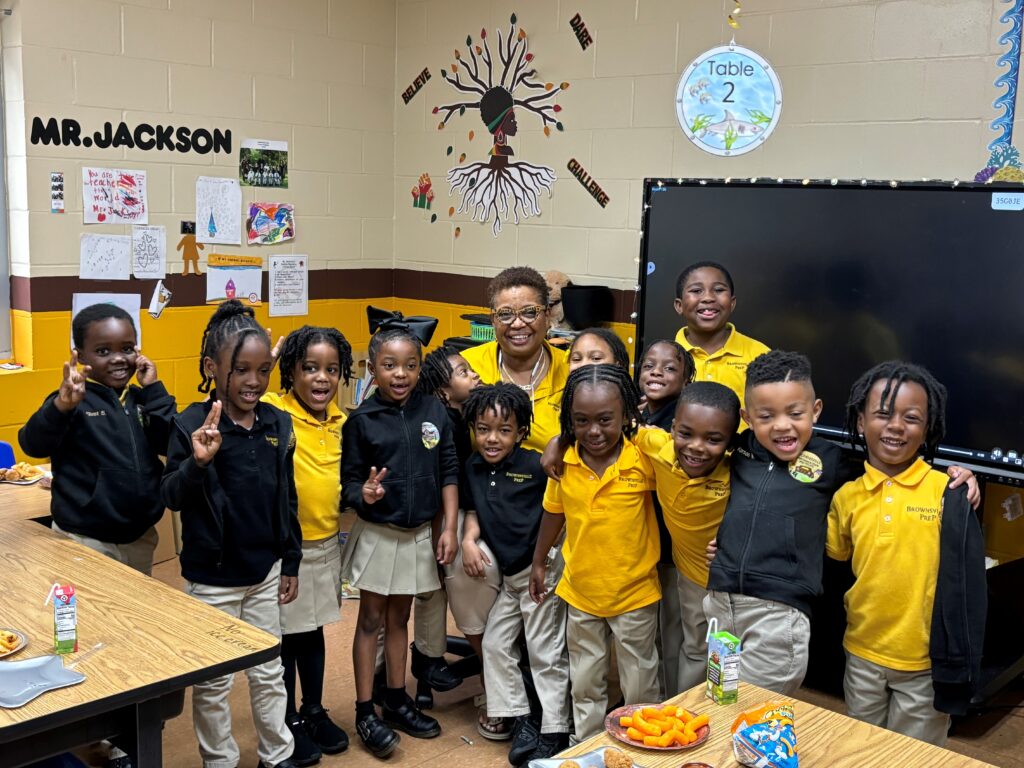
Brownsville Preparatory Institute founder Rita Brown, center, with her students. The private school focuses on teaching kids to read at age 3.
TALLAHASSEE, Fla. – Benjamin Crump, one of the most prominent lawyers in America, aka “Black America’s attorney general,” obviously could send his daughter to any school he wanted. So, it says everything that he and his wife, Genae Angelique Crump, chose a little private school that’s known as the place “where three-year-olds learn to read.”
This gem is Brownsville Preparatory Institute. It was founded 20 years ago by Rita Brown, a retired businesswoman, former homeschool mom, and force of nature who taught her own kids to read by age 3.
Brownsville Prep is “excellence personified,” Crump says in an audio recording on the school’s website. “And that’s why we chose to send our little princess … to be a proud student at Brownsville Preparatory Institute. And I would encourage you to send your brown, Black and beautiful little children to Black excellence.”
In school choice-rich Florida, about 140,000 Black students – fully one in five across the state – now attend a charter school or use a state-supported choice scholarship to attend a private school. That’s according to data from the Florida Department of Education and Step Up For Students, the nonprofit scholarship funding organization that administers nearly all of Florida’s K-12 school choice scholarships.
For context, 140,000 Black students in non-district choice schools is more than 31 individual states that have Black students in public schools.
Schools like Brownsville Prep are among the reasons why.
Rita Brown began her journey in education entrepreneurship in 2003, running a learning pod in her home for six kids in preschool. Now Brownsville Prep serves 80 students in PreK-3 – with more than 200 on a waitlist. All the students in K-3 use choice scholarships.
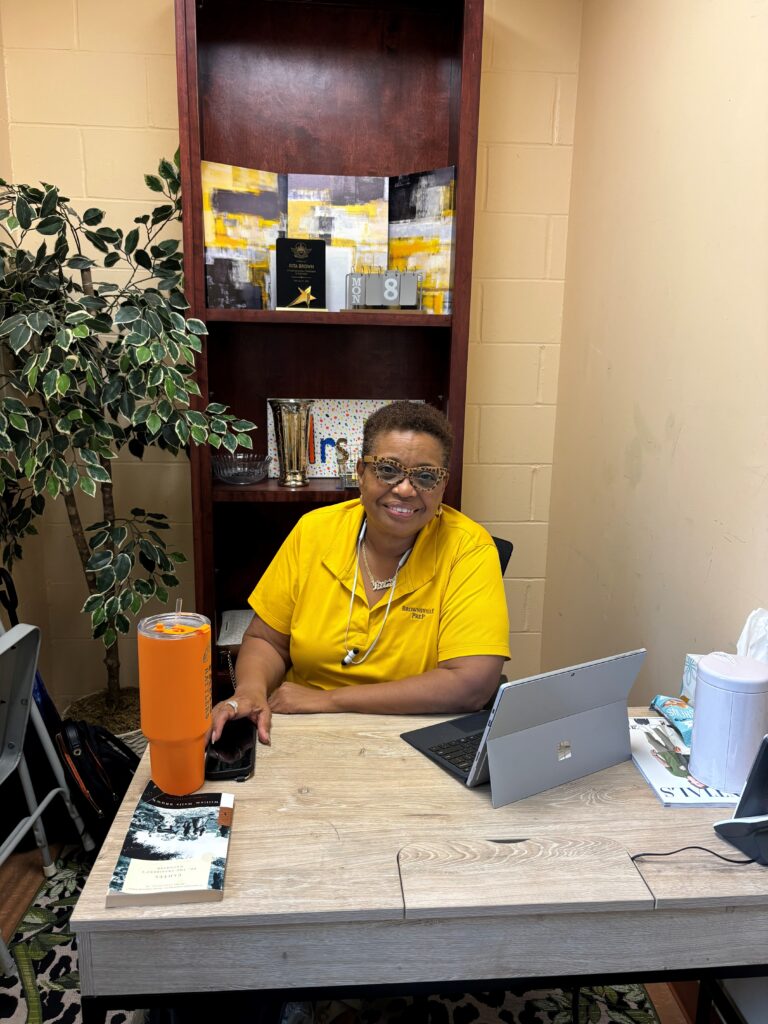
Rita Brown in her tiny office at Brownsville Preparatory Institute.
“We don’t advertise. You know how we advertise? These children,” Brown said from her tiny office at the school, which may be smaller than Harry Potter’s Cupboard Under the Stairs. “The other parents hear them talk – and they know. They know something is happening here that isn’t happening in other places.”
Brown is the daughter of a New York City police officer and a homemaker. She owned a beauty salon and beauty supply business in Rockland County, New York, before she and her husband, also a New York City police officer, retired and moved to Florida.
Early literacy is something she emphasized with her own children, using a phonics-based program to get them started. When her oldest began soaring past grade level in public school, Brown decided to homeschool. Today, all three of her children are Florida A&M University graduates. Her sons are the CEO and CTO, respectively, of the tech company Breakr. Her daughter is an international business consultant.
“It’s all because they were able to read early,” Brown said. “When you can read early, you become a self-taught person. Information is available. You just have to be able to read it and digest it.”
Besides early literacy and core academics, Brownsville Prep emphasizes Black history and culture. It’s important, Brown said, for her students to see people who look like them finding success at the highest levels in every realm.
At the same time, she said, parents know if a school is truly putting its students on that path.
“They’re sending their kids here because of the level of academic excellence,” she said. “They couldn’t care less about the Blackness if their kids weren’t learning.”
Brown didn’t set out to create a buzz.
Until 2010, her operation served only children in pre-school. But year after year, the parents of more and more of her former students grew frustrated, their kids no longer accelerating academically as they had at Brownsville. So, Brown decided to expand into the early grades. She moved to bigger digs in an office complex, and then, in 2019, expanded again, this time leasing space from a church.
Florida’s private school choice programs are key to Brownsville Prep’s mission. It has helped the school become an anchor for the whole community, Brown said, because it gives families from all walks of life the opportunity to access a high-quality option. At Brownsville, the sons and daughters of doctors and lawyers sit side by side with the children of working-class and lower-income families, and nobody knows the difference.
Kindergartner Kyree Thomas has attended Brownsville Prep since he was 3. His grandmother, Michelle Melton, said she chose it over his zoned school because it had the features she knew would help Kyree succeed: Smaller class sizes. A family-like atmosphere. No distractions with behavior issues. And more than anything, the highest expectations.
“I was like, ‘You expect them to write at 3? And read at 3?’ ”said Melton, a former home daycare operator who now works as a delivery driver while she cares for her mother. “Guess what? He did it, and he’s excelling.”
Every day, Melton continued, the school sends the message that the sky’s the limit.
“It doesn’t matter how much money you have,” she said. “You can do anything. You can conquer anything.”
Brownsville Prep has had its challenges, mostly in meeting demand.
Brown has been looking to expand again, but she’s had trouble finding a facility within the predominantly Black neighborhoods she serves.
Moving elsewhere isn’t an option.
“These neighborhoods need it more than other places,” Brown said. One way or the other, “we’re going to find a way to meet the needs of the people we serve.”
For more on Black families in Florida migrating to school choice options, see our 2021 special report with Black Minds Matter and the American Federation for Children.

A new working paper by David Grissmer of the University of Virginia and others found very large and positive impacts on reading achievement for students attending charter schools using the Core Knowledge curriculum. The study involved using charter school lotteries for oversubscribed charters utilizing the curriculum, allowing an experimental evaluation with both a control group (lottery losers) and an experimental group (lotter winners). How large is large? “These effects were large enough to close achievement gaps for disadvantaged students by third and sixth grade in all subjects measured.” This is wonderful news, and some careful consideration should be given to how the choice and curriculum improvement movements can aid each other. It has been clear for decades that teaching methods can make a substantial academic difference going back at least to Project Follow Through, which produced results like:
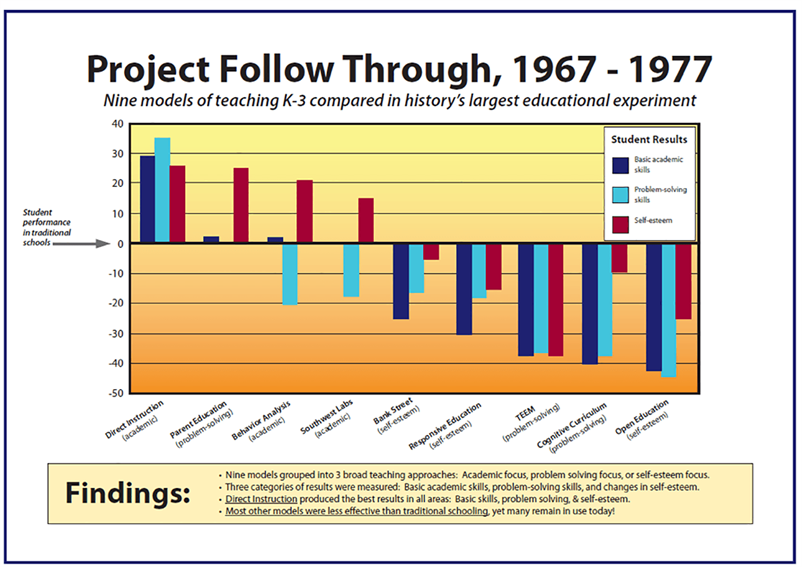
Some of those methods look far more effective than others, so you might think that American educators would strongly gravitate toward the more effective methods, but alas you’d be entirely wrong. Decades ago, John Chubb and Terry Moe taught us that the central problem of American K-12 is politics and those who adhere to failed reading methods, curricula and ineffective teaching methods regrettably outnumber those with opposing preferences.
A more recent example of how a largely curricular reform approach can create positive results comes from Mississippi. Mississippi revamped their public schools’ approach to reading and, well, this happened:
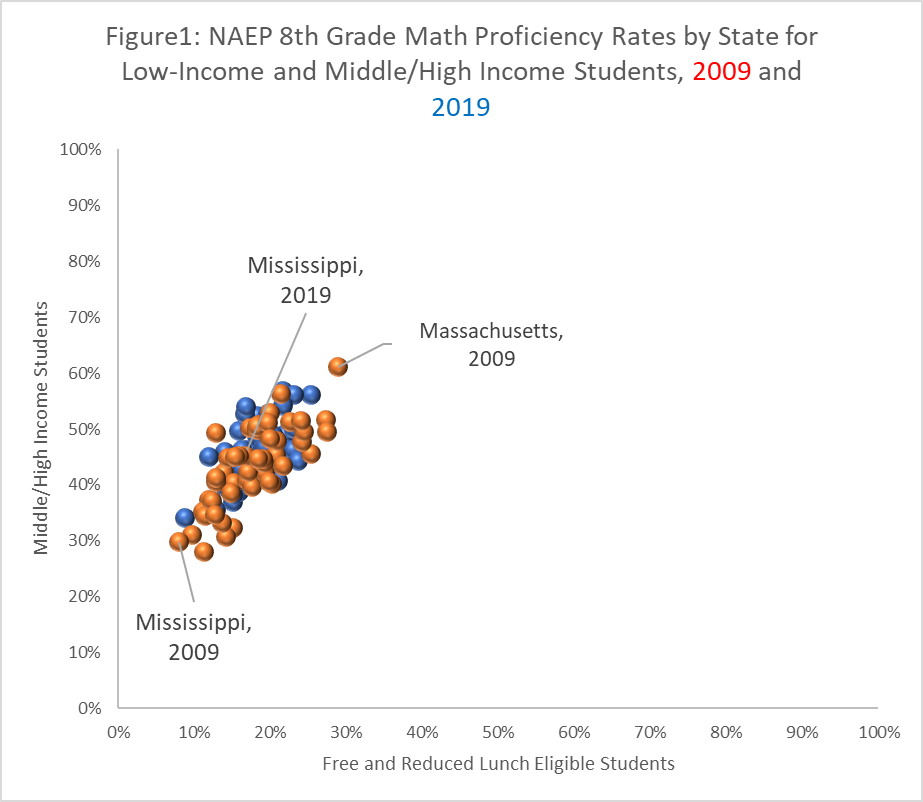
Now before you go off and sneeringly adopt a regression to the mean theory, let’s take a look at neighboring (and demographically similar) Alabama on the same sort of chart:
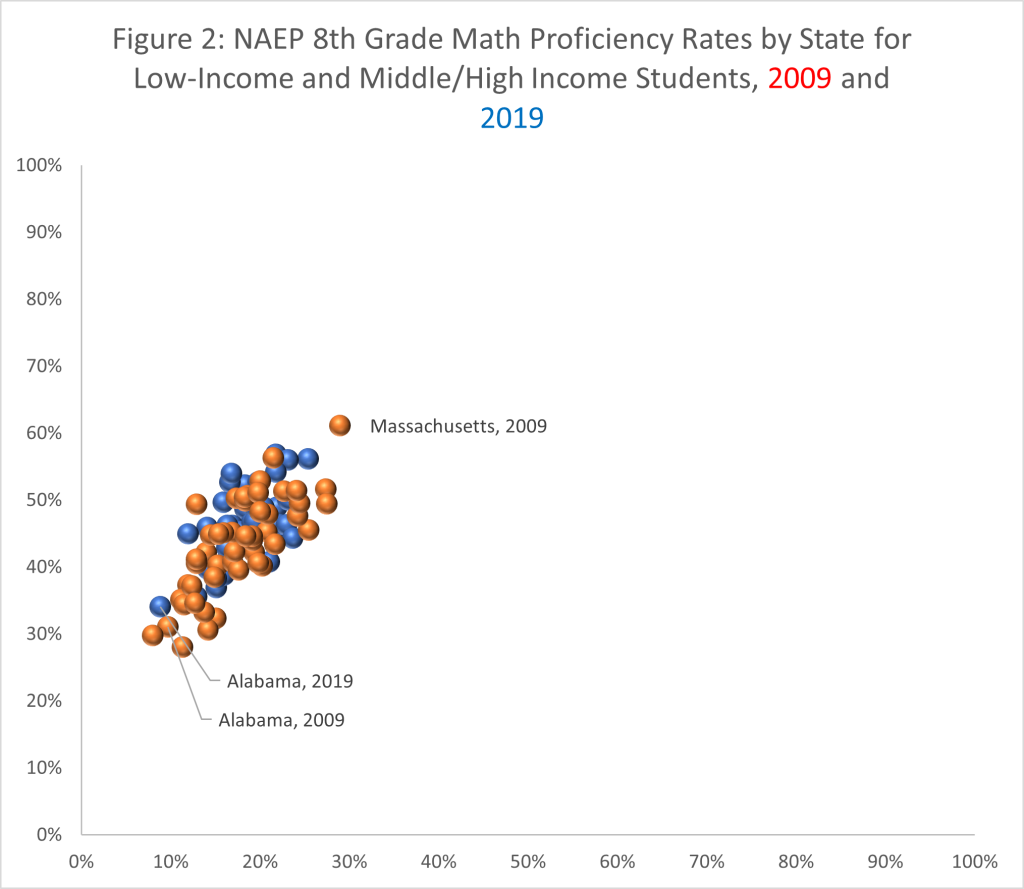
As you can see in the Alabama chart, there is no guarantee a state will get better just because they start off at the bottom. It is entirely possible to start on the bottom and to stay there. Mississippi adopted only a smidge of parental choice during this period, so we can dispense with all this choice business and get back to the business of top-down reform!
The only reason Grissimer and company were able to study the impact of the knowledge rich curricula in those charter schools in a rigorous fashion was because, well, there are charter schools. If one visits the Core Knowledge Foundation websites and clicks on their national map of Core Knowledge schools, it looks like:
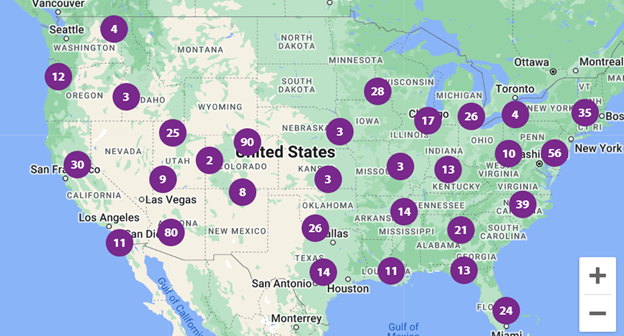
First thing to note: this is a tiny number of schools in total given that there are more than 115,000 schools in America. This map visualizes just how much of a minority religion the Core Knowledge curriculum has been up to this point. Where do more than a smidge of these schools operate? Answer: Arizona and Colorado: two of the #WildWest charter states. Coincidence? Nope: when you click in on both states you find a whole lot of charter and private schools.
A recent New York Times article titled (tellingly)‘Kids Can’t Read’: The Revolt That Is Taking On the Education Establishment details legislative and school board level fights to remove galactically catastrophically ineffective reading curriculum and methods. The story quoted a veteran of the George W. Bush administration:
In 2000, at the behest of Congress, a National Reading Panel recommended many strategies being argued for today. And the Bush administration prioritized phonics. Yet that effort faltered because of politics and bureaucratic snafus.
Dr. (Susan) Neuman, now a professor at New York University, is among those who question whether this moment can be different. “I worry,” she said, “that it’s déjà vu all over again.”
Dr. Neuman is wise to feel concerned. While things seem to be going well currently, they’ve been going well in the past and then just like that the empire strikes back and your left hand goes flying away.

Just so- you can try to order people to do things, but fundamental political dynamics remain unchanged. School districts politically captured by teacher unions and have elaborate levels of job security have proven difficult to change. Meanwhile, schools of choice have been relatively enthusiastic adopters of Core Knowledge and may become more so with more high-quality evidence to drive demand. Choice and curriculum reform are mutually reinforcing and a force to be reckoned with.
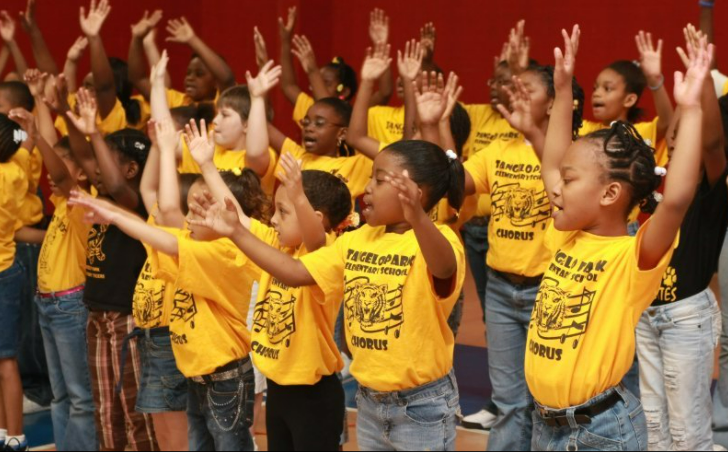
The Tangelo Park Program in Orlando, Florida, has become a positive model for other communities, demonstrating that assistance to high-risk youth can yield an attractive, long-term return on investment for society through educational gains and community empowerment.
Editor’s note: This article appeared today on the Journal Gazette of Fort Wayne, Indiana.
Fort Wayne Community Schools is exploring options to expand a program unfunded by the state – pre-K.
“There are students who come to us in kindergarten that are two years to three years behind their peers,” FWCS Superintendent Mark Daniel said. “That has to change. That's a gap that is way too wide.”
FWCS is looking to the Sunshine State for inspiration. A team of six, including Daniel, recently visited the Tangelo Park Program in Orlando, Florida.
Created in 1993 by Orlando hotelier and philanthropist Harris Rosen, the program provides free preschool for every 2-, 3- and 4-year-old living in the Tangelo Park neighborhood, among other offerings. It is funded through Rosen's philanthropy, the Harris Rosen Foundation.
The program – which also includes full college and vocational school scholarships for high school graduates – has produced “unbelievable results,” Daniel said. He cited its almost 100% graduation rate and post-secondary successes, including how 77% of Tangelo Park Program alumni who attend four-year colleges earn a degree.
Previously, the predominantly Black neighborhood of about 1,000 homes faced overt drug problems, poor school attendance, declining test scores and high dropout rates, according to the Tangelo Park Program website.
To continue reading, click here.

