A private elementary school that emphasizes self-paced, competency-based learning is set to open next year in the Sarasota community of Newtown.
Newtown was founded by Black residents who were forced to leave Overtown, a vibrant area near downtown Sarasota.
Today, the community features an African American Cultural Resource Center and a $58 million magnet high school with a state-of-the-art visual and performing arts program.
The school: Star Lab
Grades/ages served: The school plans to welcome its first kindergarten cohort and add grades until it serves students through fifth grade.
The founder: Alison Rini brings expertise in gifted education as well as helping students overcome challenges and disabilities from more than two decades teaching in public and private schools. She taught at P.S. 6 (Manhattan) and St. Croix Country Day School (U.S. Virgin Islands), and served as principal at Island Village Montessori, a Sarasota charter school.
The vision: Star Lab intends to emphasize “learning and joy.” According to the Drexel Fund, Rini’s vision is a true collaboration between teachers, families and students that offers self-paced progress in each subject, real-time feedback and project-based learning. The school will allow students to run and play every hour and offer mindfulness exercises.
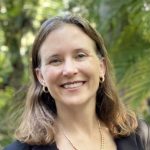
Alison Rini
In her own words: “A student’s path is not aligned to grade levels, but to academy skills. Students can progress at their own pace through each content area – they can move faster or slower as needed.”
Where Rini got help and where you can, too: The Drexel Fund is a national venture philanthropy that provides financial support and mentoring to educational entrepreneurs seeking to launch and scale private schools focused on underserved communities.
Drexel will offer free information sessions starting Oct. 10 for first-time private school founders to learn the basics of school development and hear from leaders who have launched private schools.
Founders who are already on the path to opening schools may apply for the Founders Program, a one-year paid fellowship that helps leaders continue to plan and open schools in Florida, Wisconsin, Indiana, Ohio, Louisiana, North Carolina and Arizona.
 Here's some advice for school districts around the country: If you have a star principal who's uplifted one of your toughest schools, treat her extra nice.
Because folks in Tennessee may be coming with a really sweet deal.
The Tennessee Charter School Incubator has just launched a pioneering effort to recruit top school leaders from far and wide, then give them extended training before they launch their own charter schools. Those selected into the Education Entrepreneurs Fellowship will study everything from finance to community organizing to faculty development. They'll see excellent schools up close. And many of them will end up in the Achievement School District, a Race to the Top-fueled project that aims to catapult the lowest-performing schools in the state into the top 25 percent.
"The reason we're focusing on national talent stems from some lessons Tennessee has had the opportunity to learn - many lessons that in fact other states have learned the hard way," Rebecca Lieberman, the incubator's chief talent strategy officer, told redefinED in the podcast interview attached below. "One of those key lessons is that any reform effort that you put into place will only be successful if you have the right people and enough of them to make concentrated change."
For now, the incubator has enough funding for six to eight fellows, with three years of support each. They'll get training to build on strengths and shore up weaknesses. They'll get time to build relationships and map out strategies. Ultimately, they'll be tackling what Lieberman called "next generation challenges" of the charter movement - turning around struggling schools, scaling up successful models and introducing new ones.
The fellowship isn't for everyone. A track record of success with high-poverty kids is a must. So is a desire to take ed reform to the next level. "We think there are leaders out there that are innovative, that are looking for their next challenge," Lieberman said.
The fellowship, she added, may be a sign that those who want top talent in education may have to fight for it: "The best principals and the best teachers - I want there to be competition over them," she said. "And I want more of them."

