 Editor’s note: This analysis appeared Monday on the74million.org.
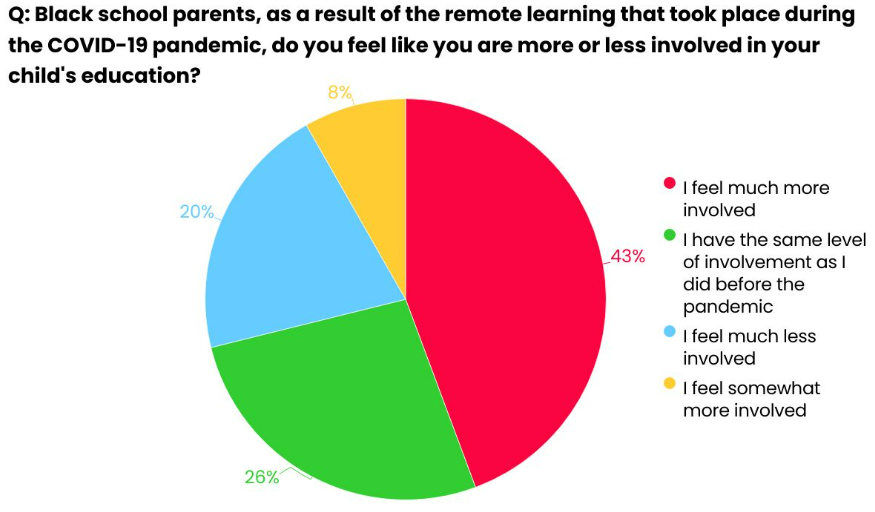
Black parents say they play a much more active role in their children’s education than they did before the pandemic, according to a new poll released this month. Large majorities look favorably on policies like private school vouchers and education savings accounts, and comparatively few want the K-12 experience to remain the same.
The results come from a survey of African American parents of school-aged children conducted by the research and polling company Morning Consult. Its findings, while capturing only a moment in time, may reflect educational preferences that have shifted significantly away from traditional public schools in the COVID era.
Morning Consult’s survey was administered to roughly 1,300 respondents across January and February on behalf of EdChoice, an Indianapolis-based advocacy group that backs school choice. During the pandemic, the organization has maintained tracking polls of parents and teachers on general perceptions of K–12 education. Black adults, including parents, have been included both in those ongoing efforts and in separate surveys as districts adjusted to the demands of remote instruction and virus mitigation.
Overall, 57% of respondents said they supported education savings accounts — a financial vehicle that offers families money to spend on educational costs of their choosing — even without being provided a description of their function. Even higher proportions supported school vouchers (62%), open enrollment of public schools (66%), and charter schools (68%).
Paul DiPerna, EdChoice’s vice president of research and innovation, said he found it notable that families’ attitudes toward such policies have remained “fairly stable” even as the circumstances surrounding schools have changed dramatically. In a similar poll conducted in the fall of 2021, for example, two-thirds of African American parents said that COVID had made them more open to the idea of homeschooling; 65% said they were supportive of homeschooling today.
“At the time [of the previous poll], the pandemic looked a lot different for parents and schools,” DiPerna said, invoking the Omicron wave that closed or severely disrupted schools in early 2022. “But some of these levels of support are still high for other modes of learning besides the traditional district school.”
To continue reading, click here.
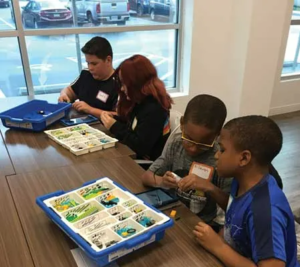
Pennsylvania Cyber Charter School, headquartered in Midland, Pennsylvania, is one of the largest and most successful online public schools in the nation, offering personalized instruction for students in kindergarten through 12th grade.
Editor’s note: This analysis of school choice trends in 2002 appeared Monday on theanswertampa.com.
More parents overwhelmingly chose school choice in 2022 after expressing frustration with lockdown policies, school boards and mandates. As more state legislators look to expand school choice policies in 2023, Florida is seen as a model to follow, according to several reports and polls taken throughout the year.
In 2022, the majority of parents surveyed in a major study said they wanted other options for their children’s education other than the public school districts their children were zoned to attend.
In "Never Going Back: An Analysis of Parent Sentiment on Education," the National Alliance for Public Charter Schools surveyed more than 5,000 parents to learn more about the reasons why they increasingly chose different educational options after the 2020-21 school year.
According to the survey, 93% of parents surveyed said one size doesn’t fit all in education. More than 25% said they switched the type of school their children attended; 86% said they want different options for their children to attend a school other than in the district where they are zoned or assigned to attend.
Among parents who switched schools, charter schools were a popular choice. Roughly three in four parents surveyed said they want more public charter school offerings in their area.
Nearly 90% of parents surveyed said after switching school types, they or their children experienced a positive change as a result of the switch; 57% said their children were happier.
Roughly 83% of parents said education had become a more important political issue in 2022 than it was in the past. Nearly as many, 82%, said they were willing to vote outside of their party when it comes to educational issues.
The 2022 report followed a 2021 report, “Voting with Their Feet: A State-level Analysis of Public Charter School and District Public School Enrollment Trends,” which found that at least 1.4 million students left their district schools during state lockdowns in the 2020-2021 school year. The report, which analyzed data from 42 state educational agencies, also found that nearly 240,000 new students enrolled in public charter schools during the same period.
To continue reading, click here.
Editor’s note: This article from Jeff Murray, formerly of School Choice Ohio and the Greater Columbus Arts Council, appeared Thursday on the Thomas B. Fordham Institute’s website.
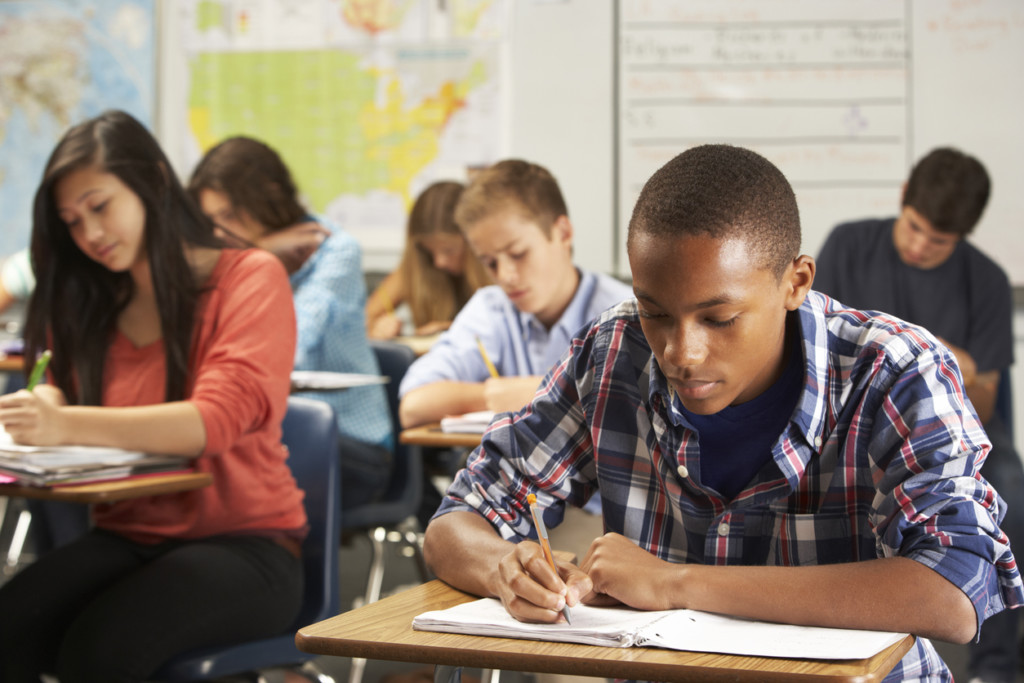
Common sense, backed by research, tells us that families weigh a lot of information when making school choice decisions. This is especially true when options are readily available and easily comparable via centralized application systems.
Importantly, families’ calculations must be made anew each time a child moves schools, and it seems likely that the primary influencing factors can vary over time. New research investigates the stability of preferences by comparing choices made by the same families for younger and older children. It’s a quick but interesting look at familial decision making.
Harvard researcher Mark J. Chin uses application data from over 10,000 families applying for seats in both sixth and ninth grade in an unnamed large urban school district between the 2011–12 and 2018–19 school years. A majority of students in the district—and in the study—are Hispanic.
Via a unified enrollment system, families can rank up to five district options for each child. Assignment to schools is based on family preferences, available seats, admission priorities (including siblings), and random placement (if processing of the previous factors yields more than one valid option).
Chin’s work does not involve the actual offering or acceptance of seats in any particular school, but examines the preferences revealed by the schools ranked first in each family’s submissions.
Overall, all families selected as their top choice schools that were of higher quality than the average district building. This holds true for both middle and high school choices, although it is important to note that Chin does not define what “quality” means in this context.
White families chose schools that were whiter than both the average district building—middle and high schools—and the top choices of Hispanic and Black families. Similarly, Hispanic and Black families’ top choices served more students matching their racial/ethnic background than the average district building.
Black applicants chose middle and high schools that were further away from home than did their Hispanic and White peers.
To continue reading, click here.
 Editor’s note: This article appeared Wednesday on the74million.org. To read an analysis of the survey from Patrick Gibbons, manager of policy and public affairs at Step Up For Students, click here.
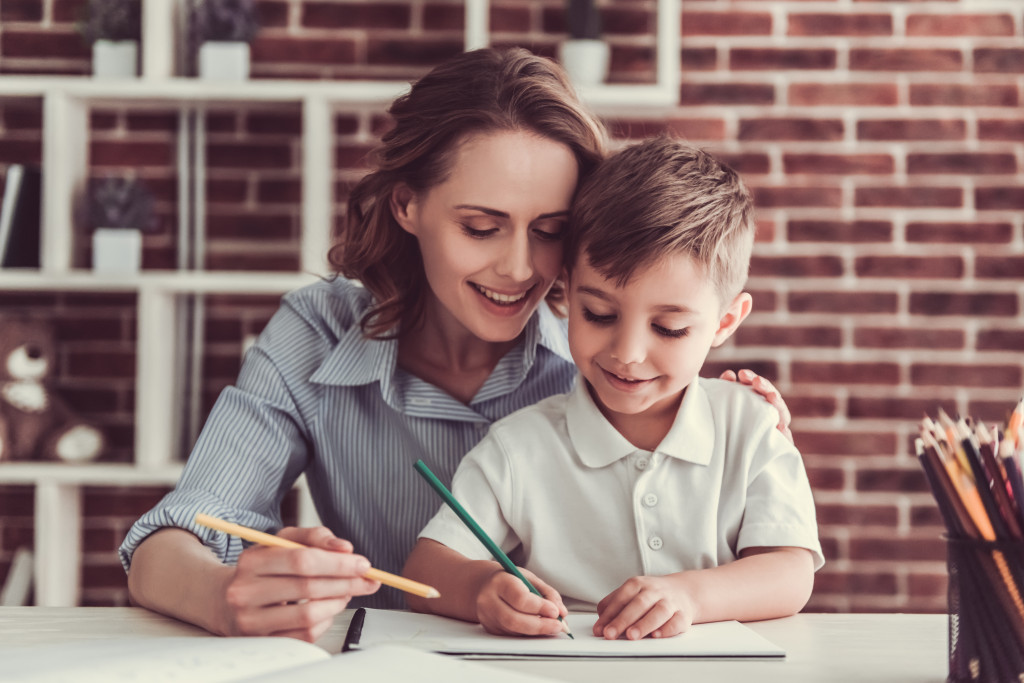
More than half of the 3,115 parents who participated in a spring survey said they prefer to direct and curate their child’s education rather than rely entirely on their local school system, results showed.
Conducted by Tyton Partners, an investment banking and consulting firm that examines pandemic-related shifts in education, and funded in part by the Walton Family Foundation and Stand Together Trust, the survey was released Oct. 26. It comes after parents had courtside seats to various aspects of their children’s learning during the pandemic, prompting many — from myriad backgrounds and political affiliations — to push for change.
“What we’re hearing from parents loud and clear is they feel a greater sense of ownership over their child’s education,” said Christian Lehr, a senior principal in Tyton’s strategy consulting practice. “The last two years have been incredibly difficult. Now, parents are actively searching for new experiences that will deliver on academic promises, yes, but also bring joy and delight.”
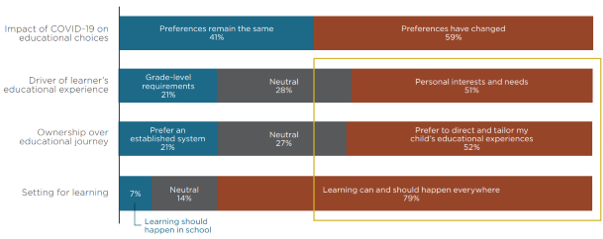
Fifty-nine percent of participants said their educational preferences changed post-pandemic: 51% said personal interest and needs should drive a child’s education rather than grade-level requirements.
Nearly 80% said learning can and should happen anywhere.
Some parent groups, frustrated by underperforming schools, have advocated for the types of change they feel will propel children of color and other marginalized groups. Many don’t have a political agenda while others are openly partisan: Conservative parents are driving change from within the public school system, pushing for certain texts — often those that concern issues of race and gender — to be pulled from the classroom. Left-leaning suburban families have organized against this trend.
Others still, unhappy with districts’ remote learning options during the pandemic, removed their children from the public school system entirely. And while some have returned to campus, virtual school enrollment figures remain high.
To continue reading, click here.
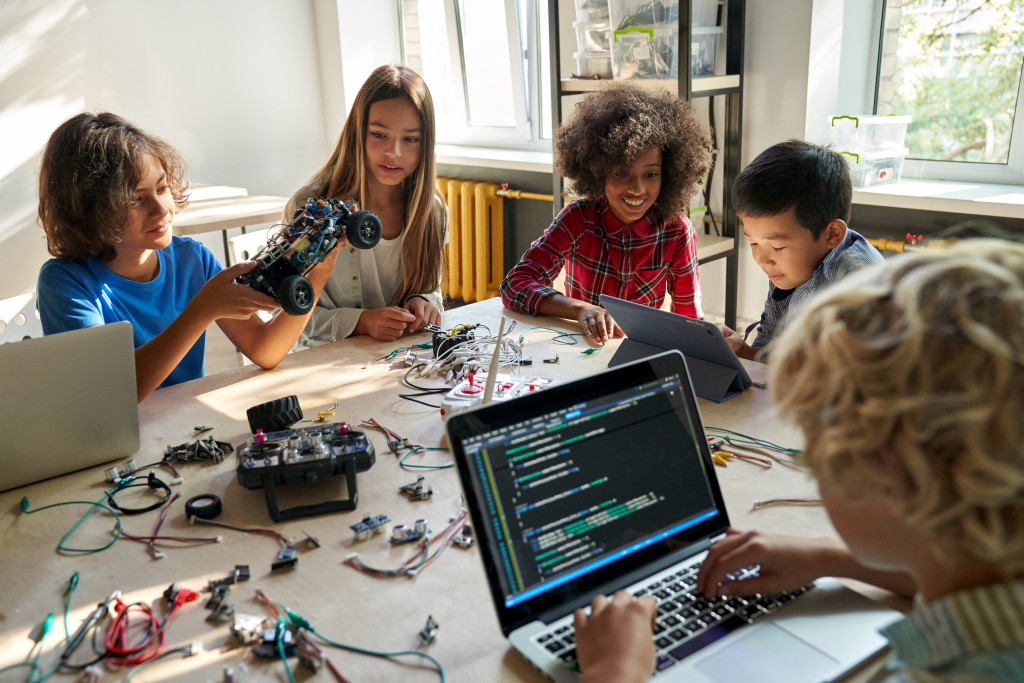 The Covid-19 pandemic proved that K-12 education was ripe for disruption. A new report from Tyton Partners finds that a majority of parents “prefer to direct and curate their child’s education rather than rely on local school systems.”
With many families educating their children at home during the crisis, parents discovered learning and personal growth can happen everywhere, not just in the classroom. Not only are parents choosing where, and how, their children are educated; they also are making choices on extracurricular activities like camp, tutoring, cultural enrichment and sports.
Could educational choice and extracurricular choice coexist, and how might it work?
Tyton Partners, with the Walton Family Foundation and Stand Together Trust, set out to find answers to these questions with a new report, “Choose To Learn: Connecting In- And Out-Of-School Learning In A Post-Pandemic World.”
Researchers surveyed more than 3,000 parents and nearly 150 organizational leaders who offer in-school and out-of-school educational programs.
According to the survey, the pandemic fundamentally changed the way parents view K-12 education.
Parents’ values and beliefs toward K-12 learning
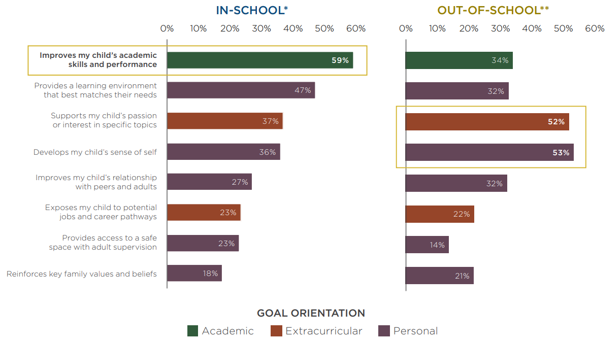
While parents still believe in-school learning is the greatest means of improving a child’s intellectual opportunity, Tyton Partners found that parents viewed out-of-school activities to be far better at supporting a child’s passions of interest and developing a child’s sense of self-worth.
Out-of-school activities were viewed as being better at helping students develop relationships with peers and adults and reinforcing key family values and beliefs. These out-of-school style activities may even be blended into non-traditional educational models, such as microschools or other alternative educational programs.
Top aspirations for child’s learning
 Given the positive benefits of these out-of-school activities, researchers reviewed concerns over equitable access to extracurricular activities and alternative schools by minorities or low-income families. Alternative school options and extracurricular activities also remain unaffordable to most families, regardless of race or income.
Researchers provide two solutions to making alternative educational models and extracurricular activities more affordable: education savings accounts (ESAs) and public microgrants.
ESAs would provide funds directly to parents to pay for tuition, tutoring and other afterschool activities like camps, museum trips, sports and more. Microgrants include programs like VELA Education Fund offering grants to educational entrepreneurs, or Boston Public Schools’ “Opportunity Portfolio,” which provides grants to community organizations and enrichment programs to serve local students.
In addition to resolving equity issues, the researchers examined accessibility and quality issues as well.
Overall, the research launched to gain a better understanding of issues impacting every family, including the more than 40 million parents who send their children to public school, according to Christian Lehr, senior principal at Tyton Partners and lead author of the report.
“Relative to issues of equity and access, our local public districts play a crucial role for K-12 families,” Lehr said. “At the same time, families crave a wide variety of learning experiences. It is in this spirit that we examined parents’ aspirations at the intersection of in- and out-of-school learning, and ask: How can the K-12 sector deliver a stronger union of academic, extracurricular, and personal outcomes for all families, regardless of life or economic circumstances?”
 Editor’s note: This analysis appeared Sunday on the74million.org.
So many things went wrong during the pandemic and its resulting lockdowns. Families lost loved ones. Small businesses closed forever.
The pandemic has packed a punch unlike any other period in living memory and forced many to take a hard look at the state of the nation’s schools. For some parents, this was the first time they’d ever see their child’s education in action — the good and the bad.
For those of us who have long championed the rights of parents to send their children to alternative public and private schools, we weren’t surprised to hear the frustration of our neighbors. I was fortunate. My children have received wonderful educations in both virtual and hybrid settings. The consistency they offered my daughters during the pandemic is a gift we never could have anticipated prior to 2020.
More than two years later, the nation is still uncovering the effects the pandemic had on children through learning losses, mental health struggles and behavioral issues. A working paper from researchers at Penn, Yale, Northwestern and the University of Amsterdam described the pandemic as the “largest disruption to children’s learning in many countries in generations,” a crisis that will continue for decades. A Brown University study found serious declines in math and English, which were even larger in districts serving a high number of Black students.
As a result, frustrated families are now more open to alternatives to their local public schools. Parents want the power to make decisions that impact their child’s education. Gone are the days of parents handing their children over to their local neighborhood school and hoping they can meet their child’s unique learning needs.
For years, a small minority had embraced the idea of school choice, but that changed during lockdowns. Having spent time as part-time teachers, families are now questioning the educational institutions they long supported.
A national survey commissioned in August by the National Coalition for Public School Options found that while 71% of parents surveyed sent their children to their local district public school, 61% believe those schools are headed in the wrong direction, including urban residents, at 67%. This follows a recent Gallup poll that found only 28% of Americans say they have a great deal of confidence in public schools, the second-lowest confidence rating on record.
To continue reading, click here.
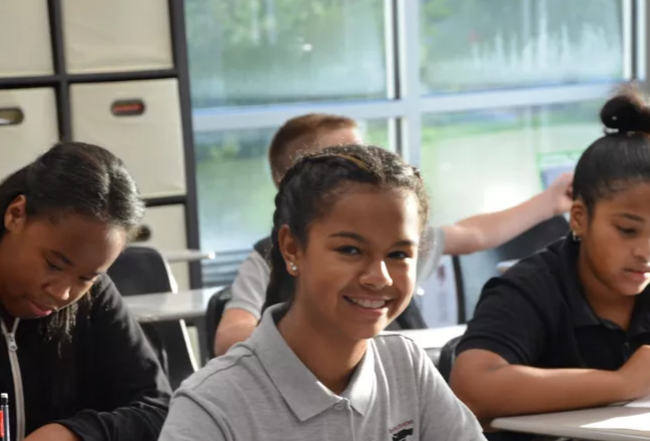
Destiny Christian School in Oklahoma City, Oklahoma, is one of 209 private schools in the state serving more than 37,700 students. Destiny is an interdenominational school with an emphasis on fundamental biblical principles, developing a Christian worldview and Christian character.
A new survey of likely Republican voters in the Sooner State revealed that 73% of those polled support the concept of school choice.
Local media outlet News 9/News On 6 conducted the statewide poll of 383 Republicans, including voters who have changed their party affiliation to the GOP, asking:
“Thinking about education in Oklahoma, school choice gives parents the right to use tax dollars associated with their child’s education to send their child to the public or private school which better serves their needs. Generally speaking, do you support or oppose the concept of school choice?”
Seventy-three percent of respondents said they support school choice, with 50% “strongly” supporting school choice. The findings mirror a recent EdChoice poll conducted by Morning Consult that showed most Oklahomans – Republicans, Democrats, and Independents – would choose something other than a “regular” public school for their children if given the option.
EdChoice also queried those surveyed on education savings accounts, asking:
“An education savings account in K–12 education—often called an ESA—establishes for parents a government-authorized savings account with restricted but multiple uses for educational purposes. Parents can then use these funds to pay for school tuition, tutoring, online education programs, therapies for students with special needs, textbooks or other instructional materials, and save for future college expenses. In general, what is your opinion of education savings accounts?”
Seventy-seven percent of respondents who identified as parents and 68% of respondents overall indicated support for education savings accounts in the EdChoice poll.
 Editor’s note: This article appeared Thursday in the National Review.
According to a new poll released this morning by the American Federation for Children and Invest in Education, support for school choice continues to rise among Americans of all political views and across racial demographics.
The results contain several notable findings, but the theme is clear: Americans of all stripes are beginning to reach a consensus in favor of school choice and of education policy that favors parental rights.
The survey asked respondents about four key areas of the education debate: the role of parents, education-savings accounts, education-freedom scholarships, and failing schools. On each question, a majority of all respondents believed that greater education freedom is the correct policy.
The survey was conducted by OnMessage Inc. in telephone interviews between Feb. 14 and Feb. 17, surveying 1,000 voters likely to vote in the upcoming general election. The sample was stratified to reflect voter trends and had a 3.1% margin of error.
“As we mark two years since the beginning of the pandemic, there has been a seismic shift in how parents think about education,” said Luke Messer, president of Invest in Education, and Tommy Schultz, CEO of the American Federation for Children in a joint statement. “Voters are also prioritizing education freedom and standing ready to make their views known at the ballot box.”
Messer and Schultz also emphasized that growing support for school choice is a response to “egregious achievement gaps” in public schools and the fact that “disadvantaged children [are] systematically assigned to schools that have been failing students for decades.”
To continue reading, click here.
 Results from a new poll from RealClear Opinion Research indicates that voters have a problem with lawmakers who oppose school choice for others but exercise it for their own children.
According to a survey conducted this month of more than 2,000 registered voters, 62% would be less likely to vote for a candidate who opposes education choice policies yet sends his or her own children to a private school. The sentiment was evenly shared by those who identified as Democrat, Republican and Independent.
Researchers asked the question: If an elected official or political candidate sends their own children to private school but opposes school choice for other families, would that make you more likely to vote for that candidate, less likely to vote for that candidate, or would it not make a difference?
Here is the breakdown among political affiliation:
Democrats were 56% less likely to vote for such a candidate; Republicans were 66% less likely; and Independents were 65% less likely.
American Federation for Children CEO Tommy Schultz said in response to the poll results that it’s unfortunate that politicians block expanded educational opportunities for others while exercising that freedom for their own children.
“From president of the United States governors to state lawmakers and school board members, many in such places of privilege disregard the needs of families who want nothing but the same opportunity to access an educational environment that meets their own children’s needs,” Schultz said.
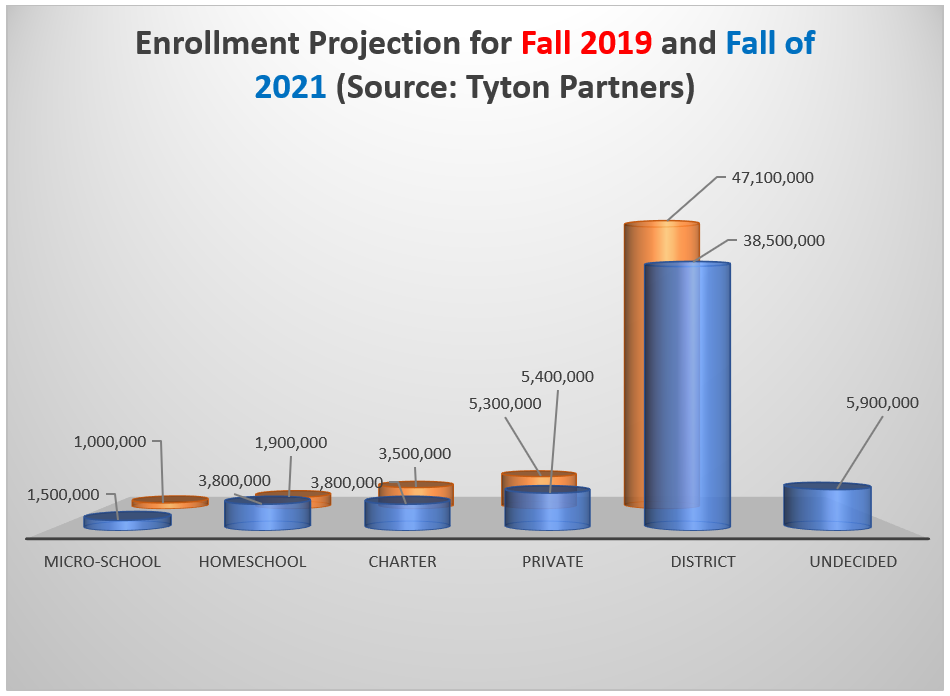
 The advisory firm Tyton Partners has released the second installment of its “school disrupted” study, which takes a deeper look at the drivers and barriers parents experienced when making educational decisions for their children in the face of COVID-19 challenges, as well as how their experiences will continue to shape the way they approach their children’s education after the pandemic subsides.
Part 2 of the study includes estimated enrollment by school sector for this fall. Among families who have made decisions for their children, approximately 72% chose a district school, with 28% choosing something different. If the 5.9 million families who are still undecided break in similar fashion, district enrollment could dip to levels not experienced in this millennium.
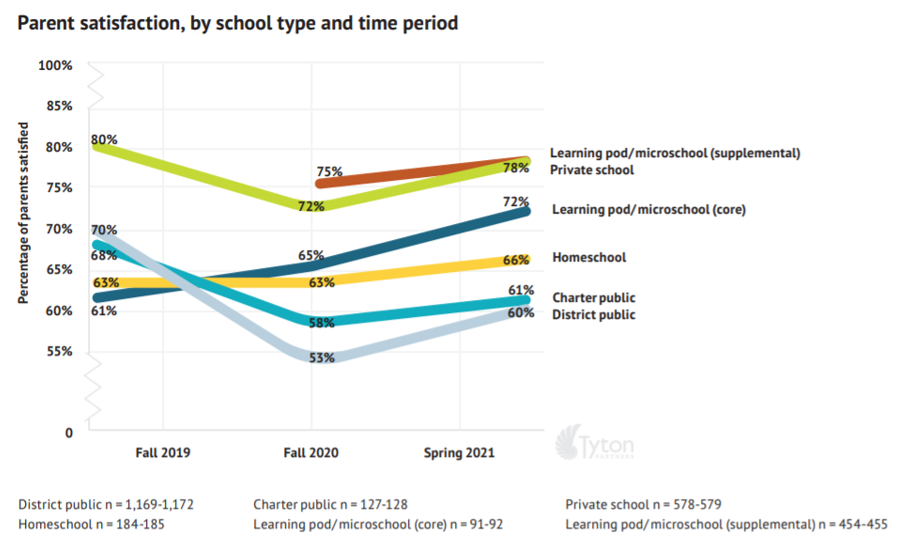
The survey also measured parental satisfaction by school sector from the previous school year. Satisfaction with supplemental pods, in which students remain enrolled in the distance learning program of a school but gather in groups with adult guidance, posted at 78%, tied with private school satisfaction. Parents whose students participated in pods full time followed with 72% satisfaction. Satisfaction with charter and traditional public schools was least favorable, at 61% and 60%, respectively.
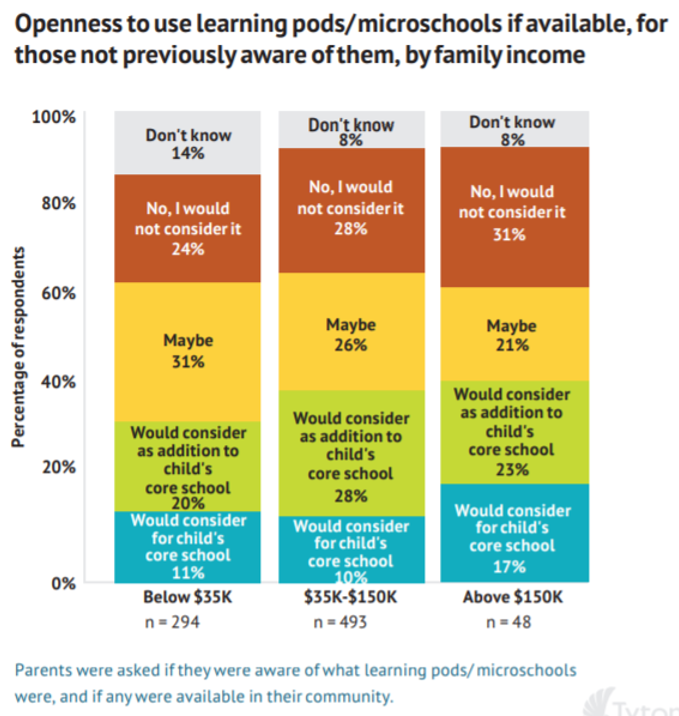
Additionally, the survey queried families who were unaware of learning pods and micro-schools on their potential interest. A majority across all income levels expressed interest in utilizing pods and micro-schools for either supplemental or full-time attendance.
The study is well worth reading in full. The results show robust growth in alternative schooling and home-schooling during the pandemic among those who have participated as well as from those who did not. It also shows a great deal of dissatisfaction with traditional schooling.
Put all this together with a baby-bust that began in the Great Recession period and I’m willing to go all in on the following bet: Peak district school attendance lies at some point in the past for anyone old enough to read this post.
Ironically, it was the very groups that accused their opponents of attempting to “destroy public education” that have inflicted this exodus upon the system they claim to support.

