Florida public schools now rank No. 4 in academic achievement, behind only Massachusetts, New Jersey and Virginia, according to the latest annual “Quality Counts” report from Education Week, released this week. Though it’s not noted in the report, Florida has a far higher rate of low-income students than any state in the Top 10, with roughly 60 percent of its students eligible for free- and reduced-price lunch.
The latest ranking is Florida’s highest ever. But it shouldn’t come as a surprise.
In fact, it punctuates a decade-long run.
Since 2009, Florida has, by Education Week’s analysis, finished at No. 7, No. 7, No. 6, No. 12, No. 12, No. 7, No. 7, No. 11, No. 11 and now No. 4. (The rankings stayed the same in some consecutive years because Education Week waited on national test scores, released every other year, to re-calculate.)
Education Week bases its analysis on a combination of common indicators: high school graduation rates; results on college-caliber Advanced Placement exams; and reading and math scores on the National Assessment of Educational Progress, considered the gold standard of standardized tests. It factors in proficiency and progress.
In a less tribal world, yet more good news about the relative performance of Florida public schools would finally knock the dunce cap off the state’s reputation, and spur more scrutiny of those trying to keep it there. The track record there isn’t encouraging.
Florida’s vision of education reform has been in the state and national spotlight for 20 years and remains “controversial” despite the rising trend lines. State policy makers have consistently emphasized a dual approach: Tough regulatory accountability measures like school grades. And an expansion of school choice options like charter schools and private school scholarships.
The latest news will come as a surprise to many parents – if they hear it – given the still oft-repeated myth that Florida schools are sub-par.
Twenty years ago, Florida’s education system was anemic, according to the most common indicators, with barely half its students graduating. But today, Florida’s public schools have never performed better, according to the same indicators. In some respects, they are among the best in the nation.
For example, Florida students rank No. 1, No. 1, No. 3 and No. 8 on the four core NAEP tests, once adjusted for demographics, according to the left-leaning Urban Institute. After the latest round of NAEP scores were released last spring, showing Florida had made the biggest gains in the nation, a top official at the National Center for Education Statistics told reporters, “Something very good is happening in Florida, obviously.”
Obviously.
How odd, then, that some who define themselves as public school defenders continue to double down on the notion that Florida public schools are being decimated – and to blame school choice for a decimation that so clearly isn’t happening.
How odd, too, that they so easily get away with it.
 Another year, another report, another Top 10 academic ranking for Florida's oft-criticized public schools.
The Sunshine State ranks No. 7 in K-12 achievement this year, up from No. 12 last year, says Education Week in its latest annual “Quality Counts” report.
Released Thursday morning, the report for the first time since 2008 did not include overall grades or ranks for each state. (Florida ranked No. 11, No. 5, No. 8, No. 11 and No. 6 over those years.) It did, though, continue to offer grades and ranks for six separate categories, including the one that matters the most.
In K-12 achievement, Florida earned a C, up from a C- last year. Massachusetts and Maryland earned the highest grade, a B; New Jersey, a B-; and the others ahead of Florida, a C+. The nation as a whole earned a C-.
Florida has a far greater percentage of low-income students than the states ahead of it or immediately behind it (roughly 10 to 30 percentage points more). It also stands out because of how aggressively it has pursued school choice and top-down accountability.
Gov. Rick Scott credited teachers: “Today’s news that Florida jumped to 7th nationwide in K-12 achievement is the result of great work by our teachers," he said in a written statement. Florida families depend on an education system that provides every student with a quality education, and that’s why in our last budget we fought to provide our teachers with a pay raise and secured more than $1 billion in additional investments for K-12 education.”
Florida Gov. Rick Scott delivered the State of the State Address to the Legislature on the opening day of its session Tuesday, stressing jobs and education. Here are his remarks on education, as prepared for delivery:
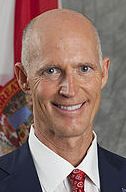
Gov. Scott
Our work to cut spending and live within our means over the last two years has allowed us to once again invest in education.
The workers of tomorrow are in Florida classrooms today.
When I first stood before you in 2011, I said, “The single most important factor in student learning is the quality of teaching.”
Since that time, we eliminated teacher tenure. We signed performance pay into law, and it will take effect in 2014.
Florida’s education system is making tremendous progress, due in large part to our great teachers and the work begun by Governor Bush and many in this legislature.
Our students and teachers were recently ranked sixth for educational quality; and our fourth-graders scored among the highest in the world on a recent reading evaluation.
Accountability is working.
The best way we can build on this progress is to reward our hard-working teachers with a $2,500 pay raise.
Some say they are afraid that giving raises to all teachers may mean that a teacher doing a bad job gets rewarded. But, thanks to our work, we are now in a better position than ever before to reward good teachers and move bad teachers out of the classroom.
We don’t want a war on teachers; we want a war on failure. (more…)
 For the second time this week, a credible, independent analysis shows Florida students leading the pack in progress.
Between 1992 and 2011, Florida students made bigger gains than students in four other “mega states” in fourth- and eighth-grade reading and fourth-grade math, according to a report released Thursday by an arm of the U.S. Department of Education. In each case, they moved from below the national average to meeting or exceeding it. Low-income and minority students in particular showed traction.
“There is something real going on there,” said Jack Buckley, commissioner of the National Center for Education Statistics, according to Education Week.
The center’s comparison followed Wednesday’s College Board report that showed Florida continues to climb the charts on Advanced Placement exams. The Sunshine State now ranks fourth in the percentage of high school graduates passing AP exams. Over the past decade, it ranks second in progress.
Broken-record alert No. 1: Florida’s trend lines shouldn’t be a surprise, given reports like this, this, this, this and this in the past year alone. Yet there remains a lingering perception, cultivated by critics, that Florida’s public schools are sub par and stagnant.
For Thursday’s report, the center for the first time compared scores from Florida, California, Texas, New York and Illinois – the states with the biggest student populations and arguably the biggest challenges. It used results from the National Assessment of Educational Progress, a battery of tests better known as “The Nation’s Report Card” and considered the gold standard among standardized assessments.
In eighth-grade math, Florida students made gains but remain below the national average. Elsewhere in the report, they were singled out often. (more…)
Florida's status. Matt Reed, Florida Today's editorial page editor, takes a look at NAEP data and the most recent Education Week Quality Counts report and concludes: "We obviously have room to improve. But our system is neither starving, as educators always say. Nor is it “broken” or “failing,” as reformers keep telling us."
Florida's status, Part II. Diane Ravitch's latest take, after quoting a Florida teacher at length: "There is no Florida miracle. Education has only gotten worse over the past few years, no matter how schools, districts and the state itself game the system. And, contrary to what the media will tell you, it is NOT teachers’ fault, unions’ fault, and I won’t even blame it on the kids or their parents this time. It is the fault of education “reform” led by Jeb Bush et al."
Charter schools. The South Florida Sun Sentinel writes up the bill that would require school districts to share unused or underused facilities with charter schools. Bad idea, editorializes the Palm Beach Post.
Gays and lesbians. The Lake County School Board considers rules that would keep a Gay-Straight Alliance from forming at a middle school. Orlando Sentinel.
Teacher evaluations. Tampa Bay Times on one impact (or not) of the new system in Hillsborough: "After years of planning and training, observation and deliberation, the first wave of firings has begun under a teaching-improvement project funded by the Bill & Melinda Gates Foundation. The tally: Three teachers." (more…)
Private schools and FCAT testing. So far, two schools that accept tax credit scholarships have signed up, reports SchoolZone. The deadline is March 1.
 Charter schools. A bill to be considered by the House Education Committee this week would require school districts to turn over empty buildings to charter schools for free and pay to maintain them. SchoolZone.
Teacher conduct. Two more girls are suing the Palm Beach County School Board, claiming they were sexually assaulted by a former middle school band teacher; the board has already agreed to pay two other girls $150,000 each to settle. Palm Beach Post.
Teacher evaluations. Tampa Bay Times raises questions about the new system with an analysis of schoolwide VAM scores in Pinellas.
Rick Scott. To get re-elected, he's "throwing money at schools." Palm Beach Post.
School grades. Focus is what led to improvements at two Polk schools. Lakeland Ledger.
School poverty. Percentage of students eligible for free- and reduced-price lunch is rising in Volusia and Flagler. Daytona Beach News Journal.
School spending. The Palm Beach County district wants the Legislature to restore districts' previous taxing authority for capital needs, so it can avoid a capital budget deficit that could top $50 million. Palm Beach Post.
School security. More than 50 Pinellas teachers sign up for free gun training. Tampa Bay Times.
Hidden faces. Non-instructional workers in Palm Beach County rally for fair treatment. South Florida Sun Sentinel.
ALEC's report card. StateImpact Florida.
It's National School Choice Week. SchoolZone and StateImpact Florida.
Grade inflation? The Palm Beach Post writes there is less to Florida's No. 6 ranking in the latest Education Week Quality Counts report than education reform supporters suggest, and encourages teachers and politicians "to dig into the details."
Teacher evals. Despite concerns raised by Senate President Don Gaetz, the Shanker Blog says it wouldn't make sense if school grades and the new teacher ratings were too closely associated. The Tampa Bay Times interviews David Steele, who's in charge of the Gates-funded teacher evaluation project in Hillsborough.
Teacher pay. More on Democratic bills to raise teacher pay to the national average. Palm Beach Post.
School security. Bills are filed to use taxes from gun sales for guidance services, and to expand gun-free zones around schools, reports SchoolZone. The superintendents association releases a district-by-district SRO survey, reports the Northwest Florida Daily News.
Technology. StateImpact Florida writes up what to expect at the Florida Educational Technology Conference, where 10,000 educators will gather. Senate Education Committee Chairman John Legg says he's putting together a proposal that aggressively invests in new technology, reports Gradebook.
$10,000 degrees. All 23 state colleges accept Gov. Scott's challenge, reports the Associated Press. More from Miami Herald, Lakeland Ledger, Pensacola News Journal, Bradenton Herald, Sarasota Herald Tribune, Gradebook. (more…)
Another week, another report card. Florida earns a B on the Center for Education Reform's latest annual look at charter school laws, which was released this morning. The state gets high marks for not capping the number of charters, and for decent equity in operational funding. It gets low marks for not having multiple authorizers and for limited facilities funding. Florida ranked No. 7 overall (up from No. 8 last year), behind Washington D.C., Minnesota, Indiana, Michigan, Arizona and New York. More on this year's report here. Last year's report here.
 Quality Counts. Florida ranks No. 6 this year in Education Week’s annual report. Coverage from redefinED, Associated Press, Miami Herald, Gradebook, Orlando Sentinel, StateImpact Florida, Fort Myers News Press, Naples Daily News, WCTV, News4Jax. More from Huffington Post.
Charter school access. SchoolZone takes a critical look at the first policy paper from the Center for School Options, a new think tank chaired by former Education Commissioner Jim Horne. It grades the 10 biggest districts in the state on charter school access. The Fort Myers News Press writes up Lee County's top grade.
Charter school attendance. Palm Beach district officials suggest tighter controls are needed after a Mavericks charter school overstated its attendance and received $160,000 more in per-pupil funding. Palm Beach Post.
Career and technical. Tampa Bay school officials are headed to Germany to learn more about programs there. Tampa Bay Times.
Suspension and grad rates. A Johns Hopkins University study of Florida ninth graders finds much higher graduation rates for those who were never suspended as freshmen versus those who were suspended even once or twice.Education Week.
Rick Scott. Visits Fort Lauderdale High School. South Florida Sun Sentinel.
Superintendent searches. Interim education commissioner Pam Stewart applies for the superintendent’s opening in Manatee County, reports Gradebook. St. Lucie County gears up to replace retiring Superintendent Michael Lannon, reports TCPalm.com.
School security. Hillsborough is going too far, editorializes the Tampa Bay Times. So is a Lake County School Board member who wants to arm teachers and principals, writes Orlando Sentinel columnist Lauren Ritchie.
Rezoning angst in Seminole. Orlando Sentinel.
At the EdFly Blog today, former Orlando Sentinel columnist Mike Thomas asks a reasonable question: Why isn't the Florida teachers union trumpeting the dramatic gains of Florida teachers? This morning's Education Week ranking is just the latest in a long string of credible reports that finds Florida making steady academic progress. Shouldn't Florida teachers, doing more with less and under enormous pressure to produce results, get credit from those who portray themselves as their biggest supporters? Here's Thomas:

FEA President Andy Ford
Florida scored another impressive victory with the state finishing sixth in the Education Week “Quality Counts’’ rankings.
This follows news from last month that Florida fourth graders finished second in the world on international reading assessments. In October, Miami-Dade won the prestigious Broad Prize for urban school districts because of progress in closing the achievement gap. Florida kids ranked second in the nation in learning gains dating back to the 1990s. I could go on.
Alas, Florida’s good news is not celebrated by all, even by its own teachers’ union. The Florida Education Association has been silent on all of the above, even though its teachers are on the front lines of these successes. Repentant reformer Diane Ravitch actually compared student achievement in Florida and Massachusetts. Of course Massachusetts kids perform better. Look at the student demographic and income data, Diane. Are you serious?
The reason for this denial is that Florida did not achieve its success by acceptable means. By that, I mean if the state had achieved these results by tripling education spending and eliminating its accountability provisions and school choice options, the above victories would have been trumpeted from the rooftops by the FEA and Diane as well.
Continue reading Thomas' post here.

