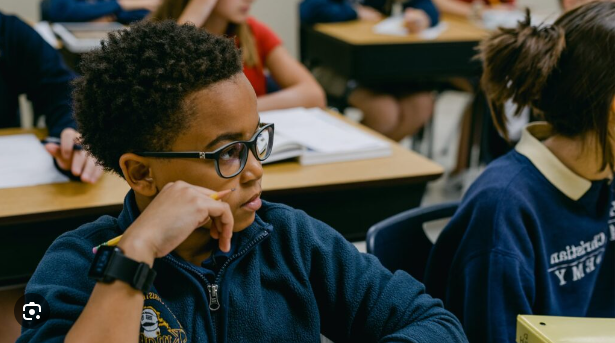
Hickory Christian Academy in Hickory, North Carolina, one of 844 private schools in the state serving more than 123,000 students, aims to equip children today to be God’s leaders tomorrow.
Editor’s note: This article appeared Wednesday on North Carolina’s WRAL.com.
The North Carolina House of Representatives moved to expand private school voucher eligibility to families all of incomes and spend nearly $400 million more annually on the vouchers in years to come — one of the biggest boosts in education dollars in years, an effort that is fueling an intense debate over how schools are funded.
After more than two hours of debate, the House passe House Bill 823 by a 65-to-45 vote Wednesday. It now heads to the Senate for review, where an identical bill has already passed the Senate Education/Higher Education committee.
House Bill 823 would make vouchers to attend private schools one of the state’s biggest education line items.
Supporters argued the expansion would give more families more opportunities to choose where their children go to school, especially for children with special needs. Opponents argued the bill would divest from underfunded public schools and increase investment in a private landscape in which not all students are accepted.
An Office of State Budget and Management analysis released last week estimated public schools would lose thousands of students to the private schools, costing them more than $200 million annually by the 2026-27 school year, before the program expands to well more than half a billion dollars during the 2032-33 school year.
Private school vouchers, called Opportunity Scholarships in North Carolina, are checks written by the state on behalf of qualifying families who apply for the voucher, to a private school. The child must apply to the private school and be accepted to qualify.
“We don’t need to bleed off money to send to the private sector,” said Rep. Abe Jones, D-Wake. “We need to strengthen the public schools where most people’s kids are going to still be going.”
Bill sponsor Rep. Tricia Cotham, R-Mecklenberg, framed the issue from a different angle. She said some students aren’t engaged in school and need to be.
“Maybe a kid says they hate school” Cotham said. “It’s just not the place, maybe the school is too large, maybe it’s the type of curriculum, maybe they have dyslexia and need another location for them. So this would give families, parents, the opportunity because they know their child the best to say where their child should go to school.”
To continue reading, click here.
 Editor’s note: This commentary from Frederick Hess, director of education policy studies at the American Enterprise Institute, appeared last week on the Thomas B. Fordham Institute’s website.
This year’s state legislative sessions, now coming to a close, have yielded a blizzard of high-profile victories on school choice, from enactment of universal education savings accounts programs to the expansion of private school choice policies to serve many more families, to fairer funding for charter schools.
These gains have come primarily in red states, even as choice opponents in blue states have, if anything, strengthened their hand, with resurgent teacher unions and energized progressives denouncing charter schools (never mind vouchers and ESAs) as nefarious “privatization.”
What can choice supporters take from these developments? It seems to me that there are at least four big takeaways, all of them rooted in the kind of reflection that I suggest in my new book, The Great School Rethink (Harvard Education Press 2023).
First, when it comes to educational choice, it turns out that huge swaths of seemingly “satisfied” parents see the value in having more options—at least when it’s offered in terms of taking care of their kid rather than bashing their public schools. The pandemic and value-laden fights fueled by political polarization have made choice appealing to many families that never thought much about it before. This is what’s driving so many of the legislative wins.
As I put it in The Great School Rethink:
How do we reconcile parent support for more choices with affection for their local public schools? It’s not hard, really. Parents want options. They may wish for alternatives when it comes to scheduling, school safety, or instructional approach … At the same time, though, they also value schools as community anchors, like their kid’s teachers, and may live where they do precisely because they like the local schools … The notion that one is either for empowering parents or supporting public education is a misleading one. Real parents don’t think this way.
Now, some observers see a handful of very online choice advocates denouncing “failing public schools” or calling to “blow up school systems,” and seem to imagine that these appeals are helping to fuel choice gains. I think they have this wholly backwards.
Choice enthusiasts have been issuing such screeds for many years. What’s changed is that, after the pandemic, many more parents are open to choice even though the lion’s share continue to like their local public schools. Advocates who get this are more likely both to win over red-state parents and to bolster their case with blue-state ones.
Indeed, many apolitical parents who just want good options for their kids are alienated by reformers who seem like wannabe revolutionaries.
Second, it’s more useful to think of “educational choice” than “school choice.” From start to finish, schooling is a stew of choices made by students, parents, educators, system officials, and policymakers. Attendance zones, discipline policies, electives, homework policies, when to start school—schools are nothing but a series of choices about education. Given that, we need to appreciate that school choice works much better in some places (like urban areas studded with schools) than in others (like sparsely populated rural communities or those lacking in convenient transportation).
Even in locales where the promise of school choice may be more limited, many families stand to benefit mightily from educational choice that allows them to address their child’s needs.
To continue reading, click here.
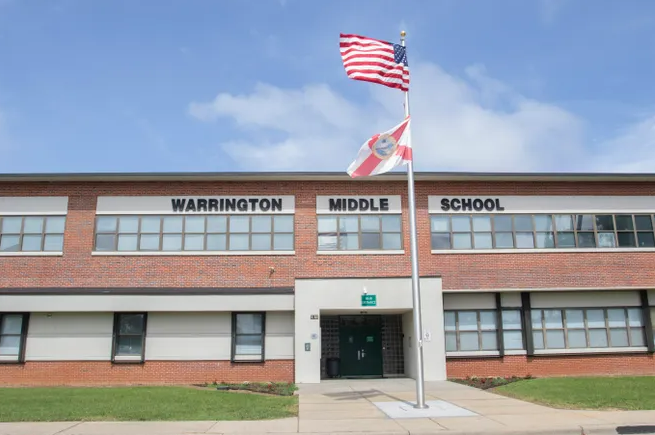 With the clock ticking on a state-imposed 48-hour deadline and the threat of withheld salaries hanging over their heads, Escambia County School Board members on Tuesday approved a contract with a charter school operator to take over a struggling middle school.
Board members voted 4 to 1 in favor of the contract, which allows Charter Schools USA to assume operations in the upcoming school year at Warrington Middle School, which has never received a state grade higher than a D for the past decade.
Board members who voted in favor of the measure were clear they did so reluctantly.
“I really hurt today,” board member Patty Hightower said. “We have never equivocated on the fact that we have never been successful at Warrington Middle School. But it’s not because of the people who work there. The people have given their blood, sweat and tears to work with these students. It’s not because they didn’t try. It’s not because they are incompetent.”
However, she added, “Charter schools are public schools. Some of the things they are asking for in this agreement are normal charter school requests. I’m willing to give Charter Schools USA a chance, and so I will be voting to support the agreement.”
The other three board members who voted with her said they thought they had no choice given the state’s ultimatum and that it was better than closing the school and busing all the students to other middle schools.
“This is the best thing at the moment for the students in the Warrington zone,” board member Bill Slayton said. “We’ve been given 48 hours; that’s why I’m saying let’s give it to them. We have tried for 10 years or longer.”
The Escambia County School Board vote followed a contentious conference call earlier in the day of the state Board of Education, in which members leveled harsh criticism at the Escambia County district leadership. State board members voted unanimously in favor of Florida Commissioner of Education Manny Diaz Jr.’s recommendations, which were the following if the district failed to sign an agreement with Charter Schools USA within 48 hours.
Report the school district to the Florida Legislature for failing to comply with state law.
Withhold funding to the district equal to the salaries of the superintendent and school board members.
Require the district to provide the state Department of Education with daily progress reports on its negotiations with Charter Schools USA.
“You’ve been failing the children of Warrington Middle School for the past decade,” Diaz told Escambia School Superintendent Tim Smith and School Board Chairman Paul Fetsko, who represented the district on the call.
Diaz said he found the district’s recalcitrance in correcting the situation “shocking” that district had yet to reach an agreement with Charter Schools USA, which it chose last year to take over Warrington Middle School. “This is not a new issue.”
State board Vice Chairman Ryan Petty accused the school district leaders of being “incompetent and completely disingenuous” in their handling of the matter.
“It’s been well over a year, and while I understand there were critical issues during the negotiations, you have had over a year to get these things resolved, and you come in here telling us just now that in the last couple of days you’ve been unable to resolve this,” Petty said.
Smith said the district board held an emergency meeting Friday but did not receive any response from Charter Schools USA about its counteroffer until later in the day. He said there had been some confusion as to whether Warrington students would be guaranteed seats at the charter school. Charter Schools USA said in its counteroffer on May 5 that 200 students from the Warrington zone in sixth through eighth grades would be guaranteed seats when the charter opened this year.
School officials had said throughout the negotiation process that their biggest concern was that students living in the Warrington zone would have a neighborhood middle school.
Warrington Middle first entered the state’s turnaround process in 2012 under a district-managed plan. However, when test scores did not improve, the state gave the district until 2020-21 for Warrington to reach a state grade of at least a C. During that year, the state allowed schools to forgo reporting test scores because of the COVID-19 pandemic.
When the district did report scores in 2021-22, Warrington Middle remained at a D. The state board then ordered the district turn it over to a charter company by May 1. You can see a complete history and update of its turnaround plan here.
District officials began negotiating in November with Charter Schools USA, which serves 75,000 students in five states. The 26-year-old charter school operator was the only organization to express interest in taking over the Title 1 school, where 80% to 90% of its approximately 600 students live below the federal poverty line.
The parties appeared to be headed toward a May 1 deadline to forge an agreement. However, negotiations hit a snag when district leaders said at an April 13 school board meeting that Charter Schools USA had sent a list of conditions for it to make a long-term commitment to the school. Those included the charter company becoming a K-12 charter with open enrollment by 2026-27.
Other points of conflict had been the charter company’s request for 100% of the district’s 1.5 mil local taxes for capital projects and the district’s request that the charter school pay the district a 5% administrative fee; the charter company said they should not have to pay the fee.
On Tuesday night, Fetsko expressed his feelings about Diaz, the state Board of Education and Charter School USA.
“I have great disdain for the business practices of Charter Schools USA,” he said. “The commissioner showed himself to be a very unreasonable man. State board members showed themselves to be nothing but a bunch of magpies reporting what they’ve been told to say. At one time I had great respect for the Department of Education. That has changed.”
Though Fetsko said he would vote for the contract, he said the district should find a way to way to “make sure this never happens again.”
“Build a system of K-8 or something to cause our students to stay with us, to not choice into a charter and not leave what’s going on and show we can educate our own and we don’t need somebody being pushed upon us.”
Shortly after the vote to approve the contract with Charter Schools USA, the school board voted 3-2 to fire the superintendent, citing resignations, staff shortages, and a lack of communication regarding the contract with Charter Schools USA. Smith’s contract ends May 31. The board appointed an assistant superintendent as interim.
 Editor’s note: This article appeared Sunday on thecentersquare.com.
An Ohio policy group continues to push the Senate to adopt universal school choice, testifying a plan passed by the House would leave “many working-class families” out of the option.
Greg Lawson, research fellow at The Buckeye Institute, told the Senate Education Committee in written testimony to make school choice available to all students and increase funding for charter schools, two areas where Lawson said the current House-passed budget falls short.
“EdChoice would grow under House Bill 33, but many working-class families would still be ineligible,” Lawsons said in his testimony. “These working-class families deserve the same opportunity to help their children succeed in school with an educational environment that best fits their students’ needs.”
As previously reported by The Center Square, the House passed budget increases the income limit for the school voucher program from 250% to 450% of the federal poverty level. Rep. Tracy Richardson, R-Marysville, said that a family of four making $135,000 or less would be eligible for private school vouchers, representing nearly 75% of children ages 6-18 in the state.
It also increases the per-student amount of taxpayer dollars the state gives to qualifying charter schools.
Lawson pointed to a Buckeye Institute analysis that showed a family of four in Dayton with jobs as a police officer and teacher with two children attending Chaminade Julieen Catholic High School would not qualify for vouchers and pay nearly $25,000 annually for tuition.
As previously reported by The Center Square, fiscal notes provided by the state’s Legislative Service Commission said universal school choice could cost Ohio taxpayers more than $1 billion.
To continue reading, click here.
 Editor’s note: This commentary from Colleen Hroncich, a policy analyst with Cato's Center for Educational Freedom, appeared Sunday on the center's website.
My oldest child is graduating from college tomorrow, so it has me thinking about our educational journey—which could best be described as eclectic. At various times, we used private school, district school, and cyber charter school. But we ultimately landed on homeschooling.
That doesn’t mean they were literally learning at home every day. My kids participated in co‐ops, hybrid classes, dual enrollment, athletics, and more. This gave them access to experts and plenty of social time.
It can be scary taking charge of your children’s education—I remember feeling very relieved when my oldest received her first college acceptance. But today there are more resources than you can imagine to help you create the best education plan for your children’s individual needs and interests. And with the growth of education entrepreneurship, the situation is getting even better.
For starters, you don’t have to go it alone. The growth of microschools and hybrid schools means there are flexible learning options in many areas that previously had none. One goal of the Friday Feature is to help parents see the diversity of educational options that exist. To see what’s available in your area, you can search online, check with friends and neighbors, or connect with a local homeschool group.
If you don’t find what you’re looking for, the good news is that there’s also more support for people looking to start new learning entities.
The National Microschooling Center is a great starting place if you’re considering creating your own microschool. The National Hybrid Schools Project at Kennesaw State University is also a tremendous resource. There are businesses—like Microschool Builders and Teacher, Let Your Light Shine—whose focus is helping people navigate the path to education entrepreneurship. And grant opportunities, like VELA and Yass Prize, can help with funding.
We were fortunate to be in an area with a strong homeschool community and therefore had plenty of activities to choose from. But I’m still a bit jealous when I speak to parents and teachers each week and hear about the amazing educational environments they’ve created.
There’s also an abundance of online resources available, from full online schools to à la carte classes in every subject imaginable. If you like online classes but want an in‐person component, KaiPod Learning might be just the ticket. These are flexible learning centers where kids can bring whatever curriculum they’re using and work with support from a KaiPod learning coach. There are daily enrichment activities, like art, music, and coding, as well as social time.
One of the best parts of taking charge of your children’s education is that it puts you in the driver’s seat. If your children are advanced in particular subjects, they can push forward at their own pace. In areas where they struggle, they can take their time and be sure they understand before moving ahead. (One potential downside is that this takes extra discipline and can be challenging. But it’s tremendously beneficial overall.)
These nonconventional learning paths can be great for kids who don’t want to go to college, too. Flexible schedules free up time to pursue a trade, music, performing arts, sports, agriculture, and more. As kids get older, they can increasingly take charge of their own education. This lends itself to developing an entrepreneurial outlook, which is vitally important in a world where technology and public policy are constantly changing the workforce and economic landscapes.
“One size doesn’t fit all” is a common saying among school choice supporters. But this is more than just a slogan. It’s an acknowledgement that children are unique and should have access to learning environments that work for them. Public policy is catching up to this understanding—six states have passed some version of a universal education savings account that will let parents fund multiple education options.
If you’ve considered taking the reins when it comes to your children’s education, it’s a great time to act on it. Whether you choose a full‐time, in‐person option, a hybrid schedule, or full homeschooling, you’ll be able to customize a learning plan that works best for your kids and your family.
And you may even become an education entrepreneur yourself and end up with a fulfilling career that you never expected.
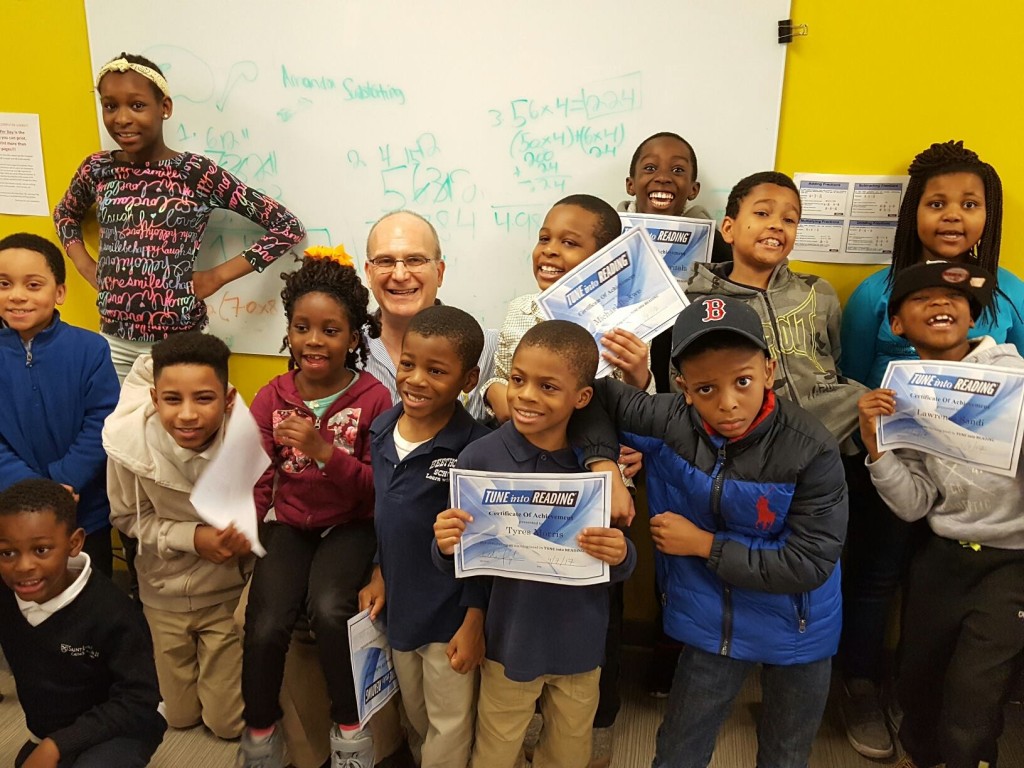
Carlo Franzblau, surrounded here by students who are thriving as a result of his TUNE into READING program, relied on independent research conducted mostly through the University of South Florida to launch his product. Ongoing research drives product improvement and development.
Since he was a school-aged kid, Carlo Franzblau sang off key, even though he played the piano and a mean guitar.
“In theater, they always told me to paint the sets, but they didn’t want me to open my mouth,” said Franzblau, who had to abandon his childhood fantasy of becoming a rock star.
Many people probably would not consider a bad singing voice a blessing. But an inability to carry a tune created an opportunity for the Tampa businessman to become an inventor and a vocal supporter of early literacy.
Franzblau is the founder of TUNE into READING, a software program that uses singing to help struggling readers. Thirty public schools in Pinellas and Hillsborough counties use the program to help students who are reading below grade level. It also recently became an approved provider for Florida’s New Worlds Reading Scholarship Account program.
The New Worlds education savings account program offers $500 to each eligible public school student in kindergarten through fifth grade who reads below grade level. Families may spend their money on pre-approved part-time tutors, curriculum, instructional materials and after-school or summer programs that focus on boosting reading skills.
Step Up For Students, which hosts this blog, administrates the program for the state.
When Franzblau became a dad, he left behind his dreams of becoming a rock star, but he wanted to sing his children off to sweet dreams with lullabies.
Please don’t, his wife begged.
“She said It could cause them brain damage,” Franzblau joked.
So, in 2003, the Harvard University graduate and co-owner of a family catalog business developed software to help train himself and customers to maintain proper pitch. He sold some programs online, though not enough to make a business out of it. He called it Carry-a-Tune and later changed the name to SingingCoach. Users accessed it on a disk.
“I was going to shut the whole thing down when we heard it was helping kids who were struggling with reading,” he said.
One of the first stories Franzblau heard was how his program helped a middle school student. To this day, Franzblau still remembers her name: Ashley Jackson.
Jackson was so behind that she was in intensive remedial reading. The class held exercises in which students sat in a circle and took turns reading aloud to the group, which can be embarrassing for struggling students.
After a time, Ashley’s teacher noticed that her student not only read out loud willingly when asked, but she even started to volunteer.
“She was doing it with more ease and more fluency and some clear indications of comprehension,” Franzblau recalls.
The teacher called the student’s mother to find out what Ashley might be doing at home to contribute to her success.
“The only thing the mom could say to explain the improvement was that Ashley was doing this singing program for fun’’ Franzblau said. The teacher told Ashley’s mother to encourage her daughter to continue using the program.
Ashley’s results and a few other success stories piqued Franzblau’s interest in converting the program to help students with reading. However, he first wanted evidence that the improvements were the result of his program and not simply coincidence before taking it to market.
His brother-in-law, a fundraiser at the University of South Florida, connected him with Susan Homan, an education professor and an expert in emergent literacy and struggling adolescent readers. Homan, who received more than $700,000 to conduct research studies on TUNE into READING, found that middle school students’ reading skills jumped by an entire grade level after nine weeks of use compared with a control group, whose reading levels remained unchanged.
An expanded follow-up study in 2005 showed that the program, for which Franzblau now holds three U.S. patents, enhanced reading in elementary, middle and high school levels.
“These findings strongly support the use of interactive singing software that provides real-time pitch-tracking to increase reading levels and fluency for struggling readers at the elementary, middle, and high school levels,” the study said.
Studies at other institutions produced similar findings.
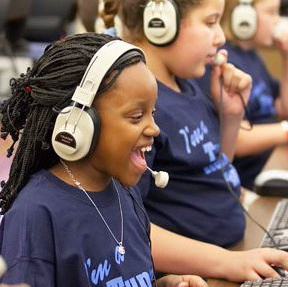
Students enter the TUNE into READING program at their individual level and work on grade-level and age appropriate content.
Here’s how the program works. Students first listen three times to a vocalist sing a song while they silently read the lyrics. Then they see vocabulary words used in the song and pictures that illustrate the words while a narrator offers a definition of the word and uses it in a sentence.
After that, students sing the words to the tune five times without the help of a singer. They get a gold star for each time they perform it correctly. Finally, they take a quiz. The program also allows students to track their progress.
Franzblau said the program includes 200 songs, with about 70 more soon to be added. Tunes are mainly in the public domain to keep costs low. A subscription for a private pay customer is $100 per month after a free 30-day trial.
In 2019, Franzblau and his wife, Beth, established a nonprofit foundation called SOAR, short for Sing Out And READ, to make the program more accessible to low-income families through community partnerships and private donations.
At Dunbar Elementary Magnet School in Tampa, teacher Victoria Klug used TUNE into READING at a 12-week summer program. Some students had been held back a year in school due to low reading skills. The program boosted their reading grade level by at least a year in just three months.
“It’s wonderful,” Klug told 83 Degrees Media. “It’s life changing.”
It also has been life changing for Franzblau, who sold the family catalog business in 2018. He now focuses solely on improving literacy for young readers through TUNE into READING and SOAR, and as an approved provider for Florida’s New Worlds Reading Scholarship Account program, which is soon expected to expand to help students struggling with math. As a result of recent legislation, the name would also change to New Worlds Scholarship Accounts. Gov. Ron DeSantis has until May 31 to act on HB 7039.
As to whether the music program that started it all has improved Franzblau’s dreadful singing, he said it has.
“I can match pitch better, meaning I can sing along with other people and stay in tune if they are singing in my vocal range,” he said.
Though he will never be the rock musician he dreamed of as a child. Franzblau has become a rock star for reading, which suits him fine.
“It’s become my passion project,” he said.
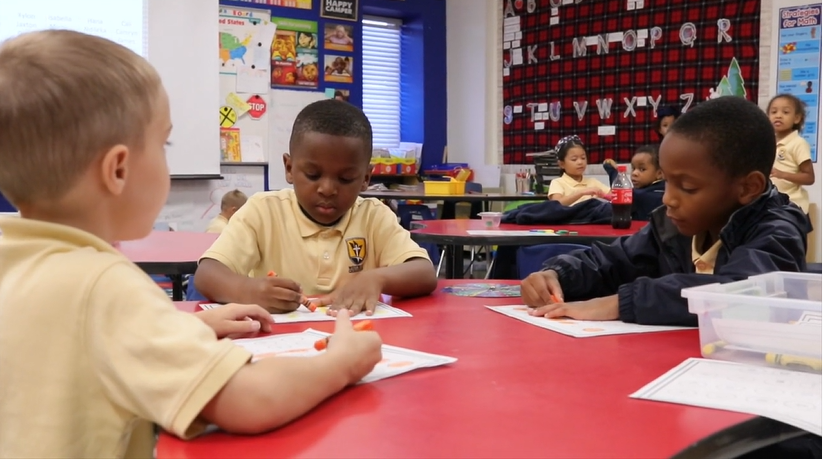
Westbury Christian School in Houston, one of 2,037 private schools in Texas serving more than 331,600 students, is a private, Christian, co-ed, college preparatory K3 through 12th grade school system. Westbury Christian exists to provide each student with the opportunity to acknowledge and respond through faith to the Word of God while participating in an educational program that stresses academic, social, emotional, and physical development.
Editor’s note: This article appeared Sunday on texastribune.org.
Gov. Greg Abbot on Sunday said he would veto a toned-down version of a bill to offer school vouchers in Texas, and threatened to call legislators back for special sessions if they don't "expand the scope of school choice" this month.
"Parents and their children deserve no less," he said in a statement. His dramatic declaration came the night before the House Public Education Committee was scheduled to hold a public hearing on Senate Bill 8, the school voucher bill. That measure passed the Senate more than a month ago but has so far been stalled in lower chamber as it lacks sufficient support.
The committee is set to vote Monday on the latest version of SB 8, authored by Sen. Brandon Creighton, R-Conroe, which would significantly roll back voucher eligibility to only students with disabilities or those that attended an F-rated campus. This would mean that fewer than a million students would be eligible to enter the program.
Abbott doesn't believe the revised version does enough to provide the state with a meaningful "school choice" program. Since the start of the legislative session, Abbott has signaled his support to earlier proposals that would be open to most students.
The governor also said he has had complaints over the new funding for the bill, saying it gives less money to special education students. It also doesn't give priority to low-income students, who "may desperately need expanded education options for their children," he said.
The centerpiece of the original Senate bill was "education savings accounts," which work like vouchers and direct state funds to help Texas families pay for private schooling.
The version approved by the Senate would be open to most K-12 students in Texas and would give parents who opt out of the public school system up to $8,000 in taxpayer money per student each year.
Those funds could be used to pay for a child’s private schooling and other educational expenses, such as textbooks or tutoring. But that idea has faced an uphill climb in the House, where lawmakers signaled last month their support for banning school vouchers in the state.
To continue reading, click here.
 The recently passed New York budget included a deal for 14 new charter schools, certainly a welcome development. With an estimated charter school waitlist of 163,000 students, that’s about one new school for every 11,600 or so waitlisted students.
New York seems unwilling to have the supply of schooling alternatives match demand. Where will they turn for schooling options? Florida seems like the most promising answer.
During the same session, Florida lawmakers embraced universal private school choice and passed a law to phase in facility funding for charter schools. Florida has taken crucial steps towards a demand driven system of schooling, while New York lawmakers can’t quite seem to embrace the concept.
This leaves Florida’s system not only more pluralistic, diverse and efficient than the New York system, it also performs the task of teaching the basics at a much higher level.
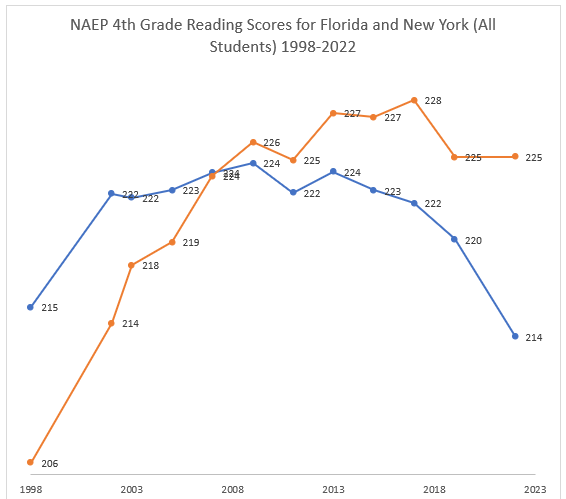
New York fourth graders in 1998 scored approximately a year’s worth of learning higher than their peers in New York. In the most recent NAEP, it was New York who were a grade level behind Florida despite a much higher level of spending per pupil.
It’s worth mentioning that Florida pulled off this higher level of performance with a much lower state and local tax burden.

Target the moving van companies! We need these serfs to pay their taxes and like it!
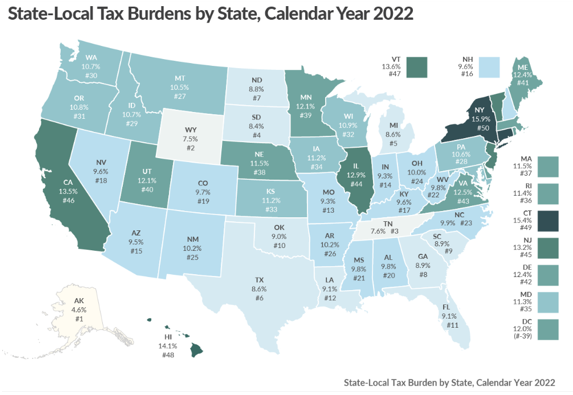
New Yorkers have been fleeing to Florida in record numbers, but the question seems to be not why so many have made the change, but rather: Why are so many still there?

YAHOOO! You’re all clear, Florida! Let’s rescue New York families and go home!
 Editor’s note: This commentary from Jeff Yass, co-founder and managing director of Philadelphia-based Susquehanna International Group and an early investor in TikTok, appeared Tuesday on forbes.com.
Milton Friedman was not only a brilliant economist, but he was prescient on the potential for markets to drive a demand for education freedom. In 2005, when educational mediocrity was on the rise, he predicted there would be a breakthrough in how we deliver education. “We shall get a universal voucher plan in one or more states,” he said.
And sure enough, Friedman was right, even if his prediction was a long-time coming and not yet fully realized.
He first discussed his idea for universal education savings accounts in his 1955 essay, “The Role of Government in Education.” Arguing that empowering parents with the right, and resources, to choose schools for their children would spur competition. With these financial resources, Friedman wrote:
“Parents could express their views about schools directly, by withdrawing their children from one school and sending them to another…” This, Friedman reasoned, would lead to greater efficiencies, cost effectiveness and improved overall quality of education.
Friedman’s thoughts weren’t put into action until 34 years later when, in 1989, Wisconsin passed the nation’s first funding legislation. To be fair, the motivation here was not to test Friedman’s economic theories. It was far more personal and practical. Milwaukee public schools were failing to provide children with an education and parents had no way to enroll them elsewhere.
To address this crisis – and for the families whose children were trapped in failing schools, it was a crisis – Wisconsin adopted the Milwaukee Parental Choice Program. Authored and championed by education freedom pioneer, Assemblywoman Polly Williams, the program was the first in the nation to allow public funds to be used to help low-income families enroll in private schools and to give parents options in where their children were educated.
To continue reading, click here.
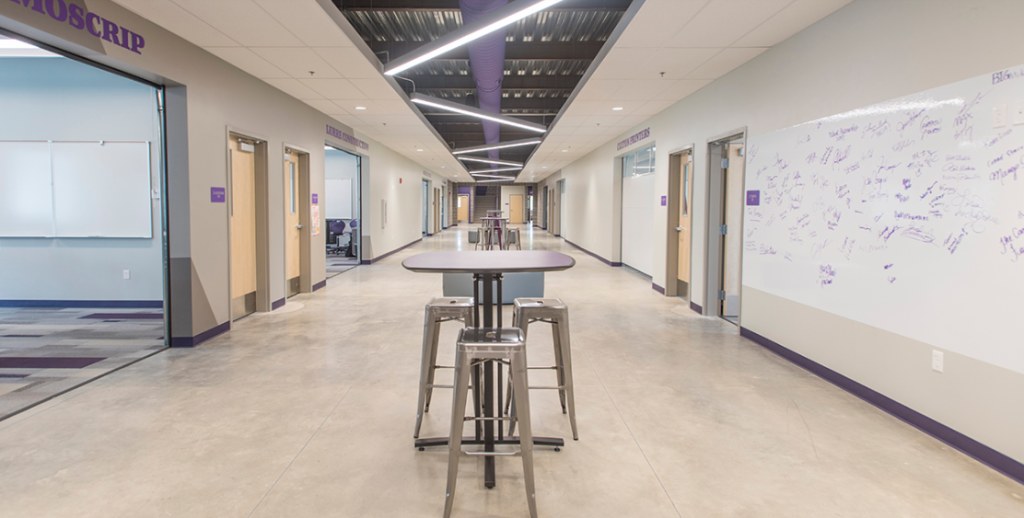
Elevate Charter Academy in Caldwell, Idaho, occupies a state-of-the-art, 55,000-square-foot building designed by professionals in the areas of culinary arts, construction, welding, manufacturing, medical arts, criminal justice, firefighting, business, marketing, and graphic design.
As National Charter Schools Week draws to a close, reimaginED presents this first-person essay from Domionique Valenzuela, a charter school graduate and member of the 2023 Future Leaders Fellowship with the American Federation for Children. You can read more about Valenzuela here.

Domionique Valenzuela
If you had told me three years ago that I would be at this point in life – with my diploma, a certificate in culinary arts, and a certificate in business services – all because of a charter school, I wouldn't have believed you.
But that’s exactly what happened, and my experience is why I am so motivated to make sure other students have the chances I did. This year during National Charter Schools Week, I am sharing my experience so that others might know the endless opportunities these choices can bring.
For as long as I can remember, I had a tough time in school. I struggled with reading and writing for years. My family moved around a lot, so I was constantly in and out of different schools. The public schools I went to were good for some students, but they were never able to help me in the way I needed.
Often, what I needed most was just support and encouragement.
As my freshman year approached, because of where I lived, there were no other options for my schooling other than my local public high school. I never felt so diminished in my life as during that year. I was tired of feeling like I didn't know anything.
I couldn't turn to my teachers for support because they had already determined my value and decided my time was better spent in suspension than in the classroom.
I was tired of being told I was so far behind I couldn’t catch up, that I wouldn't even come close to graduating. It was hurtful, but even worse, I had started to believe it, that I wouldn't make it and wasn't going to graduate and build the life I had dreamed of.
Luckily, at the beginning of my sophomore year, Elevate Academy in Caldwell, Idaho, part of the Boise metropolitan area, had opened. When my family found out about this option, I immediately transferred. Elevate is a public charter school that involves trades in its curriculum. I remember my first day; it was hard. I didn't trust my teachers because of experiences at my old high school, and working past that was a challenge.
It took some adjusting and getting to know my teachers until I realized that they cared about me, about all of us. They took so much time and energy and invested it into our success. Most of my classmates came from the same school I had come from. We were tired, and we all felt the same way: dumb. No student deserves to feel that way, but we did. We were all behind, and if we had stayed, most of us would have failed or dropped out.
Elevate provided the hope for us to get another chance to be something in life, not just prove everyone who had shamed us right. At Elevate, we had teachers supporting us, and we were a close-knit group ourselves. We weren't going to let each other fall behind.
Not only did Elevate give me the strength to believe in myself and graduate, but it also gave me the love I didn’t realize I had for learning. It’s a great feeling wanting to come to school because you have a responsibility and know people are counting on you. Elevate was able to make me feel that way with my education, and it changed everything.
During sophomore year, we learned about the different trades to determine what we wanted to pick for the next year, and we got a helpful visual learning experience. In math, we were told we had to design a building on paper, and we decided on a shed. It needed doors, windows, and a roof.
The construction teacher used an app, and we were able to build and sell our building! Later, when we took business, we had to find a real lot on which to place our hypothetical building, make sure it complied with city laws, and have some type of nonprofit or business to occupy it. Experiencing a more hands-on approach to education was like entering a new world, and it was one in which I thrived.
During junior year, I was able to pick two trades to learn and focus on for the next two years. I decided that my primary would be business services, and secondary would be culinary arts. During that time, I was the business manager of the construction trade, and members of the public could use our services.
The construction team built a doghouse, sheds, fences, and so many other creations. I had the experience of calling the customers, talking to them about pricing, billing them, and everything else that goes along with managing businesses. For culinary arts, we managed catering, school coffee shops, bakery fundraisers, teacher lunches, and more. We were the real-life faces of the businesses, and we students had a responsibility to be there – and we wanted to be!
My experience shows just one small part of the endless opportunities that innovative educational options can bring. For me, choosing Elevate was choosing success for my future. I graduated in 2022, and I’m learning the demands of my current job to take ownership of it, along with continuing my education, taking a competitive internship, and more. All of this – for a student who was told she would fail.
The U.S. Congress as well as individual states should support charter schools because every student deserves these chances.

