Editor's note: The Rev. Manuel Sykes is pastor of Bethel Community Baptist Church and president of the St. Petersburg NAACP, an active chapter on Florida's west coast. In this commentary, he responds to a recent Tampa Bay Times column that criticized a federal tax credit scholarship bill offered by U.S. Sen. Marco Rubio. The Times also published a letter to the editor from Rev. Sykes in today's editions.
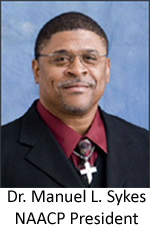 Florida offers the nation’s best lesson on whether private school options can help poor children, but the Tampa Bay Times seems uninterested in what these parents and students are telling us. Instead, it is busy pointing a distinctly partisan finger.
Argue if you want about whether the federal government should provide K-12 scholarships to low-income students, but the tax credit scholarship plan introduced by Republican U.S. Sen. Marco Rubio is not “bankrupt” or “craven.” It is instead a learning option that economically disadvantaged students wouldn’t otherwise have, and to label it as “money laundering” represents the kind of rhetorical excess that cheapens our public debate.
In Florida, more than 50,000 students are on a similar plan, and the results are encouraging to those of us who work with struggling children. The students who use the Florida Tax Credit Scholarship are truly poor – incomes barely above poverty and averaging less than $25,000 for a household of four – and more than two thirds of them are black or Hispanic. State research tells us they were among the lowest academic performers in the public schools they left behind, and testing results show they are making the same academic gains as students of all income levels nationally. Just as encouraging, the traditional public schools that are most impacted by students who choose the scholarships are themselves experiencing higher learning gains.
The educational results don’t seem to matter to those who prefer instead to dismiss scholarships as some kind of Republican conspiracy. Never mind that nearly half the Democrats in Florida’s Legislature also support this option, including a majority of the Black Caucus. Never mind those of us who work in disadvantaged communities in St. Petersburg and see children for whom these opportunities can make the difference between a diploma or a jail cell. Never mind that the Black Alliance for Educational Options, which represents elected black Democrats across the nation, has expressed its support for Rubio’s bill. (more…)
While the U.S. Supreme Court's decision in Citizens United v. Federal Election Commission will no doubt continue to reshape the campaign finance landscape, a Wall Street Journal report today is a reminder that teacher unions remain very active players. Using information from both U.S. Labor Department and Federal Election Commission reports, the Journal identified $377 million in total political spending by the nation's two top teacher organizations from 2005 to 2011. That's roughly four times the amount previously reported just from FEC records.
Of note to those of us in Florida, the Journal also reported that the Florida Education Association spent $14.7 million over the same period, ranking it behind only teachers unions in California, New York and four other northern states.
The Florida number brings to mind a Florida Times-Union story published last year on the campaign influence of a separate education organization, the American Federation For Children. That story, which is still actively linked by various progressive blogs, made the legitimate point that AFC, a national organization that supports private school options, has been spending money for candidates who feel the same way. The reporter identified $313,757 in Florida campaign contributions since 2007, and singled out Democrats who, as it turns out, had received roughly three-fourths of that total.
What the story and the blog posts have missed is that the AFC money pales in comparison to what FEA spends to influence the process. This is not intended as a criticism of FEA or its investment in the political process, because its members indeed have a profound interest in education policy. But the story carried with it the implication that the Democrats who support private learning options for low-income students are selling out for campaign money. It said as much through how it reported the response of the Democrats: "They say their vote is about bringing choice to districts with poor public schools, not campaign cash." Pointedly, it did not ask the same question of Democrats who oppose private learning options and receive FEA contributions. That question is more than little relevant, given that unions still forcefully oppose any voucher for any child for any reason.
A South Florida progressive blog recently branded any Democrat who votes to give poor children a private learning option a "sellout to the school voucher lobby." Given the striking difference in the financial stakes between the voucher lobby and the FEA lobby, this accusation assumes such a Democrat not only lacks the moral conviction to help poor school children but the political acumen to sell out to the highest bidder.
Editor’s note: Today, we introduce a new feature (even if we’re not sure the name will last) - an occasional compilation of bite-sized nuggets about school choice and education reform that are worth noting but may not be worth a post by themselves.
More anti-Muslim bigotry in school choice debates
It’s nearly impossible to go a month without hearing another example of anti-Muslim bigotry in a school choice debate.
The latest example: Louisiana state Rep. Valarie Hodges, who now says she wishes she had not voted for Gov. Bobby Jindal’s voucher bill because she fears it will promote Islam. “There are a thousand Muslim schools that have sprung up recently,” she said. “I do not support using public funds for teaching Islam anywhere here in Louisiana.”
The lawmaker’s comments echo Muslim bashing in school choice debates in Kansas, Alabama, Tennessee and other places in the past few months alone. Sadly, religious bigotry has long been a part of the school choice narrative. To repeat what we wrote in April:
The courts have ruled that vouchers and tax credit scholarships are constitutional. We live in a religiously diverse society and this pluralism is a source of pride and strength. We can’t pick and choose which religions are acceptable and unacceptable for school choice. And we should not tarnish whole groups of people because of the horrible actions of a few individuals. In the end, expanded school choice will serve the public good. It will increase the likelihood that more kids, whatever their religion, become the productive citizens we all want them to be.
Jeb Bush endorses pro-choice school board candidate
Jeb Bush doesn’t endorse local candidates often. But last week, he decided to back a Tampa Bay-area school board member who openly supports expanded school choice, including vouchers and tax credit scholarships.
Glen Gilzean, 30, is running against four other candidates to keep the Pinellas County School Board seat that Gov. Rick Scott appointed him to in January. The district in play includes much of the city of St. Petersburg and has more black voters than any other.
I don’t know how much Bush’s endorsement will help Gilzean. He's a black Republican in a district that leans Democratic (even if school board races in Florida are officially nonpartisan). But I do know this: Black students in Pinellas struggle more than black students in every major urban school district in Florida, and frustrated black residents are increasingly open to school choice alternatives. (more…)

