The school choice movement has entered a new era.
A clear signal of that came today with the announcement that Institute for Justice, the national public interest law firm that successfully argued the 2022 landmark U.S. Supreme Court case establishing parental freedom in state school choice programs, is partnering with the national research nonprofit EdChoice to defend future legal challenges to school choice programs.
The organizations will join forces to provide legislative counseling and legal defense of choice under the joint banner of the Partnership for Educational Choice, with the newly founded EdChoice Legal Advocates eventually taking over those responsibilities from IJ, according to a news release.
“IJ and EdChoice have worked together for decades to pass, promote and defend educational choice programs and we are excited about our new partnership to ensure vigorous defense of state programs throughout the country,” IJ President and Chief Counsel Scott Bullock said in a statement. “IJ has accomplished what it set out to do three decades ago: establish the constitutionality of educational choice programs and, in turn, make it possible for millions of families across the country to benefit from the opportunity that those programs provide.”
The phased handoff of all choice program defense to EdChoice will allow IJ to focus on barriers to forms of education choice such as microschools, homeschool co-ops and other innovative programs that have emerged as the result of newly adopted education savings account programs. Entrepreneurs seeking to establish these non-traditional learning environments are often stifled by government-imposed land use and zoning regulations, as well as building codes criticized as outdated and discriminatory.
For example, a Florida law passed in 2022 reined in local government rules that blocked new charter schools. But the law didn’t protect private schools. The exclusion kept a South Florida Jewish day school from opening a few weeks before classes were set to begin, sending families scrambling for options.
IJ leaders say that while they have met the goal set at the organization’s founding in 1991 of being the premier lawyers for the education choice movement and establishing the federal constitutionality of ed choice programs, legal battles continue in state courts. That’s where EdChoice, with its long history of working in statehouses, comes in.
“To realize Milton and Rose Friedman’s vision of universal choice, we must not merely create educational freedom programs, but also ensure they withstand legal challenge in state courts,” EdChoice President and CEO Robert Enlow said in a statement. “Just as we anticipate a need to help implement school choice, we also anticipate an increased need to represent parents and defend these statutes across the country. By partnering with IJ to launch EdChoice Legal Advocates, we will safeguard the Friedmans’ legacy and preserve choice programs for families.”
EdChoice has tapped Tom Fisher, former solicitor general of the state of Indiana, to lead the effort. Fisher has argued five times at the U.S. Supreme Court and many more in the Supreme Court of Indiana, including in Meredith v. Pence, in which, along with IJ, he successfully defended the state’s Opportunity Scholarship Program.
IJ senior attorney Michael Bindas, who leads IJ’s educational choice practice and argued the landmark Carson v. Makin case at the Supreme Court, called the partnership a “force multiplier” for the education freedom movement and will ensure that state-adopted programs will be robustly defended while at the same time, barriers to innovation are vigorously challenged.
“Every child deserves the education that will work best for her, and this partnership will bring us closer to making that a reality,” he said.
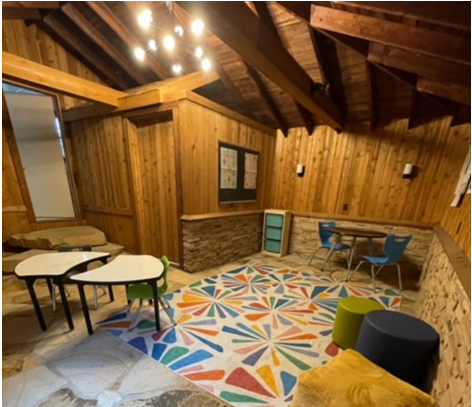
Modeled on Acton Academy’s educational approach toward self-directed learning, Apollo Academy will open this fall in Tampa.
“Acton is a learner-driven approach. It literally flips the education system upside down. It’s highly focused on teaching students how to think, to do, to be, to know.” –Beth Ann Valavanis

Beth Ann Valavanis
A former healthcare executive is among a growing number of entrepreneurs taking a hard look at traditional education models, hoping to forge a path beyond lectures, homework, tests, and strict timelines for mastering skills.
Beth Ann Valavanis, a graduate of district schools in the Atlanta area and the University of Georgia, had planned to enroll her daughter, Emilia, in one of South Tampa’s highly rated district schools. But then she was introduced to a book written by Laura Sandefer, who with her husband, Jeff, co-founded Acton Academy. Sandefer’s book inspired Valavanis to start a K-5 school following Acton’s principles of self-directed learning.
Based in South Tampa, Valavanis’ Apollo Academy is one of several Acton affiliates opening this fall in Florida. (Click here for a list of Acton affiliates across the United States.)
Valavanis spoke with reimaginEDonline about how she became an Acton affiliate and her reasons for launching Apollo Academy. Answers have been edited for brevity and clarity.
Q. What made you want to start a school?
A. Apollo Academy came into existence for two reasons. One is that I have a two-and-a-half-year-old, and the Acton approach just aligned with what my husband and I want for our family. And, I had been working in business for the last 14 years running companies and had sold a private equity company, and I knew whatever I did next was going to have to be centered around affecting my local community. I didn’t know I was going to be starting a school.
Q. How did you discover Acton Academy?
A. We had been living between Chicago, Atlanta, and Tampa Bay. Once we had Emilia, we said, ‘If South Tampa is going to be our home, we’ve got to start exploring some options.’ During the summer of 2020, I was working, going to the office every day, and I started listening to books about childrearing. It was during a time of tension – George Floyd was killed - and I thought, ‘This is not the world I want my daughter to grow up in.’ Someone recommended Laura Sandefer’s book, “Courage To Grow.” I’d get to work in the morning and wouldn’t want to get out of my car. I listened to all of it in two-and-a-half days.
Q. What attracted you to the Acton’s model?
A. Something just clicked for me. We had thought of sending our daughter to public schools, because my husband and I went to public schools, and our experience was fine. There are a lot of really great public and private schools here, but the only option if you don’t want to drive longer than 15 minutes is a religious school. Also, a lot of things came back to me from my educational experience as I started exploring Acton. For example, I remember starting work at KPMG International and someone asked me a question that I didn’t have an exact answer for, and I remember thinking, ‘No one really taught me how to think.’ When I started exploring Acton, I realizes this is a great fit for our family. Once you know, you can’t unknow.
Q. I understand that Acton approves only a small number of the more than 1,000 applications they receive each year. What did you have to do to be named an affiliate?
A. It’s kind of like Cross Fit. You have a lot of autonomy, but you have to be approved to use the rights and get access to all the curricula. It was an audition process, a lot of essays, videos, and confirmation that I did a lot of research on my own. They look for educators and entrepreneurs who just know there’s got to be a better way to educate children.
Q. What needs do you hope to fill for families as an Acton affiliate?
A. In South Tampa, there are no alternative options short of homeschooling. There is a huge need for other options that do education a little differently because some students do not fit into the box of traditional schools.
Q. How does Acton do education differently?
A. Acton is a learner-driven approach. It literally flips the education system upside down. It’s highly focused on teaching students how to think, to do, to be, to know. When you provide an environment that harnesses children’s curiosity and allow them to explore at will, to fail quickly, often, and cheaply, and to celebrate that, that’s so freeing. To think that my daughter could be in a place where it’s not, ‘You failed, so you get a C; let’s move on,’ it’s ‘Why don’t you stay with this a little bit longer, try something different until you get mastery,’ because that’s what the world is really like.
Q. Is it true that Acton requires no memorization and no homework?
A. In 2022, we don’t need to memorize anything anymore. We have everything in a device held in our hands. As for assigned homework, there is none. I have friends who are so beaten down that the only quality time they get with their children is at the dinner table when they are trying to make them do worksheets. There is a program Acton students do that they master involving basic math, but they do it at their own pace. They won’t have to memorize the names of every U.S. president.
Q. Apollo’s tuition is $10,000 a year. That’s out of financial reach for some families. Will your school participate in Florida’s school choice scholarship program, or would you consider participating in an education savings account program that allows families to use their funds for non-traditional schools if the Florida Legislature approves one?
A. So many parents call, and the first question is, ‘Do you take the scholarships?’ So, I know there’s market for it. I have served as a guardian ad litem, and I think that worked to shine a new light for me on disparities that exist in education. Two students in an area can go to two public schools, but the experience is vastly different. We are very affordable, but our goal hopefully for next year is to accept school choice scholarships.

