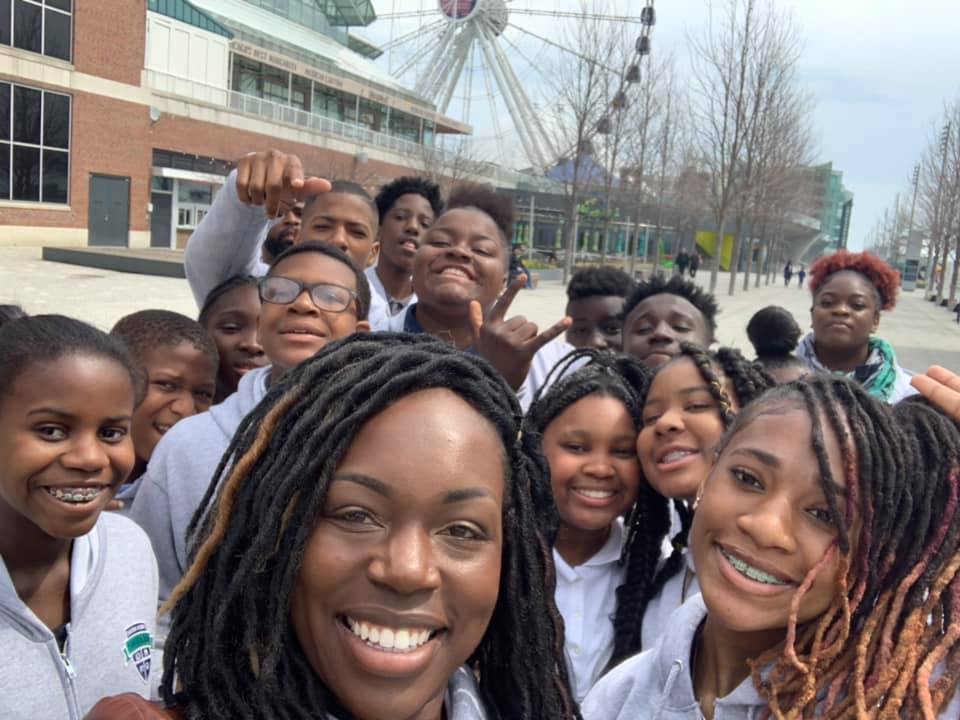
Monica Hall, pictured here, opened T.H.R.I.V.E Christian Academy in Stone Mountain, Georgia, in 2013. T.H.R.I.V.E. stands for Truth, Humility, Respect, Integrity, Victory, and Excellence, the six pillars upon which the school was founded.
Editor’s note: This report was compiled by Denisha Merriweather, founder of Black Minds Matter and senior fellow at the American Federation for Children; Dava Cherry, former director for enterprise data and research at Step Up For Students; and Ron Matus, director for research and special projects at Step Up For Students.
Across America, education entrepreneurs are on the rise, fueled by frustration with traditional schools, a pandemic that magnified the inequities of public education, and the accelerating expansion of education choice.
Black education entrepreneurs are in the thick of it.
We wanted to learn more about this distinctive group of innovators. So, we surveyed Black school founders who are listed on the Black-owned Schools Directory maintained by Black Minds Matter. The responses we received from 61 founders are a first-ever glimpse into who these entrepreneurs are.
Here’s a taste of what they told us:
 Who are the Black school founders?
Who are they serving?
What is motivating them?
What have they created?
You can read the full report here.
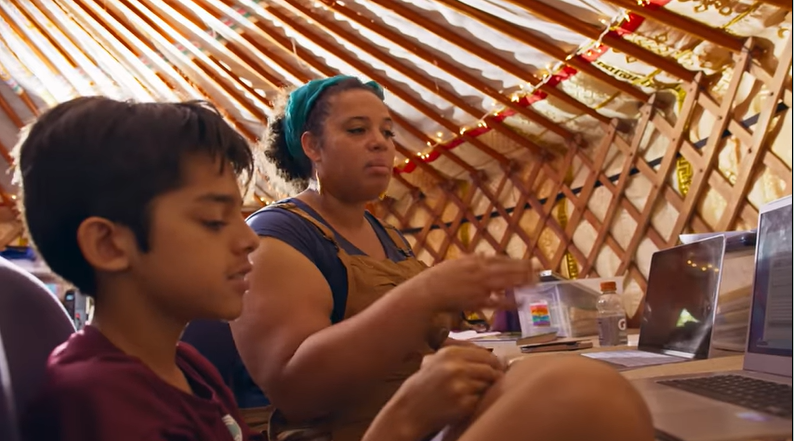
Shiren Rattigan launched Colossal Academy from what she describes as three main intersections: the learning sanctuary she needed as a child; the vision she had when she became an educator; and the microschool she needed for her own children.
Editor’s note: This essay from Shiren Rattigan, who worked in public and private schools for 10 years before founding Colossal Academy in the Miami-Ft. Lauderdale area, first appeared in the South Florida Sun Sentinel. Click here to read more stories about teacher entrepreneurship in a new paper authored by a combined team of researchers at Step Up For Students and EdChoice.
Five years ago, I was working in a traditional school classroom like 3 million other teachers in the U.S.
I was a middle school teacher. I had 150 students. I thought, how in the world do I connect to 150 students? And how do I do it so that they’re not just numbers? So that they’re treated as the brilliant young minds, capable of everything, that they are?
This “teaching” was not what I signed up for. And I knew my students and their families deserved better. So, I did what more and more teachers are doing, especially in states like Florida that are expanding education choice.
I set myself free.
I founded my own school, a micro-school in Broward called Colossal Academy. I knew going small and private would be “colossal,” because then I could control my own destiny.
My tuition is below per-pupil spending for many public districts in Florida, yet my school delivers top-notch, hands-on, project-based programming.
We use Florida Virtual School for core academic courses. We partner with home-grown education entrepreneurs like Surf Skate Science and Project Flourish. And we spend a few hours every week growing things on a lush tropical farm.
Best of all, we have the autonomy and flexibility to change it up any time we — and by “we” I mean my students, their families and me — want to.
Among a long list of other cool things, my students have interviewed a geneticist, visited a chocolatier, and learned to take photos with drones — because that’s where their curiosity compelled them.
In case anybody doesn’t think this is real learning that improves academic outcomes, standardized test scores show my students, on average, made two years of math and reading progress last year in a year’s worth of time. They’re learning more because they’re having a blast.
My experiment in micro-schooling holds colossal lessons for other teachers.
If you’re a teacher and you’re feeling drained, exhausted, sad, frustrated — all the things I felt in traditional settings — please listen to me: There is a way out.
Don’t like being told how to teach? Don’t like being unsure of what you can or can’t say about this or that in your classroom? Don’t like the pacing guides? Or the evaluation system? Or people far removed from your school micromanaging your every move?
Then do your own thing. In Florida, it’s getting easier every day.
The average value of an income-based school choice scholarship is now $7,700, and 70% of students are now eligible. The average value of a state-funded education savings account for students with special needs is about $10,000.
The math adds up. I have 18 students; 14 full time, four part time and eight using choice scholarships. Those scholarships allow more families, and a more diverse array of families, to access my school.
Again, my tuition is below per-pupil funding in district schools. And yet I’m making a better living and providing a better education to a more diverse group of students than I did in traditional schools. It’s amazing how far education dollars go when you, the teacher, directly accountable to the families you serve, have the power to direct them.
More teachers are freeing themselves every day. And even more would join us if policymakers could mitigate some of the barriers to entry.
For example, it can be a nightmare finding an adequate facility, given zoning and building codes that were written before micro-schools and learning pods became a thing. It’s also true that while choice scholarships can empower entrepreneurs, they’re limited to full-time, brick-and-mortar schools.
I think Florida would see innovation erupt if scholarships could also be used at hybrid models where learning is split between virtual and in-person settings. I’m confident that solutions for all these things will be found.
In the meantime, I hope more teachers realize the mainstreaming of education choice is expanding options for them, too.
The freedom is there – if you want it.
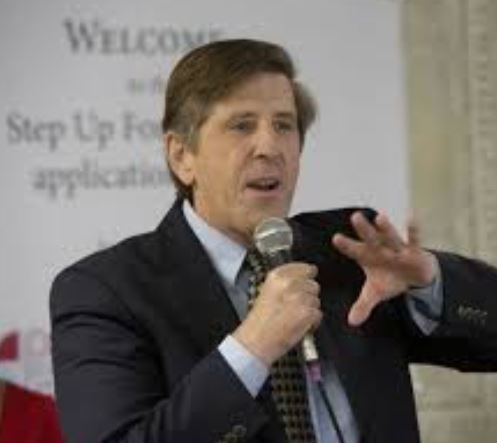
A lifelong educator and former teacher union president, Doug Tuthill has been president of Step Up For Students since August 2008.
On this episode, Tuthill, a former teacher union leader, presents his vision for how teacher unions can evolve in a world with robust education choice opportunity for families who want it.
Tuthill’s 45-year history with public education has convinced him that putting education spending in the hands of families provides a huge opportunity for educators who are keen to create new businesses and teach outside the current district system.
A key necessity, Tuthill maintains, will be for unions to evolve to serve those teachers and help create a healthier public education market.
“For some reason, we take this level of regulation and micromanagement and don’t rebel against it. But as you see now, families are saying, ‘This doesn't work.’ Education choice is a necessary condition to a create a functional (public education) market. One hundred fifty years of evidence showing a dysfunctional public education market does not create the equity we all aspire to.”
EPISODE DETAILS:

