
Editor’s note: In September, the Florida Council of 100, in cooperation with the Florida Department of Education, released a study that pointed to a “rigor gap” between the grades Florida high school students receive and their mastery of content required to pass end-of-course exams in Algebra I and Grade 10 English Language Arts. This commentary from Steven Birnholz, Florida Council of 100 executive vice president and director of policy, and Eric Frey, an economist for the Florida Council of 100, published recently on the Thomas B. Fordham Institute’s website, expands on that story and explains why the “rigor gap” matters.
Two years ago, Seth Gershenson and Fordham published Grade Inflation in High Schools, groundbreaking research examining the relationship between students’ Algebra I course grades and end-of-course (EOC) test results in North Carolina. Gershenson found that 36% of Algebra I students who scored a “B” in the classroom did not pass the state’s corresponding EOC. Now there is evidence from Florida.
Our recent work in the Sunshine State also uncovered a chasm between students’ grades and EOC scores for courses required for graduation. Looking at Florida Algebra I and tenth grade English students from 2015–18, we found that 55% of students who did not pass the Algebra I EOC, and 72% of English students who did not pass the EOC, received a “C” or higher in the course. Further, more than a third of students who did not pass the EOC for 10th-grade English received a “B” or higher in the course.
We call this disparity between a school’s evaluation of a student’s level of mastery of state standards and the student’s demonstrated mastery of those standards on corresponding statewide standardized tests “the rigor gap.” This rigor gap matters for two key reasons.
First, it is not hard for any of us to think back to a class where we did not learn as much as we could have, or should have, because we knew the teacher’s grading practices made the course an “easy A.” In fact, a 2010 study showed that students study 50% less when they expect teachers to award relatively higher grades.
This reduction in what is learned in a course can have serious personal and economic consequences. Just like we did, today’s students will likely study less than they would have if their teacher held them to a higher standard, and by the time the student has received their EOC score, which raises the question of which measurement of knowledge should be given more credence, it is time to enjoy summer recess or focus on the next class in the subject’s succession.
Second, the rigor gap should be concerning to students and parents because it illustrates that many are investing two of life’s scarcest resources, time and money, into college or career decisions based on incomplete or misleading information about their chance of success. A 2017 nationwide survey found that while 84% of 12th-grade students want to go to college, only half felt that their school had helped them develop the skills and knowledge they need for college-level classes. Part of this likely arises from the lack of conviction students may possess in their abilities when their course grades and EOC results tell opposing stories.
It is also worth noting that, while this research was conducted with student data prior to the COVID-19 pandemic, we hypothesize that the drastic impact it had on students’ learning experiences during the 2019-20 spring semester has likely exacerbated the rigor gap presented in the cohorts which comprise our research through, among other things, more lenient grading practices. These include “do no harm” grading, pass/fail systems, or even “no grade issued” approaches.
This lack of incentive to work to raise a “C” to a “B” — or to receive any grade at all — likely decreased many students’ mastery of standards typically covered in the latter half of the school year. The effects were further magnified by the cancellation of year-end summative assessments based on the suspension of federal requirements. If a second year of waivers were to be granted, some students could be halfway through high school without an honest answer to how prepared they are for their desired future.
Fixing the rigor gap is not an easy proposition, but research from North Carolina and Florida tells us it will lead to students learning more — regardless of race/ethnicity, gender, or previous academic performance. Accomplishing this will require a collaborative effort among school leaders, teachers, parents, and students.
For district and school leaders, closing the rigor gap can be supported by, among other things, increasing the efficiency by which students’ course grades and EOC scores can be compared. Here in Florida, and we’re confident this issue exists in other states, the amount of effort that must be undertaken by teachers in certain school districts to compare their students’ course grades and EOC scores is unacceptable.
We believe that, once cognizant of the existence of, and educational damage caused by, the rigor gap, many teachers will naturally adjust their grading practices to better ensure that students are mastering state standards throughout the year and, thus, are more prepared for their EOCs. For those classrooms that persistently display a rigor gap, an infrastructure which provides clear, efficient presentation of this information will better equip school administrators to have an objective conversation with their teachers on this important subject.
For parents and students, the awareness of this rigor gap means a failing EOC score should spark sincere reflection, rather than them brushing it off because of a high grade in the corresponding course. If the local school district provides concise interim, formative assessments, it means the reflection and comparison of course grades and EOC scores can start earlier to avoid potentially finding out how behind one is at the end of the school year.
Although the rigor gap is likely nothing new, the time to address it is now. It is high time that students are told the truth so they can approach their dreams with the conviction that they are ready.
Charter schools. What happened to the Ben Gamla charter school in Pinellas is a "study in bad charter school governance." Choice Words. Parents try to figure out what to do now that a struggling charter school in Deland is closing. Daytona Beach News Journal. Ditto for the parents of a charter school in Lutz. Tampa Tribune. After 22 years in traditional public schools, a local principal is hired to lead the city of Cape Coral charter school system. Fort Myers News Press.
 Homeschooling. The Palm Beach Post takes a look at Space of Mind, a pricey but fascinating home-school school that insists it's not a school.
Tax credit scholarships. The number of parents seeking them grows in Highlands and beyond. Highlands Today.
School grades. Education Commissioner Tony Bennett is recommending another year of a "safety net" provision so grades don't drop more than one letter grade. Tampa Bay Times, Miami Herald, Palm Beach Post, Orlando Sentinel, Florida Times Union, Tampa Tribune, TCPalm.com, Associated Press. Other states are watching the goings-on. Miami Herald. Another story on how everyone is expecting grades to drop. Sarasota Herald Tribune.
VPK. Needs to be more focus on pre-K for poor kids. Pensacola News Journal.
Common Core. The Tallahassee Democrat offers an overview of the big challenges and potential payoffs ahead. (more…)
Charter schools. A Palm Beach County School Board member questions whether it's appropriate to allow a charter school to stay in a district building that needs millions of dollars in renovations. Extra Credit.
Career education. Manatee students make a splash in two national competitions - one in technology, and the other for career and technical students. Bradenton Herald.
Rick Scott. A new web ad from the Republican Party of Florida highlights teachers who praise Rick Scott. StateImpact Florida, Gradebook.
School zoning. Alachua is looking for better ways to communicate with parents about exceptions that allow students to attend schools other than their zoned schools. Gainesville Sun.
School schedules. South Florida Sun Sentinel: "High school schedules in Broward County won't change next year despite an arbitrator's ruling this week that seven-period schedules violated a contract with the teacher's union." More from the Miami Herald.
School spending. Polk's athletic budget has been cut 22 percent since 2007. Lakeland Ledger.
School food. Districts respond to a federal crackdown on yummy stuff. Sarasota Herald Tribune. (more…)
Common Core. StateImpact Florida: Don't let Common Core squeeze out science. StateImpact Florida: State Sen. John Legg says lawmakers still have a lot to do to get the state ready for Common Core.
Charter schools. New study from CREDO shows charter schools improving nationally, compared to traditional public schools, but with results varying widely from state to state. Coverage in the New York Times, Washington Post, Hechinger Report, Charters & Choice, Associated Press, Huffington Post.
School grades. Gradebook: Miami-Dade Superintendent Alberto Carvalho calls on the state to change how it grades ESE centers.
Summer learning loss. Gradebook: High-poverty schools in Pinellas have the lowest turnout for a new district program to stem summer learning loss. Tampa Tribune: Overall turnout for the Pinellas program is less than expected, too. Tallahassee Democrat: Leon offers a summer course for students who failed the Algebra I end of course exam.
Educator conduct. South Florida Sun Sentinel: A teacher's aide at a Palm Beach County charter school is accused of sexually assaulting a 15-year-old he met at church. Tampa Bay Times: A former Pinellas County elementary school is sentenced to two years in prison for possession of child pornography.
Teacher data. Gradebook: DOE offers help to teachers whose info may have been compromised.The Gainesville Sun writes up the data breach. So does the Pensacola News Journal.
STEM. Northwest Florida Daily News: Parents pack an Okaloosa County School Board meeting to show support for a STEMM (science, technology, engineering, math and medical) academy.
Rick Scott. Gov. Rick Scott vetoes about $400 million in spending and a proposed tuition hike, reports the Associated Press and South Florida Sun Sentinel. (Tampa Tribune columnist Joe Henderson gives him a thumbs up.) Vetoes other ed-related items, reports StateImpact Florida. Vetoes $1.5 million for a STEM project in Pasco, reports Gradebook. Vetoes $14 million for a new building at Gulf Coast State College, reports the Panama City News Herald. Vetoes a $7.5 million "innovation hub" at Florida Gulf Coast University, reports the Naples Daily News. Doesn't veto a wind tunnel at Embry-Riddle Aeronautical University, reports the Daytona Beach News Journal.
Dual enrollment. Gov. Scott signs into law a measure that requires districts to pick up the cost. Orlando Sentinel.
Teacher merit pay. Pinellas is about to roll out a pilot at seven schools. Gradebook.
Teachers unions. A glimpse at the financial picture for United Teachers of Dade. Intercepts.
Ed schools. The Hechinger Report uses the University of Central Florida as the lead for a story about more scrutiny and accountability coming to colleges of ed.
School spending. Projected layoffs reach 282 in Manatee, including 182 teachers, reports the Bradenton Herrald. About 100 rally to show support for the teachers, the Herald also reports. More from the Sarasota Herald Tribune. (more…)
Florida Education Commissioner Tony Bennett is tweaking policy and looking to enlist school districts and state colleges to remedy a testing headache for thousands of private school students.
The headache is caused by Florida’s end-of-course exams, which are tied to graduation requirements. 
Here’s the problem: If a seventh-grader in a private school completes Algebra I, then becomes a freshman at a public high school, he can’t receive credit for the course until he takes the EOC. But currently, he can’t take the test until he enrolls in public school. So he ends up taking the test two years after completing the class.
As many as 6,000 private school and out-of-state students a year could be affected.
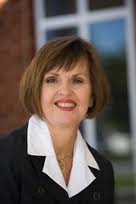
Barbara Hodges
“It’s one of our biggest issues,’’ said Barbara Hodges, executive director of the Florida Council of Independent Schools, which accredits 160 private schools. “It’s really impacting our freshman class this year. We know our students are prepared, but they don’t want to take a test on a class they took two years before.’’
Here’s Bennett’s proposed solution:
First, starting next month when EOC assessments begin, the state Department of Education will allow private school and out-of-state students who plan to attend a Florida public school next fall to take the exams prior to enrollment.
Private school administrators and/or students must contact their local district’s assessment office – not the public school – to schedule a time.
Bennett has “strongly’’ encouraged school districts to offer their future students the opportunity to participate.
“While I certainly understand that testing these students prior to enrollment will result in additional work for school and district staff, allowing these students to test is the right thing to do … ,’’ he wrote to school superintendents earlier this month. (more…)
Parent trigger. The House parent trigger bill clears a second committee in face of growing opposition. Coverage from redefinED and The Buzz. The parent trigger is all about privatizing, editorializes the Bradenton Herald (though the piece appears to be word for word the same one that ran in the Palm BeachPost.)
 School choice. Once again, there are far more applicants than slots at the "fundamental schools" in Pinellas, meaning lotteries will leave many parents unhappy. Gradebook.
Charter schools. Florida Virtual Academy, a network of online charters run by K12 Inc., will not seek to open three schools in Central Florida next years as it originally hoped, reports the Orlando Sentinel. A STEM-oriented charter on Marco Island is moving out of a church and into new digs, reports the Naples Daily News.
Graduation requirements. The Orlando Sentinel gives a thumbs up to plans for alternative diploma routes that tie into career education.
Teacher pay. Gov. Rick Scott takes a dig at House Speaker Will Weatherford for not supporting Scott's proposed across-the-board hike in teacher pay, reports The Buzz. More from the Associated Press. Lawmakers wrestle with how much to set aside and what constraints to put on it, reports the Tallahassee Democrat. Growing numbers of teachers are taking second jobs, reports the Sarasota Herald Tribune.
Testing. The Board of Education votes to create a task force to help districts reduce duplication as they create a massive number of end-of-course exams. Tallahassee Democrat. (more…)
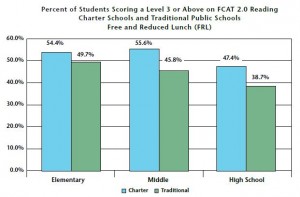 Florida charter school students are out-scoring and out-gaining their traditional public school counterparts in more than 150 comparisons on the state’s standardized tests, according to a state-mandated report released by the Florida Department of Education Thursday.
In 156 of 177 comparisons, charter school students scored higher, made bigger gains and had smaller achievement gaps.
The department compared the two sectors by looking at students overall, and by comparing white, black, Hispanic, high-poverty and disabled students, as well as English language learners. It broke down results into elementary, middle and high school categories.
The state based its analysis on more than three million scores from last year's reading, math and science FCAT tests and Algebra I end-of-course exam. Only students who attended traditional public schools or charter schools for the entire year were included. The report did not break down results by district.
Charters did particularly well with low-income middle schoolers. In reading, 55.6 percent of FRL kids in charter middle schools scored at grade level or above, compared to 45.8 percent for their traditional school peers. In math, the corresponding percentages were 54.8 and 44.5.
DOE press release here. Initial coverage from Gradebook and South Florida Sun Sentinel.
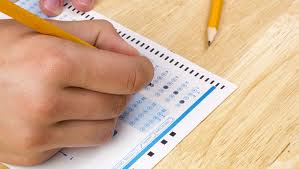 At least 13 private schools that accept the Florida Tax Credit Scholarship have applied to administer the FCAT and end-of-course exams next year.
The schools, mostly faith-based and in South and Central Florida, have submitted their applications to the Florida Department of Education, which will decide in August whether to approve them.
DOE spokeswoman Tiffany Cowie said there may be more schools that made the March 1 deadline, but the department won’t know the final number until the mail is cleared towards the end of the week.
A state law passed in 2012 allows private schools with at least one student receiving the tax credit scholarship to offer the Florida Comprehensive Assessment Test and/or end of course exams, which are required in public schools.
Of the 13 schools that applied, eight signed up only for EOCs.
“The FCAT is a dinosaur,’’ said Principal Sandra Basinger of St. Mary’s Catholic School in Brevard County, where her seventh- and eighth-graders hope to take EOCs in Algebra I and Geometry next spring.
Like a lot of Catholic schools, St. Mary’s administers the Iowa Test of Basic Skills to its students in grades 2-8. The test is as good as if not better than the FCAT, Basinger said. And with Florida phasing out the state assessment for other tests in line with the new Common Core standards, “really, I just don’t think it would be worth it,’’ she said.
James Herzog, associate director of education for the Florida Catholic Conference in Tallahassee, said in an email to redefinED that he has heard the same sentiment from other Catholic schools.
“From a practical standpoint, it would … not make any sense for Catholic schools (or most other nonpublic schools) to offer the FCAT for a year or two only and then have to switch again to something else … ,’’ he said.
Herzog originally anticipated 30 to 40 Catholic schools would apply to give the FCAT.
“Obviously, I was way off,’’ he said. (more…)
 Editor's note: Another year, another legislative session, another stack of school-choice bills in Florida. Here's a roundup of choice legislation that lawmakers will consider in the annual session that begins today.
Career Academies:
SB 1076 by Sen. John Legg, R-Lutz. Expands the "Career and Professional Education Act (CAPE)," revising requirements for high school graduation and accelerated high school graduation, and allowing students to earn and substitute certain industry certifications for certain course credits. Also requires districts to make digital materials available to students and to use the Postsecondary Industry Certification Funding List in determining annual performance funding distributions to school districts and Florida College System institutions, etc.
Charter Schools:
HB 373 by Rep. Joe Saunders, D-Orlando. Provides that a contract for a charter school employee or service provider may not extend beyond the school’s charter contract, and that the employee or service provider is not entitled to compensation after the school’s closure. (Identical to SB 780 by Sen. Geraldine Thompson, D-Orlando.)
HB 453 by Rep. Victor Torres, D-Orlando. Requires the compensation and salary schedules for charter school employees to be based on school district schedules. (Identical to SB 784- Charter Schools by Sen. Geraldine Thompson, D-Orlando.)
SB 744 by Sen. David Simmons, R-Altamonte Springs. Requires charter school applications to demonstrate the applicant is financially qualified to open and maintain a high-quality charter school, requires the charter to set forth detailed reporting of the financial operations of the school to ensure employees are not paid unreasonable compensation, and requires that the term of the charter must provide for cancellation of the charter if the school becomes insolvent, fails to provide a quality education, or does not comply with applicable law. The bill also clarifies that a charter school system shall be designated a LEA solely for the purpose of receiving federal funds if certain criteria are met.
SB 828 by Sen. Rene Garcia, R-Hialeah. Grants school districts the ad valorem tax exemption given to charter schools, and restricts the use of capital outlay funds for property improvements if the property is exempt from ad valorem taxes. It restricts charter schools or technical career centers having financial problems from certain activities, and grants flexibility to high-performing school choice districts.
HB 1001 by Rep. Karen Castor Dentel, D-Maitland. Prohibits charter schools from requiring, soliciting, or accepting certain student information before student's enrollment or attendance. Also requires charter schools to submit attendance plans to the school district for students enrolled in school; provide funding to the school district in event of student transfers; and report to the school district certain student enrollment and wait-list information.
SB 1092 by Sen. Geraldine Thompson, D-Orlando. Requires charter school to submit attendance information for each student to the school district, and requires the charter school to provide a prorated portion of per-student funding to the school district if a student transfers to another public school in the school district before the last day of the school year.
SB 1164 by Sen. Kelli Stargel, R-Lakeland. Revises the eligibility criteria for extracurricular activities to include students in charter schools, and revises the criteria for bylaws, policies, or guidelines adopted by the Florida High School Athletic Association. (Compare to HB 1279 by Rep. Larry Metz, R-Groveland.) (more…)

