Duval County Public Schools recently claimed Florida’s newly expanded scholarship program will leave a $17 million hole in their budget.
“In a year like this year where they only partially fund the vouchers then that money has to be made up and its made up from our budget,” a representative from the district told First Coast News.
But the state did fully fund the scholarships and it appears the $17 million gap claimed by the district comes from a honest misunderstanding of both the Florida Education Finance Program (FEFP) and a new law intended to address this very concern.
Florida law requires the scholarships to be paid for by state and not local tax dollars.
HB 5101, which passed in June and took effect July 1, created a new education funding category called the “state-funded discretionary supplement” to ensure school districts would not be financially burdened by state-funded education choice scholarship programs.
This new funding category can be found in column 6 on page 34 of the latest FEFP breakdown published by the Department of Education. For Duval County Public Schools, that amount is $16.8 million being paid to the scholarship program by the state. It is not funding the district will have to pay for itself.
For Duval County, the state estimated there would be $124.4 million in FES scholarships paid for by state dollars. This total amount includes the new $16.8 million supplemental funding category.
In addition to creating a new funding category to prevent potential holes in district budgets, Florida lawmakers also set aside a $350 million “education enrollment stabilization program” that the Florida Department of Education can use to ensure districts’ now-established budgets would be protected if scholarship programs grow faster than the expected 117,000 student growth.
Critics have spilled considerable ink attacking Florida’s proposed Family Empowerment Scholarship. The voucher would cost about $100 million and allow at least 15,000 low- and working-class students to attend private schools.
“I’m afraid it will do damage to the regular public schools in the state of Florida,” said Sen. Bill Montford (D-Tallahassee), who opposed “diverting” money in the Florida Education Finance Program (FEFP) from public schools to private schools.
“DeSantis private school voucher plan robs Florida public schools of needed money,” exclaimed the Palm Beach Post editorial board.
“The plan would divert money from public education in a state that already ranks a disgraceful 41st in the country in per-pupil funding and 46th in teacher salaries,” the Gainesville Sun editorial board wrote.
These critics seem to think the $100 million for the Family Empowerment Scholarship could be used to improve public education, increase per-pupil spending and raise teacher salaries all at the same time. But it’s not like the 15,000 kids who could have accessed the program are suddenly going to educate themselves.
Although $100 million would be removed from the total public school pot, 15,000 students – and many of the expenses that come with them – would go, too. And while the proposed program isn’t finalized, both the House and Senate versions set the voucher amount at a percentage of what the FEFP pays public schools.
One version even excludes more than $1.6 billion in the FEFP from being used to calculate that percentage. That’s $1.6 billion that can be spread among remaining public school students.
Additionally, the FEFP doesn’t cover the full cost of public education in Florida, as local and federal sources collect billions more. This is why the average scholarship from the Florida Tax Credit Scholarship program is worth just 59 percent of Florida’s per pupil expenses.
Every student who takes a scholarship not only removes expenses from public schools, but also creates a savings that can be spread to other students. That is why multiple studies have shown that scholarships save taxpayers money. It’s also part of the reason why the Florida Supreme Court tossed out a lawsuit claiming scholarships harmed public schools.
And it’s not like the FEFP is some sacrosanct source of public school funding, either.
Last year, the state “diverted” $221 million from the FEFP to fund 31,044 private school scholarships for children with special needs. No one batted an eye.
Even if the Legislature decided to appropriate $100 million from the General Fund to pay for the Family Empowerment Scholarship, as it does with the Gardiner Scholarship program, the FEFP would decline by around $100 million anyway. Why? Money is fungible.
The FEFP is mostly based on the number of students enrolled in public schools. If 15,000 low-income students leave public schools because they now have a scholarship to a private school, that is 15,000 fewer students to calculate a base student allocation and more. The FEFP would decline by about the same amount as the total voucher fund. Other pots of money still would be available for the remaining public school students.
Money is fungible, but it’s not magical. You can’t take a voucher worth a fraction of per-pupil spending and suddenly increase per-pupil spending in public schools, and increase teacher pay at the same time. Let’s stop pretending you can.
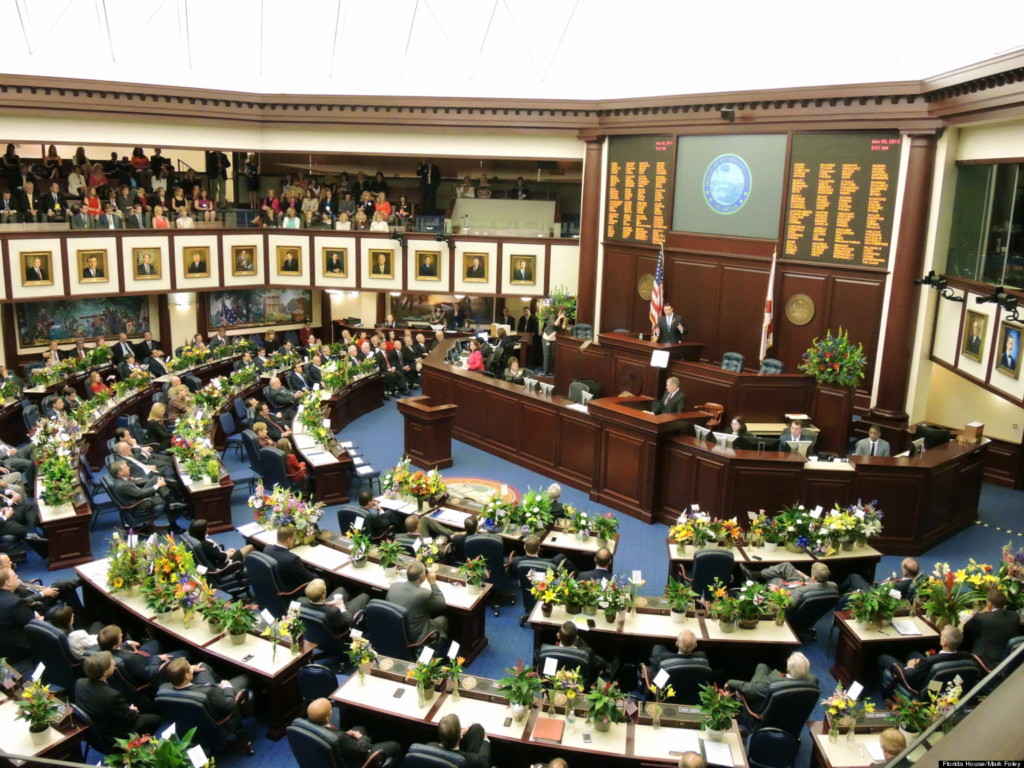 TALLAHASSEE -- The House Education Committee on Tuesday filed a bill that would eliminate a waiting list for the Florida Tax Credit Scholarship for lower-income families.
House PCB EDC 19-01, known as the Family Empowerment Scholarship, would help pay for private school tuition and fees, with unused funds rolling over to the next school year. The scholarship also could cover transportation costs to public or lab school in the student's district.
The committee is expected to vote on the bill Thursday.
The House bill’s goal is similar to Senate Bill 7070, passed last week by the Senate Education Committee in a 5-3 party-line vote, but there are significant differences between the two measures. The House bill would help about 28,000 students in 2019-20, while the Senate version would be capped at 15,000 students in its first year.
Both measures would be funded through the Florida Education Finance Program (FEFP), but while the Senate bill would be administered by the state Department of Education, the House bill would be managed by eligible Scholarship Funding Organizations such as Step Up For Students, which hosts this blog. The Florida Tax Credit Scholarship is funded with donations from corporations that receive tax credits.
Under the House bill:
The value of the scholarships would be 97 percent of the district average per-student funding in the FEFP. Eligibility would be limited to students whose household income levels do not exceed 300 percent of the federal poverty level ($77,250 for a family of four) in the first year. That amount would increase by 25 percent each following year until it reaches 375 percent of the federal poverty level ($96,563 for household of four).
Students would be eligible if they spent the previous school year in public school for grades 1 through 12, if they are entering kindergarten, or received a scholarship from an eligible Scholarship Funding Organization – or the state – the previous year. Once families are found eligible, they would not have to re-verify their income every year.
Priority in each year would be granted to renewal students and new applicants with household incomes under 185 percent of the federal poverty level ($47,637 for household of four) or who are in foster or out-of-home care. The number of new scholarships in any school year cannot exceed 1 percent of the total public school enrollment for that school year.
In comparison, the Senate bill puts the value of the scholarships at 95 percent of the district average per-student funding in the FEFP. Like the Florida Tax Credit Scholarship, eligibility would be limited to students whose household income levels do not exceed 260 percent of the federal poverty level ($66,950 for a family of four). Beginning in 2020-21, the number of students on scholarship would increase with the percentage increase in the public school student enrollment.
Both bills address a disconnect between supply and demand for tax credit scholarships. Enrollment in the Florida Tax Credit program dropped for the first time in 14 years in 2018-19; in the preceding 13 years, the average annual enrollment increase was 20 percent. The dip was due to slower growth in corporate contributions, according to the state Department of Revenue.
Demand for the scholarship remains strong. Parents of more than 170,000 students had started applications by the time Step Up For Students halted the application process in June. This year, Step Up already has awarded more than 87,000 scholarships for 2019-20, more than 44,000 of which are new -- approximately 20,000 students ahead of last year. New students are starting applications at a rate of more than 1,000 a day.
Gov. Ron DeSantis last month proposed a state-funded “Equal Opportunity Scholarship” to eliminate the Florida Tax Credit Scholarship waiting list.

Kenny
The two-day Florida Charter School Conference officially opens Thursday with keynote speaker Deborah Kenny, founder and chief executive officer of the successful New York charter schools, Harlem Village Academies.
But a pre-conference schedule the day before offers sessions on starting a charter school and networking for principals, along with a three-hour town hall meeting featuring school leaders and legislators scheduled to talk about the future of charters in Florida.
No confirmations, yet, on the roster for that meeting. But look for discussions about charter school funding, especially calls for more oversight in light of the recent discovery of an Orlando charter school that paid its principal $800,000 last school year before the school shut down.
There might also be discussions on PECO funds – Public Education Capital Outlay dollars dedicated to school construction costs. Last year, lawmakers designated $55 million for charter schools and none for traditional public schools.
The rationale? Traditional schools can levy property taxes to build and maintain schools; charters don’t have that luxury. With 574 charter schools in 44 districts and more anticipated, expect debate about the public dollars in 2013.
Although the conference features a separate breakout session Friday on the Charter School Growth Fund, lawmakers might offer some details during the town hall meeting on how that money is used. The fund is made up of $20 million in Race To The Top dollars and $10 million in private donations. (more…)

