Florida business leaders put a spotlight Wednesday on the promise and potential pitfalls of Common Core - the tough, new academic standards that are rolling into Florida schools and will help re-shape teaching, learning and testing.

Bennett: "The state should own this initiative."
At a wide-ranging, day-long education summit in Orlando, several participants suggested a public awareness campaign to inform parents about the changes – which may be initially painful when they're implemented in the 2014-15 school year - and to rally broad support in a way that has eluded many of the state’s other, recent education reforms.
“These tend to be Tallahassee conversations. But if we don’t do this right, it becomes a Miami conversation or a Jacksonville conversation” and not in a positive way, Marshall Criser III, president of AT&T Florida and chairman of the Florida Council of 100, told redefinED during a break. “We have an opportunity and responsibility to take this back to our communities ... Because if not us, then who?”
“The state should own this initiative,” Education Commissioner Tony Bennett told attendees, reminding them of the marketing effort a decade ago for Just Read, Florida. “It shouldn’t be teachers against people. It shouldn’t be the state against schools, state against districts. This should be a statewide rollout that says this is important to our children and this is important to the future of our state.”
The Council of 100 sponsored the summit with the Florida Chamber Foundation, the National Chamber Foundation and the Institute for a Competitive Workforce. About 100 people attended, including three lawmakers, two superintendents, Board of Education Chairman Gary Chartrand and Florida Education Association President Andy Ford.
Spurred by the National Governors Association and the Council of Chief State School Officers, the Common Core standards in math and language arts have been adopted by 44 states. They’re well-thought-out and well-vetted. They’re benchmarked against international standards. They’re designed to instill a deeper knowledge than state standards do now. In the long term, supporters say, the higher bar will better prepare students for college and careers and an ever-more-competitive world. In the short term, though, ouch: They’re expected to result in a steep drop in test scores – and all the angst that comes with it.
“That’s a pain point,” Criser said. “But people have to understand that’s good,” he continued, because it’s the first step on a better path.
The discussion around Common Core has centered almost exclusively on public schools. But its gravitational pull is expected to be so strong that the impact will be felt at the private schools, too, to varying degrees. (more…)
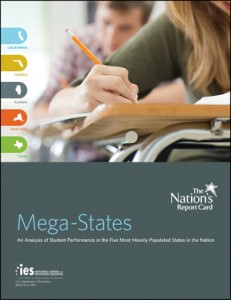 For the second time this week, a credible, independent analysis shows Florida students leading the pack in progress.
Between 1992 and 2011, Florida students made bigger gains than students in four other “mega states” in fourth- and eighth-grade reading and fourth-grade math, according to a report released Thursday by an arm of the U.S. Department of Education. In each case, they moved from below the national average to meeting or exceeding it. Low-income and minority students in particular showed traction.
“There is something real going on there,” said Jack Buckley, commissioner of the National Center for Education Statistics, according to Education Week.
The center’s comparison followed Wednesday’s College Board report that showed Florida continues to climb the charts on Advanced Placement exams. The Sunshine State now ranks fourth in the percentage of high school graduates passing AP exams. Over the past decade, it ranks second in progress.
Broken-record alert No. 1: Florida’s trend lines shouldn’t be a surprise, given reports like this, this, this, this and this in the past year alone. Yet there remains a lingering perception, cultivated by critics, that Florida’s public schools are sub par and stagnant.
For Thursday’s report, the center for the first time compared scores from Florida, California, Texas, New York and Illinois – the states with the biggest student populations and arguably the biggest challenges. It used results from the National Assessment of Educational Progress, a battery of tests better known as “The Nation’s Report Card” and considered the gold standard among standardized assessments.
In eighth-grade math, Florida students made gains but remain below the national average. Elsewhere in the report, they were singled out often. (more…)
 A Florida Board of Education member proposed today that the state end its textbook adoption process, saying teachers and principals are best equipped to decide which materials are needed to help students.
Roberto Martinez of Miami said the time is right for that step, given Florida’s education reforms - tough standards, a tough accountability system and big changes to the teaching profession – as well as digital learning advances that are easing access to high-quality instructional materials.
“It seems we’re now at the stage - and certainly will be at the stage in the next couple of years - where the teachers and principals working with the districts should then be able to have the freedom to do as they deem appropriate, based upon the exercise of their professional judgment, to use whatever materials they want,” Martinez said at a board meeting this morning. “If they want to use textbooks, let them use textbooks. If they want to use primary source material, fine. Digital? Fine. Whatever it is. But I think we’re at that stage where we can give them that kind of freedom to accomplish the outcomes that we want.”
Martinez said he wanted the board to add elimination of textbook adoption to its legislative priorities for next year. He did not offer a timeline for ending the process, but in a letter to board members Monday he wrote that the Department of Education needed to work with school districts to develop “an effective transition plan.”
“These changes would get rid of the expensive and unnecessary burdens that impede the ability of our teachers and students from accessing the latest, most advanced, and best educational materials, many of which are, or will become, available through digital learning,” he wrote.
Martinez’s proposal isn’t entirely new; last year, the board discussed a plan to make Florida classrooms all digital within five years. Nevertheless, Tuesday’s comments drew an enthusiastic response from fellow board members and two superintendents in attendance. (more…)
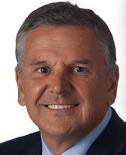
Chartrand
Florida is a national leader in expanding school choice. And the state's new top education official doesn’t see the momentum slowing, especially with low-income children.
“The train has left the station on school choice,” Gary Chartrand, 58, told redefinED by phone this week - his first media interview since being elected chair of the Florida Board of Education on Friday.
“I often say that freedom is abundant in America but it’s not universal. When you’re stuck in a broken system, and you’re poor, and you’re full of despair, and you only have one choice, and that choice happens to be an F school, that’s not freedom. And so I think the school choice movement is bringing more freedom, especially to the most under served children in the state of Florida.”
Chartrand, a Jacksonville businessman, takes a leadership role at an especially sensitive time. Funding, already low compared to other states, has been stagnant. Common Core standards are around the corner. Teacher evaluations are in flux. Criticism of the state’s accountability system is as loud as it’s ever been (which, after the Jeb Bush years, is saying a lot.) And now the board is looking for its fifth education commissioner in eight years.
At the same time, Florida has been a pace setter in academic gains for most of the past decade. Those shaping state ed policy have no plans to ease up on the gas.
Chartrand touched on a number of issues in the interview, which is attached below. Some highlights:
On his priorities as chair: “I am not proud of the fact that America is 17th in reading, 25th in math and 30th in science in the world. We used to be No. 1. And I believe that if this continues, we’ll undoubtedly lower our standard of living … And so I just have one goal: and that’s a quality education for all. We can do better. We must do better. We got to prepare our kids for a very rapidly changing world.”
On the best way to raise standards: “We’ve got to raise standards incrementally. I get a little concerned at times, and I always use the analogy of, if you can jump on a high bar six feet, you don’t raise it to seven feet and try to get over it. Because you’re not going to get over it. You raise it from 6 to 6-1, to 6-2, 6-3, and that’s how you incrementally improve, to continue to excel. And I think that’s what we need to do at the Department of Education.” (more…)

