 Editor's note: Another year, another legislative session, another stack of school-choice bills in Florida. Here's a roundup of choice legislation that lawmakers will consider in the annual session that begins today.
Career Academies:
SB 1076 by Sen. John Legg, R-Lutz. Expands the "Career and Professional Education Act (CAPE)," revising requirements for high school graduation and accelerated high school graduation, and allowing students to earn and substitute certain industry certifications for certain course credits. Also requires districts to make digital materials available to students and to use the Postsecondary Industry Certification Funding List in determining annual performance funding distributions to school districts and Florida College System institutions, etc.
Charter Schools:
HB 373 by Rep. Joe Saunders, D-Orlando. Provides that a contract for a charter school employee or service provider may not extend beyond the school’s charter contract, and that the employee or service provider is not entitled to compensation after the school’s closure. (Identical to SB 780 by Sen. Geraldine Thompson, D-Orlando.)
HB 453 by Rep. Victor Torres, D-Orlando. Requires the compensation and salary schedules for charter school employees to be based on school district schedules. (Identical to SB 784- Charter Schools by Sen. Geraldine Thompson, D-Orlando.)
SB 744 by Sen. David Simmons, R-Altamonte Springs. Requires charter school applications to demonstrate the applicant is financially qualified to open and maintain a high-quality charter school, requires the charter to set forth detailed reporting of the financial operations of the school to ensure employees are not paid unreasonable compensation, and requires that the term of the charter must provide for cancellation of the charter if the school becomes insolvent, fails to provide a quality education, or does not comply with applicable law. The bill also clarifies that a charter school system shall be designated a LEA solely for the purpose of receiving federal funds if certain criteria are met.
SB 828 by Sen. Rene Garcia, R-Hialeah. Grants school districts the ad valorem tax exemption given to charter schools, and restricts the use of capital outlay funds for property improvements if the property is exempt from ad valorem taxes. It restricts charter schools or technical career centers having financial problems from certain activities, and grants flexibility to high-performing school choice districts.
HB 1001 by Rep. Karen Castor Dentel, D-Maitland. Prohibits charter schools from requiring, soliciting, or accepting certain student information before student's enrollment or attendance. Also requires charter schools to submit attendance plans to the school district for students enrolled in school; provide funding to the school district in event of student transfers; and report to the school district certain student enrollment and wait-list information.
SB 1092 by Sen. Geraldine Thompson, D-Orlando. Requires charter school to submit attendance information for each student to the school district, and requires the charter school to provide a prorated portion of per-student funding to the school district if a student transfers to another public school in the school district before the last day of the school year.
SB 1164 by Sen. Kelli Stargel, R-Lakeland. Revises the eligibility criteria for extracurricular activities to include students in charter schools, and revises the criteria for bylaws, policies, or guidelines adopted by the Florida High School Athletic Association. (Compare to HB 1279 by Rep. Larry Metz, R-Groveland.) (more…)
Digital learning. Lawmakers are set to consider a digital education bill that would allow school districts to create "innovation schools" similar to charter schools. Gradebook.
 Parent trigger. House version is filed, reports SchoolZone. Democrats concede they probably don't have the votes to stop it this year, reports Naked Politics.
Magnet schools. The Orange County School Board has a wide-ranging discussion about the district's offerings. SchoolZone.
Charter schools. The governing board of a charter school in Sarasota County votes to end its management contract with the Imagine charter network, but the company immediately files suit. Sarasota Herald Tribune.
Common Core. Having a Plan B is not a bad idea, writes EdFly Blog. Education Commissioner Tony Bennett notes the politics of CC are tricky, too, reports StateImpact Florida.
Teacher evaluations. Contrary to perception, charter schools have to abide by the new teacher evaluation law just like district schools. StateImpact Florida.
Wall of Shame. Teachers at Tampa's Jefferson High get an F for word choice, writes Tampa Bay Times columnist Sue Carlton.
Teacher shortage areas. Tallahassee Democrat. (more…)
Charter schools. The exorbitant payouts to the principal of a failing Orange County charter school are behind legislative efforts to tighten charter laws. Orlando Sentinel.
Privatization. The Volusia County school district considers outsourcing 500 custodial and grounds maintenance jobs, reports the Daytona Beach News Journal. The Bay County school district considers bids for privatizing the district's transportation services, reports the Panama City News Herald.
School choice. Vouchers and tax credit scholarships can make private school more affordable. Panama City News Herald.
Forget the furloughs. The Pasco school district finds the $3 million it needs to keep from making employees take two unpaid days off, as originally planned. Tampa Bay Times.
Raising the bar. Don't set it too high with graduation requirements, a high school principal tells the House K-12 Subcommittee. WTXL.
Educator conduct. Prosecutors drop fraud charges against a band teacher who was accused of using nearly $15,000 in school funds to pay for relatives who accompanied the band on a trip to Paris, reports the South Florida Sun Sentinel. More from the Palm Beach Post. An assistant football coach in Manatee County is accused of improperly touching a student and asking her for naked photographs, reports the Sarasota Herald Tribune. More from the Bradenton Herald. A Hernando middle school teacher with a history of off-campus incidents - including three DUI arrests - returns to the classroom after his latest DUI, reports the Tampa Bay Times.
Substitutes. The Marion County teachers union is accusing the district of using "full time" subs to avoid paying benefits. Ocala Star Banner. (more…)
Vouchers and testing. A new report from the Fordham Institute finds that mandated testing - and even public reporting of test results - isn't that big a concern for private schools worried about government regs tied to vouchers and tax credit scholarships. Coverage from redefinED, Choice Words, the Cato Institute's Andrew J. Coulson and Gradebook. AEI's Michael McShane says Florida's tax credit scholarship program (which, altogether now, is administered by Step Up For Students, which co-hosts this blog) finds the "sweet spot" with its testing and financial reporting requirements: "These regulations don’t sound too crazy to me; they seem to strike a good balance of accountability for safety, fiscal responsibility, and academic performance without being overly dictatorial in how schools must demonstrate any of those."
Shooting rockets. Senate President Don Gaetz tells the Associated Press that Florida needs to slow down on ed reforms until it rights the new teacher evaluation system and other changes in the works: "We need to quit shooting rockets into the air. We need to give schools and school districts, teachers and parents time to institutionalize the reforms that have already been made. We need about a two-year cooling off period."
Ford Falcons. Schools need competition. EdFly Blog.
School choice. Education Commissioner Tony Bennett says at a National School Choice Week event in Tampa that some Florida districts deserve credit for expanding public school options such as magnets and career academies, reports redefinED. More from Tampa Tribune.
Charter schools. The National Alliance for Public Charter Schools ranks Florida fifth for its charter laws. SchoolZone. Gradebook. South Florida Sun Sentinel. StateImpact Florida. The Pinellas school district postpones a decision on whether to close a long-struggling Imagine school in St. Petersburg, reports the Tampa Bay Times and Tampa Tribune. The Volusia district's decision to shut down a struggling charter in Deland is headed to appeals court, reports the Daytona Beach News Journal. (more…)
Fox 13, a TV station in Tampa, Fla., did a nice piece this week about a unique partnership that shows how much and how fast education is changing. It’s between Khan Academy and Step Up For Students, the nonprofit that administers Florida’s tax credit scholarship program for low-income kids (and, full disclosure, co-hosts this blog). The story focused on Gateway Christian Academy, one of 10 private schools that accept scholarship students and volunteered to join the effort.
Like other partnership schools, Gateway Christian is holding “Khan Nights” to show parents how Khan Academy works, how the school is incorporating it into its curriculum and how it can make a difference for their children. As you’ll see from the clip, it’s using this technology, and reeling in a diverse group of moms and dads, all so it can maximize the academic outcomes for its kids.
As we wrote a few months back, the Khan Academy/Step Up venture is only one of a handful that Khan Academy has established with school districts nationwide, and the only one outside of California that involves a network of private schools. The way we see it, it’s a beautiful marriage between school choice and the latest learning tools, with a heavy dose of parental engagement thrown in. Thanks, Fox 13, for giving your viewers a peek at the future.
 School choice is growing. DOE officials tell state lawmakers 40 percent of Florida students now attend a school other than their zoned school, reports WFSU.
School choice adds complications. Planning and zoning is a lot tougher with magnets and charters in the mix, editorializes the Palm Beach Post.
Dozen new charters coming to Duval. Florida Times Union.
Digital learning. Lee County School Board members worry about funding for state-mandated requirements for electronic learning materials, reports the Naples Daily News.
Tony Bennett. He’s one of three finalists for the ed commish job, along with Charles Hokanson Jr. and Randy Dunn. Coverage from redefinED, Gradebook, WFSU, School Zone.
More budget questions in Manatee. The interim superintendent says he has found another $7 million in unbudgeted items, reports the Bradenton Herald.
Covering the coverage. Gradebook and StateImpact Florida note EdFly Blog’s rebuttal to Reuters’ story on Florida’s academic progress.
Teacher evals. Alachua teachers are upset with the new system, reports the Gainesville Sun.
 Promise of online learning. Pinellas math and statistics teacher Rob Tarrou puts his lessons online, a la Khan Academy, and wins fans around the world, reports the Tampa Bay Times. My favorite graph: “A reporter recently asked students in that statistics class how many had other teachers post educational videos online. No one raised a hand. Next, students were asked how many wished their other teachers would post videos online. Nearly all raised their hands.” See a “Tarrou’s Chalk Talk” video here.
Valerie Strauss on Tony Bennett coming to Florida: Column here.
Rick Scott’s ed plan falls short. Especially on charter schools, editorializes the Tampa Bay Times.
Republican hubris and Amendment 8: In its roundup of election winners and losers, the Tampa Bay Times suggests Amendment 8 had a lot to do with vouchers – and that it fits into the narrative about GOP overreach.
Contracting complaints. At the Division of Blind Services, which falls under the Florida Department of Education, reports the Tampa Bay Times.
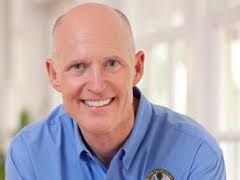 Rick Scott’s ed plans. Charter school expansion is a plank in Gov. Scott’s education plan for the next legislative session, but this exclusive Tampa Bay Times story on it doesn’t offer much detail. Here’s the main part that touches on school choice: The plan includes “lifting enrollment caps on charter schools, removing barriers to choice options in low-performing areas and letting school districts operate their own "charter innovation schools. ‘Our local school districts are going to keep getting better if we give them the authority to do it,’ Scott said.”
School grades work. In this op-ed for The Oklahoman, former Florida education commissioner Eric J. Smith gives Oklahoma kudos for adopting a school grading system. It worked in the Sunshine State, he said, particularly for the kids who needed the most help: “The biggest winners in Florida have been low-income, minority students. Schools that had long failed these students were exposed. Parents were given options to move their children to other schools. And when that happened, poorly performing schools could no longer be ignored or tolerated.”
Op-ed got it wrong on vouchers. Lincoln Tamayo, who heads the highly regarded Academy Prep private schools in Tampa and St. Petersburg, writes in response to a recent op-ed in the Tampa Bay Times that suggested vouchers don’t come with enough accountability.
Florida Virtual School in Education Week. In a story about blended learning. You’ll need a subscription to see the whole thing, but here’s a taste: “Forty-four districts in Florida have now put in place FLVS hybrid or blended learning models, called Virtual Learning Labs, said Tania Clow, a spokeswoman for the FLVS. The virtual school launched the blended programs during the 2010-11 school year, with 152 Virtual Learning Labs across the state. The number has grown this school year to 314, Ms. Clow said. Face-to-face interaction includes the weekly teacher visits, the facilitator, and frequent visits from an FLVS specialist in blended learning who troubleshoots school issues.”
 A Florida Board of Education member proposed today that the state end its textbook adoption process, saying teachers and principals are best equipped to decide which materials are needed to help students.
Roberto Martinez of Miami said the time is right for that step, given Florida’s education reforms - tough standards, a tough accountability system and big changes to the teaching profession – as well as digital learning advances that are easing access to high-quality instructional materials.
“It seems we’re now at the stage - and certainly will be at the stage in the next couple of years - where the teachers and principals working with the districts should then be able to have the freedom to do as they deem appropriate, based upon the exercise of their professional judgment, to use whatever materials they want,” Martinez said at a board meeting this morning. “If they want to use textbooks, let them use textbooks. If they want to use primary source material, fine. Digital? Fine. Whatever it is. But I think we’re at that stage where we can give them that kind of freedom to accomplish the outcomes that we want.”
Martinez said he wanted the board to add elimination of textbook adoption to its legislative priorities for next year. He did not offer a timeline for ending the process, but in a letter to board members Monday he wrote that the Department of Education needed to work with school districts to develop “an effective transition plan.”
“These changes would get rid of the expensive and unnecessary burdens that impede the ability of our teachers and students from accessing the latest, most advanced, and best educational materials, many of which are, or will become, available through digital learning,” he wrote.
Martinez’s proposal isn’t entirely new; last year, the board discussed a plan to make Florida classrooms all digital within five years. Nevertheless, Tuesday’s comments drew an enthusiastic response from fellow board members and two superintendents in attendance. (more…)

by Star Kraschinsky
Florida Virtual School® (FLVS®) opened its virtual doors in August 1997 as the country’s first Internet-based public high school with seven teachers and 77 students. Today, the statewide, public virtual school serves more than 122,000 public, private, charter and home-schooled students in Kindergarten through 12th grade and provides e-solutions to all 67 Florida school districts, the remaining 49 states and to 57 countries.
Through FLVS and online learning solutions, curriculum and scheduling choices are no longer limited to local school offerings or a student’s zip code. Access is offered 24/7/365 from any place with Internet connection. Fast forward 10, maybe even just five years, and this paradigm shift on how to best serve students – where they are and not where we want them to be – will be almost complete.
The fundamental belief of FLVS that every student is unique and learns at a different pace is as true today as it was 15 years ago. It’s all about personalized learning and instruction.
In the future, when funding completely follows a child, he/she will be able to be zoned to one “home” school, but take courses from various schools. Students and their parents will have educational choices; they will be able to map out their own personalized learning journey.
With funding following the student, the bottom line will not be at the center of all decisions made; the student will be at the center – as he/she should be. (more…)

