From the News Service of Florida a few minutes ago:
The president of the state's main teacher's union met Wednesday with Gov. Rick Scott, but said afterward he and the governor are taking it slow in terms of making up for years of ill will between the GOP and the union. "This is like dating – it's a second date," said Andy Ford, president of the Florida Education Association. "Not much has happened yet." Ford didn't discuss specifics in terms of where the union and the governor might find some common ground, but said the issues of money for education – Scott has said he doesn't want lawmakers to cut the schools budget – teacher evaluations, and what to do about the state's lowest performing schools all came up. It's the second meeting between Scott, who has said he wants to make education a priority, and Ford, who said he probably won't know until the legislative session whether the governor and the union may be able to agree on how to improve the education system. " We're always willing to sit down and have some conversation," Ford said. "The test will be during the session, on whether we have some success or not."
 Two more months. As expected, the Florida Board of Education decided this morning to extend the search for a new education commissioner. The board discussed the issue for about three minutes before voting unanimously in favor of a new timeline.
The original deadline for applications, Sept. 27, had drawn 16 candidates through last Friday, but no big names in ed reform and school choice circles. The new deadline is Nov. 30.
Several board members made brief reference this morning to candidate quality.
If the candidates are not "up to the level we have set - which is a very high level - I would like to have the flexibility to, if needed, to extend the deadline (again) or take other appropriate action," said board member Roberto Martinez of Miami. "I assume that would be implicit in all this."
Yes, said board chair Gary Chartrand: "We're not going to lower our standards here. And Bob, if we're not satisfied with the results, at that point in time, I think we certainly have the right to push that date out further."
The new timeline: (more…)
 It does sound nefarious: The people who back accountability for Florida public schools, the argument goes, are really out to mine huge sums of money from their degradation and demise. In a weekend op-ed for the Orlando Sentinel, Florida teachers union president Andy Ford (pictured here) mashed the privatization button hard in panning the state’s “flawed and punitive” ed reforms. The accountability system, he wrote, has been “endlessly promoted by legislators who favor for-profit schools, and the Florida Chamber of Commerce.” The state’s standardized test has been “abused by politicians and those wanting to make a profit off public schools and students.” The job of state education commissioner has “devolved into one solely focused on implementing the marching orders of Jeb Bush and the corporate community.”
Yikes! But if all of those folks really were out to make public schools look awful (so profiteers could swoop to the rescue with charter schools and vouchers) they’ve done a miserable job. As we’ve noted before, one key indicator after another and one credible, independent report after another has found Florida’s public school students – especially its poor and minority students – have, over the past 10 to 15 years, improved as fast as students in just about any other state. Matthew Ladner, a researcher at the Foundation for Excellence in Education, has more on this point today at Jay P. Greene’s Blog:
Notice that the “good ole days” in Florida (pre-reform) were a disaster for low-income children. A whopping 37% of Florida’s low-income 4th graders had learned to read according to NAEP’s standards in 1998. A lack of transparency and accountability may have suited the FEA fine, but it was nothing less than catastrophic for Florida’s low-income children. Thirteen years into the “flawed” system, that figure was up to 62 percent. The goal of Florida policymakers should clearly be to accelerate this impressive progress rather than to go back to the failed practices of the past.
Put another way, if Mr. Ford considers this system “flawed” then Florida lawmakers should quickly implement something that he would judge to be “catastrophically flawed.”
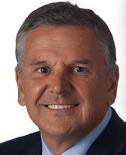
Chartrand
Florida is a national leader in expanding school choice. And the state's new top education official doesn’t see the momentum slowing, especially with low-income children.
“The train has left the station on school choice,” Gary Chartrand, 58, told redefinED by phone this week - his first media interview since being elected chair of the Florida Board of Education on Friday.
“I often say that freedom is abundant in America but it’s not universal. When you’re stuck in a broken system, and you’re poor, and you’re full of despair, and you only have one choice, and that choice happens to be an F school, that’s not freedom. And so I think the school choice movement is bringing more freedom, especially to the most under served children in the state of Florida.”
Chartrand, a Jacksonville businessman, takes a leadership role at an especially sensitive time. Funding, already low compared to other states, has been stagnant. Common Core standards are around the corner. Teacher evaluations are in flux. Criticism of the state’s accountability system is as loud as it’s ever been (which, after the Jeb Bush years, is saying a lot.) And now the board is looking for its fifth education commissioner in eight years.
At the same time, Florida has been a pace setter in academic gains for most of the past decade. Those shaping state ed policy have no plans to ease up on the gas.
Chartrand touched on a number of issues in the interview, which is attached below. Some highlights:
On his priorities as chair: “I am not proud of the fact that America is 17th in reading, 25th in math and 30th in science in the world. We used to be No. 1. And I believe that if this continues, we’ll undoubtedly lower our standard of living … And so I just have one goal: and that’s a quality education for all. We can do better. We must do better. We got to prepare our kids for a very rapidly changing world.”
On the best way to raise standards: “We’ve got to raise standards incrementally. I get a little concerned at times, and I always use the analogy of, if you can jump on a high bar six feet, you don’t raise it to seven feet and try to get over it. Because you’re not going to get over it. You raise it from 6 to 6-1, to 6-2, 6-3, and that’s how you incrementally improve, to continue to excel. And I think that’s what we need to do at the Department of Education.” (more…)
From the News Service of Florida:
THE CAPITAL, TALLAHASSEE, September 11, 2012..........A trial court will decide whether state lawmakers are adequately funding public education after the Florida Supreme Court turned aside a last-ditch effort by Senate President Mike Haridopolos to block the suit.
The Supreme Court's decision Tuesday largely hinged on a procedural issue. In November, the 1st District Court of Appeal issued a divided ruling, with eight judges voting to allow the case to go forward, though one of the judges differed with the other seven on the basis for that ruling. The other seven judges said the lawsuit should end.
Lawyers for Haridopolos, R-Merritt Island, said the Supreme Court should immediately step in and declare that the issue wasn't one the trial court should take up.
"The Court should clarify that the adequacy of the public school system is a political question outside the courts’ subject matter jurisdiction," said a brief filed in the case.
But even lawyers for House Speaker Dean Cannon, a Winter Park Republican who is also a defendant in the suit, said that wasn't necessary.
"The issue will undoubtedly be resolved by this Court eventually, but at present, the case is not ripe for review because of the District Court of Appeal's failure to reach a majority decision," lawyers for Cannon argued. (more…)
 As the Florida Board of Education ramped up its search this morning for a new state education commissioner, one of its board members offered a polite suggestion to Gov. Rick Scott and Florida lawmakers: Give the next commish some space.
"I think all of us, the board and the political establishment, needs to understand that we need to give that person a lot of autonomy so that they can function professionally with minimal interference from the political folks," said board member Roberto Martinez of Miami (pictured here). "I say that respectfully to our elected officials."
The board is looking to replace Gerard Robinson, who left last week after little more than a year on the job. The next commissioner will be Florida's fifth in eight years, not counting interim commissioners.
Technically, the state board of education hires the commissioner. Florida voters approved a constitutional amendment in 1998 to make the board responsible for that decision, in an attempt to keep education policy better insulated from shifting political winds. But it hasn't quite worked out that way.
After his election in 2006, former Gov. Charlie Crist nudged out former Education Commissioner John Winn, who was close to former Gov. Jeb Bush. The board replaced Winn with Eric J. Smith. But after Scott was elected in 2010, Smith was out, clearing the path for Robinson. Robinson abruptly announced his resignation July 31, saying he needed to return to his family in Virginia.
The board expects to have a list of candidates on Sept. 27. More from the Tampa Bay Times here.

