School recognition funds. About 1,700 schools will get about $134 million, reports Gradebook. More from SchoolZone, Miami Herald, South Florida Sun Sentinel, TCPalm.com, Florida Times Union, Naples Daily News.
Charter schools. Palm Beach Post: "Palm Beach County has pledged to help a nonprofit charter school sell $10.5 million in mostly tax-exempt bonds so it can open a new campus in Juno Beach — a move that has upset County Commissioner Paulette Burdick, who questions whether the county should aid privately run charters that pull students away from the public school district." More on Cape Coral charter schools asking the Lee County school district for facilities funding from NBC2.
Pre-K. Florida's pre-K isn't the reason its students are surging ahead of Nevada's. Heartland Institute.
Parent trigger. Lakeland Ledger weighs in.
Zero tolerance. Despite changes in the law, thousands of students are still arrested in Florida schools every year for minor infractions. StateImpact Florida.
FCAT. Time again for students to "brace" for the "dreaded" test, reports the South Florida Sun Sentinel. This year, teachers and students better prepared for tougher writing standards, reports the Orlando Sentinel.
Grad rates. Another report notes Florida's rate is low but improving. SchoolZone. (more…)
I am more politically incorrect than your average guy, so when I heard President Obama call for universal pre-K for 4-year olds in the State of the Union, I cringed. With all the raucous enthusiasm ringing around this issue since the speech, adapting Warren Buffet’s investment approach to public policy might be wise: when everyone is bold, it’s time to be cautious.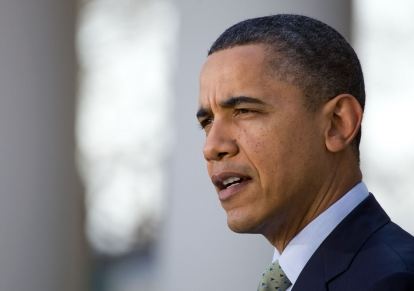
In 2006, when I was with California Parents for Educational Choice, we were part of a coalition of organizations that defeated Rob Reiner’s ballot initiative to bring universal pre-K to the state. It was introduced to widespread public approval, but by Election Day garnered only 39 percent of the vote. The electorate came to understand three major elements they did not like:
* Expanding pre-K to everyone, including middle class and upper income families, is hugely expensive and precious little, if any evidence, supports much educational value added for the middle class and wealthy.
* The initiative vastly expanded the existing public school monopoly, which hardly has a resounding record of educational success, especially with poor and minority students. It also mandated collective bargaining, swelling the ranks and economic power of the California Teachers Association, an organization that systematically stands in the way of innovation and reform.
* The academic outcomes were questionable. A Reason Foundation analysis found from 1965 to 2005, 4-year old participation in preschool programs had grown nationwide from 16 percent to 66 percent, but we had virtually no evidence of increased student learning on the National Assessment of Educational Progress (NAEP) by fourth grade. Oklahoma, with a universal program since 1998, finished dead last on the 2005 NAEP, actually losing four points.
But that was close to seven years ago and admittedly, I haven’t followed the pre-K issue regularly. So I spent the last few days reviewing some studies and data. The key word in the Obama proposal is quality.
We likely can justify a highly targeted effort on kids in failed families or families that simply have no resources - financial, social, emotional, or cultural - to allow their children to mature and develop normally. But when Obama declares, “We know this works,” he overstates and simplifies our experience. (more…)

Colburn
David Colburn is a respected former University of Florida provost and progressive academic who should have done more homework before he blithely characterized those who support private school options as salesmen and hucksters. His recent commentary in the state’s largest newspaper, the Tampa Bay Times, rather pointedly ignored important evidence in his own backyard.
Dr. Colburn is good thinker on education issues, but somehow managed to treat all school vouchers as though they are inherently unaccountable. “There is something basically wrong when public funds are earmarked for these private schools,” he wrote, “and the state fails to insist on accountability measures for student achievement outcomes.”
That assumption is demonstrably false, and he need look no farther than his own state. The state’s first voucher program, which was declared unconstitutional in 2006, required students to take the state test. The current pre-K voucher that served 145,551 4-year-olds last year requires pre- and post-academic evaluations that are used to rate providers.
Lincoln Tamayo, who runs the highly successful Academy Prep Centers of Tampa and St. Petersburg that serve underprivileged middle school students, was also quick to note in a letter to the editor that the Florida Tax Credit Scholarship serving 49,000 low-income students has required nationally norm-referenced tests since 2006. The test scores for Tamayo’s students, who are treated to an intensive six-day-a-week, 11-months-a-year program, reveal both year-to-year academic gains and 8th grade reading and math scores in the 70th and 76th percentile range.
There is ample room for principled debate over whether the current testing approach for these private options is sufficient to assure that students are making academic progress. For example, there are certainly challenges in trying to compare the test results of low-income students in private schools with their low-income colleagues remaining in public schools, in part because the scholarship students tend to be much poorer.
But Dr. Colburn instead seemed content to assert that vouchers “court disaster,” as though every one of these programs is flying blind. His lack of intellectual rigor was, needless to say, disappointing.

