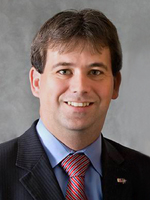
Sen. Legg
Florida state Sen. John Legg has a slogan ready for a bill he plans to file next week: “It’s not your daddy’s vo-tech.’’
The bill will focus on “high-end, high-skilled industry certifications at the high school level,’’ with one plank calling for some certifications to fulfill certain high school graduation requirements, said Legg, R-New Port Richey, who chairs the Senate Education Committee.
The certifications won’t replace any requirements, but serve as substitutions, he said. The idea is to put students on the fast-track for high-tech jobs that help grow the economy.
“Career education has changed since 1982,’’ Legg said. “It’s evolved. We’re trying to get the jobs back that we had in 2003, but we have failed. They’re not coming back, so we’ve got to train for jobs in 2023.’’
The bill, which is still being drafted, is part of a “very large package concerning career and technical education that will become a high priority for the senate,’’ he said.
It complements another bill Legg filed last month that would create “STEM zones” in counties with state universities that have high levels of research activity. Legg is looking primarily at the University of South Florida in Tampa.
Senate Bill 192 calls for partnerships between the Department of Education and Workforce Florida to build a gateway to science, technology, and engineering or mathematics careers.
The zones would create education hubs, not only looking to higher education facilities to train adults, but inviting traditional K-12 schools - as well as charters and private schools - to develop innovative curriculum for students and a pipeline of highly-skilled workers. In return, the schools would receive incentives, such as tax credits, expedited permits or grants, Legg said. (more…)
Tutoring oversight. In the first part of a two-part series on a requirement initially mandated by No Child Left Behind, a Tampa Bay Times investigation finds at least 36 of 456 tutoring companies in Florida are headed by people with criminal records. In part two, the Times traces last year's last-minute legislative push to keep the mandate in place.
Educator oversight. Sarasota Herald Tribune: "As Bradenton police investigate allegations that a Manatee High School assistant football coach groped a female student, they are also trying to determine who knew about the girl's claims and why no one notified law enforcement as required by law."
Teacher bashing? A StateImpact Florida story headlined "Teachers Question Why Proposed Pay Raises Come Before Teacher Evaluations" quotes a single teacher who says, “For a while now we’ve been hearing how bad we are. [That] we need to weed out bad teachers, there’s so many bad teachers.” Ocala Star Banner editorial page editor Brad Rogers writes in this column: "There are so many wildly talented, caring and dedicated teachers in Marion County’s schools that unfairly take abuse and blame and criticism for what is wrong with our schools and our society, when in truth they represent what is most right and bright and promising about our schools and our society."
Teacher pay. Sen. Bill Galvano, chair of the Senate Education Appropriations Committee, suggests Gov. Rick Scott's proposal for across-the-board raises clashes with performance pay, reports the Florida Current. The South Florida Sun Sentinel also writes up the debate over proposals for higher teacher pay.
Strange bedfellows. The Florida Education Association plans to join the Florida Department of Education in fighting the Florida Times-Union's request for teacher evaluation data.
Tony Bennett. He talks to North Florida superintendents about teacher evals and notes he encouraged his daughter to become a teacher: "“I don’t want it written on my headstone: ‘Here lies the man that ruined the career his daughter chose.’ ” Tallahassee Democrat.
Teachers unions. The United Teachers of Dade will elect a new leader this week. Miami Herald. (more…)
 New York: More than 1,000 charter school parents rally in Albany to convince the state to let charter schools compete for state funding for pre-K (Fox23 News).
Montana: Lawmakers hear from parents and other child advocates who want their state to open charter schools and support giving families more choices, such as tax credits (Great Falls Tribune). Bills to create a tax credit scholarship program pass out of committees on mostly party line votes (Helena Independent Record). More from the Billings Gazette.
Ohio: Half the students in the state would be eligible for private school vouchers under an expansion proposed by Gov. John Kasich to include all low-income children (ClevelandLeader.com).
Texas: House Speaker Joe Straus warns the Senate that it might not want to go "full bore'' on a school voucher bill, calling it an "exercise in futility'' (Dallas Morning News). Four groups aiming to open charter schools next year turn in applications that have material copied from other applications (Dallas Morning News).
Florida: The Florida House approved a bill that makes it easier for charter schools to grow, but calls for increased accountability (redefinED). The bill also gives charters greater access to district facilities, something one school official said would be a "logistical nightmare" (Palm Beach Post). More from Tallahassee Democrat. Private schools can apply to administer the FCAT, but, so far, only two have (Orlando Sentinel). (more…)
 The Orlando Sentinel recently published a blog entry about a new website that opposes students using publicly-funded vouchers to attend private schools that teach creationism. The site asserts, “Teaching creationism with public money is unconstitutional. It violates the First Amendment of the U.S. Constitution which lays out a clear separation of church and state.”
I’m fine with citizens opposing the teaching of creationism. I would not send my child to a school that taught creationism in lieu of evolution, but the assertion that it’s unconstitutional is false.
In the 1925 Pierce v. Society of Sisters decision, the U.S. Supreme Court ruled parents are responsible for determining how and what their children are taught. And in the 2002 Zelman v. Simmons-Harris decision, the court ruled parents may use public money to pay for tuition at faith-based schools provided their choice is genuinely independent, and the funds go first to the parents and then to the school.
Florida’s school voucher programs all adhere to the Zelman requirement that funds go first to the parent and then the school, which is why using publicly-funded vouchers to attend faith-based schools is an exercise of the First Amendment’s freedom of religion clause, and not a violation of the Establishment Clause. (By the way, the term “separation of church and state” does not appear in the U.S. Constitution. That phrase was used by President Thomas Jefferson in a January 1, 1802 letter he wrote to the Danbury Baptist Association of Connecticut, reassuring them that he opposed the government interfering with their religious practices.)
The Sentinel wrote that some state officials think tax credit scholarships are more constitutional than vouchers because tax credit funds never touch the state treasury, but, again, the key to the Zelman decision is the path the funds travel to arrive at a faith-based school. Once public funds are given to the parents, they become less public and more private, which is why their expenditure is an exercise of religious freedom and not government-supported religion. (more…)
Private schools and FCAT testing. So far, two schools that accept tax credit scholarships have signed up, reports SchoolZone. The deadline is March 1.
 Charter schools. A bill to be considered by the House Education Committee this week would require school districts to turn over empty buildings to charter schools for free and pay to maintain them. SchoolZone.
Teacher conduct. Two more girls are suing the Palm Beach County School Board, claiming they were sexually assaulted by a former middle school band teacher; the board has already agreed to pay two other girls $150,000 each to settle. Palm Beach Post.
Teacher evaluations. Tampa Bay Times raises questions about the new system with an analysis of schoolwide VAM scores in Pinellas.
Rick Scott. To get re-elected, he's "throwing money at schools." Palm Beach Post.
School grades. Focus is what led to improvements at two Polk schools. Lakeland Ledger.
School poverty. Percentage of students eligible for free- and reduced-price lunch is rising in Volusia and Flagler. Daytona Beach News Journal.
School spending. The Palm Beach County district wants the Legislature to restore districts' previous taxing authority for capital needs, so it can avoid a capital budget deficit that could top $50 million. Palm Beach Post.
School security. More than 50 Pinellas teachers sign up for free gun training. Tampa Bay Times.
Hidden faces. Non-instructional workers in Palm Beach County rally for fair treatment. South Florida Sun Sentinel.
ALEC's report card. StateImpact Florida.
Editor’s note: Every month, Step Up For Students - which co-hosts this blog - profiles a family that benefits from Florida’s tax credit scholarship program. Here's the latest:

Anastasia
Vivian Calhoun is raising a princess. She didn’t plan on it, but it’s working out just fine.
She gets to give and receive lots of hugs and kisses from her 6-year-old great-granddaughter, Anastasia, who came into the world to parents who couldn’t take care of her. But with Vivian’s help, the young girl is living much more of a fairy tale than was ever expected.
“She thinks she’s a princess,” Vivian said with a chuckle. “If you ask, she’ll tell you she’s royalty.”
Anastasia’s mother wasn’t able to care for her and her father has never really been a part of her life, Vivian said. And Anastasia’s grandmother, Vivian’s daughter, had problems of her own, so the great-grandmother did the only thing she could: Become Anastasia’s guardian and only true parental figure.
“It was an easy decision,” Vivian said.
Still, Vivian, 68 and a widow after 35 years of marriage, lives on her disability checks. She had to retire from working as a manager for staffing company because back surgery left her with permanent nerve damage. She gets less than $200 monthly from the state to help with Anastasia and does all she can to make the money stretch, she said. But seeing the effects of drugs and violence up close with loved ones, she wanted to ensure that Anastasia had a safe learning environment, and received individualized attention in smaller classrooms in a place that could instill similar values as Vivian was trying to teach at home. She also wanted Anastasia to feel like people at school were an extension of her family.
Vivian yearned to send Anastasia to a local private school that matched these needs, but she didn’t have the financial means until a neighbor told her about Step Up For Students, Florida’s Tax Credit Scholarship Program that helps send low-income Florida students to private K-12 schools or out-of-district public schools.
During the 2011-12 school year, Anastasia started kindergarten at Christ’s Church Academy, formerly called Mandarin Christian School, in Jacksonville and is now 6 and in the first grade.
“Everybody is just so wonderful. It’s been smooth sailing,” Vivian said of the school and Anastasia’s adjustment to school life. “She’s so happy and doing so well.”
Anastasia loves CCA so much, her great grandmother said, that she doesn’t like school vacations and early dismissal days.
“She doesn’t want to leave the school, and that tells me a lot about the school,” Vivian said. (more…)
School funding. Gov. Rick Scott proposes to spend $1.2 billion more on public schools next year. Coverage from Tampa Bay Times, South Florida Sun Sentinel, Palm Beach Post, Lakeland Ledger, Associated Press, News Service of Florida, Naples Daily News, StateImpact Florida, Panama City News Herald. More money will prove lawmakers care, writes Tampa Bay Times columnist John Romano.
Teacher evaluations. Senate President Don Gaetz reiterates his concerns about the new system: "We have to be able to win this debate at the PTO meeting and the school advisory council, and we haven't won the debate." News Service of Florida. Gaetz is right about taking more time with teacher evals and other reforms, editorializes the Panama City News Herald.
Vouchers and creationism. SchoolZone notes a new website: Say No to Creationist Vouchers.
Jeb conspiracy. Exposed!!! Orlando Sentinel. Gradebook. The Answer Sheet. The Nation.
ALEC. Its latest annual report card gives Florida an education policy grade of B+ and a performance rank of 12.
Educator conduct. A former Palm Beach County principal gets 10 years in prison for soliciting sex from a minor, reports the Palm Beach Post and South Florida Sun Sentinel. After a four-year battle, a Palm Beach County teacher accused of harassing and threatening fellow employees may finally be fired, reports the Sun Sentinel. (more…)
Editor’s note: Hillsborough Superintendent MaryEllen Elia was also part of the National School Choice Week event in Tampa yesterday that featured Florida Superintendent Tony Bennett, and her remarks at the all-boys magnet school may have been even more noteworthy. Hillsborough is the eighth biggest school district in the nation. Here is the heart of Elia's comments, edited slightly for length and clarity.

Elia
The parents of the young men choose to send their sons here. They want their sons to be here. And I know I’m preaching to the choir when I talk about choice, but I think choice is one of the best things about education and should be embraced by all. Woe to all of us if we have to face a world where everyone is the same. …
So one of the things that I think that’s really important, that most of you probably don’t know, is that Hillsborough County has almost 50,000 students that are in some school by choice. So think about that. We’re about 200,000, so 25 percent of our students have chose another school than what would normally be their assigned school. We think that’s important. Obviously you do, right? And I think one of the things we have to do, in generally in reform in education – and again, I’m probably speaking to the choir here – but I think the concept of choice needs to be an integral part of the reform movements we have. So not only students, but also teachers, have choice in the kinds of approaches they take in the classroom.
I want to give you an example. You might not know this, but I started magnet schools, which were really our first choices in Hillsborough County, in 1989. And I was trying to convince parents that a computer was something their child probably would want to learn how to use. … We did a presentation in Hillsborough High School’s auditorium (about a new magnet school) … and a parent said to me, ‘My child will never have to use a computer. Never. So why would I send them to this little elementary school that is down close to downtown when I don’t live there? ’ And I said, ‘Well, what does your child like?’ And she said, ‘They like dinosaurs.’ I said, ‘If every book your child read for the next three months was about dinosaurs, would he be a better reader?’ And she said, ‘Yeah, he eats and sleeps and talks dinosaurs all the time.’ And I said, ‘You want him to really be a good student, you give them the things that they like. Believe me, kids like technology.’ We filled the school that year, and we have since gone on to have … over 35 magnet schools.
The big issue is, no child’s the same. And we’ve got to make sure that we can meet those needs of children and teachers, and teaching the things and learning the things the way they are going to be most successful. So in my world, interest is a huge, huge push for kids. … (more…)
Editor’s note: As we reported last night, Florida Education Commissioner Tony Bennett made newsworthy comments yesterday when he spoke at an all-boys magnet school in Tampa. He suggested school choice wasn't a matter of public vs. private, and credited Florida school districts – Hillsborough’s in particular - for expanding magnets, career academies and other quality choice options. Here are his full remarks, edited slightly for length and clarity.
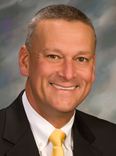
Bennett
The overview I want to give you about Florida’s choice framework is one that is, in my opinion, a true blueprint for our country. And I want to take you on this little journey. So just bear with me for a moment.
For many years, we said choice was about competition in education. And competition will raise all tides, right? The rising tide of competition will raise all the boats. And I can tell you, Florida has kind of changed that discussion. Again, being from Indiana, being from a state that tried and worked very hard to champion very similar policies, while competition in the educational system is good, the issue of choice here in Florida personifies the importance you put on what I believe to be the most important social justice issue in education. And by that, I want to do a little scenario.
If my wife and I didn’t have grown children, and in December when I was appointed, we would have gotten in our car, we would have driven to Tallahassee, and we would have driven around the community of Tallahassee, and we would have found the school that works best for the Bennett children. And the reason we could do that is frankly we could afford to. We could afford to live anywhere we wanted, send our kids to the school that we thought best fit their needs ...
And my point in this is, Florida is leading the discussion that all parents, regardless of the color of their skin or regardless of how much money they have, should have the same choice as Tony Bennett or MaryEllen (Elia, the Hillsborough superintendent). And that is a very different discussion in choice. And it is a discussion that I see is transcending what I believe can be really the first round of choice. And the first round of choice was frankly privates and charters against the public schools. Virtual schools against the traditional bricks-and-mortar buildings.
And I think MaryEllen in Hillsborough is an example of how we have taken that discussion in a completely different direction. Because this school (Franklin Middle Magnet and its Boys Preparatory Academy) provides a choice for children. This district provides a culture and a climate where choice is accepted and encouraged, and the opportunity that all children should have the same choices that Tony or MaryEllen have. They live that way.
So we’re now talking about choice – not just private schools and charter schools and virtual schools – we’re talking about public school choice. We’re talking about creative leaders like MaryEllen, like the team here, creating educational opportunities for children within the district. And really going to what we all heard was the purpose of choice to begin with, to provide incubation for innovation for our public schools. So I am very encouraged. (more…)
 The Fordham Institute may be the closest thing to an honest academic broker in the contentious private school choice arena these days, and its latest report will no doubt enhance that reputation. "Red Tape or Red Herring?", released today, provides strong evidence that private schools are not averse to academic or financial oversight – a finding that runs counter to a longstanding libertarian narrative.
As Fordham president Chester Finn Jr. acknowledged in the forward: “Many proponents of private school choice — both the voucher and tax credit scholarship versions — take for granted that schools won’t participate (or shouldn’t participate) if government asks too much of them, regulates their practices, requires them to reveal closely held information and — above all — demands that they be publicly accountable for student achievement.”
The report looks at the participation rate of private schools in voucher and tax credit scholarship programs in 11 states and surveys from 241 private schools that do and don’t participate, and it finds that testing requirements are not a significant deterrent. Only a quarter of the schools ranked state-required testing as a “very” or “extremely” important factor. Among the schools not participating in voucher or scholarship programs, testing was the fifth most-cited concern – behind such issues as protection of religious activities and admission processes and government paperwork.
This is not to suggest that private schools are eager to embrace more government regulation. The report did find a modest negative correlation between the degree of regulation in a state and the rate of schools participating. But the survey is a reality check on private schools and the educators who run them. Catholic schools remain a major player in the voucher-scholarship market, in part because their mission is to serve poor children, and they also demonstrate remarkable leadership on the issue of testing and academic accountability.
The report echoes similar on-the-ground work in Florida. (more…)

