 Don’t back up, don’t back down. “Compromise” may be a watchword for 2013, but it wouldn’t be a good thing for education reform, writes Jeanne Allen, founder and president of The Center for Education Reform, in the Huffington Post. She points to Florida as a state that hasn’t compromised on accountability and school choice – and, as a result, has seen rising student achievement.
Acknowledging progress. Pointing to the recent PIRLS results as a “crucial mark of excellence,” the Miami Herald editorial board says Florida schools are making gains but need more money.
Tony Bennett. His views on Common Core and teacher evaluations. Gradebook.
More on charter school closing. School Zone weighs in on the one in Flagler that shut down during the holiday break.
Say no to Robin Hood. Some Seminole County parents don’t like the idea of using family incomes as a factor in drawing new school boundary lines. “The school board needs to stop playing Robin Hood,” one said. School Zone.
Inappropriate. The Hernando school district’s CFO posts pornographic images and makes critical comments about the superintendent online during work hours, reports the Tampa Bay Times.
After Newtown. School district officials in Palm Beach County say metal detectors aren't the answer, reports the Palm Beach Post. Armed officers and deputies will be at every Hillsborough elementary school when students return Monday, the Tampa Tribune reports. School resource officers will be in every Alachua elementary, beginning today, reports the Gainesville Sun. Beefed up security in Marion, too, reports the Ocala Star Banner.
Editor's note: Step Up For Students president Doug Tuthill wrote the following letter, which was published this morning in the Tampa Bay Times. It's in response to this Times editorial about testing for students in Florida's tax credit scholarship program and recent comments from Gov. Rick Scott. Some recent news stories have also suggested that testing for scholarship students is limited or nonexistent.
 Florida's public education system is so rich with learning options that last year 1.3 million students chose something other than their assigned neighborhood school. So the debate about how best to hold these diverse programs accountable for student progress is important.
Unfortunately, the manner in which the Times questioned testing for one of those programs — a Tax Credit Scholarship for low-income students — was incomplete and misleading. While it is true scholarship students are not required to take the FCAT, that doesn't mean the test most of them take annually, the Stanford Achievement, is irrelevant. This test is considered the gold standard in national exams, and has now been administered for six years with two consistent findings: 1) The students choosing the scholarship were the lowest performers in their district schools; and 2) They are achieving the same test gains in reading and math as students of all incomes nationally.
The expansion of options such as magnet programs, charter schools, virtual schools and scholarships for low-income children strengthens public education. These options all undergo rigorous academic evaluation, and the new national Common Core standards will hopefully make comparative evaluations even easier for parents and the public.
Vouchers and accountability. Gov. Rick Scott’s call for “voucher” students to take the same standardized tests as public school students is long overdue, editorializes the Tampa Bay Times: “Voucher proponents can't have it both ways,” it concludes. “They can't claim they are a good bargain for taxpayers but then be unwilling to prove it.”
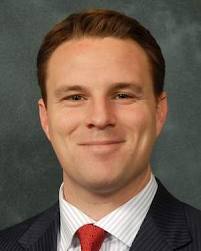
Weatherford
“Yes we are!” House Speaker Will Weatherford gives Tony Bennett a thumbs up on Twitter after a critical Tampa Bay Times column says the selection shows the state is doubling down on Jeb Bush ed reforms. Gradebook. A look at Bennett’s re-election upset in Indiana. Tampa Bay Times.
Home-schooled or truant? A Flagler County dad faces a criminal charge after not following requirements for home-schooling, reports the Daytona Beach News Herald.
Sex abuse lawsuits. Involving a former middle school teacher. Miami Herald.
Florida Board of Education openings. Two coming up, notes Gradebook.
When Florida and Mississippi schools were peas in a pod. Jackson Clarion-Ledger.

Welner
Tax credit scholarships in Chronicle of Philanthropy. (subscription required) The story leads with Step Up For Students and quotes “neovoucher” expert Kevin Welner: “He also argues that most states don't really know if they are saving money, since few have closely tracked how many students receiving scholarships would have gone to private schools without them.” Welner has raised this argument before, and it’s not the case in Florida, as redefinED has noted.
Charter school facilities funding. A state task force deadlocks on recommendations, reports the St. Augustine Record.
Charter school pay raises. Charter schools in Lake Wales look for ways to compensate their teachers, reports the News Chief.
F charter schools. Two in Escambia offer updates to the school board, reports the Pensacola News Journal.
Amendment 8 in the Washington Post. The amendment and its impact on vouchers is referenced, incorrectly, in a story on quality control issues with the D.C. voucher program. Here again is the real story.
 Editor's note: blog stars is an occasional roundup of good reads from other ed blogs.
The EdFly Blog: Frivolous litigation earns dunce cap
As for Florida dumbing down education, as is alleged in the lawsuit, the state ranks first in the country in the percent of 2011 graduates who took an AP exam, sixth in the percent of graduates passing at least one AP exam, and fourth in improving the passing percentage since 2001.
An in-depth analysis by ProPublica last year praised Florida as being a leader in giving low-income students the same access to AP classes as affluent kids.
And while the state’s NAEP scores took a dip in 2011, it ranks second nationally in gains on the national assessments dating back to the 1990s.
In fact, by any measure, the state’s education system is light years ahead of the system that was in operation when Mills helped run Tallahassee. And the biggest beneficiaries have been the students who were routinely ignored back then. Full post here.
Sara Mead's Policy Notebook: This is why our current education debate is toxic
Richard Rothstein's American Prospect investigation into the details of Joel Klein's childhood (no, I'm not kidding here) is really not worth reading, but it unfortunately exemplifies two of the most toxic aspects of the current education reform conversation (fwiw it also contains some interesting information about the history of post-war public housing in NYC):
Personality over policy: The point of Rothstein's very long article seems to be that Joel Klein's education policy views are invalid because his childhood was less poor than it has sometimes been represented as being. At a surface level, this is idiotic. Whether Klein grew up in abject poverty or simply in circumstances much more humble than the financial and political status to which he has risen has absolutely nothing to do with whether the education policies he proposes work. Nor did Klein or anyone else ever claim himself as the sole data point for the power good teachers and schools can have on kids' lives. There's, um, actual research on this. (more…)
 Florida’s next education commissioner will inherit a job that makes juggling chainsaws look easy. He or she must get under the hood of a complicated accountability system, ride herd on a historic shake-up of public education, dodge slings and arrows while walking a political tight rope and leap tall buildings in a single bound.
And yet, the job remains so compelling. Florida is the nation’s most promising bridge to an education system that can more fully give teachers and parents real power to help kids live out their dreams. In the last 10 to 15 years, no state has focused more on the low-income and minority students who are now a majority in Florida public schools. Simultaneously, no state has opened the door more to alternative learning options – options that have both empowered parents and multiplied the potential for educators to innovate. The result has been both dramatic and nowhere near enough. The next commissioner must find ways to continue the momentum.
To that end, we hope he or she can nimbly rotate hats long enough to also assume the role of explainer-in-chief. We know this won’t be easy; education reformers in Florida operate in an environment that is particularly tense and, in the past couple of years, has become downright ugly. But we can’t help but think that maybe, just maybe, the temperature will drop a few degrees if fair-minded people can be persuaded that not every education idea and not every education reform is a zero-sum proposition. Sometimes, they really can work in harmony with the other parts.
This is especially true with school choice. The sincere goal here isn’t “privatization,” it’s personalization. It’s about expanding options so more kids can be matched with settings that maximize their potential, and yes that includes private and faith-based options.
There’s no reason, and so far in Florida no demonstration, that these options have to come at the expense of traditional schools. It’s entirely possible – and many of us think it’s absolutely necessary – to support traditional public schools at the same time we push for additional options that, for individual students, may work better. (more…)
 A Florida Board of Education member proposed today that the state end its textbook adoption process, saying teachers and principals are best equipped to decide which materials are needed to help students.
Roberto Martinez of Miami said the time is right for that step, given Florida’s education reforms - tough standards, a tough accountability system and big changes to the teaching profession – as well as digital learning advances that are easing access to high-quality instructional materials.
“It seems we’re now at the stage - and certainly will be at the stage in the next couple of years - where the teachers and principals working with the districts should then be able to have the freedom to do as they deem appropriate, based upon the exercise of their professional judgment, to use whatever materials they want,” Martinez said at a board meeting this morning. “If they want to use textbooks, let them use textbooks. If they want to use primary source material, fine. Digital? Fine. Whatever it is. But I think we’re at that stage where we can give them that kind of freedom to accomplish the outcomes that we want.”
Martinez said he wanted the board to add elimination of textbook adoption to its legislative priorities for next year. He did not offer a timeline for ending the process, but in a letter to board members Monday he wrote that the Department of Education needed to work with school districts to develop “an effective transition plan.”
“These changes would get rid of the expensive and unnecessary burdens that impede the ability of our teachers and students from accessing the latest, most advanced, and best educational materials, many of which are, or will become, available through digital learning,” he wrote.
Martinez’s proposal isn’t entirely new; last year, the board discussed a plan to make Florida classrooms all digital within five years. Nevertheless, Tuesday’s comments drew an enthusiastic response from fellow board members and two superintendents in attendance. (more…)
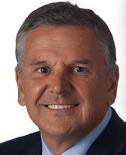
Chartrand
Florida is a national leader in expanding school choice. And the state's new top education official doesn’t see the momentum slowing, especially with low-income children.
“The train has left the station on school choice,” Gary Chartrand, 58, told redefinED by phone this week - his first media interview since being elected chair of the Florida Board of Education on Friday.
“I often say that freedom is abundant in America but it’s not universal. When you’re stuck in a broken system, and you’re poor, and you’re full of despair, and you only have one choice, and that choice happens to be an F school, that’s not freedom. And so I think the school choice movement is bringing more freedom, especially to the most under served children in the state of Florida.”
Chartrand, a Jacksonville businessman, takes a leadership role at an especially sensitive time. Funding, already low compared to other states, has been stagnant. Common Core standards are around the corner. Teacher evaluations are in flux. Criticism of the state’s accountability system is as loud as it’s ever been (which, after the Jeb Bush years, is saying a lot.) And now the board is looking for its fifth education commissioner in eight years.
At the same time, Florida has been a pace setter in academic gains for most of the past decade. Those shaping state ed policy have no plans to ease up on the gas.
Chartrand touched on a number of issues in the interview, which is attached below. Some highlights:
On his priorities as chair: “I am not proud of the fact that America is 17th in reading, 25th in math and 30th in science in the world. We used to be No. 1. And I believe that if this continues, we’ll undoubtedly lower our standard of living … And so I just have one goal: and that’s a quality education for all. We can do better. We must do better. We got to prepare our kids for a very rapidly changing world.”
On the best way to raise standards: “We’ve got to raise standards incrementally. I get a little concerned at times, and I always use the analogy of, if you can jump on a high bar six feet, you don’t raise it to seven feet and try to get over it. Because you’re not going to get over it. You raise it from 6 to 6-1, to 6-2, 6-3, and that’s how you incrementally improve, to continue to excel. And I think that’s what we need to do at the Department of Education.” (more…)
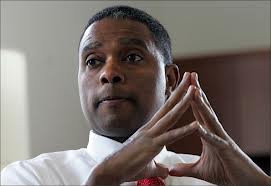 Florida education commissioner Gerard Robinson has made what appears to be an anguishing personal decision to return to his family in Virginia, because his wife, a law professor, has been unable to find a comparable position in Florida. And yet the announcement Tuesday was greeted with a level of vitriol that can only speak to the state’s nasty educational divide.
An anti-testing group released a statement deriding Robinson’s “so-called accomplishments” as tied to a testing system that “has been completely discredited.” A Democratic lawmaker called the departure “a clear indicator … that recent destructive education reform measures … are harmful to the morale and productivity of students and teachers.” A Florida School Boards Association leader accused Robinson of “doing the bidding” of the state Board of Education, as though she doesn’t expect the same of her own superintendent. Predictably, the Washington Post’s Valerie Strauss offered a conspiracy theory – that Robinson was being offered as a “scapegoat” to divert attention from the FCAT. A Democratic congresswoman who should know better actually called for a federal review of the FCAT.
You get the picture.
Now, it is certainly true that the Department of Education had issues with the FCAT writing test and bungled the initial release of school grades this year. And it is also true that much – maybe too much – rides on the performance of students on state testing. But nothing in Robinson’s 13 months on the job warrants such public venom, and you don’t have to defend him to recognize his convenience as a punching bag. So let’s call this another temperature check in the fever over educational accountability. (more…)

