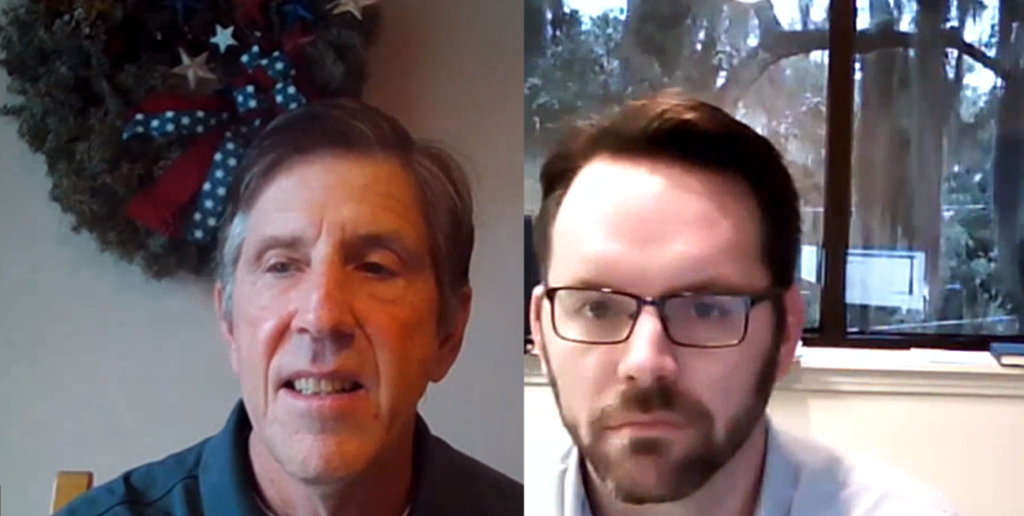
 On this episode, Tuthill speaks with the Conference’s associate for education about the history of Catholic education and the tension between Catholic schools maintaining an open, welcoming environment for all students while adhering to the practices and beliefs of their religious identity.
With nearly 30,000 of Florida’s roughly 80,000 Catholic students receiving some type of state scholarship, education choice plays a significant role in Florida’s Catholic schools. Tuthill and Barrett discuss Senate Bill 48, the landmark choice bill proposed by the Florida Senate that will be discussed during this year’s legislative session, and opportunities the Catholic community has to better serve families should the bill become law.
"We are not trying to discriminate against anybody. We're trying to maintain (schools) where we can build and teach and provide an environment that is based on the fundamental aspects of the Catholic faith.”
EPISODE DETAILS:
· The history of Catholic education in America stemming from Protestant discrimination in the first modern public schools
· How education choice provides vibrancy to Catholic schools in Florida even as enrollment declines in other states
· Issues of religious freedom and non-discrimination language that governments are codifying into law
· How Catholic schools handle identity issues on a school-by-school, per-family basis rather than adhering to blanket policies
· Senate Bill 48 and how its potential to help Catholic schools serve more students in better ways
Editor's post: This piece by James Herzog, associate director for education at the Florida Catholic Conference and occasional contributor to redefinED, ran over the weekend in the Palm Beach Post. The tax credit scholarship program is administered by Step Up For Students, which co-hosts this blog.
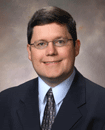
James Herzog
The low-income mom from Boynton Beach felt the school was hamstrung from providing the well-rounded academic and social environment her fifth-grade daughter needed to succeed. So last year, she did what many low-income parents could once only dream about: She transferred her child to another school.
With help from a Florida tax credit scholarship, she enrolled her daughter, now 11, into St. Vincent Ferrer Catholic School in Delray Beach. The scholarship, valued at $4,880 this year, didn’t cover the full cost of tuition. But the mom was willing to make the sacrifice to pay the additional $1,520. She was thrilled to have a choice.
Now her daughter is thriving.
Student by student, the scholarship program is making a profound difference this year for 9,448 K-12 students in Florida Catholic schools. Now serving nearly 60,000 students statewide, it also helps families who seek education opportunities offered by other faith-based or independent schools. By offering more options for the students who are often the lowest performers in public schools, it helps the state as a whole, too.
During the current legislative session, the Florida Conference of Catholic Bishops has made House Bill 7167 regarding educational choice a top priority. Sponsored by House Education Appropriations Subcommittee Chairman Erik Fresen, R-Miami, the bill deserves support from all of us who believe in expanding opportunity for families who need it the most.
One key provision would empower parents of children in grades six through 12 to have the same type of school choice as that enjoyed by parents of children in kindergarten to fifth grade. This would be accomplished by removing the requirement that students in grades six through 12 attend public schools before they’re eligible for the scholarships.
We know more options are needed. Over the past 15 years, no state has made bigger gains for its low-income students than Florida. In 1998, Florida’s low-income fourth-graders ranked No. 35 among states in reading. Now they rank No. 1. And yet, being No. 1 still means only 27 percent of them are reading at a level considered proficient. (more…)
After an unexpected funding shortfall, Florida Catholic schools want state education leaders to review how one of the state’s biggest school districts distributed federal dollars earmarked for needy children in public and private schools.
 The request was made last week after Catholic schools in northeast Florida learned the Title I funds they rely on to provide services to low-income students throughout the school year will be gone by month’s end. The 125,000-student Duval County School District, the sixth-largest in Florida, is responsible for passing a portion of the funds on to private schools.
“We were pretty much caught off-guard,’’ Patricia Bronsard, schools superintendent for the Diocese of St. Augustine, which includes Duval, told redefinED Monday. “We serve a pretty diverse population … the very population that can’t afford to have this disruption.”
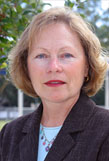
Patricia Bronsard
Now the diocese schools and other private schools – about 30 to 40 in all – are scrambling to shore up those services so children who count on additional tutoring and other programs won’t have to go without, Bronsard said.
Duval Superintendent Nikolai Vitti told the Florida Times-Union his district has done nothing wrong. He pointed to a change in how the funds were spent in district schools as the reason for the shortfall. He estimated the lost funds total about $580,000.
Vitti could not be reached Monday for comment.
Duval County School Board member Jason Fischer said he thought the timing of the notice was unfortunate, but he’s not sure who’s at fault and awaits an internal review.
“I do think we all have the obligation to work together,’’ he said of public and private schools. “I don’t know where the responsibility lies (for the late notice). Everybody should know at the beginning of the year what the expectations are.’’ (more…)
If Florida’s Catholic schools and their 84,000 students were part of a public school district, they’d be the ninth largest in the state. They’d generate scores of news stories every year. Have powerful interests battling on their behalf. Win praise for saving taxpayer money. But like other private schools, they're often out of sight, out of mind.

Sen. Altman: “If we’re going to meet the future needs of society, we have to have a viable private, parochial and faith-based education system” in addition to public schools,
In Tallahassee Tuesday night, Florida’s Catholic school superintendents led a meet-and-greet with a handful of state lawmakers to send a polite but direct message: Don’t forget about us.
“The impact of Catholic education in our state can never be underestimated,” Bishop Gregory L. Parkes of the Diocese of Pensacola-Tallahassee told about 100 people gathered on the top floor of the Capitol.
Catholic schools have long enjoyed a reputation for serving low- and middle-income families and setting a high academic bar. For taxpayers, they offer financial benefits, too. Florida’s Catholic schools save the state at least $435 million every year, according to new calculations by the Florida Catholic Conference. That’s how much it would cost to educate Catholic school students in public schools, less the cost of publicly funded school choice programs.
Tuesday’s event, which included brief remarks by Gov. Rick Scott, was not a knock on public schools. (more…)
A year ago, Catholic schools in Florida were headed toward adopting a version of Common Core State Standards that would let them keep their autonomy and cultural identity. Many liked what they saw as increased rigor. And many hoped to gain access to state assessments that could make it easier when Catholic school students transition to public schools.
 Today, though, they watch and wait with the rest of the country to see where Common Core is headed.
The bipartisan effort to create a single set of benchmarks for college and career readiness is now going head to head with political posturing and fear of federal overreach. Many Catholic schools are still planning to move forward with new language arts standards, but they’re doing so with growing caution. Meanwhile, a few that previously embraced the standards are backing off.
“Many of our schools are starting to refrain from using the words ‘Common Core,’ ’’ said James Herzog, associate director of education for the Florida Catholic Conference, which represents 237 schools. Instead, they’re using the new standards as a platform to build upon, calling them ‘rigorous standards’ or ‘Diocesan standards.’
For Dan Guernsey of the Rhodora J. Donahue Academy of Ave Maria, a K-12 school in Naples, Fla., just changing the name isn’t enough.
“As a private school in Florida, we already have very high standards, so why change?’’ said the headmaster, who also serves on the board of the National Association of Private Catholic and Independent Schools, and as a consultant for more than 150 Catholic schools nationwide. “The only reason is because of political or testing pressure. And that’s the problem. We shouldn’t be adopting statewide standards based on politics or standardized tests.’’
The debate over Common Core has been focused mostly on implications, real and perceived, for public schools. But Catholic schools are wrestling with similar concerns and pressures. About 100 Catholic dioceses have indicated they are adopting the standards, with Florida and 45 other states already committed. Many schools across the country, public and private, are using them already.
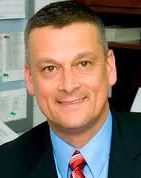
Tony Bennett
In mid-June, Florida Education Commissioner Tony Bennett visited a modest retreat on the outskirts of Tampa where a University of Notre Dame program was hosting a symposium on school choice. Fewer than 40 people were in attendance, but Bennett spoke and answered questions for an hour.
“I will never ever change my stripes on school choice,” he told them. “If giving poor kids an opportunity cost me my job,” he continued, referencing the fledgling voucher program and his electoral defeat in Indiana, that's a “pretty good trade off.”
Even in a state that leads the nation in expanding school choice, Bennett was arguably the most pro-school-choice education commissioner Florida ever had. Choice supporters expressed shock and disappointment with Thursday’s announcement that he was abruptly resigning after a two-day barrage of negative stories about grade changes at an Indiana charter school.
“This is a sad moment for Florida education,” said Rep. Manny Diaz Jr., R-Miami, a member of three House education committees. Bennett was a “rock solid proponent for students, accountability and choice.”
“It’s unfortunate and I’m very saddened,” said Florida Board of Education Chair Gary Chartrand, who was attending the KIPP conference in Las Vegas Thursday. “I told him, ‘We think the world of you and we’ll weather the storm together.’ But he made the decision to leave. Obviously, the turnover is not a good situation.”
Bennett’s replacement will be the fourth education commissioner under Gov. Rick Scott, who pushed out highly regarded Eric J. Smith in favor of Gerard Robinson, who then resigned after high-profile glitches with the state’s testing and grading system. A national search to replace Robinson drew no star-power candidates until Indiana voters put Bennett on the market.
"How much can we take?" said T. Willard Fair, a former Board of Education chair who co-founded the state's first charter school and resigned in 2011 to protest the ouster of Commissioner Smith. "We lost an outstanding commissioner in Eric Smith. We were blessed when Tony Bennett became available. To lose two great intellectuals is absolutely devastating."
The leadership churn has put smudges on Florida’s reputation as a national leader in ed reform. It has also come as thorny questions about the growth of Florida’s school choice sectors remain unresolved, including funding for charter schools and online learning. (more…)
Florida private schools will get safety alerts just like their public school counterparts, under a bill passed by the Legislature last week and expected to be signed into law by Gov. Rick Scott.
Passed unanimously in both the House and Senate, the bill requires police departments and other emergency response agencies to notify private schools about major incidents like bomb threats and SWAT team raids, as long as the schools opt into a notification program. The Florida Catholic Conference led the charge for the legislation, which, though non-controversial, had fallen short of passage in recent years.
"The bill's passage was a banner day for us," James Herzog, the conference's associate director for education, wrote in an email. "We had advocated for it during the past three sessions and even made it our spotlight education bill during the past two 'Catholic Days at the Capitol.' It was an example of how even a good and simple idea requires careful advocacy and perseverance by supporters to make it to the 'finish line' ... "
This year's bill was buoyed by a focus on school safety in the wake of the shootings in Newtown, Conn. It was sponsored by Sen. Joe Negron, R-Palm City, and Rep. Mike La Rosa, R-St. Cloud.
There are more than 2,000 private schools in Florida, with total enrollment last year of 316,745. More background on the bill here.
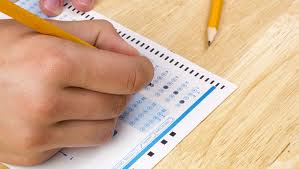 At least 13 private schools that accept the Florida Tax Credit Scholarship have applied to administer the FCAT and end-of-course exams next year.
The schools, mostly faith-based and in South and Central Florida, have submitted their applications to the Florida Department of Education, which will decide in August whether to approve them.
DOE spokeswoman Tiffany Cowie said there may be more schools that made the March 1 deadline, but the department won’t know the final number until the mail is cleared towards the end of the week.
A state law passed in 2012 allows private schools with at least one student receiving the tax credit scholarship to offer the Florida Comprehensive Assessment Test and/or end of course exams, which are required in public schools.
Of the 13 schools that applied, eight signed up only for EOCs.
“The FCAT is a dinosaur,’’ said Principal Sandra Basinger of St. Mary’s Catholic School in Brevard County, where her seventh- and eighth-graders hope to take EOCs in Algebra I and Geometry next spring.
Like a lot of Catholic schools, St. Mary’s administers the Iowa Test of Basic Skills to its students in grades 2-8. The test is as good as if not better than the FCAT, Basinger said. And with Florida phasing out the state assessment for other tests in line with the new Common Core standards, “really, I just don’t think it would be worth it,’’ she said.
James Herzog, associate director of education for the Florida Catholic Conference in Tallahassee, said in an email to redefinED that he has heard the same sentiment from other Catholic schools.
“From a practical standpoint, it would … not make any sense for Catholic schools (or most other nonpublic schools) to offer the FCAT for a year or two only and then have to switch again to something else … ,’’ he said.
Herzog originally anticipated 30 to 40 Catholic schools would apply to give the FCAT.
“Obviously, I was way off,’’ he said. (more…)
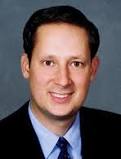
Negron
Florida private schools would get safety alerts just like public schools under a bill filed this week.
SB 284, sponsored by Sen. Joe Negron, R-Palm City, would require police departments and other emergency response agencies to notify private schools about fires, bomb threats and other major incidents just like they do now with public schools. Only private schools that opt into a school district's emergency notification policy would be affected.
Similar bills fell short of passage in recent years, but school safety is shaping up to be a bigger issue in the Florida Legislature this year in the wake of last month's shooting tragedy in Newtown, Conn.
So far, there is no House companion bill. More details, background and context from James Herzog with the Florida Catholic Conference here.
Florida Catholic schools are embracing Common Core academic standards and seriously considering whether to take the coming state tests aligned to them. In the meantime, their leaders say, 30 to 40 Catholic schools want to administer the FCAT in 2014, in what would be a trial run for potential transition to Common Core testing.
“Our mission is the same, public or Catholic school, to create productive citizens in our world that actually have the skills in life they need,” Alberto Vazquez-Matos, schools superintendent for the Diocese of St. Petersburg, told redefinED. “We’ll all be raising the standards and talking the same academic language.”
The push by Catholic schools towards common standards - and perhaps common tests - is an interesting counterpoint to the debate that followed last week’s comments by Gov. Rick Scott. Scott re-opened the door to a long-running conversation about voucher and tax-credit scholarship programs by saying he wants to see students in those programs take the same tests as their public school peers.
Right now, the state does not require tax credit scholarship students to take the FCAT, but they are mandated to take another comparable, state-approved test such as the Stanford Achievement Test or Iowa Tests of Basic Skills. Disabled students who use McKay vouchers to attend private schools are not required by the state to take any such tests.
This year, Catholic schools in Florida enroll 7,673 tax credit scholarship students. (The scholarship program is administered by Step Up for Students, which co-hosts this blog.)
Scott’s comments sparked suggestions from some school choice critics that private schools were dodging comparisons to public schools. But Florida’s Catholic schools have been quietly moving towards Common Core for more than year. In fact, all 237 Catholic schools in Florida will be rolling out a “blended’’ version of the language arts standards, right along with public schools, in 2014. (more…)

