After a quiet start, a Race-To-The-Top-fueled effort to draw proven charter schools to Florida’s neediest communities is picking up steam.
The $30 million Florida Charter School Growth Fund, begun in 2011, has now doled out grants to seven schools for a total of $2.15 million. It also remains in the hunt for luring a nationally known network to the Sunshine State, recently awarding $100,000 to Rocketship Education to help it search for a new school in South Florida.
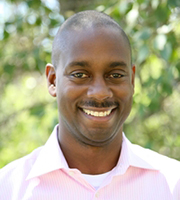
Darryl Cobb
Finding the right operators ready and able to set up shop in targeted areas takes time, said Darryl Cobb, a partner with the Colorado-based Charter School Growth Fund who leads the group’s Florida effort.
“It’s not as easy as waving a magic wand,’’ he said.
State education officials announced the Florida Charter School Growth Fund in late 2011. Florida kicked in $20 million from its Race To The Top award and the Charter School Growth Fund pledged another $10 million in private donations. (Its fund supporters include major education foundations like the Walton Family and Bill & Melinda Gates foundations.) The mission: Give grants to the best charter networks in the nation ready to open or expand schools in Florida’s poorest communities.
But organizers soon discovered many of those networks weren’t quite ready to expand to Florida, in part because of concerns about funding and authorizers. Strategy shifted to home-grown operators.
Youth Co-Op Preparatory Charter School, an A-rated K-8 school in Hialeah, was the first recipient. In November 2011, it got a $73,000 grant that went toward adding a high school. (Youth Co-Op received another grant for $250,000 in 2012). Since then, the fund has awarded grants to six more charter schools, including five from Florida.
More schools are on the way. The 5-year goal is to open 30 new high-performing charter schools that serve about 15,000 students a year in communities with persistently low achieving schools.
“Our hope is these operators will begin to transform the opportunities for students and families in these high-needs communities,’’ Cobb said. “We have to provide opportunities for them to succeed.’’
The process, though, hasn’t been without some tension, with some established charter networks in Florida complaining they have been left out.
“We’ve got amazing schools, but many of the operators don’t want to expand” to specific neighborhoods in need, said Adam Miller, director of Florida’s school choice office. “They’re perfectly content doing the amazing work their doing’’ and staying put.
The fund is open to any qualified operators willing to start or expand a school in those areas, Cobb said.
How can Florida attract highly regarded charter schools outfits like Rocketship and Yes Prep? Some of the state’s top education leaders hope to figure that out as they begin looking more closely at why those high-impact schools aren’t in Florida now.
“We need to do a better job, in my opinion as the state Board of Education chair, of serving our neediest children,’’ Gary Chartrand told redefinED Tuesday. “We need charter school operators that are really serious, cause-minded folks ready to do the hard, hard work of working in the toughest neighborhoods.”
Chartrand joined Gov. Rick Scott and Florida’s school choice director, Mike Kooi, in Orlando on Friday for a meeting with five of the country’s leading charter school operators (KIPP, Yes Prep, The Seed Foundation, Rocketship Education and Scholar Academies) and five superintendents from the state’s largest school districts (Orange, Miami-Dade, Duval, Hillsborough and Pinellas counties).
The group also included representatives from the Walton Family Foundation and the Florida Philanthropic Network, which includes the Helios Education Foundation and the Bill & Melinda Gates Foundation, Chartrand said.
The goal: identify the roadblocks for such schools and work toward solutions. There are a lot of variables, including per-pupil funding, which Chartrand said presents a significant challenge.
Florida ranks near the bottom nationwide, with an average of $9,572 spent per pupil, according to a recent Education Week analysis. By comparison, Vermont spends $18,924 per pupil and Utah $7,042.
“It does cost more to serve the highest-needs areas,’’ Chartrand said.
Chartrand helped bring KIPP to Florida and serves on the board of directors for the Jacksonville school (Chartrand donated $1 million toward the middle school and helped raise $9 million from the local business community). KIPP offers a longer school day and year, after-school programs and highly-qualified instructors to teach an academic program that focuses on college prep and character development.
Since KIPP was founded in 1994, more than 90 percent of its students have graduated high school and more than 80 percent have attended college. Of those, 40 percent have obtained college degrees.
The state wants to lure similar schools “by making long-term sustainability … a reality,’’ Chartrand said.
That might mean reducing startup costs, he said, perhaps by giving the schools access to the state’s Charter School Growth Fund. The fund is a $30 million reservoir created by federal Race to the Top dollars and philanthropic groups to benefit high-performing charters serving low-income students.
Another way to help is to streamline the charter school authorization process, Chartrand said.
In Florida, where there is no state authorizer, charter school operators apply through individual districts. But the process could go smoother if districts, state school choice officials and charter operators collaborate more closely on the front end, he said.

