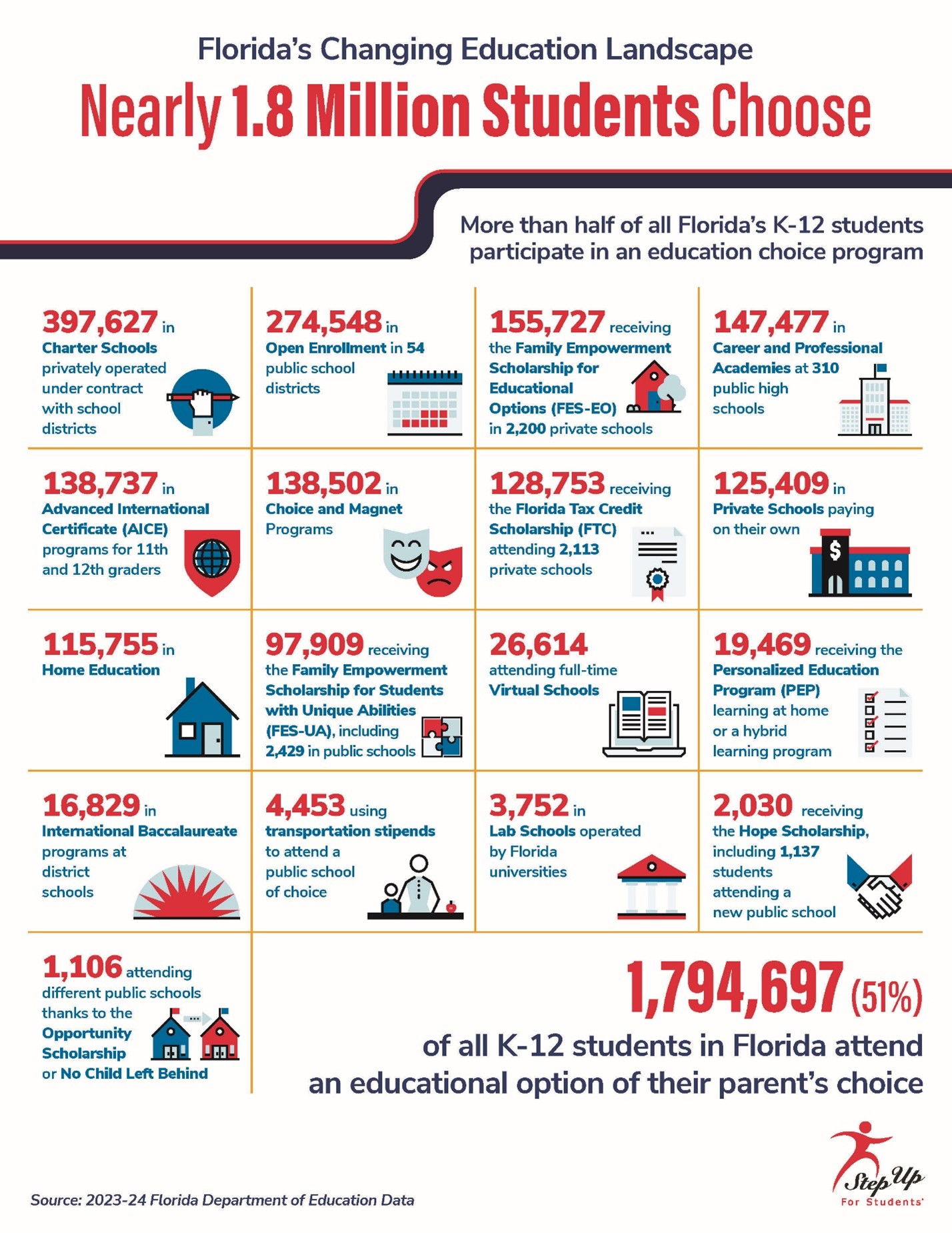
 For the first time in Florida’s history, more than half of all K-12 students are enrolled in an educational option of choice. During the 2023–24 school year, 1,794,697 students, out of the state’s approximately 3.5 million K-12 population, attended schools outside their zoned neighborhood assignment.
Since the 2008–09 school year, Step Up For Students, in collaboration with the Florida Department of Education, has tracked enrollment across a variety of choice programs. While methods and program structures have evolved, 2023–24 marks a milestone: more than 50% of Florida’s students are now learning in environments selected by their families.
The Changing Landscapes report draws from Florida Department of Education data and removes, where possible, duplicate counts to provide a clearer picture of school choice participation. For example, it adjusts for home education students supported by the Family Empowerment Scholarship for Students with Unique Abilities (FES-UA) and eliminates double-counted students in career and professional programs. It also excludes prekindergarten students in FES-UA and programs like Voluntary Pre-Kindergarten (VPK), as the report focuses solely on K–12 education.
While many families still choose their neighborhood public schools, Florida’s education system now offers a broad range of options to meet diverse student needs. Public school choice remains dominant, occupying four of the top five spots in overall enrollment. Charter schools are the most popular option, followed by district open enrollment programs, career and professional academies, and Advanced International Certificate of Education (AICE) programs for upperclassmen.
On the private side, the 2023–24 school year marked a historic shift: For the first time, a single scholarship program now serves more students than all private school families who pay tuition out of pocket.
In total, over 116,000 additional students enrolled in choice programs compared to the prior year. The Family Empowerment Scholarship for Educational Options (FES-EO) and the Florida Tax Credit Scholarship (FTC) saw the greatest growth, along with AICE and FES-UA. Altogether, scholarships for private and home education increased by approximately 142,000 students, while private-pay and non-scholarship home education enrollment declined, likely due to the expanded availability of financial aid.
Among public-school options, magnet and district choice programs saw slight declines, with 28,000 and 8,447 fewer students, respectively. Still, public-school choice remains strong: 1.1 million of Florida’s 2.9 million public school students (40%) are enrolled in a choice-based public option.
Altogether, nearly 1.8 million students attend a school chosen by their parents or guardians. This shift reflects a fundamental transformation in Florida’s educational landscape—one where families are increasingly empowered to find the best fit for their children.
But with so many students opting for alternatives to their zoned public schools, it raises an interesting question: What about those who stay? If families are surrounded by options and still choose their assigned public school, isn’t that a choice, too? In that light, Florida may already have a 100% choice system, because staying is just as much a decision as leaving.
Rather than a battle between public and private education, Florida is showing how both sectors can coexist and thrive, working together to provide high quality learning opportunities for all students. The future of education isn’t one-size-fits-all; it’s about ensuring every family has access to an option that fits their child’s unique needs. In Florida, that future is already here.
 Around the state: A wide-ranging education bill was passed recently regarding high school diploma requirements, lawmakers are working on bills to make it easier to establish charter schools in Florida, a contract that aided the mental health of students is coming to an end in Sarasota and funding cuts loom in districts. Here are details about those stories and others from the state’s districts, private schools, and colleges and universities:
Sarasota: The school district here is ending a longstanding contract that placed full-time mental health therapists in elementary schools at a time when demand for these services remains high. The annual contract with The Florida Center for Early Childhood, which has been in place for seven years and served more than 475 children last year, is set to expire at the end of June and will not be renewed, officials say. The district is now weighing a new approach that shifts away from the in-school therapy model that once made Sarasota a national leader in student mental health care. WUSF.
High school diploma requirements: The Florida Senate passed a wide-ranging education bill on Thursday that eliminates a requirement that high school students pass algebra and language arts tests to earn standard diplomas. Senators approved SB 166 unanimously. Halfway through the legislative session, it is unknown if the House will take up the proposal. The bill would require that a student’s performance on the English-language arts assessment make up 30 percent of the student’s course grade. Several school districts lobbied in support of the bill, which would expand eligibility for teachers' professional certificates, removes requirements for schools to have internal auditors and looks to enhance teachers recruitment. Third-graders who score a 1 out of 5 on their third and final reading progress monitoring tests could advance to fourth grade if they scored a 2 on the first two progress-monitoring tests. “If all they (students) learn how to do is take a test, then I think we have failed in our education system,” said Senate Education Pre-K-12 Chairman Corey Simon, who is sponsoring the bill. WCJB. WUFT. Florida Phoenix. Yahoo News. Tampa Bay Times.
Charter schools: Lawmakers in the state are working to pass two different bills to make establishing charter schools easier in Florida. House bill 123 and Senate Bill 140 would eliminate a requirement forcing charter schools to get approval from 50 percent of teachers before converting a public school to a charter school, among other changes. According to the latest data from the Florida Department of Education, charter schools serve 12% of the enrollment in public schools. Charter school enrollment has more than doubled over the last decade, the data shows. During the 2022-2023 school year, 23 conversion charter schools operated in Florida, representing approximately 3 percent of the total number of charter schools in the state. WPTV. WLFX. South Florida Sun-Sentinel.
Also in the Legislature: An Orange County school board member is voicing concerns about Florida House Bill 5101, which, if it is passed, would ax funding for certain programs at high schools statewide. If approved, the bill would cut funding for AP, IB, Cambridge, Dual Enrollment and career and professional courses for high school students. “If these cuts go through, our students will suffer, our families will suffer, and our economy will suffer,” said Orange County School Board member Stephanie Vanos. The bill, sponsored by state Rep. Jenna Persons-Mulicka, said during a budget committee meeting that concerned families should talk to school district officials about how they use their money. If passed, HB 5101 would go into effect on July 1. Spectrum News.
Colleges and universities: Undocumented college students affected by the repeal of in-state tuition rates and their advocates recently appealed to lawmakers. The Florida Legislature earlier this year repealed a 2014 law allowing individuals brought into the U.S. as children without documentation, referred to as "Dreamers," to pay in-state tuition rates at Florida college and universities. The Florida Policy Institute reports that this will affect about 6,500 undergraduates. Florida Phoenix. The Florida House's proposed budget would take away funding for almost 22,000 Florida students who attend private, non-profit colleges and universities in the state. The Effective Access to Student Education Grant, or EASE, provides scholarships to Florida residents at some private, not-for-profit institutions to help ease the burden of the cost of a higher education. The proposed cut would impact students at 15 of the 30 schools that fall under this designation. WUSF. College of Central Florida launched a program that guarantees transfer admission to the University of Florida for students who successfully finish one of 19 pathways. Ocala Star-Banner. Meanwhile, the nation's historically Black colleges and universities, some of which are in the state of Florida, are wondering how to survive as cuts continue for higher education funding. The 74th.
Opinions on schools: Florida has long been a national leader in expanding educational choice, especially at the K-12 level, where policymakers have championed the right of families to select schools that best meet their children's needs. However, when it comes to higher education, that same commitment to choice is under threat. Arthur Keiser, chancellor of Keiser University.
Over at Charter Folks, Jed Wallace weighed in on the recent Rotherham/Pillow/Yours Truly discussion on the state of the charter school movement in an era of increased popularity of ESAs.
Wallace seconds Travis Pillow’s observation that both ESAs and charter schools are simultaneously flourishing in Florida, and notes that it is also happening in states such as Iowa. Wallace then posits that the attraction held by Republican lawmakers for ESAs may prove fleeting:
Because, as we all know, universal ESAs and vouchers have got issues, and we’re just starting to see policy makers begin to grapple with them.
Top of mind is how to pay for them.
In Arizona this month, we saw the state approve a budget …that cut 3.5% from all other agencies and delayed a $333 million dollar contribution to a water infrastructure account in order to afford its universal ESA program, which has become a new $429 million line item.
Arizona’s budget is widely discussed, but the reality is that this narrative has little to do with reality. In reality, Arizona’s ESA program is a part of the Arizona Department of Education’s budget, and that budget had a $28 million surplus last year. To paraphrase the bard, Arizona’s budget had 99 problems last year, but ESA a’int one.
A bit later in the piece Wallace took issue with your humble author’s contention that the charter school movement suffers from a Baptist and Bootlegger problem:
While I’m all in with Matt on our Baptist problem, the fact is I just don’t see much evidence of Bootlegger complicity.
Yes, stifling regulation and general blowback is a massive problem in the charter school space, all the more so now that private school options can expand at will in many parts of the country. And yes, massive compliance challenges are particularly daunting for smaller organizations to contend with. Many are getting crowded out altogether.
But are big CMOs actually okay with, or in some way are supportive of, the heaping on of additional regulation that is happening in CharterLand these days?
All to squeeze out competition coming from “moms and pops?”
Not from where I stand, at least.
CMOs are as frustrated by debilitating new regulation as any category of charter school organization.
Examining the handy-dandy charter school ranking document from the Center for Education Reform, I count seven state charter laws that passed since 2010: Mississippi (2010), Maine (2011) , Washington (2012), Alabama (2015), Kentucky (2017), West Virginia (2019) and Montana (2023).
The number of charter schools operating in these states as of April 2024: Mississippi 10; Maine 9; Washington 18, Alabama 14, Kentucky 0; West Virginia 24; Montana 1. Obviously, it is too early to draw much in the way of conclusions from Montana’s law operating for a single year. I would also entertain the notion that 24 schools in five years given West Virginia’s modest population might be considered not bad.
Overall, however, the math proves unforgiving: collectively these states have had 61 years of charter school laws but have produced 76 charter schools- an average of a net increase in charter schools of 1.24 per year across seven states.
Combined these states have well over 2 million more residents than Florida. Since 2011, however, Florida managed to average a net increase of 18.8 charter schools per year.
Now let’s see how the national charter school groups rank these seven laws, starting with the National Alliance for Public Charter Schools. The most recent ranking, from 2022, came before the passage of the Montana law. The National Alliance initially ranked the Kentucky law 10th but excluded it after — cough — it produced zero charter schools.

A few observations: Alabama’s law ranks above Florida’s, despite 707 charter schools operating in Florida compared with 14 in Alabama. Florida’s charter school movement might wonder just what exactly is so special about that Alabama charter law. Next, West Virginia has only 9% of the population of these five states and over a third of the charter schools but the lowest ranked law. Alabama, Washington, Mississippi and Maine have 48 years of charter schooling collectively, whereas West Virginia has only five. The West Virginia law however ranks 28th, whereas those other four states rank third, sixth, seventh and 10th respectively.
The National Association of Charter School Authorizers (NACSA) apparently exited the charter school law ranking business after 2015, best I can discern. That 2015 publication, however, has plenty of gems to admire: for instance. Alabama’s law ranked fourth, with NACSA approvingly noting “Alabama passed a new charter law in 2015 that is based on best practices in charter school policy.” The publication ranked Mississippi’s law as tied for sixth place, again noting, “Mississippi passed a new charter law in 2013 that is based on best practices in charter school policy.” “Best practices” did not seem to include opening many actual charter schools.
Delightfully, however, the Center for Education Reform gives West Virginia the highest ranking of any of the states passing laws since 2010 with a “B” grade. Montana and Alabama received a “C;” Mississippi, Kentucky, Maine and Washington each received a “D.”
Summing up, the National Alliance ranks charter laws according to adherence with a model bill that seems to have a very strong track record of not producing many charter schools. NACSA meanwhile described non-productive state charter laws as reflecting “best practices.” Charter schools clearly have a “Baptist” problem, and more recently practical challenges such as higher interest rates. We are dealing with a complicated reality with multiple factors at play.
Jed does not want to believe in the Bootleggers. The Bootleggers, however, believe in passing as many weak charter laws as possible and then singing their praises. They have enjoyed a great deal of success since 2010.
The nation’s first charter school law passed in 1991, the year after an improbably left-right coalition enacted the nation’s first modern school voucher program.
Ever since, charters have been the go-to “third way” solution: More regulated than private schools. More flexible than district-run public schools. Accountable to the public in more ways than either. And, crucially, amenable to worldviews of Democrats and Republicans.
But that may be starting to change.
Support for independently run public schools has eroded among elected Democrats. In a break from his predecessors in both parties, President Biden declined to issue a pro-charter proclamation and proposed cutting or restricting programs that support their growth.
And private education scholarships are sweeping the country: 18 states and counting have enacted education savings accounts or a similar mechanism allowing parents to direct public education funding to schools and providers of their choice. Growing numbers of large states like Ohio are opening private school voucher programs to all students. It’s clear this is where Republicans' education policy enthusiasm lies.
All of this has led some observers, like Andrew Rotherham of Bellwether, to worry charter schools are at risk of becoming a political orphan. As Republicans and Democrats pull further apart on education policy, will they strand charter schools in a barren middle ground?
It used to be a big deal when you had a pilot voucher program in places like D.C., Cleveland, and Milwaukee. Now another state passes universal choice and it's like, yawn. And whether you love them, hate them, or are a wait and see how they play out type, these programs are wildly popular right now. Speaks volumes about where the energy is.
Second, the Republicans are, on average, a lot more interested in ESA's than other choice options. They like the universal features, less regulation, less publicness, all of it. Democrats, meanwhile, mostly see those things as flaws. For a while there was stasis in this debate; charters were something of a compromise. Charters offered fewer regulations, could be universal, but they had key elements of publicness. They were an outpost for Democrats and a way station for Republicans. The ground has shifted, and post-pandemic, the energy is with rapidly expanding choice.
So, as private options expand, will that way station be abandoned?
Florida offers cause for optimism.
Last year, when Gov. Ron DeSantis signed HB 1, expanding private education scholarships and opening them to all students, he also signed a separate bill that, at long last, equalized facilities funding for charter schools (phased in over five years). The year before, legislation created a statewide charter school board. And this year, the state rolled out the welcome mat for Success Academy’s first potential expansion outside New York.
Each of those developments is a monumental success for Florida’s charter school movement that would have been unthinkable a few years ago, but happened with barely a peep from critics at about the same time the state was launching the largest expansion of private education choice in U.S. history.
The expansion of universal private education choice hasn’t led to the abandonment of charter schools. It’s opened up political space for the third-way solution to flourish, largely free of controversy. Florida’s charter schools have quietly and steadily grown to serve just shy of 400,000 students.
Last fall, our state education commissioner appeared on stage in Orlando, calling for public charter schools and private education options to join forces in a unified movement. That productive coexistence is already visible on the ground. The national education commentariat should take notice.
Florida's decade-long efforts to recruit more high-quality charter school operators to the state could be on the verge of a major breakthrough.
Tomorrow, the state Board of Education is set to consider an application from New York-based Success Academy as a designated Schools of Hope operator.
The Schools of Hope program was created in 2017 to help draw more high-performing charter school organizations to the Sunshine State. It scored a few successes, helping bring IDEA Public Schools to Jacksonville and Tampa, as well as KIPP to Miami.
Florida education leaders had for years bemoaned that major national nonprofit charter networks with strong track records of improving outcomes for low-income students had largely steered clear of the nation's third-largest state, despite a steadily growing charter school sector that now enrolls nearly 400,000 students.
One of the leaders working to make the state more friendly to top charter operators was then-state legislator Manny Diaz Jr., who is now the state's education commissioner.
Success fits the profile of operators Florida has long hoped to attract. Its schools boast the best math achievement in New York State while serving a student population of predominantly low-income children of color. All of its graduates get accepted to four-year colleges. The network is known for a relentless commitment to high expectations and celebrated efforts to deliver an academically demanding curriculum at scale.
But it's never opened a school outside New York City.
That may be about to change.
"We are immensely excited at the prospect of bringing our success to Florida and look forward to exploring what we can accomplish together, given that Florida is a national leader in educational choice, as the Schools of Hope program demonstrates," Success Academy's founder, Eva Moskowitz, wrote in a cover letter accompanying its Hope application. "Success believes its innovative model would translate well in Florida to bring further educational choice and opportunities to deserving Florida families."
Schools of Hope was designed to eliminate barriers for top charter operators, such as startup funding, facilities and local school board politics. In the just-completed legislative session, lawmakers set aside $6 million in funding to help Hope Operators with teacher training and startup costs.
The state's charter schools have scored other under-the-radar policy wins in recent years. The state created new exemptions from local zoning rules, convened a statewide authorizing commission, and is gradually phasing in close-to-equal per-student funding with district schools.
Combined with the state's continued enrollment growth, these policies have made Florida fertile ground for new charter schools.
New York's cap on the number of allowable charter schools has one of the state's best charter networks looking at other options for growth to help more students, including expansion to Florida, a state with a favorable policy environment, said Derrell Bradford, president of the education advocacy group 50CAN.
"Growth has been a priority for Success Academy for a very long time, because the network wants to give as many families access to a quality education, regardless of their ZIP code, as possible," said Bradford, who is also a member of the charter network's board.
Success has worked to spread its impact beyond the 53 schools it runs, publishing curriculum guides online and creating an education institute that offers training and resources for teachers.
"Right now, this is the best way for us to make sure that an example of what is possible exists beyond New York," Bradford said.
ORLANDO — Joining forces to form a powerful movement was the theme as the Florida Charter School Conference and School Choice Summit kicked off Wednesday.
For the first time, the annual conference that brings together the state’s charter school leaders included private schools as part of a strategy to unite the Sunshine State’s education choice movement.
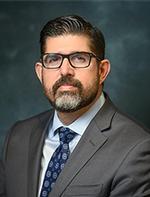
Florida Education Commissioner Manny Diaz Jr.
“After the passage of HB 1, it is one movement,” Florida Education Commissioner Manny Diaz Jr. said during his opening remarks at the conference, which was previously focused exclusively on charter schools.
This year’s event, held in Orlando, logged the highest participation rate ever with 853 attendees. Of those, more than 140 represented private schools.
Diaz said that while organizing this year’s conference, state education leaders had conversations about the importance of unifying the school choice movement, which historically had been more siloed.
“In Florida, we’re capitalizing on this historic school choice and charter school movement. We’re giving parents the ability to choose the best path for their students, regardless of background, regardless of income,” he said.
Florida enacted its charter school law in 1996 and launched its first private school choice program in 1999. Now, the state has more than 380,000 students attending more than 700 charter schools, and almost as many students enrolled in the nation’s largest suite of education choice scholarship programs. Together, those programs account for nearly a quarter of all the students in the state—a powerful political constituency if they joined forces.
Diaz called HB 1, which offered universal eligibility for education choice scholarships to all students regardless of family income and converted all traditional scholarships to education savings accounts, a “gamechanger” and urged members of the charter school and private school worlds to work together.
“The reason we have everybody together is it’s not two separate groups,” he said. “There’s so much collaboration that could go on between our charter schools and our private schools.”
In less than 30 years, Florida has come a long way from the days when parents had to lie about their addresses and risk criminal charges to gain access to the most desirable schools. Still, Diaz warned against complacency.
He wrapped up the opening session of the conference, which runs through Friday, with an admonition for everyone in the unified movement to keep innovating and creating new and better learning opportunities for students.
“Don’t make that mistake of becoming so mainstream that you become the status quo,” he said.
With the start of classes just weeks away, Florida’s top education officials finally got some good news about the progress of a charter school’s efforts to turn around a persistently struggling school in Escambia County.
With a long-delayed contract in hand, officials with Charter Schools USA told the state Board of Education they had hired nearly two-thirds of the staff they will need to welcome students to the newly rechristened Warrington Preparatory Academy.
They are now convening teachers for three weeks of training and culture-building before the first day of school.
“We truly believe that on the first day that students do come back, they are going to come into a welcoming environment that they deserve and that they can be successful in,” said Eddie Ruiz, the state superintendent for the charter management company, which operates 90 schools across five states and 60 in Florida.
Warrington Middle School struggled with low test scores for more than a decade and is now the latest school to be brought under new management by a charter school organization tasked with turning around its low performance.
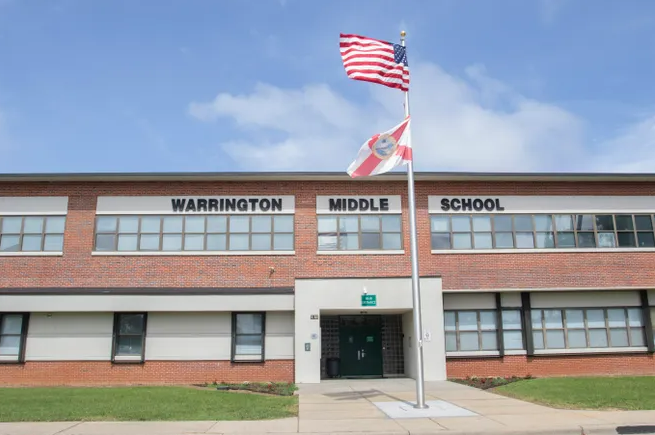 After a months of stalled contract negotiations that drew threats from the state Board of Education members to launch an investigation and withhold district leaders’ salaries, the local school board approved the agreement for Charter Schools USA to take over Warrington on May 16.
The timing gave Charter Schools USA a tight window to hire staff, reassure parents, and enlist community supporters.
Ruiz, a top leader with the South Florida management company, was sent to the Panhandle community as a “boots on the ground” presence. He said the company has prioritized renovations, repainted the building inside and out, cleaned and waxed the floors, and refurbished the gym.
The company has also hired a new principal, curriculum specialist and social workers “right off the bat” and filled 47 of 72 open positions, Ruiz said.
Education Commissioner Manny Diaz, Jr. and state board members pressed Ruiz for a contingency plan in case some positions remain unfilled when school starts Aug. 10. On its website, the school touts a $12,000 salary premium for new teachers compared to the surrounding school district.
“People are coming from all over the state and from nearby states to be a part of the changes happening at Warrington Prep,” Ruiz said.
He added that the company immediately reached out to parents to let them know about the new school, which will house grades six through eight this year and later be converted to serve students in kindergarten through eighth grade.
“There was a lot of confusion as to what had happened,” Ruiz said. He said they expect to have at least 660 students when classes resume.
State board members praised Ruiz and the company’s efforts so far but expressed a desire to continue monitoring the situation closely. They asked for another update in October and indicated they would be watching with interest when the school reports students’ fall and winter progress monitoring test results.
Board member Ryan Petty called the update “fantastic news” and recalled the concern he felt during a fact-finding visit to Warrington Middle School.
“I cannot get those images out of my head,” he said. “(Students) deserve better than they were receiving at that point.”
Debates over school choice accountability and regulations often become surrogate battles over whether states should have, or expand, options in the first place. This week saw several of these fights flare over charter schools.
Democrats in Philadelphia's mayoral race couldn't agree on whether they support charter schools, but they almost all seemed to agree on imposing a moratorium. In Newark, the city council took a different path, passing a resolution to oppose a bill that would limit charters.
An effort to clamp down on state-approved charter schools in A- or B- rated districts was defeated in Louisiana. A district judge there also ruled 33 charter schools authorized by the state are constitutional.
Differences in minority and special needs enrollment between charter schools and public schools had one Idaho teacher wanting a moratorium on the state's brand new charter school system.
Charter schools in Ohio aren't performing as well as charters in other states, so Republicans and Democrats are looking to overhaul their system of oversight. However, virtual charter schools feel some of the rules aren't appropriate.
Unexpected closures of charter schools in Florida have left legislators looking for ways to reign in unqualified operators. One Florida city is trying to take matters into its own hands by developing policies that may restrict new schools.

This week, a Connecticut columnist played the kitten card on charter schools.
Meanwhile...
President Barack Obama gave remarks on poverty and education at Georgetown University that provoked a strong reaction from conservatives, libertarians and school choice supporters.
Quotes of the Week:
"We have thousands of children in Newark alone who are on waiting lists to attend charter schools. The last thing the legislature should be doing is limiting their growth.” - , Newark City Councilman Anibal Ramos, Jr.
"So, it’s in our hands. Our friends—Governor Cuomo, so many assembly Democrats, and the Republicans—tell me they can’t get it done unless we back them and hold them as accountable as the opposition does. And, it’s not us bishops who have the clout, they whisper, but our parents and teachers You’re the ones who vote! They report to you!" - Cardinal James Dolan, proclaiming efforts in the New York Assembly to pass an Education Investment Tax Credit are not over.
We, for out part, report to you. Send your points and counterpoints to tpillow[at]sufs.org and pgibbons[at]sufs.org.
The increased scrutiny over shuttered charter schools have state lawmakers looking for ways to ensure that the people who apply to open and run new schools are up to the task.
Charter school closures aren't always bad things, but a recent investigation by the Naples Daily News found dozens of charters have closed "amid poor financial management, accounting and oversight." Those are the kind of closures lawmakers — as well as charter school advocates — hope to prevent.
A new article in Education Next suggests the responsibility for those sorts of problems lies squarely with charter school boards, the non-profits, municipalities or other organizations that oversee the schools and in some cases hire management companies that run their day-to-day operations.
Whose responsibility is it when a charter school gets into trouble—when its students aren’t learning or it misses its enrollment targets or money runs short or it closes?
Everyone I asked gave the same answer. “I’d point right to the board,” said Mark Lerner, who sits on the board of Washington Latin charter school. “The failure of a charter is the failure of the board,” said Tom Keane, who directs strategic initiatives at AppleTree, an early-learning charter with six D.C. campuses. “Every closure ultimately can get traced back to the board not doing the job,” added Marci Cornell-Feist, a Massachusetts-based education consultant and entrepreneur.
Charter legislation passed last week by the Florida House and up for a committee vote later this week in the Senate would bring charter school boards under greater scrutiny before they open new schools. SB 1552 and HB 7037 would require charter schools to disclose the names of governing board members, as well as the financial and performance history of any charter schools they may be associated with, when they pply to local school boards.
The article looks at the push by organizations like BoardOnTrack and Charter Board Partners to find qualified people and train them for positions on charter school boards in places like Washington, D.C. They also hold boot camps where recruits practice mock board meetings and learn about leadership evaluation and bone up on the nuts and bolts of corporate governance. In short, they prepare future board members to help lead what are, in effect, multi-million dollar startups.
Author June Kronholz says she repeatedly heard the number of charter school closures will decline as the sector becomes more mature "In part," she writes, "that’s because authorizers, bankers, and donors are paying increasing attention to how well the schools are governed."
Patrick Gibbons contributed to this post.
 Broward County School District
Robert Runcie, the superintendent of the Broward County School District, wanted to help low-performing charter schools by partnering them with high-quality charter operators. He and his staff brought the idea to the school board and helped secure a $3.3 million grant from the state. But Runcie's bosses on the school board opted to turn the grant down. The reason defies logic.
“It’s not our job,” said board member Laurie Rich Levinson. Board member Patricia Good didn’t want to help either because, according to the Sun-Sentinel she believed, “it was up to individual schools to bring up their own grades.”

Laurie Rich Levinson
The apathetic approach to helping students in underperforming charter schools isn’t surprising given the Board’s history with charters. Repeated constantly by the Sun-Sentinel, board members claim charters are “easy to open but difficult to shutter if they fail,” and that this is entirely the state's fault.
Reality is more complicated. Broward shuts down a lot of charter schools. It also approves a lot of charters. According to the 2014 Authorizers Report, Broward recently approved 22 new charter schools, more than any other district in the state.
District staff say they are understaffed for charter school oversight, and the board grumbles about the proliferation of of poor-performing charter schools. But now the board is refusing money to help on both accounts.

