
Editor’s note: In September, the Florida Council of 100, in cooperation with the Florida Department of Education, released a study that pointed to a “rigor gap” between the grades Florida high school students receive and their mastery of content required to pass end-of-course exams in Algebra I and Grade 10 English Language Arts. This commentary from Steven Birnholz, Florida Council of 100 executive vice president and director of policy, and Eric Frey, an economist for the Florida Council of 100, published recently on the Thomas B. Fordham Institute’s website, expands on that story and explains why the “rigor gap” matters.
Two years ago, Seth Gershenson and Fordham published Grade Inflation in High Schools, groundbreaking research examining the relationship between students’ Algebra I course grades and end-of-course (EOC) test results in North Carolina. Gershenson found that 36% of Algebra I students who scored a “B” in the classroom did not pass the state’s corresponding EOC. Now there is evidence from Florida.
Our recent work in the Sunshine State also uncovered a chasm between students’ grades and EOC scores for courses required for graduation. Looking at Florida Algebra I and tenth grade English students from 2015–18, we found that 55% of students who did not pass the Algebra I EOC, and 72% of English students who did not pass the EOC, received a “C” or higher in the course. Further, more than a third of students who did not pass the EOC for 10th-grade English received a “B” or higher in the course.
We call this disparity between a school’s evaluation of a student’s level of mastery of state standards and the student’s demonstrated mastery of those standards on corresponding statewide standardized tests “the rigor gap.” This rigor gap matters for two key reasons.
First, it is not hard for any of us to think back to a class where we did not learn as much as we could have, or should have, because we knew the teacher’s grading practices made the course an “easy A.” In fact, a 2010 study showed that students study 50% less when they expect teachers to award relatively higher grades.
This reduction in what is learned in a course can have serious personal and economic consequences. Just like we did, today’s students will likely study less than they would have if their teacher held them to a higher standard, and by the time the student has received their EOC score, which raises the question of which measurement of knowledge should be given more credence, it is time to enjoy summer recess or focus on the next class in the subject’s succession.
Second, the rigor gap should be concerning to students and parents because it illustrates that many are investing two of life’s scarcest resources, time and money, into college or career decisions based on incomplete or misleading information about their chance of success. A 2017 nationwide survey found that while 84% of 12th-grade students want to go to college, only half felt that their school had helped them develop the skills and knowledge they need for college-level classes. Part of this likely arises from the lack of conviction students may possess in their abilities when their course grades and EOC results tell opposing stories.
It is also worth noting that, while this research was conducted with student data prior to the COVID-19 pandemic, we hypothesize that the drastic impact it had on students’ learning experiences during the 2019-20 spring semester has likely exacerbated the rigor gap presented in the cohorts which comprise our research through, among other things, more lenient grading practices. These include “do no harm” grading, pass/fail systems, or even “no grade issued” approaches.
This lack of incentive to work to raise a “C” to a “B” — or to receive any grade at all — likely decreased many students’ mastery of standards typically covered in the latter half of the school year. The effects were further magnified by the cancellation of year-end summative assessments based on the suspension of federal requirements. If a second year of waivers were to be granted, some students could be halfway through high school without an honest answer to how prepared they are for their desired future.
Fixing the rigor gap is not an easy proposition, but research from North Carolina and Florida tells us it will lead to students learning more — regardless of race/ethnicity, gender, or previous academic performance. Accomplishing this will require a collaborative effort among school leaders, teachers, parents, and students.
For district and school leaders, closing the rigor gap can be supported by, among other things, increasing the efficiency by which students’ course grades and EOC scores can be compared. Here in Florida, and we’re confident this issue exists in other states, the amount of effort that must be undertaken by teachers in certain school districts to compare their students’ course grades and EOC scores is unacceptable.
We believe that, once cognizant of the existence of, and educational damage caused by, the rigor gap, many teachers will naturally adjust their grading practices to better ensure that students are mastering state standards throughout the year and, thus, are more prepared for their EOCs. For those classrooms that persistently display a rigor gap, an infrastructure which provides clear, efficient presentation of this information will better equip school administrators to have an objective conversation with their teachers on this important subject.
For parents and students, the awareness of this rigor gap means a failing EOC score should spark sincere reflection, rather than them brushing it off because of a high grade in the corresponding course. If the local school district provides concise interim, formative assessments, it means the reflection and comparison of course grades and EOC scores can start earlier to avoid potentially finding out how behind one is at the end of the school year.
Although the rigor gap is likely nothing new, the time to address it is now. It is high time that students are told the truth so they can approach their dreams with the conviction that they are ready.

A detailed study released today by the Florida Council of 100 in cooperation with the Florida Department of Education includes data indicating the state can do more to align efforts on student growth by helping students and families in real time.
Coming on the heels of last year’s dismal National Assessment of Educational Progress scores, the study shows a substantial “rigor gap” between the grades Florida high school students receive and their mastery of content required to pass end-of-course exams in Algebra I and Grade 10 English Language Arts.
Among the findings:
· Seventy-two percent of English 2 students and 55% of Algebra I students who did not pass the corresponding end-of-course exam received a course grade of C or higher.
· Thirty-seven percent of 10th-grade English students and 12% of Algebra I students who did not pass the corresponding end-of-course exam received a course grade of B or higher.
While the study, which relied on three years of data from the Florida Department of Education, does not include student data from the COVID–19 pandemic, the researchers hypothesize that the pandemic has increased the identified rigor gap due in part to more lenient grading practices and issues related to delivering high-quality distance learning.
“Our analysis concludes that if teachers, leaders, and administrators hold students accountable throughout the school year for the standards they’ll be evaluated on at the end of the year, their grades and test scores will be closely aligned,” said Chris Corr, Council of 100 chairperson. “The rigor gap we see instead indicates the contrary, the result being that students are less prepared for success at the postsecondary level or in the workplace.”
Corr noted that while the responsibility for closing the rigor gap falls upon the system as a whole, he referenced a 2010 study that indicated students tend to study 50% less when they expect teachers to award relatively higher grades, leaving them surprised by less favorable end-of-course exam scores.
Florida Commissioner of Education Richard Corcoran warned in comments included in a Council of 100 news release about the study that “we can love someone into mediocrity,” and observed that challenges brought about by the pandemic have made it more important than ever to deliver a quality education driven by high expectations.
“The COVID-19 pandemic has likely exacerbated gaps in student achievement, so it is imperative that all students, especially low-income students, students with special needs, English Language Learners, and other struggling students are given the supports and honest learning feedback to achieve their individualized educational dreams,” Corcoran wrote.
Among the tactics for implementing those supports, Corcoran said, are the “record investments” Florida Gov. Ron DeSantis has made in teacher compensation, aligning education to curriculum tied to Florida’s new B.E.S.T. standards, and ensuring that parents have increasingly robust learning options from which to choose.
For more details, a question-and-answer document on the study can be accessed here.
 Fighting against charters: Leon County School Superintendent Rocky Hanna is ignoring the recommendation of a review committee and is asking his school board to reject the applications of two companies that want to build charter schools. Hanna says the schools aren't needed, and that he doesn't like that charters don't have the same regulations as public schools. "If we start opening mom and pop schools on every corner we’re going to slowly bleed our traditional schools to death. ... Until we have some type of oversight on their expansion, I’m going to keep denying these requests," said Hanna, who further explains his position in an op-ed column. The board votes on the applications April 10. If they are rejected, the charter schools can appeal to the Florida Department of Education. Tallahassee Democrat.
Graduation rates warning: The Duval County graduation rate could drop 10 percentage points next year because the state is raising the scores students need to pass alternative tests to the state's assessments, warns assistant superintendent Kelly Coker-Daniel. She says as many as 1,000 students who complete the course requirements but can't pass the Florida Standards Assessments standards take an alternative test, such as the ACT or SAT, to meet the requirements for graduation. The state recently announced it was sharply raising the passing grades for all tests. Florida Times-Union.
Security in schools: Brevard County students and residents will discuss a proposal to arm school employees at a town hall meeting Saturday in Satellite Beach. The meeting is one of 100 or so Town Halls for Our Lives being held around the United States. Meanwhile, Brevard Sheriff Wayne Ivey makes his pitch for arming school employees by citing a 1764 school massacre. "To those that want to use this most recent tragedy for anything but finding a solution to protect our children, I say: 'Stop it,' " Ivey demanded in a Facebook video. "This is not about politics, the Second Amendment or automatic weapons. ... It's about implementing strategies that will stop an active shooter today, not two years from now." Florida Today. The Volusia County School District is considering hiring a private firm to provide security at county schools. WFTV. Improving school security in Martin County will cost $12 million, school board members are told. They are considering raising the sales tax or property taxes. TCPalm. Citrus County officials are trying to determine if the Academy of Environmental Science, the only charter school in the county, will be required to have a resource officer. AES has just 73 students. Citrus County Chronicle. (more…)
District may sue over bill: The Broward County School Board is considering suing the Florida Department of Education over H.B. 7069's requirements that districts share property tax revenue with charter schools and that districts accept charters - so-called "schools of hope" - into neighborhoods with persistently low-performing schools. “We believe that it’s an unlawful public financing of private enterprise,” said Barbara Myrick, Broward’s legal counsel. She also says the 270-plus-page legislation has more than one subject, which she considers a violation of the state law that calls for legislative bills to contain one subject. A decision on a suit is expected to be made next week. Sun Sentinel.
New laws Saturday: One hundred and twenty-five new Florida laws go into effect Saturday. Among them are several education bills: H.B. 3A, which boosts per-pupil spending by $100; H.B. 7069, which changes testing, recess, teacher bonuses, provides extra money for charter schools and more; S.B. 436, which gives teachers and students greater freedom of religious expression; and H.B. 989, which allows anyone to challenge a district's choice of classroom materials. News Service of Florida. A Lakeland couple's successful push to extend state adoption benefits to charter and virtual school employees also takes effect Saturday. Lakeland Ledger.
Educational shift: The Florida Council of 100 believes up to $3 billion in state pre-K through 3rd grade education spending should be redirected from meeting the requirements of the class size amendment to recruiting and paying higher-quality teachers, extending the pre-K program to 3-year-olds and investing in technology. “While class size has a proven impact on grades PreK-3, research clearly indicates that at least $2 billion of taxpayer money for the later years would be better spent on things like attracting and retaining top-notch teachers and improving early learning,” says Pat Geraghty, council chair. The council's report, “The Horizons 2040 Project: Prekindergarten Through Grade 3,” will be presented to the Constitution Revision Commission for consideration. Sunshine State News. Gradebook. Florida Politics.
Random drug testing: Monroe County high school athletes and students in performance groups will be subject to random drug testing this fall. The one-year trial was approved this week by the Monroe County School Board. Keynoter. (more…)
 Accountability concerns: While the Florida Board of Education decided how to judge student testing and grade schools last week, educators already are suggesting the entire process of assessing accountability should get another look after the next round of tests. Tampa Bay Times. Business groups such as the Florida Chamber of Commerce and the Council of 100 are disappointed that the State Board of Education did not toughen standards for student proficiency. They think a level 3 grade, which is now considered passing, is too low and won't prepare students for college or work. Florida Times-Union.
Legislative issues: A bill has been filed by State Sen. Jeff Brandes, R-St. Petersburg, that would require a 60 percent voter approval on any sales tax increases. School officials are concerned that would make it more difficult to pass tax hikes for school improvements. Gradebook. Among the issues before the Florida Legislature, which begins its session Tuesday, are charter school regulation, school accountability, high school sports, teacher bonuses and the complex funding formula for schools. But generally, we should expect tweaks instead of tranformation. WFSU. Tampa Bay Times. Daily Commercial.
School health care: Endeavour Community School opens in Cocoa and will provide health-care, dental care, mental health care, after-school programming and parental outreach efforts on campus. Florida Today.
Online graduation: Orange and Lake counties are participating in a test program that gives dropouts a chance at a high school degree by taking classes online at public libraries. Orlando Sentinel.
Religion and schools: Several groups are asking Hillsborough School Superintendent Jeff Eakins to review the district's relationship with several area church. Gradebook. (more…)
Florida business leaders put a spotlight Wednesday on the promise and potential pitfalls of Common Core - the tough, new academic standards that are rolling into Florida schools and will help re-shape teaching, learning and testing.
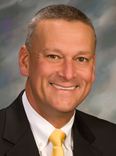
Bennett: "The state should own this initiative."
At a wide-ranging, day-long education summit in Orlando, several participants suggested a public awareness campaign to inform parents about the changes – which may be initially painful when they're implemented in the 2014-15 school year - and to rally broad support in a way that has eluded many of the state’s other, recent education reforms.
“These tend to be Tallahassee conversations. But if we don’t do this right, it becomes a Miami conversation or a Jacksonville conversation” and not in a positive way, Marshall Criser III, president of AT&T Florida and chairman of the Florida Council of 100, told redefinED during a break. “We have an opportunity and responsibility to take this back to our communities ... Because if not us, then who?”
“The state should own this initiative,” Education Commissioner Tony Bennett told attendees, reminding them of the marketing effort a decade ago for Just Read, Florida. “It shouldn’t be teachers against people. It shouldn’t be the state against schools, state against districts. This should be a statewide rollout that says this is important to our children and this is important to the future of our state.”
The Council of 100 sponsored the summit with the Florida Chamber Foundation, the National Chamber Foundation and the Institute for a Competitive Workforce. About 100 people attended, including three lawmakers, two superintendents, Board of Education Chairman Gary Chartrand and Florida Education Association President Andy Ford.
Spurred by the National Governors Association and the Council of Chief State School Officers, the Common Core standards in math and language arts have been adopted by 44 states. They’re well-thought-out and well-vetted. They’re benchmarked against international standards. They’re designed to instill a deeper knowledge than state standards do now. In the long term, supporters say, the higher bar will better prepare students for college and careers and an ever-more-competitive world. In the short term, though, ouch: They’re expected to result in a steep drop in test scores – and all the angst that comes with it.
“That’s a pain point,” Criser said. “But people have to understand that’s good,” he continued, because it’s the first step on a better path.
The discussion around Common Core has centered almost exclusively on public schools. But its gravitational pull is expected to be so strong that the impact will be felt at the private schools, too, to varying degrees. (more…)

