
Manatee County middle school students participated in the annual Technology Student Association competition last month, showing off skills that included engineering and design. Photo provided by Manatee schools.
Career and technical education is attracting a lot of attention from Florida lawmakers this year, and an effort to expand it in the upcoming session appears to have bipartisan support.
CTE is the centerpiece of proposed legislation that builds on the state’s Career and Professional Education Act, which created industry-certification programs at the high school level.
Senate Bill 1076, filed last week by Sen. John Legg, R-Lutz, would add more partnerships with business and community leaders to develop similar initiatives in middle and elementary schools. It also would elevate industry certifications to a level that can satisfy certain high school requirements.
Senate President Don Gaetz, a Republican from Destin, told redefinED this week that passage of the legislation would result in historic changes that, ultimately, would make education in the Sunshine State more relevant. He said lawmakers should be able to back it no matter their party affiliations.

Sen. Don Gaetz
“All of us … want our graduates to walk across the stage and get a degree in their hands that results in a job,’’ Gaetz said. “It’s a sea change in educational delivery.''
Sen. Bill Montford, a ranking Democrat from Tallahassee, said he endorses the bill and the sentiment behind it.
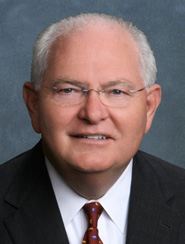
Sen. Bill Montford
“We need a different pathway for a lot of our students,” said the former Leon County schools superintendent, who heads the state superintendents association. “This is not a dumbing down of our curriculum. It’s not a retreat. This is what is best for our children in these schools.’’
Freshman lawmaker Shevrin Jones agreed. The Democratic representative from West Park has co-sponsored a bill that calls for more focus on career education.
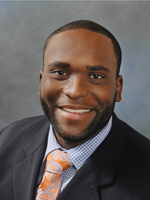
Rep. Shevrin Jones
“Not everyone is going to college,’’ said the former high school educator, who taught Advanced Placement Biology until his election to the House last year. “What this will do is allow us to make sure that our students are prepared to go into the workforce.’’
But expanding career education doesn’t shut the door on a college degree, Montford said. “Most college students work,” he said. “This is a good fit.’’
Legg’s bill is at the forefront of this overhaul, serving as the cornerstone of another bill the lawmaker filed last month that ties education to economic development.
The so-call STEM zone bill would create hubs that invite colleges and universities - as well as K-12 district schools, private schools and charters - to help develop a pipeline of highly-skilled workers for careers in science, technology, engineering and math fields.
Florida industry leaders like what they’re hearing.
“It’s very difficult to connect skilled workers to jobs,’’ Ron Avery, chairman of the St. Augustine-based Ronco Group, which includes industrial, engineering and manufacturing businesses, told lawmakers at a committee hearing last month. “There are 4,000 manufacturing jobs open in Florida. We need to figure out today how to fill these.’’ (more…)
Students would get greater access to online instruction through blended learning opportunities and potentially new providers under a Florida House bill that sailed through a subcommittee Wednesday.
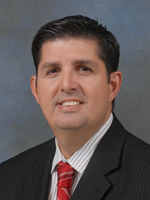
Rep. Manny Diaz Jr.
“This bill is going to be about innovation, access and technology,’’ said Rep. Manny Diaz, Jr., R-Hialeah, a school district assistant principal who introduced the legislation in the Choice & Innovation Subcommittee. “We know that every child doesn’t learn the same.’’
The digital learning bill would create a district “innovation school’’ pilot program that encourages traditional schools to offer students more blended-learning opportunities with a mix of online and classroom instruction.
Districts could use their virtual programs, or courses offered by Florida Virtual School or another online provider. In addition, students could take online courses from another school district.
In return, school districts would be given more freedom in the digital realm in a fashion similar to charters. For instance, class sizes for courses within the innovation schools would be calculated at a schoolwide average instead of class by class.
Florida mandates that district schools limit the number of students allowed in core classes depending on grade level. Violations result in hefty fines, but meeting the law has resulted in students having to wait to take some classes.
The bill would allow districts to offer part-time, online courses to K-12 students in all subjects. Currently, they can only do that for courses that require statewide assessments.
It also would make it easier for online providers to operate in Florida. One provision allows a company without “prior, successful experience” to set up shop. (more…)

