 In this episode of podcastED, Step Up For Students President Doug Tuthill and Florida Senate Education Committee Chairman Manny Diaz, R-Hialeah, discuss how public education shifts are ramping up due in part to COVID-19.
Among other topics, Tuthill and Diaz discuss policy changes that will be required to allow families to continue to educate their children based on subject competency rather than brick-and-mortar seat time. Both believe the expansion of Education Scholarship Accounts will provide families key flexibility.
Diaz: “Families will discover they can be more effective and more efficient with their time … more seat time doesn’t mean more learning.”
EPISODE DETAILS:
· How public and private schools alike have innovated on the fly to remain open during the pandemic
· Florida’s unique position as a leader in education choice, which will allow for policy flexibility for families now and in the future
· Florida Virtual School, its work in Alaska, and its competency-based model of learning vs. traditional seat-time learning
· Funding and policy shifts that must occur, including expansion of Education Scholarship Accounts
LINKS MENTIONED:
· FLVS brings distance learning to Alaska
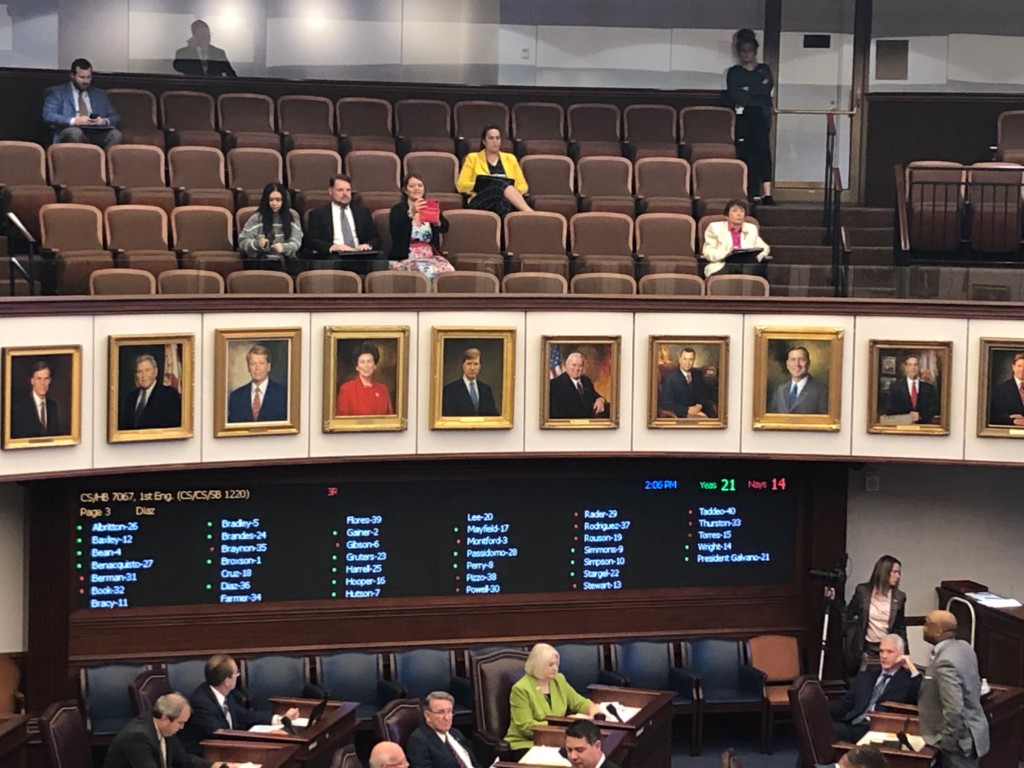 A bill that expands and aligns two K-12 scholarship programs for economically disadvantaged students won final passage in the Florida Legislature today and will be sent to Gov. Ron DeSantis for his expected signature.
With no debate and by a vote of 21 to 14, the Florida Senate gave final approval to HB 7067, which is aimed at aligning policies between the Family Empowerment Scholarship, adopted last year and serving 18,000 students, and the Florida Tax Credit Scholarship, created in 2001 and serving 108,000 students.
“This session, revising the Family Empowerment Scholarship Program was our state’s priority, because no matter what economic challenges a student has, investing in the education of our children is always a win,” said Sen. Manny Diaz Jr., R-Hialeah, who as chairman of the Senate Education Committee, shepherded the bill through the legislative process. “I would like to thank my House and Senate colleagues for supporting a world of opportunity for all students that regardless of race, wealth, or beliefs should have access to an education that meets their needs.”
A Democratic House member expressed his satisfaction after the bill’s passage.
“It’s a good day in the state of Florida,” said Rep. James Bush III, D-Miami, who supported last year’s bill establishing the Family Empowerment Scholarship program and was one of eight Democrats who voted Monday in favor of the expansion in the House. “This bill is really going to further empower parents to be able to choose the educational environment that is best for their children.”
Both scholarship programs serve students from lower-income and working-class families.
The bill would increase the allowed enrollment growth in the Family Empowerment Scholarship. Under current law, the program can grow by up to 0.25 of total public school enrollment each year, which is roughly 7,000 students. The bill would increase that growth to 1 percent, or roughly 28,000.
The bill gives clear priority to renewal students in both programs and provides for a gradual increase in household income eligibility over time. That provision allows the eligible income level in the Family Empowerment Scholarship, currently 300 percent of federal poverty, to increase by 25 percentage points in the next year if more than 5 percent of the available scholarships remain unawarded.
The income limit for Tax Credit Scholarships would remain at 260 percent of poverty.
The bill also allows students who receive scholarships in either program to remain on the scholarship until they graduate or turn 21.
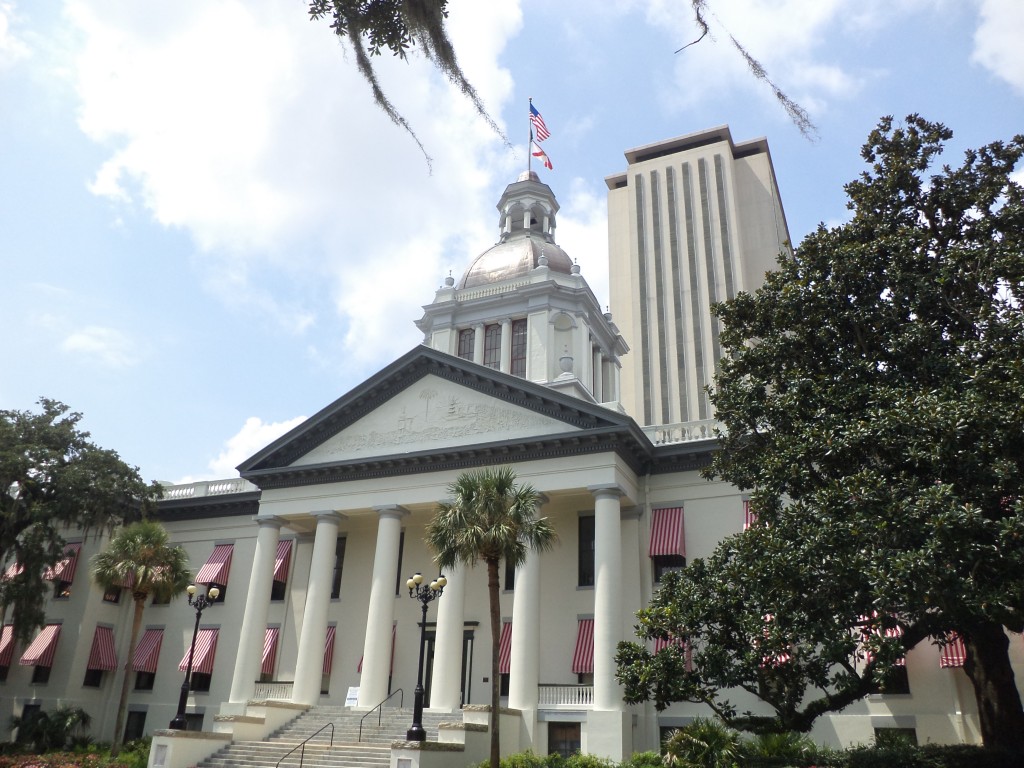 The Senate Education Appropriations subcommittee voted 5-3 today to bolster and align two state scholarship programs that provide education choice to economically disadvantaged students.
SB 1220, a bill that spells out rules for teacher training and qualifications, also includes provisions aimed at aligning policies between the new Family Empowerment Scholarship, adopted last year and serving 18,000 students, and the Florida Tax Credit Scholarship, created in 2001 and serving 108,000 students.
Both scholarship programs serve students from lower-income and working-class families. The primary difference is that the Florida Tax Credit Scholarship is funded by corporations that receive a 100 percent tax credit, and the Family Empowerment Scholarship is funded directly from the state education budget.
The bill adopted today included an amendment proposed by Education Committee Chairman Manny Diaz, R-Hialeah, that would increased the allowed enrollment growth in the Family Empowerment Scholarship. Under current law, the program can grow by up to 0.25 of total public school enrollment each year, which is roughly 7,000 students. His amendment increases the amount to 1 percent, or roughly 28,000. It also maintains the current income eligibility rules for Florida Tax Credit Scholarship. In that program, household incomes must not exceed 260 percent of the federal poverty level. An earlier version of the bill increased that percentage.
Other changes include:
Diaz said the new bill seeks to continue what last year’s Legislature started: eliminating the wait list.
Present to speak in favor of the amended bill were stakeholders, including several parents and Elijah Robinson, a scholarship student from Jacksonville, who said the scholarship allowed him to escape the constant bullying at his public school that drove him to attempt self-harm.
“My life has completely changed from a year ago,” said Robinson, who will graduate this year from The Foundation Academy. “Please vote for this bill so that students like me can get help and not be forgotten.”
Michelle Porter, a mother of seven from Miami with three children on the Florida Tax Credit Scholarship, said she couldn’t imagine her life without the scholarship. One of her daughters was born with a rare disease and often was bullied at her public school.
“She would come home crying every night,” Porter said. “I wanted her to feel safe.”
Her daughter is now enrolled at a Catholic school, “where she is treated as an equal.”
Opponents called the bill an attempt to create a parallel state education system and expressed concern about possible discrimination. The Rev. Dr. Russell Meyer, executive director of the Florida Council of Churches, said he opposes allowing any public money to be used at religious schools, period.
“No public funds should be used to teach your religion,” he said. “If you continue to give a voucher so that households can go to any school, that any school meet all criteria and make sure no discriminatory beliefs prevent them from attending that school or harming their consciences while they are there.”
Sen. Jason Pizzo, D-Miami, who voted against the bill, said he didn’t think it was unreasonable to insist on “a baseline discrimination policy” for participating schools. He also said he thinks more emphasis should be placed on allowing families to have access to different public schools.
That’s already the case, Diaz responded.
“The Legislature passed an open enrollment policy that puts that decision squarely in the hands of the district,” he said. “It’s totally local control.”
Diaz also noted the scholarship program is small compared with the number of students educated statewide – 2.8 million.
“We’re trying to provide an opportunity for 28,000 kids,” Diaz said.
He said parents, not the government, are responsible for ensuring their children are in the learning environment that is best for them.
“At the end of the day, what they’re looking for is freedom and opportunity,” he said.
The bill now heads to the Senate Appropriations Committee. A similar bill, HB 7067, is scheduled to be heard today by the House Appropriations Committee, its final stop before heading to the House floor.
Florida lawmakers have mounting concerns about the finances of a rural district that recently converted its long-struggling public schools into the state's first all-charter system.
In recent weeks, state House committees have heard multiple perspectives on Somerset Academy in Jefferson County.
Community representatives said the charter network worked to earn their trust. Students said they're happy with a new culinary lab. Somerset officials highlighted the new teacher pay plan, the most generous in the state.
But there are complications. And many of them have to do with the finances of the school district, now staffed with a skeleton crew.
House Education Appropriations Chairman Manny Diaz, R-Hialeah, had representatives from Somerset and its management company, Academica, take questions at the end of a committee hearing this week.
They described a tricky transition. They said the charter schools have taken out multi-million-dollar loans while they wait for federal funds. They've poured millions of dollars into capital expenses, from technology upgrades to new buses. And they've overdrawn accounts when the district was slow to hand over state funds.
In the years leading up to the charter takeover, the Jefferson County district hemorrhaged hundreds of students and millions in funding. It went through two rounds of emergency state intervention. Several committee members asked why the district wasn't doing more to help the charter schools manage the transition. (more…)
In an ongoing effort to make it easier to open charter schools in Florida, some lawmakers want the state – not school districts – to get the first crack at reviewing charter applications.
Rep. Manny Diaz Jr.
Members of the House Choice & Innovation Subcommittee discussed the idea Thursday during a workshop that introduced the proposed legislation. It calls for the Florida Department of Education to ensure applications meet statutory requirements before they go before school boards for a vote.
In Florida, school boards authorize charter schools, which are public schools that use tax dollars but operate independently from districts.
The idea, said Rep. Manny Diaz, the Hialeah Republican who introduced the draft bill, is to prevent a stalemate between charter applicants and districts on the minimum requirements.
“The districts in certain cases have rehashed some of those requirements during the contract process,’’ dragging out negotiations and resulting in additional costs, Diaz told redefinED. “This bill puts that back-and-forth back to where it belongs with the application. We’re trying to give applicants some clarity and guidance. If the application is not statutorily ready, it shouldn’t be submitted.’’
If the state finds the application does comply with the law, a letter goes to the school board, which still is expected to provide a rigorous review. If the board approves the application and grants a standard charter, then both parties can negotiate additional terms “but it will not stop the charter school from going forward and opening,’’ Diaz said.
The subcommittee as a whole offered positive feedback, but a few members expressed concern about how the measure might restrict districts. For instance, Orlando Democrat Randolph Bracy wondered how negotiations could be carried out once the school is up and running and a contract is signed.
The bulk of negotiations would happen during the application process, not at the contract point, Diaz said. Afterward, there would still be room for negotiations, but both parties would have to agree to the additional items.
The draft bill isn’t intended to take away authority from the districts, he said, but “it evens the playing field when it comes to the contract.’’
If the proposal makes it through the House and Senate, and is approved by the governor, it would not affect existing charter school contracts, subcommittee Chairman Michael Bileca said.

