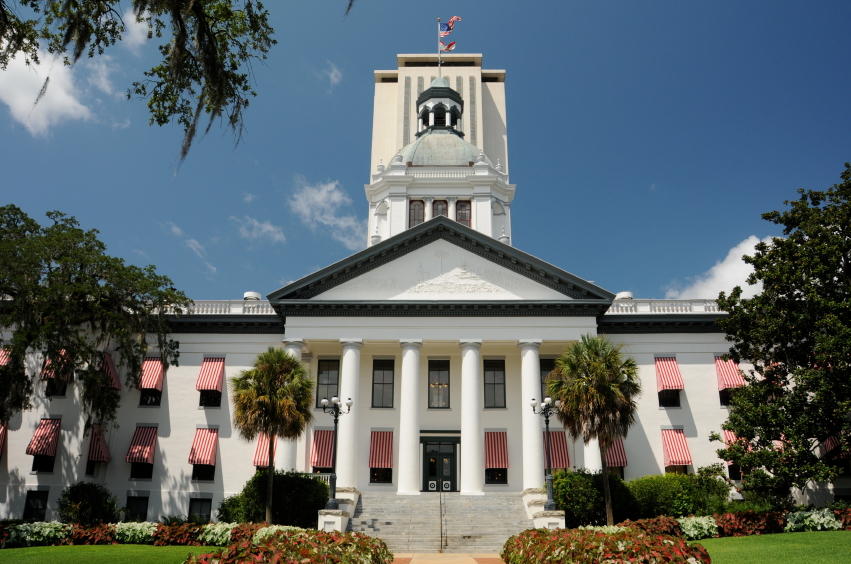
There was a flurry of education related activity in both chambers of the Florida legislature this week
Both chambers of the Legislature considered several bills related to education choice during the third week of the session. Here’s a brief recap of the week’s news from Tallahassee.
The Senate Appropriations Subcommittee on Education voted to advance a bill that would eliminate the waiting list for the Florida Tax Credit Scholarship for lower-income families. The bill, SB7070, creates the Family Empowerment Scholarship program, which would allow about 15,000 low-income students to attend the private school of their choice in 2019-20. Nearly 13,000 students are on the waiting list for Florida Tax Credit scholarships.
Senate education leaders released a plan to increase education spending by $1.1 billion in 2019-20, boosting the total to $22.2 billion. The additional funding would raise per-pupil spending to $7,779, a $350 increase per student. The House released a spending plan that would provide more than $500 million less than the Senate with a $167.79 increase in per-pupil funding.
The House PreK-12 Innovation Subcommittee passed two substantial bills impacting Florida charter schools. HB 1197 would allow state universities and Florida College System institutions to fully sponsor charter schools serving all grade levels, repealing current limitations capping such schools at Grade 8. The bill would require the Department of Education to collaborate with charter school sponsors and operators to develop an evaluation framework and report results annually in their application report.
Another bill, PCB PKI 19-02 ,expands the Schools of Hope program to allow charters to open in “Florida Opportunity Zones”, which were created in 2017 by the federal tax bill revision. The bill would increase the traditional public schools’ Schools of Hope grant program and would allow Schools of Hope funds to be used for capital outlay costs and cover executive and regional director salaries until a school is at full enrollment. The bill also revises the definition of “persistently low-performing schools” to include schools that have a grade below a C for three of five years.
The Senate Education Committee cleared SB 1444, which creates a state “disqualification list.” The list, which would be maintained by the Department of Education, would include individuals whose educator certificates have been permanently revoked by the Education Practices Commission as well as private school owners or operators who have been permanently disqualified from participation in a state scholarship program by the Department.
The House moved forward on HB 1127, a similar but separate bill that would require the Department of Education to create and maintain an electronic employment disqualification list. The list, which would be required of all public schools including charters and those that accept students who participate in a state scholarship program, would expose individuals who may not be subject to extensive criminal background checks. Among those screened for previous misconduct would be potential employees, contract employees, school board members or school owners.
The House Education Committee passed PCB EDC 19-02, a bill that would expand access to school guardians by allowing private schools and charter schools to employ school guardians – directly or by contract – and would allow law enforcement academies and school districts that employ school resource officers, in addition to sheriffs, to offer guardian training adopted by the Criminal Justice Standards Training Commission.
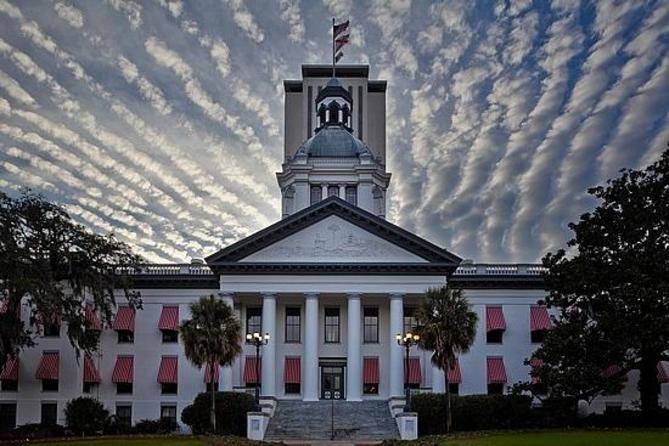 The Florida Legislature kicks off its annual 60-day session Tuesday with a host of education issues at the top of lawmakers’ agendas, including expansion of educational choice options. Here are some issues and bills to watch.
Education choice
Gov. Ron DeSantis has pledged to expand educational options and has vowed to end the waiting lists for the Florida Tax Credit Scholarship and the Gardiner Scholarship, proposing creation of a new state-funded scholarship. Senate leaders have put forth their own plan to end the waitlists. Bill language was filed in the Senate late Friday afternoon with SB 7070 creating a new state-funded scholarship program. The bill is scheduled to be heard in committee on Wednesday during the second day of session.
The first major educational choice bill filed this session, SB 1410, revises the application process for the Hope Scholarship for bullied students.
Two identical bills, HB 1051 and SB 1380, slightly revise student application and eligibility criteria for the Gardiner Scholarship. The biggest change allows for scholarship funds to be used for tuition and fees associated with art, music or theatre programs. The bill also requires the Department of Education to create a system allowing scholarship parents to submit information to maintain Gardiner eligibility electronically.
HB 189 and SB 1342 make instructional materials assigned for dual enrollment courses free of charge for students in private schools and home education programs. The legislation also allows for private and home school students in grades 11 and 12 to enroll in early college programs in their districts.
Accountability
SB 1444 and HB1127 require the Department of Education to create and maintain a “state disqualification list” that prohibits employment for “bad actors” at district, public and charter schools, as well as on charter governing boards. The legislation also allows the DOE to deny the authority of an owner or operator to establish a private school participating in scholarships programs in Florida if the owner has operated an institution “contrary to the health, safety, or welfare of the public.” Anyone employed by or applying for employment in a district or private school on the disqualification list would be committing a third-degree felony.
SB 1470 would tweak charter school operations, allowing the Charter School Appeal Commission to recommend denial of a charter application if the application does not propose a reading curriculum consistent with effective teaching strategies grounded in scientifically based reading research. The bill also has more broadly clarifying language for the commission in considering charter applications.
SB 1576 provides charter schools access to district teacher preparation programs and allows publication of state, district and school level results of anonymous every-other-year surveys of school personnel to identify best practices for student learning and teacher retention. It also creates alternative pathways for teacher support while reducing teacher costs for examination fees for teachers who have to retake parts of the exams.
School safety
SB 7030 would expand the Aaron Feis Guardian Program created after the Parkland school shooting in February 2018. It would allow school staff to volunteer to carry guns on campus and to be screened and trained by local law enforcement, removing the ban on teacher participation. Charter schools are included in the bill language, but private schools are not.
SB 1238 and HB 403 authorize religious and other private schools to designate a person to carry a firearm on school property. If the school chooses to do so, the legislation would require its governing board to create appropriate policies and procedures the designee must meet.
HB 2105 is an appropriations bill filed for the third consecutive year by Rep. Randy Fine (R-Palm Bay) allocating $4 million for security funding for Jewish Day Schools. Last year’s appropriation was $2 million.
Parents of three- and four-year-olds with special needs would be able to enroll their children in Florida's newest educational choice program for special needs students under changes approved by a legislative panel on Wednesday.
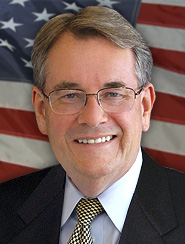
Sen. Don Gaetz
The state Senate's education budget committee approved tweaks to legislation expanding the state's new Personal Learning Scholarship Accounts after hearing emotional testimony to the mother of a child with autism.
Katie Swingle told the panel that she and her husband had scraped together money to afford therapies and private school tuition for their son, who is now seven years old, and attends Woodland Hall Academy in Tallahassee with the help of a scholarship account.
He has progressed from being told he would not be able to talk to learning to write in cursive, Swingle said. The younger children are when they start to receive services, she said, the faster their progress tends to be, but parents often struggle to cover the cost.
"When you get these bills, it's frightening," she said. "You just want to see you're child succeed and you just want to see them do well and be happy, and I see that."
Florida lawmakers made a big change to the parent trigger bill Thursday, passing it on another party-line vote but only after diluting the initial proposal to give parents more power to improve struggling schools.
The Senate Appropriations Subcommittee on Education approved an amendment that gives school boards – not the state - the final say on a school turnaround plan.
The original wording in Senate Bill 862 made the state Board of Education the final arbiter if parents and school boards didn’t agree on the best way to improve a school.
Among a list of options is converting the district school into a charter school, a plan that might have more support from parents and the state board than district leaders.
The amendment comes at the request of Education Commissioner Tony Bennett, who asked sponsors of the House and Senate parent empowerment bills to hold elected school board members accountable.
“School boards should not have the ability to push the decision to the state,’’ Bennett wrote in a recent letter. “They owe it to parents to consider what they have to say without being able to avoid the tough decisions.’’
Bennett also suggested the turnaround process was “overly burdensome’’ with formal notices, votes and petitions required to kick-start a plan. He said the school board should have to explain at a public hearing why it didn’t think the parents’ approach was best.
Sen. Simmons
The amendment, introduced by Sen. David Simmons, R-Altamonte Springs, made that a requirement.The final outcome should be determined locally, not in Tallahassee, Simmons said. He also said parents are as culpable as school boards when it comes to so-called failing schools.
Sen. Bill Montford, a Tallahassee Democrat and head of the state superintendents association, said he supported the amendment and might be able to support the bill if “we continue to move the way we are now.’’ For now, he joined three other Democrats on the subcommittee in voting against it.
The eight Republican senators present at the meeting voted in favor. The next stop for SB 862 is the Senate Appropriations Committee, which is expected to consider the bill on April 18.
The House version of the parent trigger bill, which passed earlier this month, still gives the Board of Education the final word.

