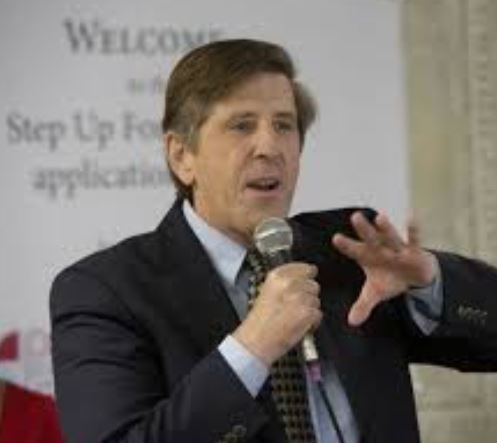
Doug Tuthill is president of Step Up For Students, which helps administer the nation's largest private school choice program (and co-hosts this blog).
The term “for-profit” has been weaponized in public education by teachers unions and their tribal allies.
They wield it against education improvement initiatives they oppose, especially education choice programs not covered by collective bargaining agreements. (Choice programs not operating under collective bargaining, such as Florida’s Voluntary PreK program, are not targets of for-profit attacks.)
For-profit corporations are forbidden to operate charter schools in Florida and California. Yet these schools are constantly being attacked for profiting off students. The overwhelming majority of Florida private schools serving tax credit scholarship and voucher students are non-profit, but newspaper editorial boards regularly criticize them for making profits.
These critics seem unfazed by the reality that district schools could not function without the products and services purchased from for-profit corporations. School buses, desks, instructional software, hardware, interactive whiteboards, books, pencils, pens, copy machines and paper are all purchased from for-profit companies. School buildings are constructed by for-profit companies using materials purchased from for-profit corporations. A proposed law requiring school districts to purchase products and services only from nonprofit organizations would be fiercely opposed by school districts, who would correctly see this as an attempt to destroy public schools.
Despite their for-profit criticisms, teachers unions rely on the profits they make from for-profit businesses to help pay their bills. During my tenure as a Florida teachers union leader, we sold insurance and financial services to teachers through various for-profit businesses. I still use a National Education Association credit card through a for-profit venture involving the NEA, MasterCard, and Bank of America.
The NEA’s for-profit businesses are not illegal. Nonprofits can own for-profit businesses provided the profits from those businesses are used for nonprofit purposes. My hometown paper, the Tampa Bay Times, is a for-profit company that is owned by the Poynter Institute, a nonprofit which provides professional development opportunities for journalists.
While teachers unions’ criticisms of for-profit businesses in public education may be disingenuous, ensuring taxpayers get the best possible value from education products and services purchased with public funds is important. But requiring that services teachers unions don’t like, such as charter schools, be purchased only from nonprofit organizations is not the best way to serve the public good. The best way is through effective contracting and oversight by government agencies.
When state government or a local school board purchases services, they should focus on maximizing the public’s benefits, not on the characteristics of the providers. As a taxpayer, I don’t care if a provider is gay or straight, male or female, black or white, for-profit or nonprofit. I want children to receive great services for a fair price. Focusing only on quality and price may not further the political agendas of certain advocacy groups, but it does serve taxpayers and the people receiving these services.
Determining what constitutes the best services for the best price is often challenging in public education. An afterschool tutoring program, a neighborhood district school, or a Montessori charter school may work well for some students, but not others.
The legendary management consultant, W. Edwards Deming, defined quality as customer satisfaction and not goodness, because what is good for one person may not be good for another. This is why parental empowerment and education choice are essential for helping determine what constitutes quality in public education. Empowering parents and educators to customize each child’s education is the best way to maximize the public’s return on its public education spending.
Given the proliferation and necessity of for-profit organizations in public education, attacking those that aren’t covered by teachers union collective bargaining agreements would seem a flawed political strategy. But it works with people and organizations who are part of the same political tribe as teachers unions, most notably many daily newspapers, Democratic politicians, and liberal advocacy groups.
As more low-income, minority, and working-class families participate in education choice programs, I hope teachers unions and their political allies will become more open to seeking common ground with these families. Many of these families are struggling to break the cycle of generational poverty. Hypocritical attacks on for-profit organizations providing services to school districts and state governments are not serving the greater good. We need to focus our collective energy on how to efficiently deliver educational excellence and equity to every child.
If it feels to the education reformer that The New York Times and The Miami Herald have made grand attempts to gore the growing presence of for-profit education providers, it's because they have. But there are many false assumptions that lead the critic to suppose these are the transgressions of the "liberal media." If choice advocates and education entrepreneurs want to overcome this adversity, it's important to know what factors lead to headlines like "Cashing In On Kids."
It first helps to survey a typical newsroom, and I don't mean a survey of the political inclinations of its inhabitants. In many ways, the liberal-conservative chasm is irrelevant to what sparks investigations like we saw of K12 Inc. in the Times. Consider the newsrooms that shaped Times reporter Stephanie Saul -- The Clarion-Ledger in Jackson, Miss., The Plain Dealer in Cleveland and Long Island's Newsday. The traditional "beat" structure of these newsrooms and their "City Desks" has remained largely unchanged for decades, and it is centered around the coverage of public institutions -- public schools, city councils, police departments and statehouses.
Now Saul is no "beat" reporter, but most daily and metropolitan newspapers employ an education reporter, and that means those reporters invariably cover their local school boards, whether they're in New York City or New Baltimore, Mich. These reporters generally spend many days of the week in school district offices, talking with superintendents and scanning the e-mail correspondence of school board members. If they're doing their job right, these reporters are applying a healthy dose of skepticism to every message they hear or read from these sources. But that is beside the point. They are immersed in issues and developments that are in the public interest and they are writing from public institutions.
In this world, for-profit education providers are nothing less than an insurgence into what is traditionally considered "public." Their operations are, naturally, opaque, whereas newspapers demand sunshine -- if not for their stories then for the public for whom they claim to write. This conflict informs a bias that is nearly absolute among reporters: A profit-making school or university is concerned primarily with making a profit; the education of its children is secondary.
I suffered from this bias myself when I was a reporter covering education for nearly 10 years at newspapers in Michigan and Florida. I was hardwired, just like all my colleagues, to examine any public policy or proposal that had the ultimate effect, however insignificant, of putting profits in someone's hands. So, of course, the burgeoning sector of for-profit higher education opened several avenues for inquiry: Who was attending these schools, and how were these colleges recruiting these students? How much of the college's revenues came from publicly backed student loans, and what was the institution's loan default rate? And, perhaps the juiciest question: What were these companies paying in campaign contributions to elected officials?
I chased stories of students who filed lawsuits against these schools because they couldn't transfer the credits they earned to more traditional institutions. I covered attorney general investigations that found heavyhanded recruitment of underqualified students and that these colleges overpromised the return on the students' investment. This is the prism through which I viewed for-profit education and its unprecedented growth. And I was not alone.
This does not condone the worst of Saul's reporting of K12. The Times story suffered from a striking lack of balance, and there was little that took the reader to the ideal path toward greater accountability and higher standards in online learning. But it does show that as for-profit companies increase the size of their footprint by investing in charter school management and online education, the scrutiny they face will be heightened for the ages of the children they serve and for the sweep they bring into primary and secondary education.
I have since left newspapering to help develop the policy and communications initiatives for a Florida program that administers a publicly funded private school option to 38,000 low-income children, and I have learned to exercise more nuance and sophistication in our expanded universe of public education. It is unfair to assume that children are being treated with malice by schools that keep one eye on the bottom line, especially when these schools must follow the regulations required of all private providers in any given state. But it is difficult to imagine that the culture in any newsroom will soon be superseded by one that considers how for-profit schools could help us find greater educational innovations with efficiency. So in the meantime, our education entrepreneurs would do well to understand what motivates an enterprising reporter. It may not be the partisan motivations we assume.

