Charter schools. The Tampa Tribune suggests a compromise is in the works on bills dealing with charter schools funding, facilities and accountability. Senate education leaders want a broader discussion about a proposal to give charter schools dibs on unused school buildings, reports Gradebook. Tampa Bay Times columnist John Romano lists support for "for profit charter schools" as another example of the Legislature not caring about popular opinion. A St. Lucie County School Board member raises the idea of converting a soon-to-be-shuttered school into a charter, reports TCPalm.com.
 Private schools. The ones in Marion County are hurt by the recession, but the pain is mitigated by McKay and tax credit scholarships, reports the Ocala Star Banner. Unpaid volunteer teachers come to the rescue of a Brandon private school that experienced an enrollment dip. Tampa Bay Times.
Magnet schools. The Miami-Dade school district is looking to create a new MAST magnet school on one of the FIU campuses, but it hinges on funding from local communities. Miami Herald.
Parent trigger. The Panama City News Herald writes up Friday's vote in the House Education Committee.
The Florida model. Education Commissioner Tony Bennett and Patricia Levesque, executive director of the Foundation for Excellence in Education, are among those participating in Maine Gov. Paul LePage's education summit, reports the Kennebec Journal. More from WABI TV. (more…)
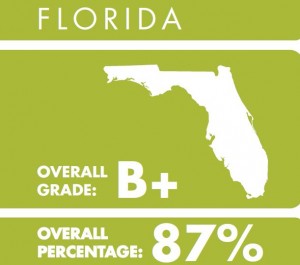 Florida earns a B+ and ranks second nationally when it comes to embracing policies and practices that advance digital learning, according to a national report released Thursday.
The state earned an A or A- in six of 10 categories on the 2012 Digital Learning Report Card, which is compiled by Digital Learning Now!, an arm of Jeb Bush's Foundation for Excellence in Education. Among the categories where Florida fared well: student eligibility, student access, quality content and funding. The state also earned a B for "quality choices."
But it could only muster a C for "quality instruction." And it got hit with two D's - one for "advancement," because it's not there yet when it comes to basing credits on competency rather than seat time; and one for "delivery," because it's not there yet when it comes to upgrading the technological infrastructure in its schools. StateImpact Florida touched on the latter issue in this piece Wednesday.
Utah earned the highest grade, an A-, while only four other states earned B's: Georgia, Minnesota, Virginia and Kansas.
The report notes Florida Virtual School is the largest public online course provider in the U.S., and that Florida has more online learners than any other state.
Education savings accounts. Bills filed Friday and Saturday would create a new mechanism for funding school choice options. Tallahassee Democrat.
 Charter schools. Some 1,200 students apply for 650 slots at a new charter in Viera, reports Florida Today. An overwhelming majority of parents and teachers vote against the proposed conversion of a Key Biscayne school into a charter, reports Miami Herald. The Palm Beach school district is recommending that its board shut down three charters, reports the Palm Beach Post. The Pepin Academies, a charter that serves disabled students in Tampa, wants to open a campus in Pasco, reports the Tampa Bay Times.
School choice. Pasco Superintendent Kurt Browning is merging the district's choice programs - open enrollment, charters, career academies, etc. - in one department. Gradebook.
Parents. At Jacksonville's first-ever ed summit, Duval Superintendent Nikolai Vitti reiterates that he wants to transform how the district views parents. Florida Times Union.
Common Core. Tampa Bay Times overview of what's coming - and whether it can happen according to schedule. Part one here. Part two here.
Legislative preview. "Reforming school reform." Tampa Bay Times.
New faces. Former Secretary of State Condoleezza Rice and Laurene Powell Jobs have joined the board of directors for the Foundation for Excellence in Education. EdFly Blog. (more…)
Florida business leaders put a spotlight Wednesday on the promise and potential pitfalls of Common Core - the tough, new academic standards that are rolling into Florida schools and will help re-shape teaching, learning and testing.
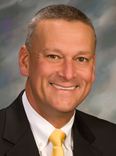
Bennett: "The state should own this initiative."
At a wide-ranging, day-long education summit in Orlando, several participants suggested a public awareness campaign to inform parents about the changes – which may be initially painful when they're implemented in the 2014-15 school year - and to rally broad support in a way that has eluded many of the state’s other, recent education reforms.
“These tend to be Tallahassee conversations. But if we don’t do this right, it becomes a Miami conversation or a Jacksonville conversation” and not in a positive way, Marshall Criser III, president of AT&T Florida and chairman of the Florida Council of 100, told redefinED during a break. “We have an opportunity and responsibility to take this back to our communities ... Because if not us, then who?”
“The state should own this initiative,” Education Commissioner Tony Bennett told attendees, reminding them of the marketing effort a decade ago for Just Read, Florida. “It shouldn’t be teachers against people. It shouldn’t be the state against schools, state against districts. This should be a statewide rollout that says this is important to our children and this is important to the future of our state.”
The Council of 100 sponsored the summit with the Florida Chamber Foundation, the National Chamber Foundation and the Institute for a Competitive Workforce. About 100 people attended, including three lawmakers, two superintendents, Board of Education Chairman Gary Chartrand and Florida Education Association President Andy Ford.
Spurred by the National Governors Association and the Council of Chief State School Officers, the Common Core standards in math and language arts have been adopted by 44 states. They’re well-thought-out and well-vetted. They’re benchmarked against international standards. They’re designed to instill a deeper knowledge than state standards do now. In the long term, supporters say, the higher bar will better prepare students for college and careers and an ever-more-competitive world. In the short term, though, ouch: They’re expected to result in a steep drop in test scores – and all the angst that comes with it.
“That’s a pain point,” Criser said. “But people have to understand that’s good,” he continued, because it’s the first step on a better path.
The discussion around Common Core has centered almost exclusively on public schools. But its gravitational pull is expected to be so strong that the impact will be felt at the private schools, too, to varying degrees. (more…)
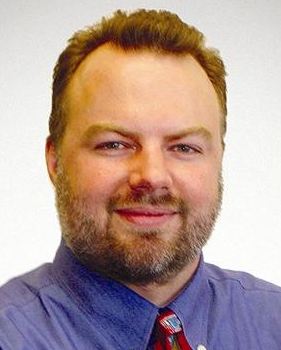
Ladner
Call them Vouchers 2.0. In the age of customization, researcher Matthew Ladner sees education savings accounts as the tool for the times. Unlike vouchers or tax credit scholarships, ESAs would allow parents to use state funds to pay for a blend of K-12 educational options – schools, tutors, online programs, etc., in whatever combo works - and perhaps squirrel away some of those funds for college.
“We we like to say that ESAs are sort of school choice and parental control over education down to the last penny,” Ladner said in a podcast interview with redefinED. “What we really want to do is allow parents to customize the education for their child. Education shouldn’t be necessarily an all or nothing proposition - you’re either attending this school or that school. In fact, the whole definition of what a school is is being fairly rapidly changed by technology.”
Ladner is senior advisor of policy and research at the Foundation for Excellence in Education. He’s one of the creators of the ESA concept and its most diligent Johnny Appleseed. In October, the Friedman Foundation for Educational Choice published a report he authored about ESAs called, “The Way of the Future.” Ladner also was instrumental in creating the ESA program in Arizona, which to date is the only one in the country but was recently expanded.
A key feature of ESAs, Ladner said, is that it requires parents to make choices based on quality and price. That in turn will spur innovation and, at the same time, reign in costs that have risen steeply for decades with little improvement in academic outcomes. “If you want to reverse that, you have to do something that’s going to seem a little radical at first,” Ladner said. “But by giving parents complete control over the money and requiring them to consider possible alternative uses for that money, it really sets them up to be discriminating consumers.“
Florida lawmakers flirted with ESAs in 2011, with critics panning the idea as “universal vouchers” and “vouchers for all.” But Ladner said even if a state went “whole hog” with the idea, the vast majority of kids would remain in public schools, as the Florida experience has shown with McKay vouchers and tax credit scholarships. In his view, ESAs should also be designed for equity - with greater funding for students with greater needs.
Are people ready for ESAs? Maybe not just yet, Ladner said. But it took a while for people to catch on to Palm Pilots, too. “As a movement we always need to be taking a strong interest in the development of our product. And our product in this case is our methods to increasing the freedom and the effectiveness of parents the parents within the schooling system,” Ladner said. “I think there is work to be done. But I do think that when this work is done we will have a product that is clearly superior to the ones we have today.”
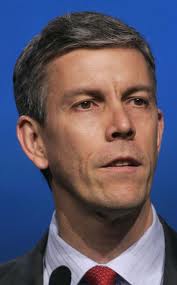 The next few years are critical for education reform, with the implementation of higher standards likely to put tremendous pressure on political leaders to abandon course, U.S. Education Secretary Arne Duncan said Wednesday.
“The idea of implementing higher standards, the adoption in 46 states of higher standards, is clearly a huge step in the right direction. (But) that’s the easy part,” Duncan, referring to Common Core standards, said at a national education summit organized by Jeb Bush’s Foundation for Excellence in Education. “Will our political leaders have the courage when test scores drop 20, 30, 40, 50 percent? … Will they have the courage not to backpedal and dummy down standards like political leaders did under No Child Left Behind?”
Despite the challenges, Duncan said he was optimistic that state and local leaders would rise to meet them, and in bipartisan fashion. He pointed to recent reforms as proof.
“I’m actually extraordinarily hopeful,” he said in response to a question from moderator Andy Rotherham. “When I look at what states did, local legislative leaders, chief state officers, what they have done over the past couple of years, no one predicted that would happen. No one predicted that 46 states would adopt higher standards. No one predicted that three dozen states have taken teacher evaluations and principal support to a very different level. No one predicted that we would have 44 states working on the next generation of assessments. Frankly, we’ve had almost no rollback. And honestly, if a couple states choose to roll back, that would not be the end of the world.”
Duncan was a keynote speaker at the fifth annual summit, which drew about 800 participants from nearly every state. He made a pitch for continued investment in early childhood education and stressed teacher quality and teacher equity. He said the fact that not a single district has methodically moved to align its best teachers with its most struggling students is a sign of how far reformers have yet to go. (more…)
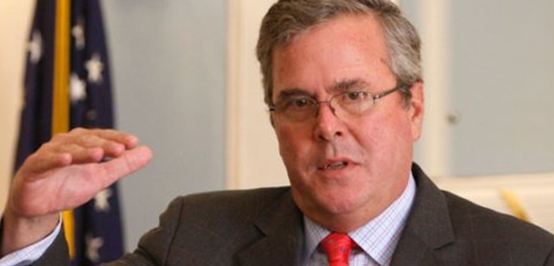 Jeb Bush may or may not seek the presidency in 2016, but those who dismiss his education foundation as a political prop are simply out of touch. What the Foundation for Excellence in Education is showing once again, with its fifth annual national summit, is that it is creating a sense of urgency and national purpose around our most fundamental commitment to each new generation.
 Recent election outcomes offer a snapshot of what people really think about education reform, said John Podesta, chairman and founder of the Center for American Progress. And lawmakers, advocates and opponents of school reform should all take note.
This month’s stunner - the ousting of Indiana public schools chief Tony Bennett, who implemented many of the same reforms found in Florida – is proof enough that reform “is not yet on solid ground,’’ said Podesta, the keynote speaker Tuesday during the fifth annual Excellence in Action National Summit in Washington, D.C.
At the same time, he noted, there are plenty of signs of progress, including historic passage of a ballot initiative in Washington that paves the way for charter schools.
The common ground seems to be a desire to create a system that works for children, he said, and reformers should seize the moment.
“As the lines blur, the movement has to invest in collaboration … ,’’ said Podesta, a former White House chief of staff to President Bill Clinton and longtime policy adviser.
“I think complete division between unions and reform is not helpful,’’ he said. “We have to let this go.’’
He also said reformers can’t “steamroll’’ measures without educating the public. “Stop just focusing on your enemy and start shoring up your allies,’’ he said. (more…)
Tony Bennett is on many a Florida ed reformer's wish list to be education commissioner. And on Tuesday, he said he was considering applying for the job.
"My wife and I are still thinking about it and praying about it," Bennett told redefinED after appearing on a panel at a national education reform summit in Washington D.C.
Considered a leading light in the national ed reform movement, Bennett lost his re-election bid this month in an upset to Glenda Ritz, an elementary school media specialist and teachers union leader. But some saw Indiana's loss as Florida's potential gain, and at least two Florida Board of Education members said they would like to see Bennett apply for the post left vacant by Gerard Robinson's abrupt departure in August.
Bennett made his brief comment to redefinED after appearing on a panel at the summit organized by Jeb Bush's Foundation for Excellence in Education. He mentioned he and his wife have been through a lot during his four years as state superintendent, so they want to be totally sure applying for the Florida job is the right decision.
The application deadline is Friday. The Board of Education technically makes the hiring decision, but Gov. Rick Scott is expected to have a huge say.
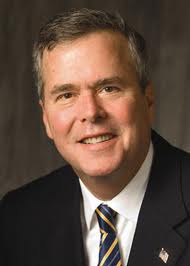 Kicking off his foundation's fifth annual national education summit, former Florida Gov. Jeb Bush stressed the usual components of his reform agenda today but also accented an increasingly big talking point: bipartisanship.
Bush said “new coalitions on the left and right” are moving to revamp teacher evaluation and compensation systems and concluded his 30-minute remarks with a lengthy homage to the leadership skills of former Democratic President Lyndon Johnson. He also noted the bipartisan backing of so-called “parent trigger” legislation, which he predicted would pass the Florida Legislature next year after failing on a dramatic 20-20 tie in the Senate last spring.
“This is one of those great places where the center, left, right coalitions of this world need to work together. And that’s exactly what’s happened,” Bush said, singling out Parent Revolution, the left-wing group that has led the charge nationally for the trigger.
Referring to his own Foundation for Excellence in Education, which organized this week’s conference, Bush continued, “We’re supposed to be center-right, I guess,” but “we will work with everybody to be able to empower parents who right now feel hopeless about whether or not they have any say about their children’s future.”
The summit has grown in both stature and bipartisanship, and this year's event includes nearly 800 attendees from 46 states. John Podesta, former chief of staff to President Clinton, is today's keynote speaker. Arne Duncan, President Obama's education secretary, will address the group tomorrow.
Bush framed his remarks about education reform and expanded school choice with concerns about declining social mobility. (more…)

