School turnarounds. Tampa Bay Times education editor Tom Tobin offers his take on what it takes: "a long, slow slog that requires principals and teachers to keep on task, stay inspired and fight through times when things don't seem to be working." The Times also offers a statistical snapshot of the five Pinellas schools on the turnaround list.
Legislature. Fund Education Now co-founder Christine Bramuchi offers her take on what happened in this year's session in a Q&A with the Orlando Sentinel. John Romano does here. The Palm Beach Post does here. Orlando Sentinel rundown here. Tallahassee Democrat here. Times/Herald here.
Florida's progress. Accountability through school grades has made a positive difference, writes Matt Ladner at Jay P. Greene Blog.
Teachers unions. The Florida Education Association has been operating without its tax-exempt status since January. Florida Center for Investigative Reporting.
Teacher pay. The Broward County School Board agrees to give extra money to high-performing teachers at low-performing schools. Fort Lauderdale Sun Sentinel.
Teacher conduct. A Broward County band teacher is accused of marijuana-fueled, sexual trysts with a student, reports the South Florida Sun Sentinel. In another teacher conduct case, the Palm Beach Post has the latest on a former private school teacher accused of giving students candy in return for sex acts.
Parent trigger. StateImpact Florida does a Storify on the post-trigger battle over #parentempowerment. Margo Pope from Florida Voices: "Parents already have options in state law that empower them. They don’t need another law. They need to know how to use what is already on the books." (more…)
Charter schools. Tampa Bay Times: "Stop the giveaway to charter schools." A charter school company is interesting in buying property at one of more of the three schools that the school board recently voted to shut down next year, reports Florida Today.
Will Weatherford. StateImpact Florida talks to him about his education views - and his own nontraditional education background.
Parent power. Lawmakers are showing strong, bipartisan support for legislation that would give the parents of special needs students more say in their children's education, but groups like Fund Education Now are opposed. Miami Herald.
Testing. Valerie Strauss's Answer Sheet devotes space to a Florida case involving the FCAT and a student who is profoundly disabled.
Teacher pay. In a meeting with the Tampa Bay Times editorial board, Gov. Rick Scott stands by his across-the-board pay plan.
Teacher conduct. Florida Times Union: "An Atlantic Beach Elementary School teacher who used depictions of minstrel caricatures of African-Americans, blackface and a lynching for a second-grade coloring assignment last month said she has used the material for the past three years." (more…)
Charter schools. Brooksville's first charter school, one with a STEM focus, will open this fall, reports the Tampa Bay Times. Competition from charter schools is forcing the Palm Beach County school district to think harder about its needs and priorities, reports the Palm Beach Post. Charters are also sparking debate among Palm Beach school board members about how much help they should give struggling charters, the Post also reports. An op-ed in the Miami Herald raises concerns about charter schools' diversity and financial incentives. The Sarasota Herald-Tribune profiles the principal of the Imagine charter school that is trying to break free from the parent company.
Magnet schools. The Tampa Tribune applauds the Hillsborough school district for creating a magnet tied to the maritime industry.
Alternative schools. Troubled girls get a fresh start at a sheriffs' youth ranch in Polk County. Orlando Sentinel.
 Tax credit scholarships. Great back-and-forth between scholars Kevin Welner at NEPC and Jason Bedrick at Cato, with Florida's program a big part of their debate. Cato at Liberty.
School choice. It's often partisan. Sunshine State News.
Parent trigger. Education Commissioner Tony Bennett raises a constitutional question. The Florida Current. (more…)
Critiquing the Florida Formula. Matt Di Carlo at the Shanker Blog is a critic to be taken seriously. In his latest post, he looks at the research that has evaluated different components in Florida’s reform effort, including the competitive pressures from vouchers, tax credit scholarships and charter schools. “As usual,” he writes, “it is a far more nuanced picture than supporters (and critics) would have you believe.”
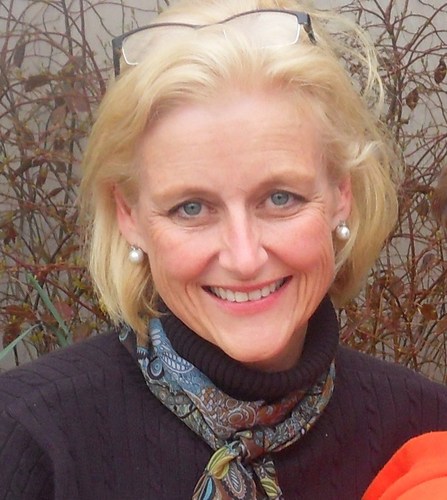
Oropeza
Legislative wish list. What do education groups want from the coming legislative session? Florida Voices asks Ruth Melton at the Florida School Boards Association; Patricia Levesque at the Foundation for Florida’s Future; Mindy Gould at the Florida PTA; and Kathleen Oropeza at Fund Education Now. Lawmakers, Oropeza writes, are out to “starve public education” and have been “intentionally bringing districts to the brink of catastrophe.”
StudentsFirst report card. Coverage from Florida Today, Orlando Sentinel, StateImpact Florida, Education Week, Fort Myers News Press. Sherman Dorn’s take here.
Online testing problems. They’re still affecting the DOE’s FAIR system. Gradebook.
Jeb Bush headed to Arkansas. He’s scheduled to visit for National School Choice Week, reports Arkansasmatters.com.
More Newtown reaction. Tampa Bay Times. Palm Beach Post. Lakeland Ledger. In Lake County, a school board member wants teachers and principals to carry district-purchased guns, reports the Orlando Sentinel. In Manatee, the interim superintendent wants local law enforcement to inspect every inch of every public school campus, reports the Bradenton Herald.
Delinquency. In public schools, a Florida Department of Juvenile Justice report finds it's down by nearly half over the last eight years, reports News Service of Florida. (more…)

Shirley Ford
The mom on stage described how she and other low-income parents rode a bus through the darkness - six hours, L.A. to Sacramento, kids still in pajamas - to plead their case to power. In the halls of the legislature, people opposed to the idea of a parent trigger accused them of being ignorant, of not understanding how schools work or how laws are made. Some called them a “lynch mob.”
Then, Shirley Ford said, there was this sad reality:
“I would have thought that the PTA would have been beside me,” Ford said. But it wasn’t. “I’m not PTA bashing when I say this,” she continued. “To see that the PTAs were on the opposite side of what we were fighting for was another level of awareness of how the system is.”
Ford is a member of Parent Revolution, the left-leaning group that is advocating for parent trigger laws around the country. She spoke last week at the Jeb Bush education summit, sharing the stage with former California state Sen. Gloria Romero and moderator Campbell Brown. Her remarks, plain spoken and passionate and sometimes interrupted by tears, touched on a point that is vital and obvious and yet too often obscured.
Parents are not a monolith.
The divides are as apparent as the different dynamics that play out in schools on either side of town. In the affluent suburbs, a lot is going right. There is stability in the teaching corps. The vast majority of kids don’t have issues with basic literacy. The high schools are stocked with Advanced Placement classes. And there, behind it all, are legions of savvy, wonderfully dogged, politically connected parents who know how to mobilize when their schools are shortchanged.
The view is starker from the other side of the tracks. A parent in a low-income neighborhood is more likely to see far more teacher turnover in her school – along with far more rookies, subs and dancing lemons. She’ll see far more students labeled disabled and far fewer AP offerings. Issues like these plague many high-poverty schools, yet they don’t get much attention from school boards or news media or, frankly, from established parent groups like the PTA. (more…)

Does Sen. Bullard, a teacher and local union rep, have a conflict of interest too?
I was a news reporter for 20 years. I appreciate what good journalists do. But I’m often perplexed by the selective scrutiny that permeates so much education coverage in Florida, particularly when it comes to school choice issues.
The latest example: An “investigation” by an Orlando TV station into the "cozy connections" between Florida state lawmakers and rapidly expanding charter schools. WFTV-Ch. 9 raised conflict-of-interest questions this week about lawmakers who work for charter schools and who have backed legislation that generally promotes charter expansion. It singled out incoming House Speaker Will Weatherford, R-Wesley Chapel; Rep. Erik Fresen, R-Miami; and John Legg, R-New Port Richey, a state rep headed to the state senate.
First off, this is old news. The ties between all three lawmakers and charter schools have been well publicized. In fact, they were among a bigger handful of lawmakers cited last December in a front-page Tampa Bay Times piece on the same issue. Curiously, the TV station kicked off its story with the same anecdotal lead as the Times did, one involving Legg and the Pasco County School Board.
More important, the station neglected to mention that a number of other lawmakers have strong if not direct ties to school districts. Sen. Bill Montford, D-Tallahassee, heads the state superintendents association. Former state rep and now Sen. Dwight Bullard, D-Miami, is a public school teacher and local union rep. Two newly elected Democratic state reps, Mark Danish in Tampa and Karen Castor Dentel in the Orlando area, also teach in district schools. Should teacher-lawmakers be voting on state budgets that could affect how much they’re paid? Should they vote on legislation that could impact how they’re evaluated? (more…)
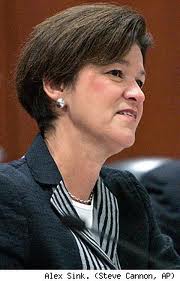
Would Alex Sink beat Rick Scott in a rematch?
Who may run against Rick Scott. According to Florida Trend, at least six challengers are already lining up: Nan Rich, Alex Sink, Dan Gelber, Buddy Dyer, Jimmy Morales and Charlie Crist. Rich, Sink and Gelber have taken strong positions against many of Florida’s ed reforms, while Crist of course vetoed Senate Bill 6.
More fallout from charter payout. For charter school opponents, the $519,000 payout to the principal of a failed Orange County charter is the gift that keeps on giving. “School boards would face public rage for even proposing such pay,” editorializes the Bradenton Herald. The original Orlando Sentinel story also gets posted on the Atlanta Journal Constitution’s Get Schooled blog. Georgia is in the middle of a big fight over a charter school amendment to the state constitution, and the Orange County case is cited as an example of what happens when oversight is lax.
Virtual expansion. The Marion County school district opens its first online elementary school, reports the Ocala Star Banner.
Taking aim at parent trigger. “The biggest lie about ‘parent trigger’ is that it is about parents,” writes a member of Florida’s Fund Education Now in the U.S. News & World Report.

Students at Franklin Middle School in Tampa.
Vouchers need more accountability. So say David R. Colburn, director of the Askew Institute at the University of Florida, and Brian Dassler, chief academic officer for the New Orleans Center for Creative Arts, in this exclusive op-ed for the Tampa Bay Times. Response here from the Heartland Institute, which says parental satisfaction is “a more effective form of accountability than extending mindless bureaucratic oversight to the private sector.”
New charter school to focus on “Latin and logic.” Tampa Bay Times story here. The applicant for the school is Anne Corcoran, the wife of state Rep. Richard Corcoran. He’s a future House speaker and a strong proponent of private school choice, too.
Threats to single-gender learning options. U.S. Sens. Kay Bailey Hutchison and Barbara Mikulski are considered to be on opposite ends of the political spectrum, but in this op-ed for the Wall Street Journal they unite in defense of single-gender options in public schools. (They single out Florida as one of the states where such options have been under legal fire.) It’s worth noting that in our own backyard, old lines of division have also faded over this issue. Last year, John Kirtley, who chairs Step Up For Students, donated $100,000 to the Hillsborough County School District to support single-gender academies at two public middle schools. The Walton Family Foundation kicked in another $100,000.
More on race-based achievement goals. The New York Times writes today about the state Board of Education’s decision last week to set different academic achievement targets for black, white, Hispanic and other subgroups. The targets incorporate steeper rates of improvement for groups with lower proficiency rates, but they have nonetheless caused a ruckus. The parents group Fund Education Now weighs in. So does Naples Daily News columnist Brent Batten, who hears from Collier County education officials that this is “much ado about nothing.”
 Having a judge determine how much money to spend on Florida schools and where to spend it is “an exercise in futility, and madness, and a waste of funds,” Florida Board of Education member Roberto Martinez said today.
Martinez’s comments came after a Department of Education attorney updated the board on a high-profile lawsuit that charges the board and lawmakers with violating state constitutional provisions for high quality schools. It was filed in 2009 by eight plaintiffs, including the Orlando-based parents group Fund Education Now. Last month, the Florida Supreme Court refused to block it from going to trial.
Martinez, a former U.S. attorney for the Southern District of Florida, is among the defendants. Here is what he had to say:
So basically they’re asking a sitting trial court judge in a county – in this case, Leon County – to tell 67 superintendents and the Board of Education, for example, how much funding to put into a particular program in a district, correct? Among other things? (The attorney says yes.)
I’ve probably been one of the most outspoken members on the board for more funding for education, funding for effective programs and I believe we need more of it. But to have a court judge, no matter how capable – and this is a capable jurist – be given the responsibility to determine how much money is adequate, in order to fund a particular service or program in a particular district in the state of Florida, is an exercise in madness. It is a ridiculous relief to request because at the end of the day, it cannot be implemented. It cannot. And in fact, a judge does not have the authority to tell the Legislature how much money to appropriate. They don’t make the funding decisions. (more…)
 To allegedly help parents understand Amendment 8, one of Florida's biggest school districts has distributed 69,000 fliers, punctuated by scary claims, in all of its school lobbies and reception areas. "VOTE ON NOVEMBER 6," they say. "Amendment 8 could impact your public school."
The Orange County school district tells redefinED the fliers don't cross the line into advocacy because they're for informational purposes and state, at the top, "IT'S YOUR DECISION." But the fliers are filled with the same misinformation being spread far and wide by the Florida Education Association, Florida School Boards Association and Fund Education Now - and left unchallenged by Florida journalists.
"If Amendment 8 passes, potentially billions of state dollars could be diverted from public schools," the flier says. "If Amendment 8 passes, public funds could be redirected into private hands by funding the education of hundreds of thousands of students in private and religious schools."
Not true. We've detailed why here and here. Amendment 8 would remove the no-aid to religion language in the Florida Constitution, which is a proposition that deserves debate. But to suggest it opens the door to private school vouchers is more than a stretch; it's wrong. Like the same claims made at school board meetings and in press releases, the ones on the district fliers don't offer any supporting evidence - and, as far as we can tell, no reporters have asked for any. In Florida, truth continues to go off the rails.

