
Berkeley law professors Jack Coons (left) and Stephen Sugarman described what we now call education savings accounts - and a system of à la carte learning - in their 1978 book, “Education by Choice.”
John E. Coons was ahead of his time.
Decades before the term “education savings account” became an integral part of the education choice movement, the law professor at the
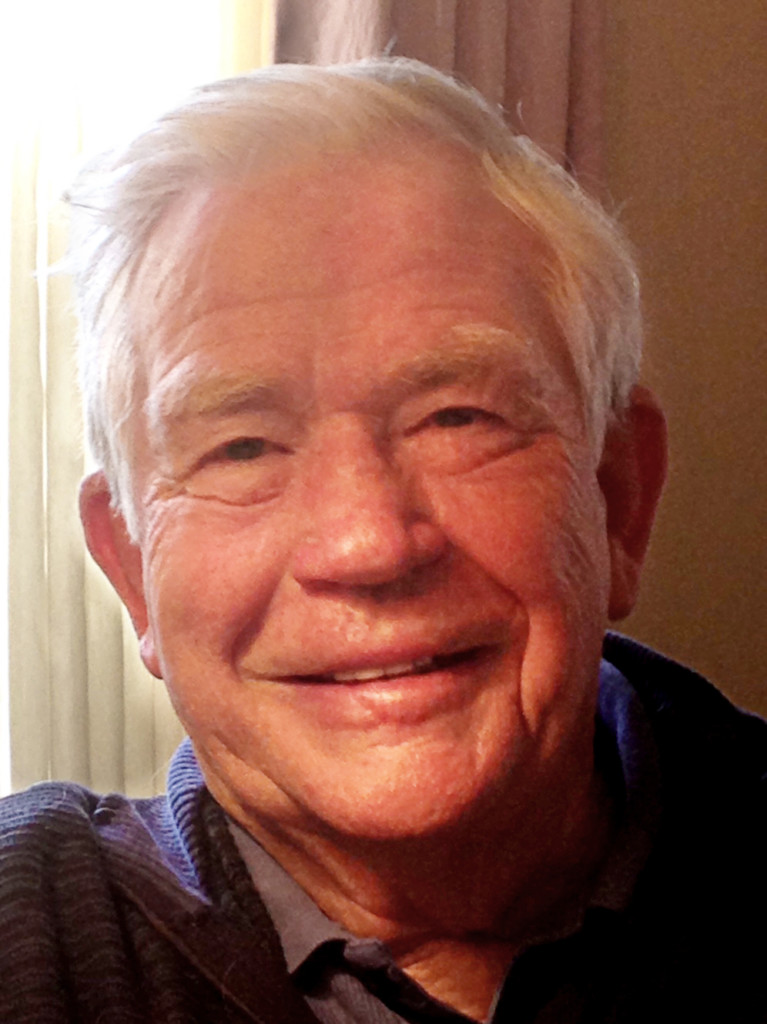
Jack Coons, pictured here, co-authored "Education by Choice" in 1978 with fellow Berkeley law professor Stephen Sugarman.
University of California, Berkeley, and his former student, Stephen Sugarman, were talking about the concept. In their 1978 book, “Education by Choice: The Case for Family Control,” the two civil rights icons envisioned a model drastically different from the traditional one-size-fits-all, ZIP code-based school system inspired by the industrial revolution:
“To us, a more attractive idea is matching up a child and a series of individual instructors who operate independently from one another. Studying reading in the morning at Ms. Kay’s house, spending two afternoons a week learning a foreign language in Mr. Buxbaum’s electronic laboratory, and going on nature walks and playing tennis the other afternoons under the direction of Mr. Phillips could be a rich package for a ten-year-old. Aside from the educational broker or clearing house which, for a small fee (payable out of the grant to the family), would link these teachers and children, Kay, Buxbaum, and Phillips need have no organizational ties with one another. Nor would all children studying with Kay need to spend time with Buxbaum and Phillips; instead, some would do math with Mr. Feller or animal care with Mr. Vetter.”
Coons and Sugarman also predicted charter schools, microschools, learning pods and education navigators, although they called them by different names.
Fast forward to Florida today, where the Personalized Education Program, or PEP, allows parents to direct education savings accounts of about $8,000 per student to customize their children’s learning. Parents can use the funds for part-time public or private school tuition, curriculum, a la carte providers, and other approved educational expenses. PEP, which the legislature passed in 2023 as part of House Bill 1, is the state’s second education savings account program; the first was the Gardiner Scholarship, now called the Florida Family Empowerment Scholarship for students with Unique Abilities, which was passed in 2014.
Coons, who turned 96 on Aug. 23, has been a regular contributor to Step Up For Students' policy blogs over the years. Shortly after the release of his 2021 book, “School Choice and Human Good,” he was featured in a podcastED interview hosted by Doug Tuthill, chief vision officer and past president of Step Up For Students.
 “It is wrong to fight against (choice) on the grounds that it is a right-wing conspiracy,” said Coons, a lifelong Catholic whom some education observers describe as “voucher left.” “It’s a conspiracy to help ordinary poor people to live their lives with respect.”
In 2018, Coons marked the 40th anniversary of “Education by Choice” by reflecting on it and his other writings for NextSteps blog.
He said he hopes his work will “broaden the conversation” about the nature and meaning of the authority of all parents to direct their children’s education, regardless of income.
“Steve (Sugarman) and I recognized all parents – not just the rich – as manifestly the most humane and efficient locus of power,” he wrote. “The state has long chosen to respect that reality for those who can afford to choose for their child. ‘Education by Choice’ provided practical models for recognizing that hallowed principle in practice for the education of all children. It has, I think, been a useful instrument for widening and informing the audience and the gladiators in the coming seasons of political combat.”

It's hard to find an athlete as exuberant as Caleb, who celebrates at the finish line of each of his races with a choreographed dance and high-fives for everyone. (Photo provided by the Prewitt family)
JACKSONVILLE, Fla. – David Prewitt was worried.
His wife, Karen, wasn’t.
“He can do it,” she said.
Their son Caleb, 13 at the time, was participating in his first open-water swim, something he needed to conquer if he was going to complete his first triathlon.
One thing you need to know about Caleb: He has Down syndrome.
Another thing you need to know about Caleb: It has never held him back.
“When we came home (from the hospital) with Caleb, we said he’s not going to be your typical young man with Down syndrome. We’re going to push him, and so we've always tried to raise him as a typical child,” Karen said.
That meant chores around the house, being active in sports, attending school, and making friends inside and outside of the Down syndrome community.
“We kind of upped the ante when we got into sports,” Karen said.
She coaxed Caleb into running a 5K on Thanksgiving of 2020 by using the Couch to 5K app that gradually built up his endurance. Now, Caleb was training for a triathlon – a 300-meter open-water swim, a 12-mile bike ride, and a 5K race.
He had learned to ride a bike. He had swum in a pool plenty of times. But what concerned David was that Caleb, with assistance from a volunteer partner, was now swimming in a lake to see if he had the strength and stamina to finish that leg of the race.
Turns out, he did.
“He comes out of that water, and he's just laughing,” David said. “And I thought to myself, ‘You’ve got to change your attitude,’ because this kid can do things.”
***
Caleb is now 18. He has completed 119 races in the past five years. Included are 44 triathlons of various distances, five half-marathons, and two Spartan Races.
The Guinness Book of World Records recognizes Caleb, 16 at the time, as the youngest person with II2 (Intellectual Impairment, including those with Down syndrome) to run a half marathon (13.1 miles). Caleb’s goal is to add his name to that book again in October by becoming the youngest person with II2 to run a marathon (26.2 miles) when he and his mom run the Chicago Marathon.
Stephen Wright was Caleb’s partner during the early part of Caleb’s running career. He’s amazed at all Caleb has accomplished.
“I don't think people realize, most 14- 15-, 16-year-old kids aren't doing that,” he said. “So not only does he have things he's trying to overcome and prove he can do things, but most kids his age aren't doing the things he's doing. It’s incredible, because I wasn't doing that stuff at his age.”
***
Deb Rains is the assistant head of school at the North Florida School of Special Education (NFSSE) in Jacksonville, where Caleb attends on a Unique Abilities Scholarship managed by Step Up For Students.
Rains called Caleb the school’s “Mr. Mayor.”
“He’s so outgoing,” she said. “He’s friends with everybody.”

Caleb will enter the North Florida School of Special Education's transition program this year.
Rains said Caleb’s always-in-a-good-mood personality and can-do spirit come from the support he receives from Karen and David. More than a decade later, she vividly recalls her first meeting with them when they visited NFSSE to see about enrolling Caleb.
“I will never forget this. They came in and they had his mission statement,” Rains said.
It read:
“We built everything around that,” Karen said.
It is important to the Prewitts that Caleb has friends outside of school because, as is often the case when students graduate, friends from school scatter to live their own lives.
Caleb has friends from school. Luke, a classmate, is his best buddy. But Caleb has friends outside of school, too. He belongs to four running clubs. He has friends from Planet Fitness, where he works out, and friends from Happy Brew, a Jacksonville coffee house that sells Caleb’s homemade cookies. (More on that shortly.)
They want Caleb to have a job and be self-sufficient. He graduated in May from NFSSE and will enter the school’s transition program, where he will learn employment skills.
“We're very thankful for that,” David said. “He's got a lot of things that he can look forward to, because he's pretty well known in the community.”
Caleb is eager to hit the job market. He’d like to work at Happy Brew, Planet Fitness, or Publix. David, now retired, worked as a store manager for Publix. Caleb’s sister, Courtney Tyler, works in a Publix bakery.
He’s getting a jump this summer on a possible job at Happy Brew by attending NFSSE’s barista camp.
“As an organization, you have a mission statement and a vision statement, but to take that and place that intentionality on their son's life just showed me that they were not limiting him because of his disability,” Rains said.
“I was very impressed by that. There was a statement to not just me, the school, but to the community, that they expected nothing less from their son than they would their daughter, who's neurotypical.
“That just created the path for him. Since they didn't put any boundaries or limitations on Caleb, there was none for him to be impacted by.”
***
The mood surrounding a child born with Down syndrome isn’t positive, David said. Parents are informed of all the things their child won’t be able to do – ride a bike, run, swim, get a job.
“We were on a mission to prove them all wrong,” Karen said.
Along the way, Caleb has become a role model for the Down syndrome community. He has advocated at the state capital in Tallahassee for the expansion of what is now the Family Empowerment Scholarship for Students with Unique Abilities, which he receives. Karen has written newspaper op-ed columns and spoken to legislative committees in Tallahassee in support of the scholarship.
“If we didn’t have the scholarship, we would have had a tougher journey,” she said.

Caleb has more than 26,000 followers on Facebook and more than 44,000 followers on Instagram. Karen said parents comment on the posts, saying they have more confidence in their child’s abilities after seeing what Caleb has achieved.
Caleb has appeared on NBC’s “Today” show during a segment featuring children with unique abilities who cook or bake. Caleb bakes. Currently, he’s baking the cookies sold at Happy Brew.
It started during the COVID-19 pandemic when Caleb began helping his dad in the kitchen. That led to their cooking show, “Fridays at Four,” that were posted to Facebook. They were hugely popular.

Caleb and Stephen Wright stand on the podium after finishing the triathlon at the Special Olympics.
Now, Caleb bakes 20 dozen chocolate chip and sugar cookies a month and delivers them to Happy Brew. The sugar cookies are a hit.
“We can’t keep them on the shelf,” owner Amy Franks said.
Caleb’s “Mr. Mayor” personality is in full force when he visits the coffee shop, Franks said.
“He'll walk in, he'll immediately step behind the counter and start making a smoothie, or he'll hop on the point of sale, like he owns the place, and we just let him do his thing, like go for it,” Franks said. “His work ethic is incredible. He never stops.”
Caleb often wears a T-shirt bearing the slogan, “No Limits.” He wrote that on top of his mortarboard at graduation.
Running, cooking, working out at the gym, Caleb has yet to encounter a limit.
And he does it all with a smile.
“The joy inside of him is so meaningful for us,” Franks said.
***
In 2021, Stephen Wright volunteered to be a partner for a special needs athlete and was paired with Caleb for a triathlon in Sebring.
He remembers how excited Caleb was before the race, and how concerned he was about how Caleb would react to the competition, the crowd, the long swim, which is the first leg.
“There was one point (during the swim) where I turned around and he wasn't there, and I started panicking,” Wright said. “He was actually underwater, trying to tickle my feet. And I was like, ‘All right, man, I can see how the rest of this day is going to go.’ We got out of the water, and everyone cheered for him.”
The two were dead last when they transitioned from the bike ride to the run. At one point, Wright couldn’t see any other runners. He wondered if the race was over.
What he didn’t know was that at the finish line, the race director was rounding up the younger runners who were waiting for the awards presentation and told them to go to the finish line and cheer on this young man who was running his first triathlon.
David and Karen were among those waiting for Caleb.
“That finish line,” Karen said, “was one of the best experiences of my life.”
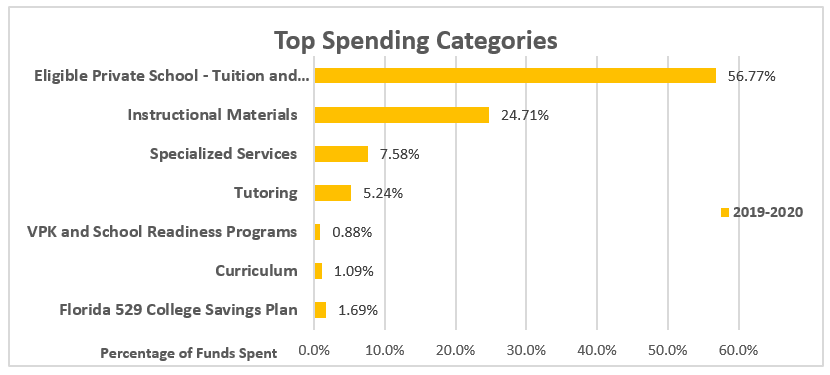 Families with children on Florida’s Gardiner Scholarship for students with special needs spent $117 million on private school tuition, books, curriculum, technology tutoring and more during the 2019-20 school year, according to a new report compiled by Step Up For Students.
While more than half (close to 57%) of scholarship monies was spent on school tuition, more than $50 million was spent on educational items not covered by other state scholarships, such as the McKay Scholarship, the Florida Tax Credit Scholarship and the Family Empowerment Scholarship.
Unlike those scholarships, Gardiner operates as an education savings account that allows parents to use scholarship funds to pay for a host of different educational options, such as curriculum, textbooks, school supplies, tutoring and afterschool or summer school programs. Unspent money rolls over from one year to the next, and parents can use the funds save for their child’s college expenses through college savings plans.
There were 14,319 students awarded Gardiner Scholarships during the 2019-20 school year, with 13,463 enrolled through Step Up For Students, which hosts this blog, compared to 11,393 students in the 2018-19 school year. The program funded $139 million in scholarships worth an average of $10,392.
Students ranged from 3 years old to 12th grade and comprised several different races, grade levels, prior school types and disabilities. Of those students, 62% had a diagnosis of autism; 10% intellectual disability; 8% rare disease; and 5% “high risk.” A little more than 3% of scholarship recipients had multiple diagnoses.
Other key findings in the report include:
· More Gardiner Scholarship students were enrolled in kindergarten through fifth grade (44%) than in middle or high school.
· There has been a slight increase in the percentage of Gardiner Scholarship students who are homeschooled students; 33 % were homeschooled in 2019-20 compared to 29.5% in 2014-15.
· More Gardiner Scholarship students live in Miami-Dade County (13%) than in any other county, followed by Orange County (8%).
· Around 84% of all scholarship funds awarded in 2019-20 were used by June 30, 2020.
· Only about 2.5% of families did not spend any of their scholarship funds in 2019-20 compared to 23.8% of families in 2014-15.
Gov. Ron DeSantis earlier this month signed a bill that will merge Florida’s two scholarship programs for students with special needs beginning with the 2022-23 school year.
 Editor's note: Materials related to the study are posted to a landing page accessible at https://ceresinstitute.org/choices-and-challenges/.
Nearly all Florida parents participating in two state scholarship programs for children with special needs are somewhat or very satisfied with their child’s educational experience according to a new study released today from researchers at Boston University.
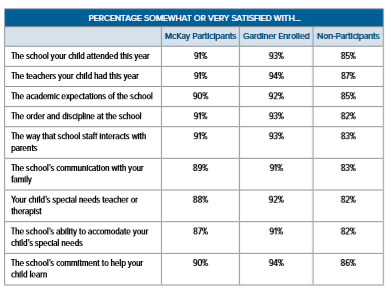
The study from the Community-Engaged Research and Evaluation Sciences Institute for Children and Youth at the university’s Wheelock College of Education & Human Development reveals that more than 90% of families whose children receive the Gardiner Scholarship and the McKay Scholarship for Students with Disabilities cite transformative changes and benefits they perceive for themselves and their children.
Additionally, findings reveal, participating parents overwhelmingly recommend that the scholarship programs continue with modifications that would reduce barriers to accessing or fully benefiting from the scholarships.
The institute worked in partnership with the Department of Education Reform at the University of Arkansas to answer two questions:
How do families who receive Gardiner and McKay scholarships navigate school choice and supplemental supports for their children?
How satisfied are parents with the scholarship schools they have chosen and the supports their children have received?
The mixed-methods research study, which entailed interviews with nearly 100 parents and included more than 4,000 survey responses, was conducted between fall 2020 and spring 2021.
Nine specific areas of parent satisfaction were measured, including academic expectations of the school, order and discipline at the school, and the way school staff interact with parents. For all measures, and for both scholarship programs, parent satisfaction was between 87% and 94%.
Based on the findings, the report’s authors recommend five considerations for statewide action to ensure that the existing scholarship programs are more widely accessible and more definitively equitable:
· Provide user-friendly, robust resources that equip parents to make informed choices, making the process for selecting and enrolling in a scholarship school simpler and more transparent
· Focus on creating more equitable access to information and services, addressing inequities in access to information as well as gaps between the cost of services and the amount of scholarship support
· Examine transitions between school levels, especially to and from middle school
· Continue to focus on improving accountability
· Give all parents of eligible students a real voice in the policies and practices that govern the scholarships
The authors note the Florida Legislature’s commitment this year of an additional $200 million to the state’s school choice program to expand eligibility and to merge the McKay and Gardiner programs into the Family Empowerment Scholarship Program effective July 1.
As that date approaches, the authors state, their report demonstrates the urgent need to provide eligible families with easy-to-access, consistent, high-quality information as well as a “supporting ecosystem” of other parents, educators, school leaders and scholarship-granting organizations to help families make the best choices for their children.
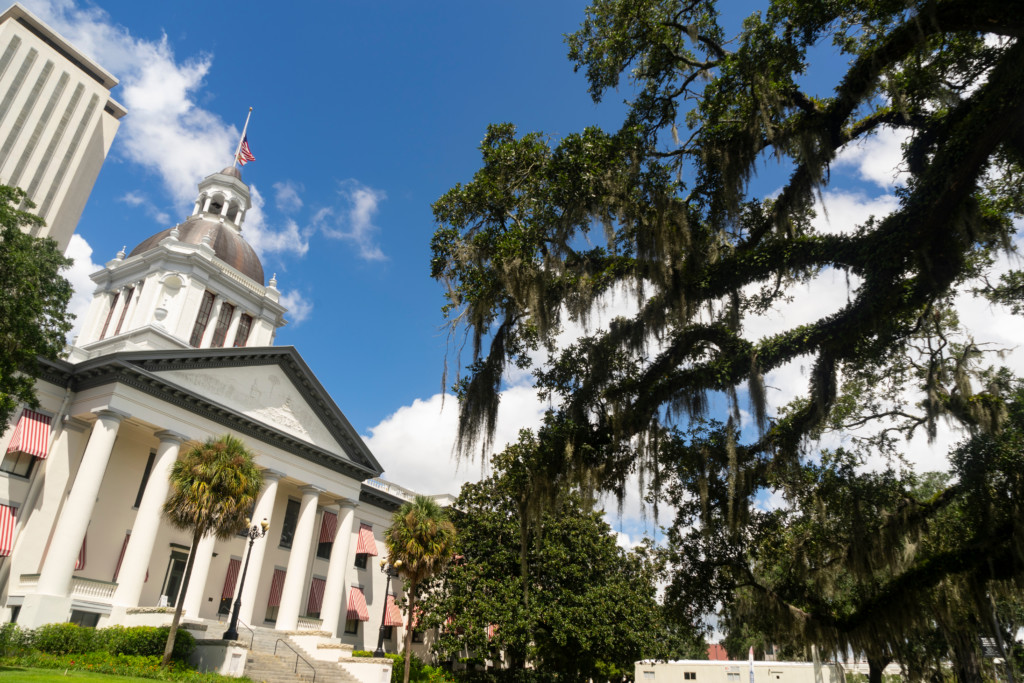
An education choice bill that would streamline options for families who receive state scholarships won approval today from the House Appropriations Committee and is headed for a floor vote.
HB 7045 passed with Democratic Reps. James Bush III of Opa-Locka, Anika Omphroy of Sunrise, Nicholas Duran of Miami, and Patricia H. Williams of Fort Lauderdale joining the Republicans in supporting the bill.
The bill would simplify navigation of the programs for families by merging the state’s two scholarship programs for students with unique abilities, McKay and Gardiner, and combining them with the Family Empowerment Scholarship program approved in 2019. One category of the Family Empowerment Scholarship would serve students with unique abilities and special needs while the other would continue to serve lower-income families.
The bill would leave intact the Florida Tax Credit Scholarship program, which is funded by corporate tax donations, and the Hope Scholarship program for students who have experienced bullying at their district schools. The bill would simplify eligibility requirements by aligning qualifying income levels of the Florida Tax Credit Scholarship with the Family Empowerment Scholarship. Each program currently has different income requirements.
The bill also would provide one-stop shopping for families by placing management of the Family Empowerment program under nonprofit scholarship organizations, which include Step Up For Students, host of this blog.
Under the bill, families currently receiving flexible spending dollars under the Gardiner program would continue to receive their scholarships as education savings accounts; McKay’s traditional scholarships would be converted to education savings accounts starting in the 2022-23 school year. Families currently participating in each program would receive whichever dollar amounts were higher, whether that was in current law or in HB 7045.
“Current McKay or Gardiner students will never receive one dollar less than they do today,” said the bill’s sponsor, Rep. Randy Fine, R-Palm Bay.
The bill also would make it easier for lower-income families to qualify for their category of the Family Empowerment Scholarship program by eliminating a requirement that students attend a district school the previous year to qualify for the scholarship. That requirement resulted in some families whose incomes took a hit due to a tragedy or during the pandemic from being turned down for scholarships that would have helped them keep their children in their private schools.
Fine said the bill “reduces complexity without consequences.”
He said in approving the patchwork of programs, legislators “created needless complexity by having four different scholarship programs that try to solve two different problems. We want to address the complexity without taking away any choice.”
The bill was filed as a companion to SB 48, which cleared its last committee in March. It now heads to the House floor for approval.

Chrissy Weisenberger of Palm Bay made creative use of her education savings account, converting a swimming pool into a ball pit for her two sensory-challenged daughters. Sometimes, the whole family joins in.
Chrissy Weisenberger is one busy mom.
With five children, including 3-year-old twin boys and two daughters who are both on the autism spectrum, homeschooling the whole brood made the most sense for the family. It allows her to design each child’s learning plan to best fit his or her educational needs.
“It’s very Frankensteined,” joked Weisenberger, who lives in Palm Bay, Florida, a city southeast of Orlando known for its sports and nature parks.
By that, she means like many homeschool parents, she has strategically used a little of this and a little of that, a grassroots method of creating the perfect learning environment for her family.
Her two daughters, Keira, 8, and Tessa, 6, are on the autism spectrum and participate in the Gardiner Scholarship Program for students with unique abilities. The scholarships allow parents to customize their child’s education by using flexible spending accounts called education savings accounts.
While traditional vouchers pay for private school tuition, the savings accounts are more flexible. The Florida Department of Education transfers a portion of a child’s funds from the state education formula to a state-approved nonprofit organization, such as Step Up For Students, which puts these funds into an account for each child. Parents then apply to this nonprofit for permission to use their child’s ESA funds to buy state-authorized educational services and products.
The girls need help to stay focused on learning, so in addition to purchasing educational materials such as books and workbooks, Weisenberger has used her daughters’ education savings accounts to buy specialized equipment such as swings, which calm kids with autism, and a mini trampoline that helps with balance and gross motor skills.
She bought two chewable necklaces for Keira, who otherwise would chew on her hair during class. She bought the girls laptops to access virtual lessons in math and reading, which she says were a godsend during the pandemic when co-op meetings with other homeschool families were canceled. And she bought them a kit that taught them how to build a volcano.
Most Gardiner families typically make purchases through MyScholarShop, Step Up For Students’ online catalog of pre-approved educational products. The platform includes curriculum materials, digital devices, and education software. Families may be able to purchase items or services not on the pre-approved list by submitting a pre-authorization request that includes supporting documentation and an explanation of how the purchase will meet the individual educational needs of the student.
An internal committee, which includes a special needs educator, conducts a review to determine if the item or service is allowable under the program’s expenditure categories and spending caps, and a notification is sent to the parent. The item or service may then be submitted on a reimbursement request that must match the corresponding pre-authorization.
Step Up For Students employs numerous measures to protect against fraud and theft. For example, if a service provider’s reimbursement request is submitted from an IP address and the platform sees that the parental approval came from the same IP address, the anti-fraud staff is alerted to investigate.
Weisenberger followed this process to purchase one item not on the pre-approved list: a $25 inflatable kiddie pool.
While a swimming pool would not qualify as a reimbursable expense under the program’s rules, Weisenberger’s proposed use made it eligible. Inspired by a Pinterest post, she converted the rectangular pool, which she ordered from Amazon, into a ball pit that she filled with almost 3,000 plastic balls. Her girls use the reconfigured pool to help them with balance.
But Weisenberger’s creativity extends further. She’s devised a way to use the pool to help her kids with math.
Using three buckets, she teaches place value by having them put the appropriate number of balls in each. For example, the number 436 would be represented by putting four balls in the hundreds place bucket, three balls in the tens place and six balls in the one place buckets.
The inventive mom has found yet another way to utilize the purchase. She pours the balls over Keira as a way to soothe her sensory-challenged daughter.
Weisenberger, who learned about Gardiner from a speech therapist two years ago, said she is very pleased with the program. While she suspects two of her other children may qualify for a scholarship, the funding she presently receives satisfies the family’s learning needs.
“I don’t want to take it away from somebody else who needs it,” she said.
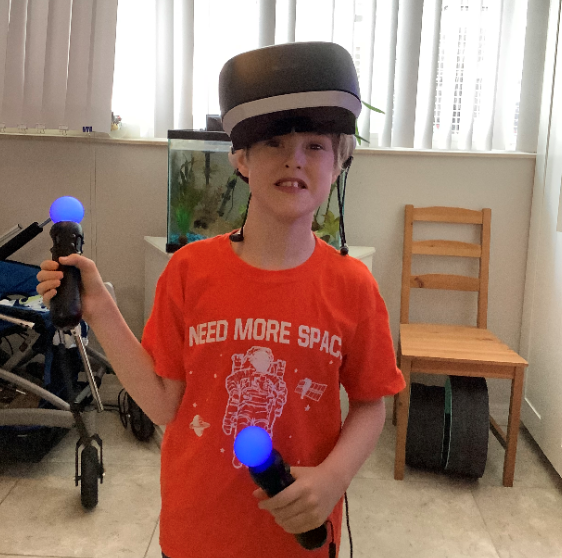
Tristan Drummond, 8, has increased his attention span, improved his hand-eye coordination, and developed his core strength through virtual reality.
Danielle Drummond was skeptical when she first saw the virtual reality headsets and consoles, and even the large-screen TVs, that are available to families who receive Florida’s Gardiner Scholarship for students with special needs.
“At first, I even wondered, ‘What on earth is the educational value of this?’” said Drummond, who lives in Fort Lauderdale.
It was 2018 and Drummond’s son Tristan, who is on the autism spectrum and is homeschooled, had recently undergone back surgery to correct a tethered spinal cord, which he had since birth. Drummond hoped Tristan, 6 at the time, could relearn to walk with the help of virtual reality.
Virtual reality has been used since the mid-1990s to help people on the spectrum learn to communicate and connect with others. Adults can use the technology to prepare for job interviews. Children use it to improve cognitive and gross motor skills.
Drummond believed the VR equipment could do the same for her son. She purchased the equipment with funds from Gardiner’s education savings account (ESA) through MyScholarShop, Step Up For Students’ online catalog of pre-approved educational products. It includes curriculum materials, digital devices, and education software.
Families can also purchase items or services that are not on the pre-approved list. They must submit a pre-authorization request that includes supporting documentation and an explanation of how the purchase will meet the individual educational needs of the student.
A review is then conducted by an internal committee, which includes a special needs educator, to determine if the item or service is allowable under the program’s expenditure categories and spending caps, and a notification is sent to the parent. The item or service may then be submitted on a reimbursement request, and it must match the corresponding pre-authorization.
Step Up For Students employs numerous measures to protect against fraud and theft. For example, if a service provider’s reimbursement request is submitted from an IP address and the platform sees that the parental approval came from the same IP address, the anti-fraud staff is alerted to investigate.
Thanks to the VR equipment made possible by the ESA, Tristan, now 8, did relearn to walk. But that was just the beginning.
“Then we discovered it had a lot more value,” Drummond said.
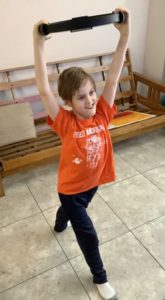 Since he began using virtual reality, Tristan has increased his attention span, improved his hand-eye coordination, and developed his core strength. He has learned how to interact socially, how to count and how to exercise.
Tristan cannot go on field trips like other students. He can’t even sit in a movie theater.
However, through virtual reality, Tristan has visited Walt Disney World’s Epcot Center and the Smithsonian Institute in Washington, D.C. He landed on the moon with Apollo 11, and went scuba diving through the Great Barrier Reef in Australia, where he swam with sharks.
“It’s enriched his life in ways that we would have been otherwise unable to do,” Drummond said.
Tristan also uses VR for his occupational and physical therapy. Drummond said it used to be a chore to get Tristan to participate in therapy.
“We would lose 75% to 80% of therapy lessons trying to get him into a groove to enjoy what he is doing,” she said. “It’s a struggle every parent with a child like Tristan knows.”
But with virtual reality now part of the sessions, Drummond said it only takes Tristan a few minutes to get into the therapy groove.
“So, we’re now getting full therapy sessions and because of that, he’s talking more, he’s interacting with us more. He’s actually becoming more social,” she said. “It’s gotten him into being healthier, because he has the ability to do physical therapy, which is absolutely his favorite thing to do.”
The technology also helps Tristan overcome his fear of visiting a place for the first time, like a medical facility. He can tour the facility virtually ahead of time.
“But now with the virtual reality, I can set him up on that, have the exact place we are going on it, and allow him to look around in a safe environment,” Drummond said. “That way when he finally goes, I don’t have to make plans for our arrival like an army general. I don’t have to have 500 contingency plans because he’s expecting it. He knows what it’s going to sound like. What it’s going to look like. He’s going to know where things are. All these things help him get acclimated and actually get more out of going to these places.”
Drummond never thought that Job Simulator on Oculus Quest, or the Ring Fit Adventure game for Nintendo Switch, or Beat Saber would improve Tristan’s life in so many ways, but they have.
“They’re a lot of fun, but it’s also a way to sneak education into him,” Drummond said. “I don’t know if I can really say it enough about it. It just helps him to do pretty much everything. He has a blast with it.”
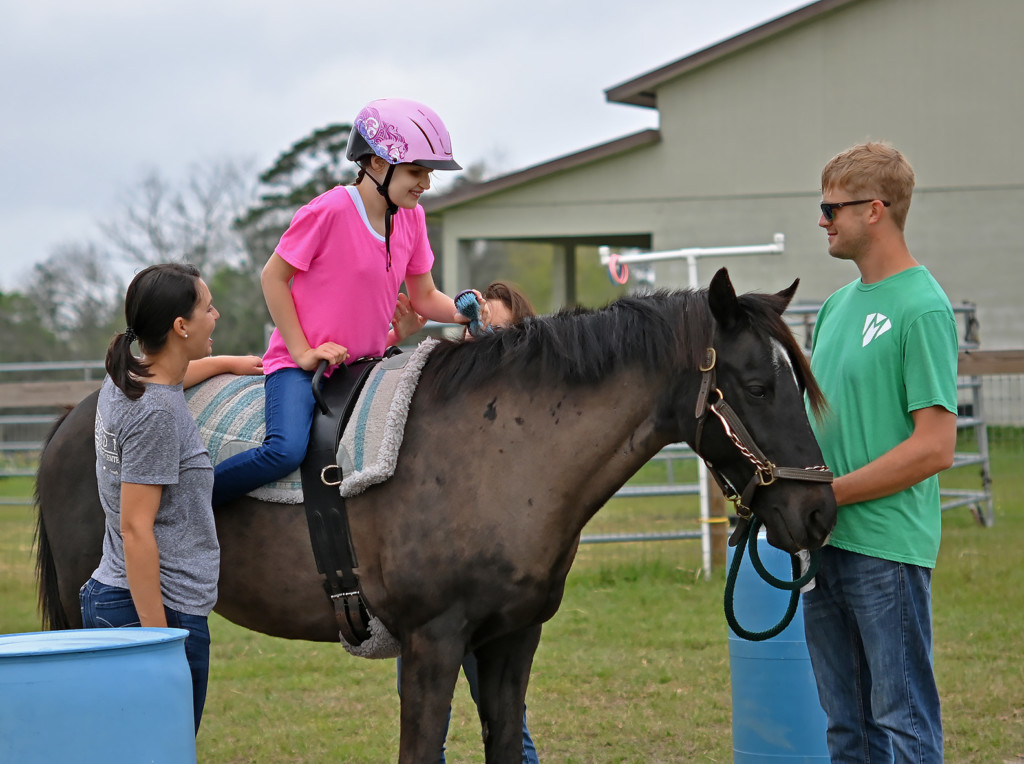
Sarah Clanton, blind since birth, gives commands to her horse, Cappy, at the Emerald M. Therapeutic Riding Center as owner and therapist Lisa Michelangelo, left, lends support.
Editor’s note: You can read an earlier story about Sarah Clanton here. Be sure to watch the video of Yvonne Clanton telling Sarah’s story at the end of this post.
Yvonne Clanton realizes some might question why a state scholarship would pay for kids to ride horses.
She wondered herself, until her daughter Sarah began attending weekly sessions at Emerald M Therapeutic Riding Center in Brooksville. The farm is nearly an hour from the Clantons’ home in Zephyrhills, but the experience, Clanton says, has been “life changing.”
Born blind and severely developmentally delayed, Sarah, now 14, spent her early years warehoused in an orphanage in Ukraine. Strapped to a bed for nearly 24 hours a day, she was never held or cuddled. When Clanton and her husband, Jon, adopted Sarah at age 5, Sarah was wearing infant-sized clothing. She could not walk or talk.
The Clantons tried unsuccessfully to educate Sarah through their school district’s homebound program. Next, they tried sending her to a small private school, but when one of her brothers, who is visually impaired and has cerebral palsy, got sick and had to be hospitalized, the family opted to homeschool both children.
Now, Sarah and her brother Sam both participate in the Gardiner Scholarship Program for students with unique abilities administered by Step Up For Students, which hosts this blog. The Clantons use the education savings accounts attached to their Gardiner Scholarships to cover the cost for both children to attend Emerald M, among other purchases, which they would not be able to afford otherwise.
“It was our last hope,” Clanton said, explaining that if this therapy, designed to make Sarah stronger, failed, the only alternative would have been purchasing a lift system on a track to support Sarah throughout the house. A bathroom renovation looked inevitable, another pricy item for a family of six whose sole breadwinner, Sarah’s father, is pastor of a small church and a prison chaplain.
The Clantons applied and were approved through Step Up For Students’ detailed process to use their Gardiner funds at Emerald M, which has been an authorized Gardiner service provider since 2016.
After each therapy session, Emerald M is required to submit a request for payment via Step Up’s direct-pay process. The secure platform routes the request to the parent for approval once staff determines the purchase meets state eligibility guidelines.
Step Up also has an online catalog of pre-approved educational products, such as curriculum materials, digital devices, and education software, that families may select. Families may also purchase items and services out of their own pockets and submit receipts and supporting documentation to Step Up for review for reimbursement.
That process includes an internal review committee with a special needs educator; regular input from a statewide Gardiner parent advisory council; and a long list of limits and prohibitions on certain expenditures and categories of expenditures. Reviewers examine each application to determine not only its eligibility but also its appropriateness for that child’s learning plan.
Step Up uses technology to look for evidence of attempted fraud or theft. For example, if a service provider’s reimbursement request is submitted from an IP address and the platform sees that the parental approval came from the same IP address, the anti-fraud staff is alerted to investigate.
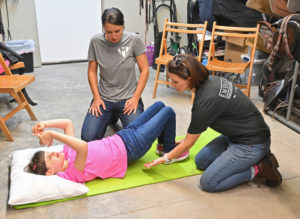
Sarah's therapy includes movement exercises that have improved her agility both on and off the horse she rides at Emerald M.
Clanton says the therapies have been a godsend for Sarah over the past three years. Sarah, who was non-verbal when she arrived at the riding center and shied away from human touch, had to be carried to the riding ring by her brother.
Then she met Cappy, a dark bay horse with a gentle trot. Sarah learned how to circle the ring atop Cappy as a therapist gave her commands to give to the horse. As Sarah began experiencing the horse’s movements, which mimic the human gait, her balance and coordination improved. She learned how to orient herself in space.
Emerald M owner Lisa Michelangelo, a physical therapist, has observed Sarah making “incredible gains” this past year.
“She is able to walk best now with just one arm linked around someone else, and she is walking straighter and not showing the drastic signs of hip drop that she was before” Michelangelo said. “Her core, pelvis and hips continue to get stronger each week.”
Clanton has purchased a few other items with funds from her education savings account, such as a therapeutic swing and a lighted wall that makes water noises. Research shows both devices help calm children with special needs like Sarah’s and Sam’s.
Today, Sarah accompanies Clanton on outings to restaurants and to church. Slowly, Sarah is learning to be more social. And she’s learning to talk.
One of her most frequently uttered words is “horse.”
https://youtu.be/bJ462heH1xs

