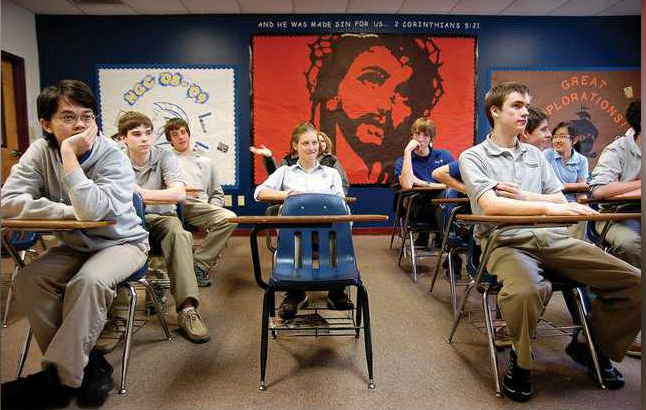
North Georgia Christian Academy in Ellijay, Georgia, is one of 855 private schools in the state serving more than 158,000 students. Established in 2003, North Georgia Christian is a top rated, accredited, independent school committed to helping children find God’s purpose for their lives.
Editor’s note: This commentary from McShane, director of national research for EdChoice, appeared Tuesday on the EdChoice website.
As the Georgia Legislature debates a new expansive education savings account program, a familiar cry has arisen from opponents: We cannot possibly send public money to private schools because they are not accountable for it.
Patricia Hugley-Green, a Muscogee County school board member, put voice to this thought when she told WTVM, “That same accountability for testing, that same accountability for having quality-based education, that needs to be also a requirement for private schools.”
Let’s tackle that sentence in two parts. The first implies that Georgia public schools are held accountable for a quality-based education, and the second that Georgia private schools are not. Both are wrong.
With respect to educational quality, it is far from clear that Georgia public schools are in any way held accountable.
If we look at results on the National Assessment for Educational Progress, and we look at the lowest performance category, we see that 41% of Georgia eighth graders scored below basic in math and 31% scored below basic in reading. They could not clear the lowest bar that the exam sets.
And, what’s worse, the trend is moving in the wrong direction. In 2019, only 33% of Georgia eighth graders scored below basic in math and only 28% scored below basic in reading.
What, if anything, has happened to public school leaders as a result of these disturbing levels and trends?
Yes, technically the state of Georgia has an accountability system. It is a complicated, Rube Goldberg-like system that utilizes standardized test scores and several other measures to ostensibly hold schools academically accountable, but little ever comes of the ratings and measurements that they create.
If you want to see it in all of its glory, you can head to the Georgia Department of Education’s website and find the 132-page document it submitted to the Federal Government to comply with the Every Student Succeeds Act that details the state’s program. It has so many provisions and alternative measurements and carveouts to make it next to incomprehensible.
Somehow, it does churn out an identification of the lowest 5% of schools, but are they actually held accountable? Not really.
In fact, getting classified as needing comprehensive or targeted school improvement actually qualifies a school for more support from the state. Now, this might be the right course of action, and these schools could very well benefit from that intervention, but it is a far cry from what people think when they hear the word “accountability.”
As an aside, would those who want to make participating private schools part of the state’s accountability system support the state providing additional resources for private schools that score too low on the state’s standardized tests? Something makes me think they wouldn’t.
So now let’s look at the second part of Ms. Hughley-Green’s statement. Are private schools accountable for a quality-based education?
Private schools live or die based on enrollment. Parents have to make an active choice to send their children there. If the educational quality is low or if the school is wasting money on pointless things, parents are in full view and can leave, especially with the financial support that programs like education savings account provide.
There is no 132-page system with standardized testing and alternative measurements and multi-stage equations. There are just their ears and eyes. They can personally examine the work that their child is doing and judge whether or not it is useful or challenging. They can speak to their child’s teacher or principal and ask questions about the education their child is receiving. And again, they can always leave if they don’t like what they find.
No system of schooling is perfect. It is a tall order to educate hundreds of thousands or millions of students from diverse backgrounds and with diverse needs. There will always be some number of schools that underperform. You cannot micromanage that away.
Ultimately, parents are closest to their children, know their children better than anyone else, and have the strongest incentives to get the best possible education for them. That doesn’t mean that they are perfect. That just means that they’re better.
Safeguards must be put in place as a fall back (and things like regular audits are part of existing education savings account programs in other states and should be part of any program going forward), but they should be designed to support and work with parents and give them the best information they need to make informed decisions.
That is how we hold schools truly accountable.
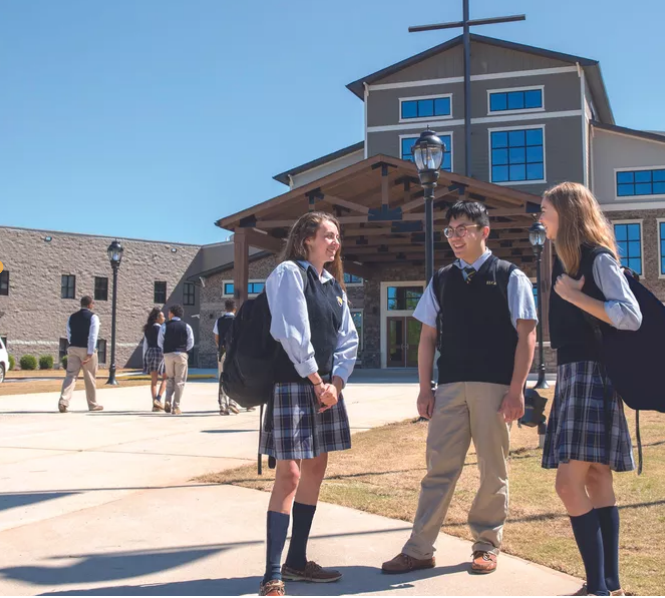
Eagle’s Landing Christian Academy in McDonough, Georgia, one of 824 private schools in the state serving nearly 153,000 students, boasts rigorous academics with every discipline taught with a biblical worldview.
Editor’s note: This article appeared last week on thecentersquare.com.
Georgia lawmakers are almost certain to discuss school funding and even school choice legislation during this year’s legislative session.
"I think we’re going to have a very robust discussion when it comes to school funding, when it comes to vouchers and other issues that come before us," House Speaker Jon Burns, R-Newington, said during a press conference this week.
"I believe we have ... a very diverse state when it comes to education funding, whether you’re from rural Georgia, or whether you’re from urban Georgia, and how funding impacts us all and comes into this equation."
During last year’s session, the Georgia Senate scuttled Senate Bill 601, the Georgia Educational Freedom Act.
The measure would have created state-funded Promise Scholarships of up to $6,000 a year. Families of K-12 students in Georgia could have used the money for private school tuition and other education expenses, such as tutoring and homeschool curriculum.
"Parents are demanding more options in education, spurred on by the seismic changes we’ve seen in K-12 schools during the pandemic," Buzz Brockway, executive vice president of public policy for the Georgia Center for Opportunity, said in a statement in response to Gov. Brian Kemp declaring Jan. 22-28 as National School Choice Week.
To continue reading, click here.
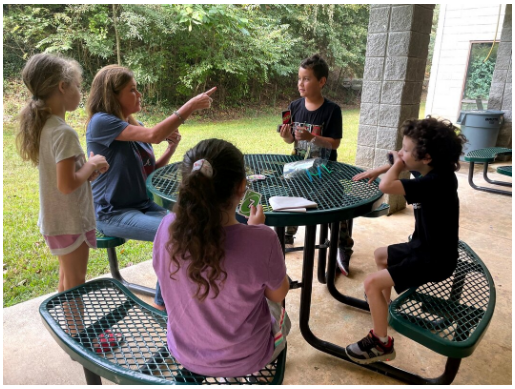
The Academy of Innovation in Gainesville, Georgia, strengthens the learning skills of students who struggle in a traditional classroom setting, including those who are dealing with specific learning disorders such as dyslexia and ADHD, and helps them succeed in any learning environment.
Editor’s note: This first-person essay from Georgia grandmother Martha Megahee was adapted from the American Federation for Children’s Voices for Choice website.
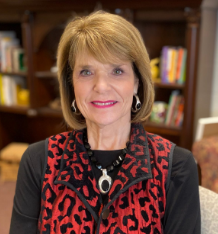
Martha Megahee
My grandson Grayson has attended the Academy of Innovation in Gainesville, Georgia, since he was 8 years old. The academy is a private school that helps children like Grayson who have had reading and learning challenges. Grayson, who is now 15, has been fortunate to attend the academy on a tax credit scholarship.
The Georgia Private School Tax Credit law allows eligible private citizens and corporations to receive tax credits for donations to scholarship funding organizations, which provide scholarships to parents of eligible children who want to attend private schools. For our family and for many others, these tax credit scholarships are a godsend.
Grayson contracted bacterial meningitis when he was just shy of 2 years old. The doctors told us that if he managed to live for 9 hours, he might survive. I was living in Richmond, Va., at the time. I got to Georgia as quickly as I could to be with Grayson, who lived through that first 9 hours but lost hearing in one ear and needed physical therapy to learn to walk again.
Once he recovered, he did not appear to be cognitively impaired, but we were told we wouldn’t know if he would have learning disabilities until he started school. We did know even then that he was hyperactive and had anger management issues. We enrolled him in a private school for kindergarten and first grade, but that’s when the problems began.
School staff had to pry him out of the car in the carpool lane because he refused to go to his classroom. His mom would have to come to get him most days before noon because he was so disruptive. We decided to have Grayson tested at Emory University and learned he had severe ADHD and probably was dyslexic. We didn’t know where to turn.
Then we found out about the Academy of Innovation. The academy started in 2007 and grew out of a tutorial service with about 20 students. The staff take a personalized approach to teaching children in grades 1 through 12 using research-based teaching methods to individually address the needs of students like my grandson who face learning barriers.
Grayson was able to start his journey there by attending a summer program and we enrolled him in the fall. His turnaround was miraculous. Before the Academy of Innovation, he hated school so much. He felt like a failure every day. But it wasn’t long after he got to the academy that he was reading beyond his grade level.
Grayson became interested in computers and can now envision a career in IT. He feels good about himself. He feels successful. He is successful. And it’s all thanks to Academy of Innovation and a tax credit scholarship. We will be forever grateful.
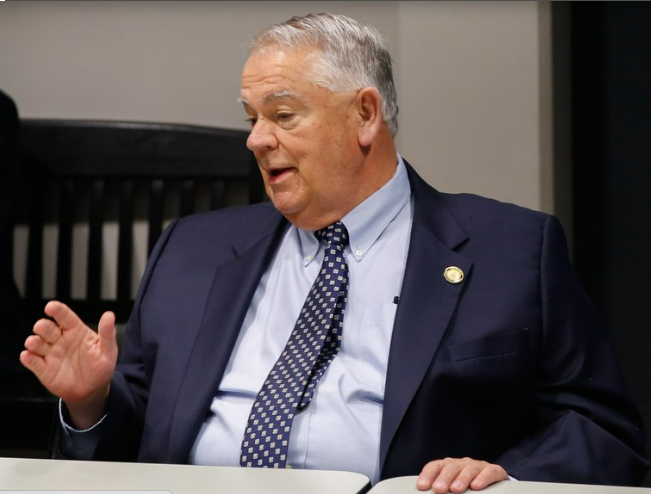
Georgia House Speaker David Ralston called the measure to increase the current $100 million cap “a further investment to provide students and their parents with greater school choice.”
Editor’s note: The following is the text of a news release issued earlier today by the AAA Scholarship Foundation.
On behalf of the many families and students it serves, AAA Scholarship Foundation today offers sincere thanks to Georgia Gov. Brian Kemp, Lieutenant Gov. Geoff Duncan and House Speaker David Ralston on the passage yesterday of HB 517, a bill that will increase the Georgia K-12 education tax credit program to $120 million from $100 million.
The legislation would also make permanent an increase to the program that was set to expire soon and expand the types of entities that can contribute to these important educational scholarships. HB 517 will allow the AAA Scholarship Foundation to serve more families through critical needs-based scholarships and help these students accomplish their educational goals with greater success.
"I am very proud of my fellow lawmakers in approving an increase in Georgia's tax credit scholarship program,” said bill sponsor Rep. John Carson. “Under HB 517, more families will be able to choose the school that best meets their child's needs, Georgia taxpayers will be able to contribute more per family, and the state will have increased transparency, disclosure and cost savings. Truly a win for everyone, especially Georgia's kids in need of educational opportunities."
HB 517 has been transferred to the Office of Gov. Brian Kemp and is awaiting signature.

Ryan Robins, shown here with his father, struggles with a form of dyslexia that caused him to fall far behind his classmates before his parents found out about the Academy of Innovation in Gainesville, Georgia, and the Georgia Special Needs Scholarship Program.
Editor’s note: This first-person essay from Georgia mother Karen Robins was adapted from the American Federation for Children’s Voices for Choice website.
My name is Karen Robins, and my son Ryan struggles with dyscalculia, or math dyslexia. It affects his ability to understand numbers – in dates, when telling time, when counting money, and when learning math facts.
Throughout his elementary school years, my husband and I moved Ryan from a public school to a private Montessori school and back to a public school. He continued to fall further and further behind his peers. He was fortunate to have some talented special education teachers who did their best to serve him, but it just wasn’t enough. He continued to decline. He felt like a failure.
As a fifth grader, his test scores showed he was performing in math at a pre-kindergarten level. There was no way he could understand fractions, let alone master them. His struggles carried over to other subjects, including reading, where he was performing at a first-grade level.
Ryan would come home from school feeling frustrated. Homework assignments that should have taken an hour to complete dragged on for four hours. His self-esteem plummeted and he became convinced he was stupid. His friendships and social interactions suffered because so many of the games his friends enjoyed required counting and numbers.
It didn’t help that he had been held back twice and was older than his classmates.
His teachers meant well, but they didn’t know what to do for him. By the time he was old enough for sixth grade, I knew he needed a specific dyslexia program to be successful, but our school district didn’t offer it. That’s when I found out about the Academy of Innovation in Gainesville, Georgia, about an hour from our home.
The Academy of Innovation is a non-profit, accredited private school with a personalized and positive approach to teaching children in grades 1 through 12. It compliments, rather than competes, with the community’s public education system, offering innovative approaches and proven, research-based teaching methods that address the individual needs of students like Ryan who face learning barriers.
And fortunately for us, the school accepts the Georgia Special Needs Scholarship Program, a school choice program available for special needs students attending Georgia public schools who are served under an Individualized Education Plan. I’ve been able to factor the substantial commute into my schedule, but there would have been no way we could have sent Ryan to the academy without the scholarship.
Ryan has been at the school for a year, and he’s experienced a complete turnaround. He can spell, he can read, and he’s working on math skills, all because teaching and learning is achieved in a different manner at this amazing school. I always suspected that Ryan’s challenges weren’t due to a lack of intelligence; he just required a different teaching method, and that’s what we’ve found at Academy of Innovation.
A couple of weeks ago, all the students in Ryan’s class were assigned book reports. Each of them chose a famous person who had dyslexia, like George Washington and Albert Einstein. Just recently, Ryan said to me, “Ask me how to spell anything. I know how to spell now because I understand how letters work.”
Knowing my son is at a school that offers children with dyslexia the support they need is so reassuring. It’s a joy to see Ryan thriving, to know that he no longer considers himself stupid. And he loves being with other kids like him, children who learn differently like he does.
School choice to me means being able to select the school that’s the best fit for your child and being helped with the resources so he or she can attend that school. Not every school fits every child. I’ve seen that over and over, with my own child and with children in other families.
Looking back, I wish we had found the Academy of Innovation when Ryan was in first grade, but I’m grateful Ryan got there when he did.
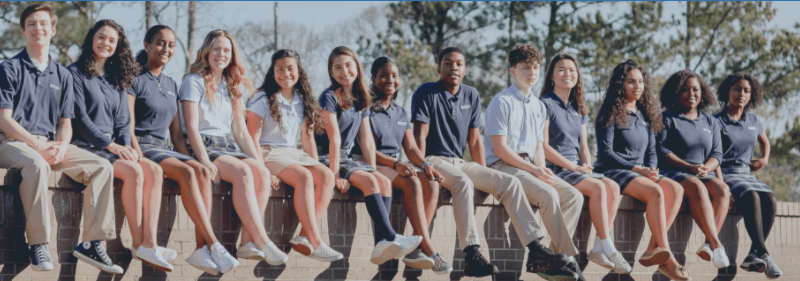
Killian Hill Christian School in Gwinnett County, Georgia, is one of 831 private schools serving more than 153,000 students in the state. A strong community of parents, faculty and staff are dedicated to preparing students to be Christian leaders of the future.
Editor’s note: This article appeared Tuesday on georgiarecorder.com.
A new school voucher bill sponsored by Georgia Senate Pro Tempore Butch Miller moved forward in a Senate committee Tuesday.
Senate Bill 601, or the “Georgia Educational Freedom Act,” would provide a $6,000 scholarship to nearly all of Georgia’s approximately 1.7 million public k-12 students to switch to a private school.
Children should not be limited to the school they happen to live near, said Miller, a Gainesville, Georgia, Republican who is running for lieutenant governor. He argued giving parents the means to send them elsewhere will help them succeed.
“I couldn’t be more thankful for the teachers and employees of our school systems, not just in my community, but around the state,” he said. “However, every child is different, every system is different, and not everyone in our state is blessed with the opportunities my children have had, and I think that we’ve seen through the pandemic that there are more options, parental options for our schools.”
School vouchers have been a perennial issue at the Capitol, with opponents decrying them as a means of funneling public dollars to less accountable private institutions.
Miller argued against that idea with a common talking point in the “school choice” movement. While the proposed law would take away the state portion of the money allocated to educating a transferring student, the school would still receive the local portion of the funding, resulting in a net gain, he said.
To continue reading, click here.
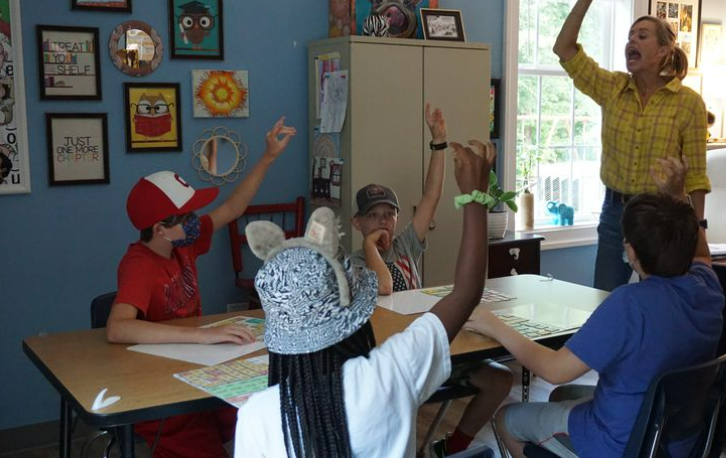
Brookwood Christian School in Acworth, Georgia, serves students who have not been successful in public or private schools due to their unique learning needs. The school participates in the Georgia Special Needs Scholarship Program.
Editor’s note: This article appeared Monday on The Center Square.
Georgia's school choice programs saved taxpayers at least $605 million in fiscal year 2018, an updated analysis by EdChoice found.
EdChoice examined the fiscal effects of 40 private educational choice programs in 19 states and the District of Columbia. The nonprofit found the Georgia Special Needs Scholarship Program and the Georgia Qualified Education Expense Tax Credit saved taxpayers between $605 million and $1.1 billion in fiscal 2018.
Each taxpayer saved money on the sum they would have paid in taxes for each student enrolled in the program to attend public schools. The programs saved each taxpayer between $4,355 to $8,013 per student, according to the report.
Georgia Center for Opportunity Vice President of Public Policy Buzz Brockway said the report dispels some misconceptions about school-choice programs.
"There is a falsehood out there that if we expand access to different educational options for Georgia families, we'll end up hurting traditional public schools," Brockway said. "Data like this from EdChoice clearly show this isn't the case."
To continue reading, click here.
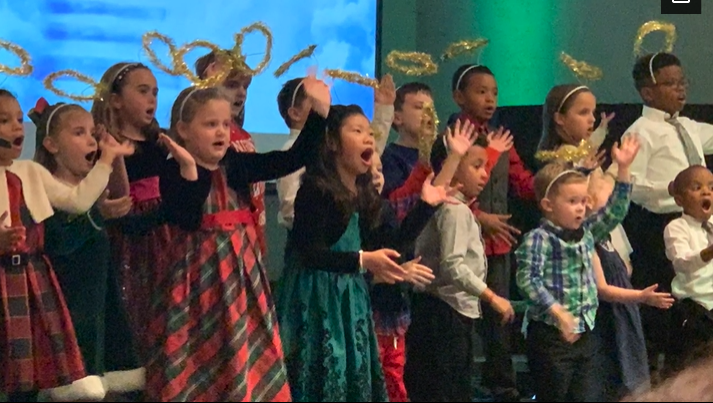
Central Christian School opened in September 1965 as the fourth Christian school ministry in the state of Georgia. The school participates in the GOAL Scholarship Program, which extends educational opportunities to thousands of children through the state.
Editor’s note: This first-person essay from Georgia mother Desiree Williams was adapted from the American Federation for Children’s Voices for Choice website.

Desiree Williams and her son, Kyle
My name is Desiree Williams, and I am the parent of a 16-year-old named Kyle.
My son has been attending Central Christian School in Sharpsburg, Ga., since sixth grade. I learned about the school from a friend whose son was attending. She told me about Central Christian because she knew I was looking for a smaller environment for my son because I knew he would learn better that way.
I believe it is so important for parents to be able to choose where their children attend school, because all children learn differently. They have different needs, so a parent’s ability to have a say in their teaching environment is crucial to how and what they learn.
At Central Christian School, my son gets the attention he needs while following the basic class curriculum for his grade level while having the opportunity to participate in a college-bound program. Every student at Central Christian has the chance to take advanced classes to prepare for higher learning after high school.
Central Christian also offers a structured environment that teaches basic Bible reading and the word of God, which I feel is important, as it means students are less likely to avoid troublesome situations and make better life choices.
There are so many things that I love about Central Christian School. One aspect I particularly appreciate is the staff. The principal, the vice principal, and all the teachers are amazing. I can tell that this is not just a job for them, it is their calling. They are very passionate, God-fearing individuals that love each child. They go out of their way to make sure every child gets all the help they need to succeed.
Central Christian has an open-door policy that encourages parents to reach out at any time to talk about our children. The staff is very quick to answer any and all questions and address any concerns we may have. And volunteering is recommended, encouraged, and welcomed at Central Christian.
When I leave my child at Central Christian, I am comfortable knowing he is in a good environment. Knowing your child is learning and thriving, and exceeding expectations, is the best feeling in the world for a parent. It’s something every parent deserves, regardless of background and income level.
As a single mom, I have endured many struggles, physically and financially, to keep my son in attendance at Central Christian. School administrators have been a huge help, and I will be eternally grateful for their support.
Arizona: A former school teacher criticizes the state superintendent of public instruction for his support of Common Core and school choice (East Valley Tribune). The Sierra Vista Herald editorial board says the state superintendent's support of ESAs hurts public schools. Applications for Empowerment Scholarship Accounts doubles (Heartlander). The Arizona Republic editorial board opposes allowing public funding to go to private schools, especially now that the state support for ESAs exceeds the state support for public schools (note: the editorial board's calculation excludes local support for public schools). A consultant at a scholarship organization is indicted for stealing $529,000 in scholarship money (Arizona Republic).
California: Vanila Singh, a professor and physician at Stanford University and congressional candidate, says school choice is the key to student success (Mercury News). The California Charter Schools Association has sued the West Contra Costa School District for withholding tax revenue intended to fund charter schools (Contra Costa Times). Charter schools struggle with online assessments (FSRN Radio).
D.C.: Two charter schools allegedly under federal investigation for possible discrimination say they have never received a complaint from a student or parent (Washington Post). President Obama sends his daughters to Sidwell Friends, an elite private school that refuses to release information on student course completion and graduation rates (Washington Post).
Florida: The tax-credit scholarship expansion will allow the program to serve higher-income families (Education Week, Tampa Tribune, WJHG TV). More low-income families will benefit from the tax-credit scholarship program if the Governor signs the bill into law (Florida Times-Union). The state passes the nation's second education savings account program (Foundation for Excellence in Education). Daphne Cambell (D-Miami-Dade) says she voted to expand the program because giving poor kids more options is the right thing to do (Miami Herald). The Tampa Tribune editorial board says the scholarship expansion is justified because every student deserves to find a school that works well for them. Brian Tilson, owner of a communications firm in Boca Raton, says the scholarships are unpopular and are hurting public schools (Gainesville Sun). Ron Matus, the editor of redefinED, says more progressive Democrats support parental choice (Gainesville Sun). The scholarship program helps families afford Jewish day schools (Chabad News). State Impact talks with Sen. John Legg about the legislative session including the passage of the scholarship bill. Marc Yacht, a retired physician, say charter schools should be more regulated and held to the same standards and rules as traditional public schools (Sun Sentinel).
Georgia: The Southern Education Foundation helps file a suit to overturn the state's tax-credit scholarship program (Watchdog). A former reporter sends her daughter to a charter school and says each school is so different it is difficult to compare them to each other let alone public schools, and that is a good thing (Atlanta Journal Constitution). (more…)
 Alabama: The Institute for Justice, a national civil rights law firm, says vouchers are constitutional in the state (Al.com).
Alaska: School choice opponents voice their concerns at a public hearing over a constitutional amendment to allow public funding of private schools (Anchorage Daily News, Nonprofit Quarterly). The proposed constitutional change passes the House Education Committee but the amendment faces a tough road ahead (Anchorage Daily News). There are 27 charter schools in the state with no cap on how many schools may operate (Alaska Dispatch).
Arizona: The state has many school choice programs (Camp Verde Bugle). A state court rules the Department of Education cannot recoup $5.9 million in over-payments to charter schools due to a change in teacher performance pay because it didn't notify the schools of the rule change (Arizona Republic). Charter school operators plan to open 25 new charter schools in Phoenix (Arizona Republic).
California: Parent trigger elicits emotions from parents on both sides (Hechinger Report). The superintendent of LA Unified says every "student has the right to a choice of a highly effective school" (Reason Magazine). San Diego school board members are attempting to exclude some charter schools from receiving bond money approved by city voters (Fox 5 San Diego).
D.C.: A new study reveals area charter schools are being shortchanged on student funding compared with district schools (Washington Post).
Florida: School choice is growing by leaps and bounds (Sunshine State News). The Palm Beach Post editorial board says giving students public school choice could reduce the disadvantages faced by low-income students. After 17 years as president and CEO of Florida Virtual School, Julie Young announces her retirement (redefinED, Orlando Business Journal). Gov. Rick Scott proposes allowing charter schools access to construction funds if they serve students within attendance zones of low-performing public schools (Tallahassee Democrat).
Georgia: A lawmaker wishes to expand the tax credit scholarship program with a $100 million cap (GPB News).
Illinois: Nobel charter schools name thee schools after donors who give $1 million or more, but the donors do not decide curriculum or which teachers to hire (Chicago Sun Times).
Indiana: The Lafayette Journal & Courier editorial board argues that private schools should continue to take the state test in order to create a fair comparison with public schools. Since vouchers can be worth no more than 90 percent of per-pupil state funding to local school districts, vouchers save the state money (Indianapolis Daily Star). Five voucher schools in the state say they teach intelligent design or creationism (Journal-Gazette). The Star Press editorial board worries that allowing students to use vouchers without ever attending public school creates two classes of education. (more…)

