 On this episode, Tuthill talks to Amy Sams, principal of Southshore Academy in Riverview, and Cuwana Lawson, principal of Woodmont Charter School in Temple Terrace, about the Hillsborough County School Board’s rejection of their renewal applications and the board's subsequent reversal of the decision on the heels of pressure from the state Board of Education.
Sams and Lawson discuss how they responded to the challenge their students and families faced by mobilizing a massive advocacy effort in support of their renewals. They also discuss how their schools have adapted in the wake of the COVID-19 pandemic and where they see the charter school movement heading in the future.
"From week to week ... we had to hold together our staff and families who were questioning if they were going to have a job and where they were going to send their kids to school.”
EPISODE DETAILS:
LINKS MENTIONED:
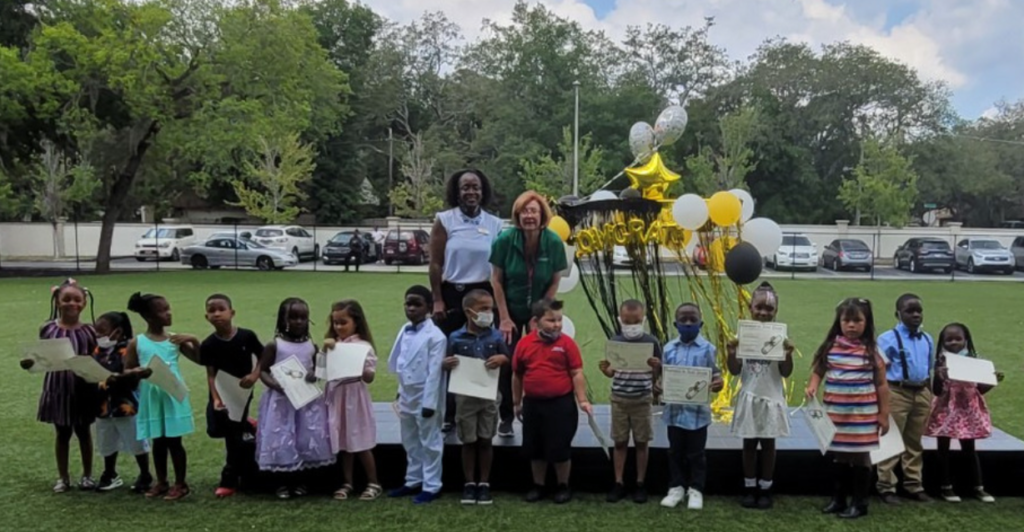
All students at Woodmont Charter School, one of four schools whose renewal application was denied by the Hillsborough County School Board, are considered economically disadvantaged. The school is managed by Charter Schools USA, based in Fort Lauderdale.
Florida education officials today ordered a Tampa Bay area school board to reverse its rejection of renewal applications from four charter schools, an action that it took just two months before the expected return of 2,200 students.
State board members unanimously approved an order drafted by Education Commissioner Richard Corcoran giving the Hillsborough County School District until July 26 to “document compliance with the law” regarding renewal requests from Kid’s Community College Charter High School, Pivot Charter School, Southshore Charter Academy and Woodmont Charter School.
Like all charter schools in the state, these schools are public schools that operate with taxpayer funds but are privately managed. Over the past quarter century, Florida lawmakers have supported legislation making it easier for charter schools to open, particularly in areas close to district schools that have been identified as “low performing.”
“Ultimately the decision has to be based on what’s best for students,” said Dre Graham, executive director of independent education and parental choice at the Florida Department of Education.
A former state teacher of the year, Graham began this morning’s discussion by saying he views the situation through the lens of students who would be disrupted if the schools were forced to close.
“Our responsibility is to provide an equitable educational experience for students in order for them to become the best versions of themselves,” Graham said.
The board vote followed a report from Hillsborough school district leaders about their ongoing efforts to address budget problems that left the district with a $100 million deficit. When local board chairwoman Lynn Gray said she would not approve any spending that did not benefit students, state board member Tom Grady fired back, asking Gray if she were prepared to commit to not spending money on legal fees to defend the district if the charter schools sue the board.
“If we had equal oversight and accountability with our charters, I think a lot of this would go away,” Gray said. She added that school board lawyers had advised her not to go into too much detail on the matter.
Grady was not satisfied. “It is your job to perform under the statute and under the laws and not according to your personal beliefs,” he said.
According to state education officials, the four schools serve high percentages of minority students. Woodmont is classified as a Title I school because 100% of its students are economically disadvantaged. Woodmont and Southshore are managed by Charter Schools USA, a Fort Lauderdale education management company that has a partnership with Step Up For Students, which hosts this blog.
Two of the schools had been operating for 10 years, and the other two had been operating for five years. Southshore and Woodmont earned B grades from the state, while the other two earned C’s.
District staff had conducted a comprehensive review of the charter schools and found no grounds for rejecting the applications, according to a memo from Florida Department of Education attorney Matthew Mears. When the Hillsborough County School Board met June 15, district staff recommended all four contracts be renewed for another five years.
But in what the Tampa Bay Times described as “a stunning departure from past practice,” board members voted to deny the renewal applications. The move meant four schools faced a possible shutdown, potentially leaving families to find mid-year alternatives for their children.
The charter schools received written notice informing them of the decision on June 29, one day before their contracts were to expire. Board members alleged problems with services to students who are gifted or have learning disabilities at Southshore and Woodmont as reasons for the denials. They cited concerns at Pivot and KCC High School about financial stability and academic performance.
On June 23, eight days after the School Board vote, state Education Commission Richard Corcoran sent a letter giving the district until June 29 to renew the contracts or show how the denials were legally justified, threatening to withhold state funding if the district failed to comply.
Gray, the school board chair, responded with a letter stating that board members complied with state law. She also wrote that the schools could appeal the decisions to an administrative law judge.
DOE attorney Mears’ memo says the law requires written notice to be sent at least 90 days before contracts expire. The Hillsborough School District said in its letter that the contracts would expire on Sept. 27, a move that state officials said did not fix the legal violation.
“This action did not cure the violation; there is no provision for unilateral extension of the contracts, and a nonrenewal after the school year begins would result in harm to the educational system, students and their families,” Mears wrote.
The memo also noted that the school board lacked sufficient legal grounds for an emergency contract termination and failed to prioritize student academic achievement in making its decision to reject the renewals.
Mears concluded that the Hillsborough County School Board’s actions gave the state probable cause to take up the matter and that the law gives the Florida Board of Education the authority to order school districts to comply with the law and “ultimately, initiate actions against the school boards for failing to comply.”
The issue drew interest from advocates on both sides, with 50 people filling out requests to speak. To accommodate everyone, state board chairman Andy Tuck had to cut each speaker’s time at the lectern from two minutes to one.
Choice advocates included staff, parents and students at the affected schools. Students praised their teachers. Several parents begged state board members not to take away their choice. Pivot principal Steve Schindler said he has received countless calls from district school leaders over the years to help with students who were having issues in a traditional environment.
“We have always gone out of our way to work with these schools to help those students succeed,” he said. “As long as we have space, we get them in.”
Hillsborough County School Board members have called a special meeting Tuesday to discuss the state board order and determine next steps.
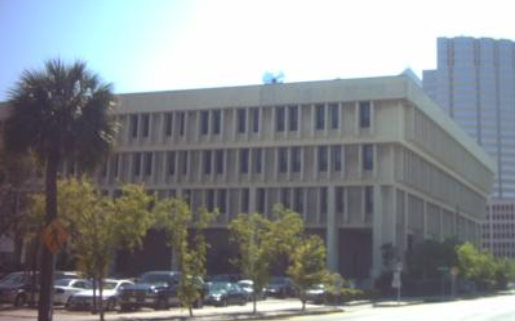
Hillsborough County Public Schools is the nation’s seventh-largest school district with nearly 224,000 students. The district’s vision, as described in its strategic plan, is “Preparing Students for Life.”
Editor’s note: This commentary from state Rep. Chris Latvala, R-Clearwater, appeared today on the Tampa Bay Times.
There can be no argument that the Hillsborough County School Board is struggling to find its footing.
The members seem to be flailing about looking for answers to the very real problems they are facing. Serious financial mismanagement led to a near state takeover earlier this year. Fortunately for the school board, the federal government bailed them out just in time with a huge influx of federal stimulus dollars. While the financial mismanagement is serious, it pales in comparison to tragically low levels of academic achievement across the district.
With 39 chronically low-performing public schools, Hillsborough County School Board owns the distinction of having more persistently failing schools than any other district in the state. And it’s not even close. Their school board has almost twice as many chronically low performing schools as Miami-Dade, Broward and Palm Beach combined.
Most of these schools serve predominately economically disadvantaged, minority students. Two out of every three Black students in Hillsborough County are reading below grade level. The high school graduation rate for Black students is 10 points lower than for white students in Hillsborough. There is a 35-percentage point gap in math performance between Black and white students in the district.
How does the school board deal with this unconscionable inequity?
To continue reading, click here.
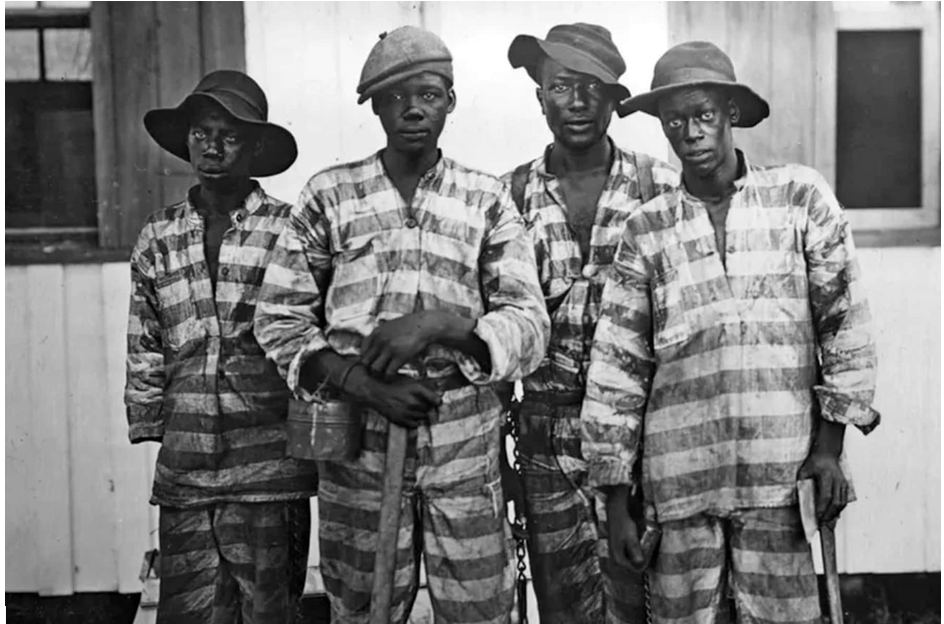
With the help of profiteering industrialists, white leaders in the early 1900s found a new way to build wealth on the bound labor of Black Americans: the convict lease system.
After fighting the bloodiest war in our nation’s history, the United States abolished slavery, or rather it tried to abolish slavery. The 13th Amendment of the U.S. Constitution reads:
Neither slavery nor involuntary servitude, except as a punishment for crime whereof the party shall have been duly convicted, shall exist within the United States, or any place subject to their jurisdiction.
Some individuals spotted a loophole between the first and second commas in that sentence, and created a system of what came to be known as peonage. Southern states created laws of various sorts to allow widespread arrests and then contracted out prison labor as a form neo-slavery.
As Wikipedia notes:
“Government officials leased imprisoned blacks and whites to small town entrepreneurs, provincial farmers, and dozens of corporations looking for cheap labor. Their labor was repeatedly bought and sold for decades, well into the 20th century, long after the official abolition of American slavery.”
Of course, nothing like this could happen today. Today our evolved sensibilities would never deprive people of their freedoms merely to benefit the greed of private interests.
Or would they?
Recently, the Tampa Bay Times quoted Hillsborough County School Board member Nadia Combs defending the board’s decision to deny renewal to four charter schools and to its refusal to open two additional charter schools:
“If we stop five or six charters from coming here, we’re saving the district millions and millions of dollars,” Combs said.
Where are the greedy private interests in the Hillsborough example?
American school board elections, sadly, make easy prey for a process that economists describe as regulatory capture. Unionized employee interests and major contractors have an intense financial interest in the outcome of school board elections. The public, on the other hand, lacks such an interest and will be lucky to know substantive differences between candidates if they vote in school board elections, which they usually do not.
Who wants the “millions and millions” described in the quote?
It doesn’t take much of an imagination to think of plantation owners in the 1940s making an argument similar to that made by Combs in the debate over ending peonage. After all, it was going to cost the peonage system’s users “millions and millions” to hire people through the normal process of mutual exchange.
The private interests benefitting from the Hillsborough school board’s decision likewise don’t much care about the autonomy of Tampa area families. They prefer to keep them in place so they can benefit from the funding associated with their education, whether actual learning happens or not.
Fortunately, Florida’s state lawmakers have been acting to draw district peonage to a close. Like the beneficiaries of the original peonage, the beneficiaries of this corrupt system are not going down without a fight.
A family without the means to exercise choice in education will be used as funding unit peons by private interests. Choice, however, involves voluntary rather than compelled associations. It’s long past time for K-12 education peonage to end.

